Illuminati
Sign in to saveAlso known as Bavarian Illuminati
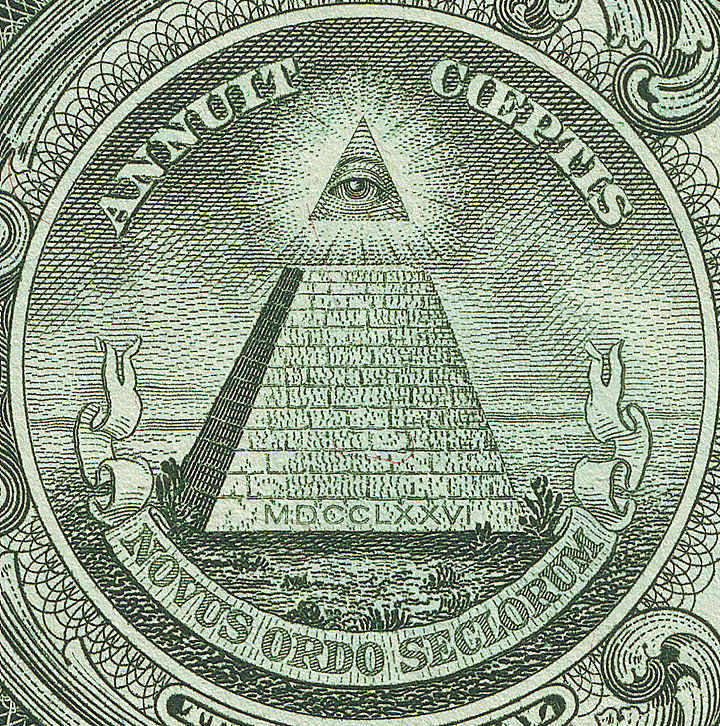
thumb|The Eye of Providence, as seen on the US $1 bill, has been perceived by some to be evidence of a conspiracy linking the [[Founding Fathers of the United States to the Illuminati.]] The Illuminati (; plural of Latin , 'enlightened') is a name given to several groups, both real and fictitious. Historically, the name usually refers to the Bavarian Illuminati, an Enlightenment-era secret society founded on 1 May 1776 in the Electorate of Bavaria. The society's stated goals were to oppose superstition, obscurantism, religious influence over public life, and abuses of state power by monar
The Illuminati refers to both a real 18th-century Bavarian secret society founded to oppose superstition and religious influence on government, and various fictional groups that have been the subject of conspiracy theories. It matters because the term has become central to modern conspiracy theories—such as claims linking the group to the Founding Fathers—despite the historical organization being relatively minor and short-lived.
AI-generated from the Wikipedia summary — may contain errors.
Wikipedia views (30d)
195,339 totalvia Wikimedia Pageviews API
Wikidata facts
- Instance of
- secret society
- Country
- Electorate of Bavaria
- Founded by
- Leopold Engel
- Image
- Minerval insignia.png
Show 10 more facts
- subject named as
- Illuminaten
- Commons category
- Illuminati
- topic's main category
- Category:Illuminati
- cause of destruction
- Charles Theodore, Elector of Bavaria
- inception
- 1776-05-01
- dissolved, abolished or demolished date
- 1785-03-00
- P8168
- PlayStation
- Wikimedia Incubator URL
- incubator.wikimedia.org/wiki/Wp/syl/ꠁꠟꠥꠝꠤꠘꠣꠔꠤ
- described by source
- Encyclopædia Britannica 11th edition
- different from
- Illuminati
via Wikidata · CC0
~41 min read
Encyclopedic overview
22 sectionsContents
- History
- Origins
- Transition
- Reform
- Adolph Knigge
- Internal problems
- New system
- Attempts at expansion
- Convent of Wilhelmsbad
- Aftermath of Wilhelmsbad
- Zenith
- Conflict with Rosicrucians
- Internal dissent
- Decline
- Barruel and Robison
- Modern Illuminati
- Legacy
- See also
- References
- Works cited
- Further reading
- External links
thumb|The Eye of Providence, as seen on the US $1 bill, has been perceived by some to be evidence of a conspiracy linking the [[Founding Fathers of the United States to the Illuminati.]] The Illuminati (; plural of Latin , 'enlightened') is a name given to several groups, both real and fictitious. Historically, the name usually refers to the Bavarian Illuminati, an Enlightenment-era secret society founded on 1 May 1776 in the Electorate of Bavaria. The society's stated goals were to oppose superstition, obscurantism, religious influence over public life, and abuses of state power by monarchs. "The order of the day", they wrote in their general statutes, "is to put an end to the machinations of the purveyors of injustice, to control them without dominating them."
The Illuminati—along with Freemasonry and other secret societies—were outlawed through edict by Charles Theodore, Elector of Bavaria, with the encouragement of the Catholic Church, in 1784, 1785, 1787 and 1790. During subsequent years, the group was generally vilified by conservative and religious critics, who claimed that the Illuminati continued underground and were responsible for the French Revolution. It attracted literary men such as Johann Wolfgang von Goethe and Johann Gottfried Herder and the reigning Duke of Gotha and of Weimar.
Excerpted from Wikipedia’s “Illuminati” article, available under the CC BY-SA 4.0 licence.
Gallery (13)
Available in 79 languages
- Español
- Français
- Deutsch
- 中文
- 日本語
- Русский
- Português
- Italiano
- العربية
- हिन्दी
- Afrikaans
- Albanian
- Albanian
- Armenian
- Assamese
- Asturian
- Azerbaijani
- Bahasa Indonesia
Show 60 more
- Bangla
- Basque
- Belarusian
- Bosnian
- Bulgarian
- Catalan
- Central Kurdish
- Chuvash
- Croatian
- Czech
- Danish
- Egyptian Arabic
- Esperanto
- Estonian
- Finnish
- Galician
- Georgian
- Greek
- Hebrew
- Hungarian
- Icelandic
- Kazakh
- Kinyarwanda
- Kurdish
- Latin
- Latvian
- Macedonian
- Malay
- Malayalam
- Mingrelian
- Nederlands
- Norwegian
- Norwegian Nynorsk
- Papiamento
- Polski
- Punjabi
- Romanian
- Serbian
- Serbian (Latin)
- simple
- Sinhala
- Slovak
- Slovenian
- Sundanese
- Svenska
- Swahili
- syl
- Tamil
- Tiếng Việt
- Türkçe
- Ukrainian
- Urdu
- Welsh
- Wu Chinese
- zh_min_nan
- zh_yue
- Zulu
- فارسی
- ไทย
- 한국어
via Wikidata sitelinks · CC0