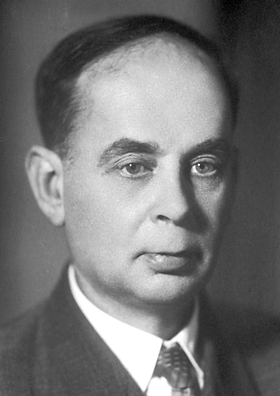
File:Ilya_Frank.jpg · Wikimedia Commons · See Wikimedia Commons
I don't have enough context to write an accurate overview. While you've indicated Ilya Frank was a Soviet physicist, I would need additional information about his specific contributions, discoveries, or significance to provide a meaningful 2-sentence explanation for a general reader.
AI-generated from the Wikipedia summary — may contain errors.
Nobel Prize
- The Nobel Prize in Physics1958
“for the discovery and the interpretation of the Cherenkov effect”
Shared · 1/3 portion
Wikidata facts
- Instance of
- human
- Family name
- Frank
- Gender
- male
- Citizenship
- Russian Empire
- Place of birth
- Saint Petersburg
- Place of death
- Moscow
- Occupation
- university teacher
- Educated at
- Russian Academy of Sciences
- Employer
- Institute for Nuclear Research
- Languages spoken
- Russian
- Religion
- Judaism
- Academic degree
- Bachelor of Science
- Doctoral advisor
- Sergey Vavilov
- Student of
- Sergey Vavilov
- Field of work
- physicist
- Image
- Ilya Frank.jpg
- Work location
- Soviet Union
Show 9 more facts
- Commons category
- Ilya Frank
- date of birth
- 1908-10-23
- date of death
- 1990-06-22
- place of burial
- Vvedenskoye Cemetery
- member of
- Russian Academy of Sciences
- Erdős number
- 7
- nominated for
- Nobel Prize in Physics
- maintained by WikiProject
- WikiProject Mathematics
- interested in
- physics
via Wikidata · CC0
~4 min read
Encyclopedic overview
Ilya Mikhailovich Frank (Russian: Илья Михайлович Франк; 23 October 1908 – 22 June 1990) was a Soviet physicist who received the 1958 Nobel Prize in Physics, jointly with Pavel Alekseyevich Cherenkov and Igor Y. Tamm, also of the Soviet Union. He received the award for his work in explaining the phenomenon of Cherenkov radiation. He received the Stalin prize in 1946 and 1953 and the USSR state prize in 1971.
Life and career
Excerpted from Wikipedia’s “Ilya Frank” article, available under the CC BY-SA 4.0 licence.
Gallery (2)
Available in 72 languages
- Español
- Français
- Deutsch
- 中文
- 日本語
- Русский
- Português
- Italiano
- العربية
- हिन्दी
- Armenian
- azb
- Azerbaijani
- Bahasa Indonesia
- Bangla
- Bashkir
- Basque
- Belarusian
Show 53 more
- Bulgarian
- Catalan
- Croatian
- Czech
- Danish
- Egyptian Arabic
- Esperanto
- Estonian
- Finnish
- Galician
- Georgian
- Greek
- Haitian Creole
- Hakka Chinese
- Hebrew
- Ido
- Irish
- Kazakh
- Kyrgyz
- Latin
- Latvian
- Lithuanian
- Macedonian
- Malay
- Marathi
- Mazanderani
- Mingrelian
- Nederlands
- Newari
- Norwegian
- Norwegian Nynorsk
- Polski
- Punjabi
- Romanian
- Serbian
- skr
- Slovak
- Slovenian
- Svenska
- Swahili
- Tatar
- Tiếng Việt
- Türkçe
- Ukrainian
- Urdu
- Uzbek
- Western Panjabi
- Wu Chinese
- Yoruba
- zh_min_nan
- zh_yue
- فارسی
- 한국어
via Wikidata sitelinks · CC0