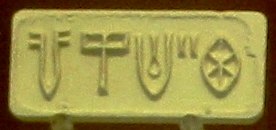
File:Indus_seal_impression.jpg · Wikimedia Commons · See Wikimedia Commons
Indus script
Sign in to saveAlso known as Harappan script, Indus, Inds
script, short strings of symbols associated with the Indus Valley Civilization
Key facts
- Script type
- Undeciphered , possibly Bronze Age writing or proto-writing
- Period
- c. 2800–1900 BCE , (possible proto-script from c. 3500 BCE ) , (rarely, later "graffiti" till c. 1300 BCE )
- Direction
- Right-to-left script , boustrophedon
- Languages
- Unknown, possibly Harappan language
- Iso 15924
- Inds (610) , Indus (Harappan)
via Wikipedia infobox
Wikidata facts
- Image
- Brahmi and Indus seal proposed connection.jpg
Show 4 more facts
- Commons category
- Indus script
- name
- indus
- inception
- 2800-00-00
- end time
- 1900-00-00
Sources (2)
via Wikidata · CC0
~25 min read
Article
The Indus script, also known as the Harappan script and the Indus Valley script, is a corpus of symbols produced by the Indus Valley Civilisation. Most inscriptions containing these symbols are extremely short, making it difficult to judge whether or not they constituted a writing system used to record a Harappan language, any of which are yet to be identified. Despite many attempts, the "script" has not yet been deciphered. There is no known bilingual inscription to help decipher the script, which shows no significant changes over time. However, some of the syntax (if that is what it may be termed) varies depending upon location.
The first publication of a seal with Harappan symbols dates to 1875, in a drawing by Alexander Cunningham. By 1992, an estimated 4,000 inscribed objects had been discovered, some as far afield as Mesopotamia due to existing Indus–Mesopotamia relations, with over 400 distinct signs represented across known inscriptions.