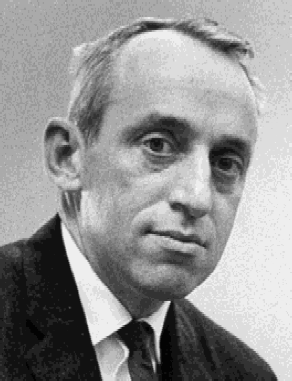
File:James_Tobin.png · Wikimedia Commons · See Wikimedia Commons
James Tobin
Sign in to saveAmerican economist (1918–2002)
James Tobin was an American economist who lived from 1918 to 2002 and made significant contributions to economic theory during the 20th century. He is best known for his work on investment behavior, monetary policy, and the relationship between financial markets and the real economy, which influenced how economists understand how money and spending interact.
AI-generated from the Wikipedia summary — may contain errors.
Nobel Prize
- The Sveriges Riksbank Prize in Economic Sciences in Memory of Alfred Nobel1981
“for his analysis of financial markets and their relations to expenditure decisions, employment, production and prices”
Wikidata facts
- Instance of
- human
- Given name
- James
- Gender
- male
- Citizenship
- United States
- Place of birth
- Champaign
- Place of death
- New Haven
- Occupation
- military personnel
- Position held
- president
- Educated at
- University of Illinois Urbana–Champaign
- Employer
- Yale University
- Languages spoken
- English language
- Doctoral advisor
- Joseph Schumpeter
- Field of work
- economics
- Conflict
- World War II
- Military branch
- United States Navy
- Military rank
- soldier
- Image
- James Tobin.png
- Residence
- Champaign
Show 11 more facts
- Commons category
- James Tobin
- member of
- American Philosophical Society
- student
- Janet Yellen
- maintained by WikiProject
- WikiProject Mathematics
- name in native language
- James Tobin
- date of birth
- 1918-03-05
- date of death
- 2002-03-11
- professorship
- professor
- cause of death
- cerebrovascular disease
- manner of death
- natural causes
- interested in
- economics
Sources (12)
via Wikidata · CC0
~11 min read
Encyclopedic overview
James Tobin (March 5, 1918 – March 11, 2002) was an American economist who served on the Council of Economic Advisers and consulted with the Board of Governors of the Federal Reserve System, and taught at Yale University. He contributed to the development of key ideas in the Keynesian economics of his generation and advocated government intervention in particular to stabilize output and avoid recessions. His academic work included pioneering contributions to the study of investment, monetary and fiscal policy and financial markets. He also proposed an econometric model for censored dependent variables, the well-known tobit model.
Along with fellow neo-Keynesian economist James Meade in 1977, Tobin proposed nominal GDP targeting as a monetary policy rule in 1980. Tobin received the Nobel Memorial Prize in Economic Sciences in 1981 for "creative and extensive work on the analysis of financial markets and their relations to expenditure decisions, employment, production and prices."
Excerpted from Wikipedia’s “James Tobin” article, available under the CC BY-SA 4.0 licence.