Japanese writing system
Also known as Han + Hiragana + Katakana, Japanese script, Japanese characters, Hiragana and Katakana and Chinese ideographic characters, Japanese writing systems, Jpan
various writing systems used Japanese, using or mixing Hiragana, Katakana and Kanji characters, inherited or derived from Chinese ideographic characters
AI overview
The Japanese writing system uses three types of characters—Hiragana, Katakana, and Kanji—which are often mixed together in the same text, with Kanji being characters inherited from Chinese. This combination of character types is essential for reading and writing Japanese, as each serves different purposes in everyday communication.
AI-generated from the Wikipedia summary — may contain errors.
Article
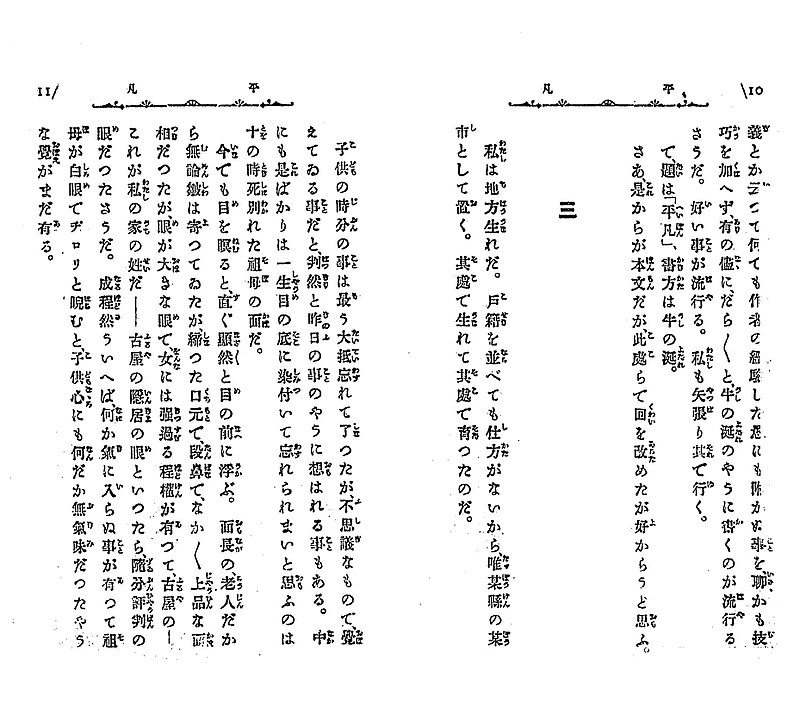
The modern Japanese writing system (日本語の表記体系, Nihongo no hyōki taikei) uses a combination of logographic kanji, which are adopted Chinese characters, and syllabic kana. Kana itself consists of a pair of syllabaries: hiragana, used primarily for native or naturalized Japanese words and grammatical elements; and katakana, used primarily for foreign words and names, loanwords, onomatopoeia, scientific names, and sometimes for emphasis. Almost all written Japanese sentences contain a mixture of kanji and kana. Because of this mixture of scripts, in addition to a large inventory of kanji characters, the Japanese writing system is considered to be one of the most complicated currently in use.
Several thousand kanji characters are in regular use, which mostly originate from traditional Chinese characters. Others made in Japan are referred to as "Japanese kanji" (和製漢字, wasei kanji), also known as "[our] country's kanji" (国字, kokuji). Each character has an intrinsic meaning (or range of meanings), and most have more than one pronunciation, the choice of which depends on context. Japanese primary and secondary school students are required to learn 2,136 jōyō kanji as of 2010. The total number of kanji is well over 50,000, though this includes tens of thousands of characters only present in historical writings and never used in modern Japanese.