File:KeratinF9.png · Wikimedia Commons · See Wikimedia Commons
keratins
Sign in to saveAlso known as keratin
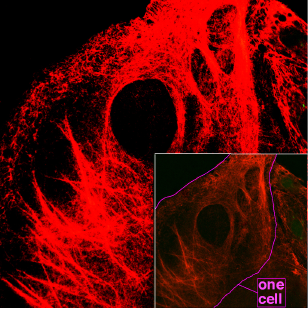
thumb|300px|Microscopy of keratin filaments inside cells
Keratins are tough, fibrous proteins that form filaments inside cells and provide structural support. They are important because they help make up key parts of the body like hair, nails, and skin, giving these tissues their strength and resilience.
AI-generated from the Wikipedia summary — may contain errors.
Research
65,331 papers- Methods to Synthesize and Assemble Recombinant Keratins.Methods in molecular biology (Clifton, N.J.) · 2021Zhang W, Fan YDOI: 10.1007/978-1-0716-1574-4_10
- Structure of Keratin.Methods in molecular biology (Clifton, N.J.) · 2021Zhang W, Fan YDOI: 10.1007/978-1-0716-1574-4_5
- Invited review: formation of keratins in the bovine claw: roles of hormones, minerals, and vitamins in functional claw integrity.ReviewJournal of dairy science · 2004Tomlinson DJ, Mülling CH, Fakler TMDOI: 10.3168/jds.S0022-0302(04)73223-3
- Keratin and keratinization.ReviewJournal of the American Academy of Dermatology · 1994Smack DP, Korge BP, James WDDOI: 10.1016/s0190-9622(94)70012-5
- Keratin hydrolysis by dermatophytes.ReviewMedical mycology · 2019Mercer DK, Stewart CSDOI: 10.1093/mmy/myx160
- Dynamic changes in protein concentrations of keratins in crop milk and related gene expression in pigeon crops during different incubation and chick rearing stages.British poultry science · 2023Zhu JG, Xie P, Zheng MD et al.DOI: 10.1080/00071668.2022.2119836
- Keratin: dissolution, extraction and biomedical application.ReviewBiomaterials science · 2017Shavandi A, Silva TH, Bekhit AA et al.DOI: 10.1039/c7bm00411g
- Assembly dynamics of epidermal keratins K1 and K10 in transfected cells.Experimental cell research · 1994Paramio JM, Jorcano JLDOI: 10.1006/excr.1994.1348
via PubMed
Wikidata facts
- Image
- Keratin.jpg
Show 3 more facts
- topic's main category
- Category:Keratins
- Commons category
- Keratins
- different from
- carotene
Sources (6)
via Wikidata · CC0
~22 min read
Encyclopedic overview
13 sectionsContents
- Examples of occurrence
- Genes
- Protein structure
- Type I and II keratins
- Disulfide bridges
- Filament formation
- Pairing
- Cornification
- Clinical significance
- Diagnostic use
- See also
- References
- External links
thumb|300px|Microscopy of keratin filaments inside cells
Keratin () is one of a family of structural fibrous proteins also known as scleroproteins. It is the key structural material making up scales, hair, nails, feathers, horns, claws, hooves, and the outer layer of skin in tetrapod vertebrates. Keratin also protects epithelial cells from damage or stress. Keratin is extremely insoluble in water and organic solvents. Keratin monomers assemble into bundles to form intermediate filaments, which are tough and form strong unmineralized epidermal appendages found in reptiles, birds, amphibians, and mammals. Excessive keratinization participate in fortification of certain tissues such as in horns of cattle and rhinos, and armadillos' osteoderm. The only other biological matter known to approximate the toughness of keratinized tissue is chitin. Keratin comes in two types: the primitive, softer forms found in all vertebrates and the harder, derived forms found only among sauropsids (reptiles and birds).
Excerpted from Wikipedia’s “keratins” article, available under the CC BY-SA 4.0 licence.
Gallery (21)
Available in 63 languages
- Español
- Français
- Deutsch
- 中文
- 日本語
- Русский
- Português
- Italiano
- العربية
- Afrikaans
- Amharic
- Armenian
- Azerbaijani
- Bahasa Indonesia
- Basque
- Bosnian
- Bulgarian
- Burmese
Show 44 more
- Catalan
- Central Kurdish
- Croatian
- Czech
- Danish
- Esperanto
- Estonian
- Finnish
- Galician
- Greek
- Haitian Creole
- Hebrew
- Hungarian
- Ido
- Irish
- Kannada
- Latin
- Latvian
- Lithuanian
- Malay
- Nederlands
- Norwegian
- Norwegian Nynorsk
- Occitan
- Polski
- Romanian
- Serbian
- Serbian (Latin)
- simple
- Slovak
- Slovenian
- Sundanese
- Svenska
- Tamil
- Tiếng Việt
- Türkçe
- Ukrainian
- Urdu
- Uzbek
- Wu Chinese
- zh_yue
- فارسی
- ไทย
- 한국어
via Wikidata sitelinks · CC0