
File:Komitas_1902.jpg · Wikimedia Commons · See Wikimedia Commons
Komitas
Sign in to saveAlso known as Soghomon Soghomonyan, Komitas Vardapet
right|235px|thumb|Komitas singing Mokats Mirza. Soghomon Soghomonian, ordained and commonly known as Komitas (; 22 October 1935), was an Ottoman-Armenian priest, musicologist, composer, arranger, singer, and choirmaster, who is considered the founder of the Armenian national school of music. He is recognized as one of the pioneers of ethnomusicology.
Komitas was an Ottoman-Armenian priest and musician who founded the Armenian national school of music and became a pioneer in ethnomusicology through his work as a composer, arranger, and musicologist. He is significant because he established the foundations of Armenian musical tradition and helped develop the academic study of traditional music across cultures.
AI-generated from the Wikipedia summary — may contain errors.
Music · MusicBrainz
- Type
- Person
- Gender
- Male
- Country
- Armenia
- Active from
- 1869
- Active to
- 1935
Discography
via MusicBrainz · CC0
Listeners · Last.fm
- Listeners
- 26,484
- Total plays
- 143,802
Tags
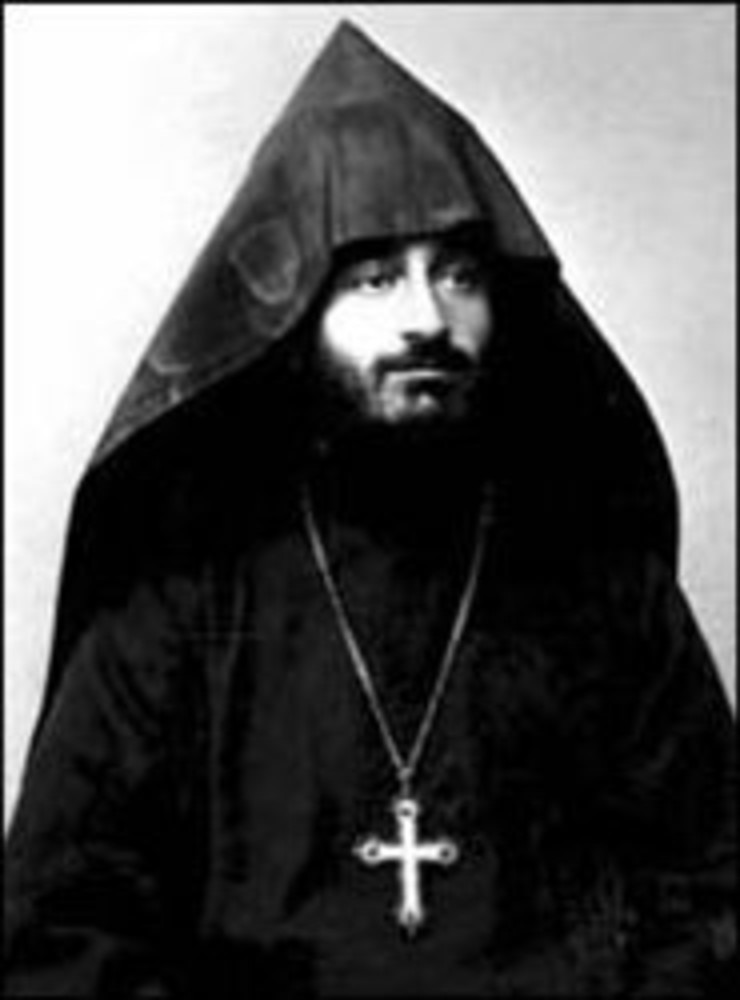
Komitas Vardapet (by Western Armenian transliteration also Gomidas Vartabed; Komitas Vartapet, born Soghomon Gevorki Soghomonyan on September 26 or October 8, 1869 in Kütahya, Ottoman Empire – October 22, 1935 in Paris, France) was an Armenian priest, ethnomusicologist, composer, choir leader, singer, and music pedagogue. He is widely regarded as the founder of modern Armenian classical music. Komitas was born into a family whose members were deeply involved in music and were monolingual in Tu
Key facts
- Person.name
- Komitas
- Person.honorific_suffix
- Vardapet
- Person.image
- komitas 1902.jpg
- Person.image_size
- 250px
- Person.caption
- Komitas in 1901 or 1902
- Person.native_name
- Կոմիտաս
- Person.native_name_lang
- hy
- Person.birth_name
- Soghomon Soghomonian
- Person.birth_place
- Kütahya, Ottoman Empire
- Person.death_place
- Paris, France
- Person.resting_place
- Komitas Pantheon
- Person.known for
- Komitas Quartet
- Person.education
- Gevorgian SeminaryFrederick William University
- Person.occupation
- Musicologist, composer, choirmaster
- Person.years_active
- 1891–1915
- Person.signature
- Komitas signature.png
- Person.website
- komitasmuseum.am
via Wikipedia infobox
Wikidata facts
- Instance of
- human
- Family name
- Soghomonyan
- Gender
- male
- Citizenship
- France
- Place of birth
- Kütahya
- Place of death
- Paris
- Occupation
- folklorist
- Educated at
- Gevorkian Theological Seminary
- Employer
- Gevorkian Theological Seminary
- Languages spoken
- French
- Religion
- Armenian Apostolic Church
- Field of work
- etnomusicology
- Genre
- Armenian folk music
- Instrument
- voice
- Official website
- կոմիտաս.հայ
- Image
- The Soviet Union 1969 CPA 3799 stamp (Komitas and Rural Scene).jpg
- Voice type
- baritone
Show 11 more facts
- Commons category
- Komitas Vardapet
- date of birth
- 1869-10-08
- date of death
- 1935-10-22
- Commons gallery
- Komitas Vardapet
- name in native language
- Կոմիտաս
- birth name
- Согомон Геворгій Согомонян
- start of work period
- 1891-00-00
- end of work period
- 1915-00-00
- pseudonym
- Կոմիտաս
- ethnic group
- Armenians
- web feed URL
- xn--y9atlut7am.xn--y9a3aq/feed
Sources (2)
via Wikidata · CC0
~17 min read
Encyclopedic overview
16 sectionsContents
- Biography
- Childhood (1869–81)
- Etchmiadzin (1881–95)
- Tiflis and Berlin (1895–1899)
- Main period of work (1899–1910)
- Constantinople (1910–15)
- Deportation and final years (1915–35)
- Legacy
- Landmarks
- Selected works, editions and recordings
- Works on Komitas
- Films
- References
- Sources
- Further reading
- External links
right|235px|thumb|Komitas singing Mokats Mirza. Soghomon Soghomonian, ordained and commonly known as Komitas (; 22 October 1935), was an Ottoman-Armenian priest, musicologist, composer, arranger, singer, and choirmaster, who is considered the founder of the Armenian national school of music. He is recognized as one of the pioneers of ethnomusicology.
Orphaned at a young age, Komitas was taken to Etchmiadzin, Armenia's religious center, where he received education at the Gevorgian Seminary. Following his ordination as vardapet (celibate priest) in 1895, he studied music at the Frederick William University in Berlin. He thereafter "used his Western training to build a national tradition". He collected and transcribed over 3,000 pieces of Armenian folk music, more than half of which were subsequently lost with only around 1,200 now extant. Besides Armenian folk songs, he also showed interest in other cultures and in 1903 published the first-ever collection of Kurdish folk songs titled Kurdish melodies. His choir presented Armenian music in many European cities, earning the praise of Claude Debussy, among others. Komitas settled in Constantinople in 1910 to escape mistreatment by ultra-conservative clergymen at Etchmiadzin and to introduce Armenian folk music to wider audiences. He was widely embraced by Armenian communities, while Arshag Chobanian called him the "savior of Armenian music".
Excerpted from Wikipedia’s “Komitas” article, available under the CC BY-SA 4.0 licence.