Lepidobotryaceae · Kew POWO · Kew Plants of the World Online
Lepidobotryaceae
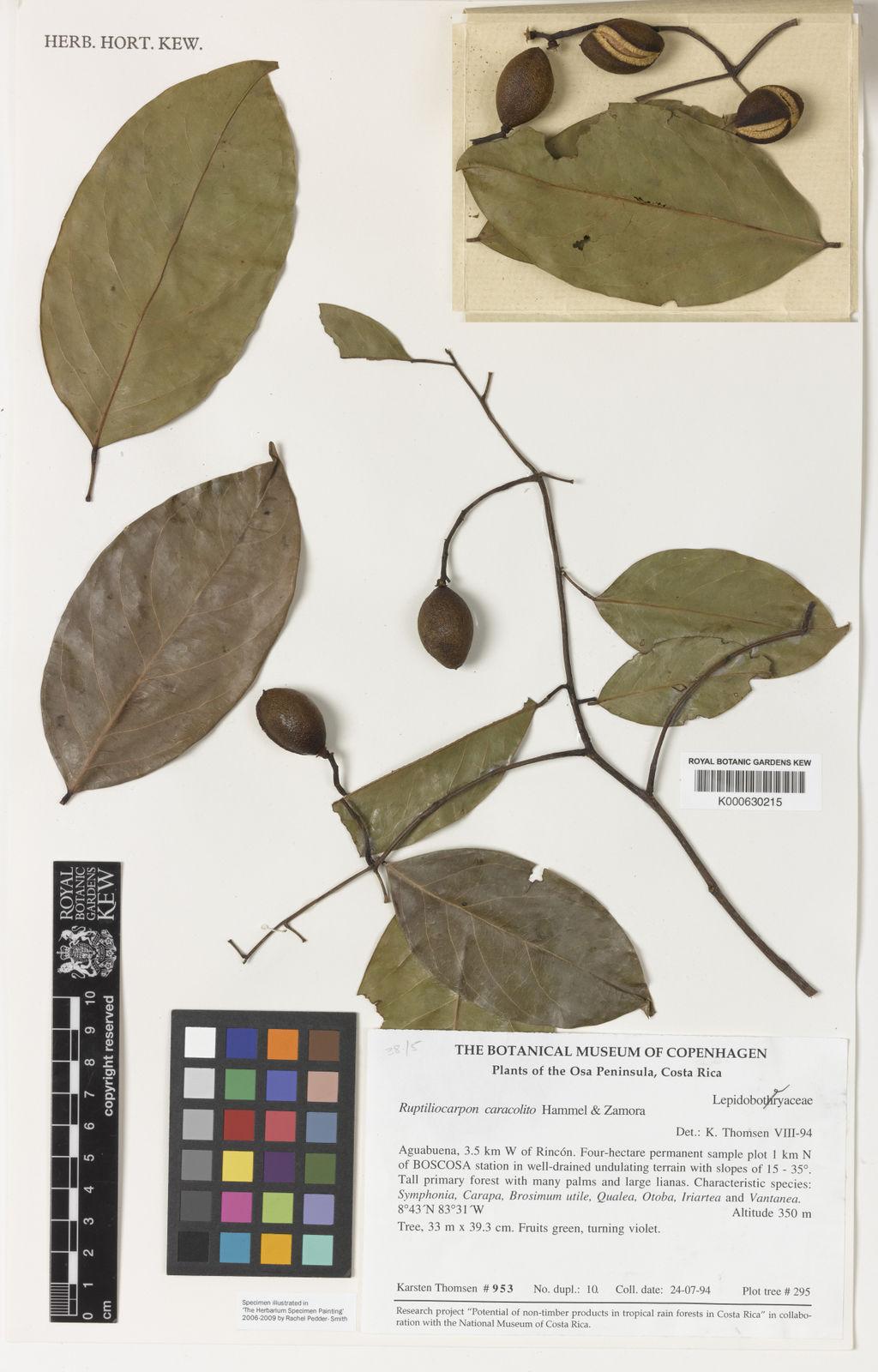
Sign in to saveLepidobotryaceae is a family of plants in the order Celastrales. It contains only two species: Lepidobotrys staudtii (native to tropical Africa) and Ruptiliocarpon caracolito (native to South and Central America).
Species
FAMILY
- KingdomPlantae
- PhylumTracheophyta
- ClassMagnoliopsida
- OrderCelastrales
- FamilyLepidobotryaceae
General: in Lepidobotryaceae is the monotypicLepidobotrys (L. staudtii Engl Appearance: differ from Lepidobotryaceae in possessing the following
via GBIF · Kew POWO
Museum specimens
- Specimen records
- 1
- With media
- 1
- Family
- Lepidobotryaceae
- Collections
- JBRJ
- Recorded in
- Brasil
Wikidata facts
- Instance of
- taxon
- Parent taxon
- Celastrales
- Image
- Lepidobotryaceae Lepidobotrys staudtii.png
Show 7 more facts
- Commons category
- Lepidobotryaceae
- taxon rank
- family
- taxon name
- Lepidobotryaceae
- topic's main category
- Category:Lepidobotryaceae
- taxon common name
- 鳞球穗科
- has fruit type
- capsule
Sources (1)
via Wikidata · CC0
~3 min read
Encyclopedic overview
3 sectionsContents
- Description
- References
- External links
Lepidobotryaceae is a family of plants in the order Celastrales. It contains only two species: Lepidobotrys staudtii (native to tropical Africa) and Ruptiliocarpon caracolito (native to South and Central America).
== Description == The Lepidobotryaceae are dioecious trees. The leaves are alternate and arranged in two rows along the stems. The blade is elliptical in shape and the margin is entire. The leaves appear simple, but are actually unifoliate. A unifoliate leaf is a type of compound leaf that consists of a single leaflet mounted on the end of a rachis. A joint occurs where the leaflet is attached to the rachis. In Lepidobotryaceae, this joint bears a single, elongate stipel and a pair of small stipules where the petiole attaches to the stem. After the emergence of the leaf, the stipel and stipules soon fall away.
Excerpted from Wikipedia’s “Lepidobotryaceae” article, available under the CC BY-SA 4.0 licence.