Category
page 1Dioecious plants

Salix
Willows, also called sallows and osiers, of the genus Salix, comprise around 350 species (plus numerous hybrids) of typically deciduous trees and shrubs. They are primarily found on moist soils in cold and temperate regions.

Cannabis
Cannabis () is a genus of flowering plants in the family Cannabaceae that is widely accepted as being indigenous to and originating from the continent of Asia. However, the number of species is disputed, with as many as three species being recognized: Cannabis sativa, C. indica, and C. ruderalis. Alternatively, C. ruderalis may be included within C. sativa, or all three may be treated as subspecies of C. sativa, or C. sativa may be accepted as a single undivided species.

Populus
Populus is a genus of 25–30 species of deciduous flowering plants in the family Salicaceae, native to most of the Northern Hemisphere. English names variously applied to different species include poplar (), aspen, and cottonwood.

Asparagus officinalis
Asparagus (Asparagus officinalis) or garden asparagus is a perennial flowering plant species in the genus Asparagus native to Eurasia. Widely cultivated as a vegetable crop, its young shoots are used as a spring vegetable.

Ginkgo biloba
species of ginkgo tree

Juniperus communis
species of plant

Urtica dioica
species of plant
.jpg)
Rumex acetosa
Sorrel (Rumex acetosa) is a perennial herbaceous plant in the family Polygonaceae. It is also called common sorrel, garden sorrel, spinach dock and narrow-leaved dock ("dock" often used for the genus).

Ceratonia siliqua
The carob ( ; Ceratonia siliqua) is a flowering evergreen tree or shrub in the Caesalpinioideae subfamily of the legume family, Fabaceae. The carob tree is native to the Mediterranean region and the Middle East. It is widely cultivated for its edible fruit, which takes the form of seed pods, and as an ornamental tree in gardens and landscapes. Spain is its largest producer, followed by Italy and Morocco.

betel
Betel (Piper betle) is a species of flowering plant in the pepper family Piperaceae, native to Southeast Asia. It is an evergreen, dioecious vine, with glossy heart-shaped leaves and white catkins. Betel plants are cultivated for their leaves, which are most commonly used as flavoring for chewing areca nut in so-called betel quid (often confusingly referred to as "betel nut"), which is toxic (as it is a psychostimulant drug) and is associated with a wide range of serious health conditions.

Welwitschia mirabilis
Welwitschia is a monotypic genus of gnetophytes containing only the species Welwitschia mirabilis. It is named after the Austrian botanist Friedrich Welwitsch, who documented the plant in the 1850s. In common use, it is sometimes referred to as the tree tumbo. It is native to Angola and Namibia, where it grows in the extreme conditions of the Namib desert, tolerating high heat and low precipitation. Welwitschia is the only living genus of the family Welwitschiaceae and order Welwitschiales, and is one of three extant genera of gnetophytes, alongside Gnetum and Ephedra.

Taxus
Taxus is a genus of coniferous trees or shrubs known as yews in the family Taxaceae. Yews occur around the globe in temperate zones of the northern hemisphere, northernmost in Norway and southernmost in the South Celebes. Some populations exist in tropical highlands.

Diospyros
Diospyros is a genus of over 700 species of deciduous and evergreen trees and shrubs. The majority are native to the tropics, with only a few species extending into temperate regions. Individual species valued for their hard, heavy, dark timber, are commonly known as ebony trees, while others are valued for their fruit and known as persimmon trees. Some are useful as ornamentals and many are of local ecological importance. Species of this genus are generally dioecious, with separate male and female plants.

Rubus chamaemorus
species of plant

Ilex
Ilex () or holly is a genus of over 570 species of flowering plants in the family Aquifoliaceae, and the only living genus in that family. Ilex has the most species of any woody dioecious angiosperm genus. The species are evergreen or deciduous trees, shrubs, and climbers from tropics to temperate zones worldwide. The type species is Ilex aquifolium, the common European holly used in Christmas decorations and cards.
.jpg)
Araucaria
Araucaria (; original pronunciation: [a.ɾawˈka. ɾja]) is a genus of evergreen coniferous trees in the family Araucariaceae. While today they are largely confined to the Southern Hemisphere, during the Jurassic and Cretaceous they were globally distributed. There are 20 extant species in New Caledonia (where 14 species are endemic, see New Caledonian Araucaria), eastern Australia (including Norfolk Island), New Guinea, Argentina, Brazil, Chile and Uruguay.
Ailanthus altissima
species of plant

Viscum album
species of plant

Rhus
Sumac or sumach ( , )—not to be confused with poison sumac—is any of the roughly 35 species of flowering plants in the genus Rhus (and related genera) of the cashew and mango tree family, Anacardiaceae. However, it is Rhus coriaria that is most commonly used for culinary purposes. Sumac is prized as a spice—especially in Arab cuisine, and other Eastern cuisines—and used as a dye and holistic remedy. The plants grow in subtropical and temperate regions, on nearly every continent except Antarctica and South America.
It holds cultural significance as a symbolic item on the Haft-sin table during N

Dioscorea
Dioscorea is a genus of over 600 species of flowering plants in the family Dioscoreaceae, native throughout the tropical and warm temperate regions of the world. The vast majority of the species are tropical, with only a few species extending into temperate climates. It was named by the monk Charles Plumier after the ancient Greek physician and botanist Dioscorides.

Nepenthes
Nepenthes ( ) is a genus of carnivorous plants, also known as tropical pitcher plants, or monkey cups, in the monotypic family Nepenthaceae. The genus includes about 170 species, and numerous natural and many cultivated hybrids. They are mostly liana-forming plants of the Old World tropics, ranging from South China, Indonesia, Malaysia, and the Philippines; westward to Madagascar (two species) and the Seychelles (one); southward to Australia (four) and New Caledonia (one); and northward to India (one) and Sri Lanka (one). The greatest diversity occurs on Borneo, Sumatra, and the Philippines, w

Rafflesia
Rafflesia (), or stinking corpse lily, is a genus of parasitic flowering plants in the family Rafflesiaceae. The species have enormous flowers, the buds rising from the ground or directly from the lower stems of their host plants; one species has the largest flower in the world. Plants of the World Online lists up to 41 species from this genus; all of them are found in Southeast Asia.

Ruscus aculeatus
evergreen shrub

Humulus
Humulus, or hop, is a small genus of flowering plants in the family Cannabaceae. The hop is native to temperate regions of the Northern Hemisphere. Hops are the female flowers (seed cones, strobiles) of the hop species H. lupulus; as a main flavor and aroma ingredient in many beer styles, H. lupulus is widely cultivated for use by the brewing industry.

Rhamnus cathartica
species of plant

Caricaceae
The Caricaceae are a family of flowering plants in the order Brassicales, found primarily in tropical regions of Central and South America and Africa. They are usually short-lived evergreen pachycaul shrubs or small to medium-sized trees growing to 5–10 m tall. One species, Vasconcellea horovitziana is a liana and the three species of the genus Jarilla are herbs. Some species, such as the papaya, bear edible fruit and produce papain.

Hippophae
Hippophae is a genus of flowering plants in the family Elaeagnaceae. They are deciduous shrubs. They are exceptionally hardy plants, able to withstand winter temperatures as low as . As Hippophae species develop an aggressive and extensive root system, they are planted to inhibit soil erosion and used in land reclamation for their nitrogen fixing properties, wildlife habitat, and soil enrichment. Hippophae berries and leaves are manufactured into various human and animal food and skincare products.
Broussonetia papyrifera
species of plant

Rumex acetosella
species of plant

Rhamnus
genus of plants

Phoenix
genus of plants
.JPG)
Cycadales
Cycads —constituting the division Cycadophyta—are seed plants with a stout, woody cylindrical trunk with a crown of large, hard, stiff, evergreen and usually pinnate (feather-shaped) leaves. The species are dioecious, that is, individual plants of a species are either male or female. Cycads vary in size from having trunks only a few centimeters to several meters tall. They typically grow slowly and have long lifespans. They superficially resemble palms or ferns, but are not closely related to either group. Cycads are gymnosperms. Cycads have specialized pollinators, usually a specific beetle,

Acer negundo
species of tree

Rhodiola rosea
species of plant

Pistacia
thumb|Mastic resin from Pistacia lentiscus
Pistacia is a genus of flowering plants in the cashew family, Anacardiaceae. It contains 10 to 20 species that are native to Africa and Eurasia from the Canary Islands, all of Africa, and southern Europe, warm and semidesert areas across Asia, and North America from Guatemala to Mexico, as well as southern Texas.

Laurus
Laurus () is a genus of evergreen trees or shrubs belonging to the laurel family. The genus contains three or more species, including the bay laurel or sweet bay, L. nobilis, widely cultivated as an ornamental plant and a culinary herb.

persimmon
thumb|Oriental persimmon fruit, whole and halved, of the firm cultivar 'fuyu'
thumb|Persimmon fruit seed
thumb|Persimmons on a tree at Bilpin, New South Wales

Actinidia
Actinidia is a genus of woody and, with a few exceptions, dioecious plants native to temperate eastern Asia, occurring throughout most of China, Taiwan, Korea, and Japan, and extending north to southern areas of Russian Far East and south into Indochina. The genus includes shrubs growing to tall, and vigorous, strong-growing vines, growing up to in tree canopies. They mostly tolerate temperatures down to around , and some are much hardier.
alt=Immature kiwifruit hanging beneath dense Actinidia foliage on a natural vine.|thumb|266x266px|Kiwifruit developing on Actinidia vines
The leaves are alt

Juniperus oxycedrus
species of plant
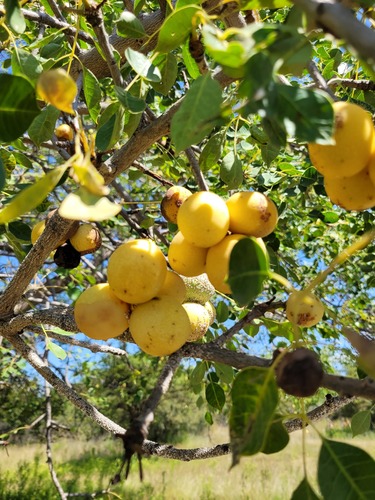
Sclerocarya birrea
species of plant

Juniperus virginiana
species of plant

Myristicaceae
The Myristicaceae are a family of flowering plants native to Africa, Asia, Pacific islands, and the Americas and has been recognized by most taxonomists. It is sometimes called the "nutmeg family", after its most famous member, Myristica fragrans, the source of the spices nutmeg and mace. The best known genera are Myristica in Asia and Virola in the Neotropics.

Juniperus sabina
species of plant

Pandanaceae
Pandanaceae is a family of flowering plants native to the tropics and subtropics of the Old World, from West Africa to the Pacific. It contains 982 known species in five genera, of which the type genus, Pandanus, is the most important, with species like Pandanus amaryllifolius and karuka (Pandanus julianettii) being important sources of food. The family likely originated during the Late Cretaceous.

Petasites
thumb|right|Petasites japonicus

Podocarpus
Podocarpus () is a genus of conifers, the most numerous and widely distributed of the podocarp family, the Podocarpaceae. Podocarpus species are evergreen shrubs or trees, usually from tall, known to reach at times. The cones have two to five fused cone scales, which form a fleshy, berry-like, brightly coloured receptacle at maturity. The fleshy cones attract birds, which then eat the cones and disperse the seeds in their droppings. Plants of the World Online accepts 116 species. Other authorities place 97 to 107 species in the genus depending on the circumscription of the species.
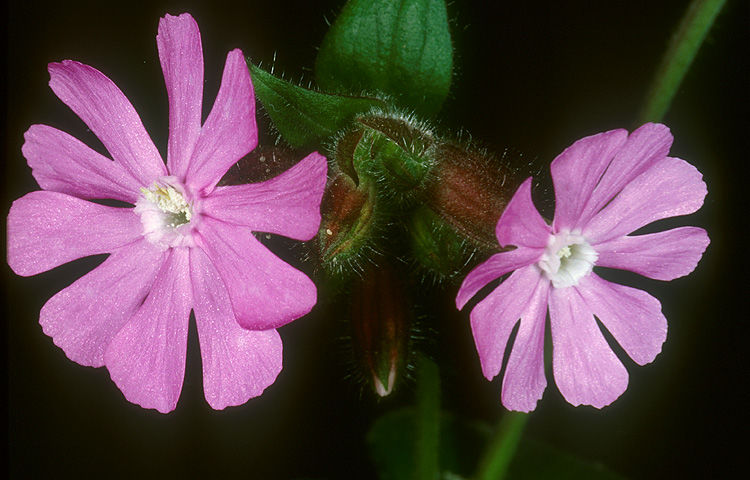
Red campion
species of plant

Maclura pomifera
species of plant

Zanthoxylum
thumb|Zanthoxylum clava-herculis Fruit and foliage
thumb|Zanthoxylum piperitum|Z. piperitum Fruit
thumb|Zanthoxylum rhetsa|Z. rhetsa bark in Pakke Tiger Reserve
thumb|Leafless Zanthoxylum simulans|Z. simulans showing its knobbed bark
thumb|Z. piperitum as a bonsai

Silene latifolia
species of plant

Bryonia
Bryonia is a genus of flowering plants in the gourd family. Bryony is its best-known common name. They are native to western Eurasia and adjacent regions, such as North Africa, the Canary Islands and South Asia.
thumb|right|Male flower of Bryonia alba|white bryony (B. alba)

Simmondsia chinensis
Jojoba (; botanical name: Simmondsia chinensis)also commonly called goat nut, deer nut, pignut, wild hazel, quinine nut, coffeeberry, and gray box bushis an evergreen, dioecious shrub native to the Southwestern United States and northern Mexico. Simmondsia chinensis is the sole species of the family Simmondsiaceae, placed in the order Caryophyllales.
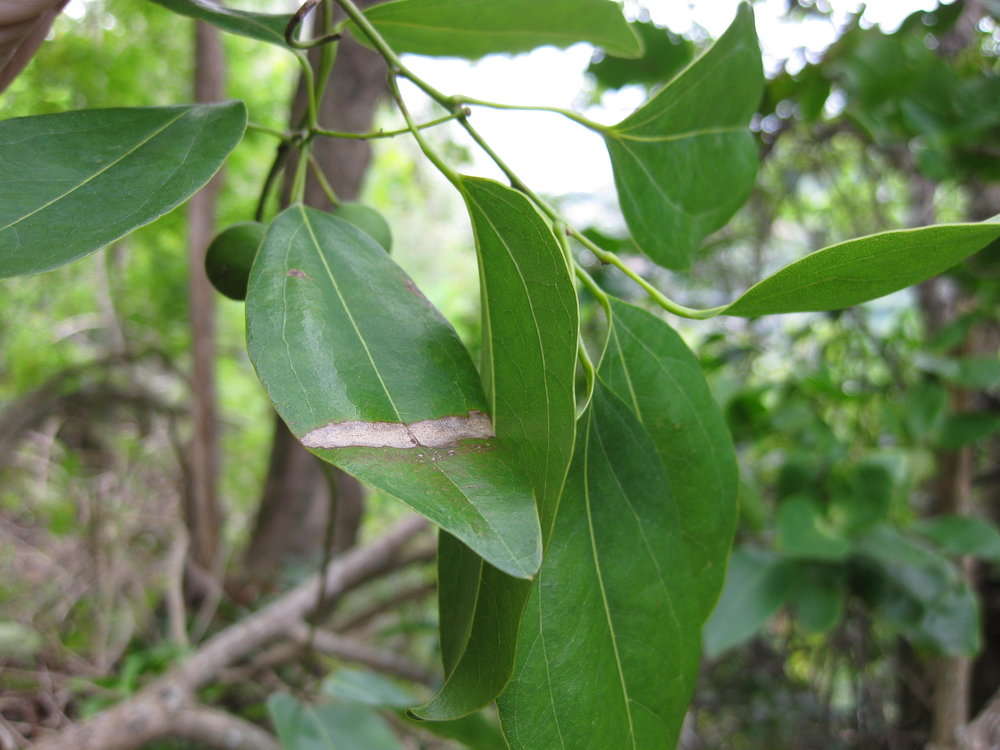
Menispermaceae
Menispermaceae (botanical Latin: 'moonseed family' from Greek mene 'crescent moon' and sperma 'seed') is a family of flowering plants. The alkaloid tubocurarine, a neuromuscular blocker and the active ingredient in the 'tube curare' form of the dart poison curare, is derived from the South American liana Chondrodendron tomentosum, which belongs to this family. Several other South American genera belonging to the family have been used to prepare the 'pot' and 'calabash' forms of curare. The family contains 81 genera with some 440 species, which are distributed throughout low-lying tropical area

Juniperus chinensis
species of plant

Fitzroya cupressoides
Fitzroya is a monotypic genus in the cypress family. The single living species, Fitzroya cupressoides, is a tall, long-lived conifer native to the Andes mountains and coastal regions of southern Chile, and to the Argentine Andes, where it is an important member of the Valdivian temperate forests. Common names include lawal (in Mapudungun, Hispanicized as lahual), alerce (, "larch" in Spanish), and Patagonian cypress. The genus was named in honour of Robert FitzRoy.

Gnetum
Gnetum is a genus of gymnosperms, the sole genus in the family Gnetaceae within the Gnetophyta. They are tropical evergreen trees, shrubs and lianas. Unlike other gymnosperms, they possess vessel elements in the xylem. Some species have been proposed to have been the first plants to be insect-pollinated as their fossils occur in association with extinct pollinating scorpionflies. Molecular phylogenies based on nuclear and plastid sequences from most of the species indicate hybridization among some of the Southeast Asian species. Fossil-calibrated molecular-clocks suggest that the Gnetum lineag

Elodea canadensis
species of plant

Myrica gale
species of plant
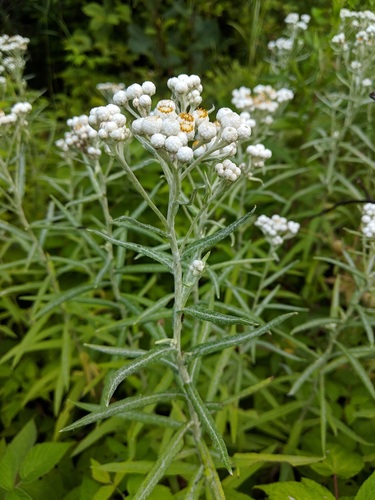
Antennaria
Antennaria is a genus of dioecious perennial herbs in the family Asteraceae, native to temperate regions of the Northern Hemisphere, with a few species (A. chilensis, A. linearifolia, A. sleumeri) in temperate southern South America; the highest species diversity is in North America. Common names include catsfoot or '''cat's-foot, pussytoes and everlasting'''.

Amborella trichopoda
Amborella is a monotypic genus of understory shrubs or small trees endemic to the main island, Grande Terre, of New Caledonia in the southwest Pacific Ocean. The genus is the only member of the family Amborellaceae and the order Amborellales and contains a single species, Amborella trichopoda. Amborella is of great interest to plant systematists because molecular phylogenetic analyses consistently place it as the sister group to all other flowering plants; as a result, it is critical for understanding angiosperm evolution. It is understood to be the most basal extant flowering plant, and is on