
File:Methylene_blue-2d-skeletal.svg · Wikimedia Commons · See Wikimedia Commons
methylene blue
Sign in to saveAlso known as methylthioninium chloride, Basic Blue 9, C.I. basic blue 9, Lowacryl blue 9, Methylene blue anhydrous, methylenium ceruleum, C.I. 52015
chemical compound
OverviewAI-generated
Methylene blue is a chemical compound with the formula C₁₆H₁₈ClN₃S. Its mass is listed as 319.090996, while its weight is recorded as 319.9. The substance has a decomposition point of 105. It features a canonical SMILES notation of CN(C)C1=CC2=C(C=C1)N=C3C=CC(=[N+](C)C)C=C3S2.[Cl-] and an InChIKey of CXKWCBBOMKCUKX-UHFFFAOYSA-M.
The compound has zero hydrogen bond donors and four hydrogen bond acceptors, with a topological polar surface area of 43.9. It carries a charge of 0. Methylene blue is referenced by 727 other encyclopedia articles. A search on PubMed yields 30,462 results for the query "methylene blue." The subject is also discussed in an article titled "Can This Blue Chemical Really Boost Your Brain? Here's What We Know."
Synthesized by Vinony from 21 facts across 5 sources: Wikidata, Firecrawl, PubMed, PubChem, Vinony graph. Generated from structured data (not the Wikipedia text) and checked against those facts — may still contain errors.
Key facts
- Trade names
- Urelene blue, Provayblue, Proveblue, others
- Other names
- CI 52015, basic blue 9
- Ahfs drugs com
- Monograph
- License data
- United States</span>"}]]}'>US DailyMed : Provayblue
- Pregnancy category
- Australia</span>"}]]}'>AU : D
- Routes of administration
- By mouth , intravenous
- Atc code
- V03AB17 ( WHO ) V04CG05 ( WHO )
- Legal status
- United States</span>"}]]}'>US : ℞-only European Union</span>"}]]}'>EU : Rx-only
- Elimination half life
- 5–24 hours ( intravenous therapy</span>"}]]}'>IV Tooltip intravenous therapy )
- Excretion
- Renal, In rats: 18%( Oral administration</span>"}]]}'>PO Tooltip Oral administration ), 28% ( </span>"}]]}'>IV )
- Cas number
- 61-73-4
- Drugbank
- DB09241
- Unii
- 8NAP7826UB
- Kegg
- D10537 C00220
- Chebi
- CHEBI:6872
- Chembl
- ChEMBL405110
- Comptox dashboard u s environmental prot
- DTXSID0023296
- Echa infocard
- 100.000.469
via Wikipedia infobox
Chemical data
- Formula
- C16H18ClN3S
- Molecular weight
- 319.9 g/mol
- IUPAC name
- [7-(dimethylamino)phenothiazin-3-ylidene]-dimethylazanium chloride
- SMILES
- CN(C)C1=CC2=C(C=C1)N=C3C=CC(=[N+](C)C)C=C3S2.[Cl-]
- InChIKey
- CXKWCBBOMKCUKX-UHFFFAOYSA-M
- Polar surface area
- 43.9 Ų
- H-bond donors
- 0
- H-bond acceptors
- 4
- Formal charge
- 0
via PubChem
Drug data · ChEMBL
- Max clinical phase
- Approved
- Molecule type
- Small molecule
- First approval
- 2011
- Indications
- colorectal neoplasm, methemoglobinemia, Alzheimer disease, Colonoscopy
via ChEMBL · EBI
Research
30,462 papers- Methylene blue.American journal of therapeutics · 2003
- Methylene Blue: An Antidote for Methemoglobinemia and Beyond.Pediatric emergency care · 2021
- Methylene blue for management of Ifosfamide-induced encephalopathy.The Annals of pharmacotherapy · 2006
- How worthwhile is methylene blue as a treatment of malaria?Expert review of anti-infective therapy · 2019
- [Methylene blue].Chudoku kenkyu : Chudoku Kenkyukai jun kikanshi = The Japanese journal of toxicology · 2008
via PubMed
Described at
Can This Blue Chemical Really Boost Your Brain? Here's What We Know. : ScienceAlert
The internet is abuzz with tributes to a liquid chemical called methylene blue that is being sold as a health supplement.
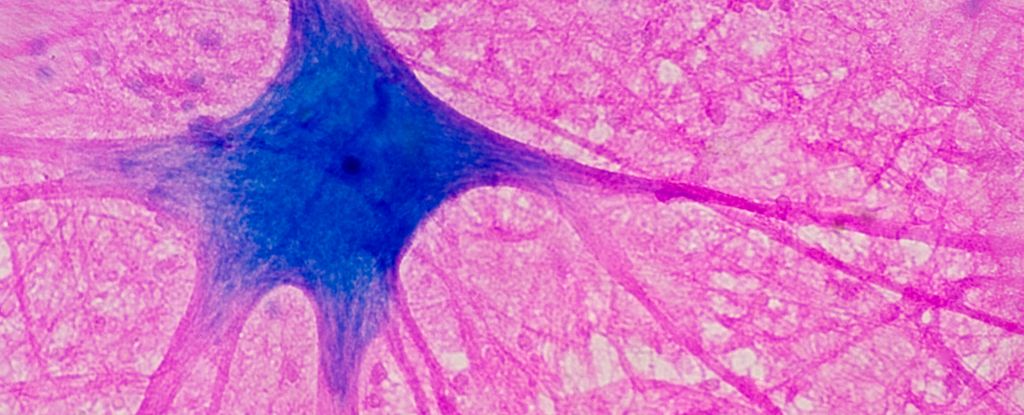
sciencealert.com →Can This Blue Chemical Really Boost Your Brain? Here's What We Know. The same dye is commonly used to enhance cells or their components under the microscope. (Ed Reschke/Stone/Getty Images) Over the past five or 10 years, methylene blue has come to be touted online as a so-called nootropic agent – a substance that enhances cognitive function. Vendors claim that it amps up brain energy, improves memory, boosts focus and dispels brain fog, among other supposed benefits. But so far, evidence supporting its health benefits is scant, and there are some serious risks to using the substance outside of medical practice. Methylene blue is a synthetic dye that exists as a dark green powder and takes on a deep blue color when dissolved in water. My work and that of others suggest that many synthetic dyes widely used in foods and medicines can trigger potentially harmful immune system reactions in the body. But unlike commonly used food dyes – one of which was recently banned by the US Food and Drug Administration – methylene blue is not derived from petroleum, also known as crude oil. Instead, it comes from a different family of dyes, which isn't thought to have these health concerns. Methylene blue was first synthesized in 1876 as a dye for textiles and was valued for its intense color and ability to bind well to fabrics. Soon after, German physician Paul Ehrlich discovered its ability to stain biological tissues and to kill the parasite that causes malaria — making it one of the first synthetic drugs used in medicine. The chemical didn't gain widespread use as a malaria treatment because it was no more effective than quinine, the standard therapy at the time. But in the 1930s, the dye found a new use in testing the safety of raw or unpasteurized milk85407-4) . If its blue color faded quickly, the milk was contaminated with bacteria, but if it remained blue, the milk was considered relatively clean. This safety test now is largely obsolete. But it works thanks to methylene blue's chemical superpower, which is that its molecules can swap electrons with other molecules, like a tiny battery charger. That same chemical superpower enables some of methylene blue's medical uses. Most significantly, doctors use it to treat a rare blood disorder called methemoglobinemia , in which hemoglobin, an iron-rich protein in red blood cells that carries oxygen, takes on a different form that can't do the job. A handful of clinical trials have investigated the effects of methylene blue in treating aspects of Alzheimer's disease in people, but a 2023 review of these trials notes that their results have been mixed and not conclusive . Methylene blue is generally safe when used under medical supervision. However, the chemical has some serious risks. For one thing, it can interact with widely used medications. Methylene blue inhibits a molecule called monoamine oxidase , whose job is to break down an important brain chemical, serotonin. Many commonly used medications for treating anxiety and depression target serotonin. Taking the supplement along with these medicines can cause a condition called serotonin syndrome , which can lead to agitation, confusion, high fever , rapid heart rate, muscle stiffness and, in severe cases, seizures or even death. In people with a rare genetic deficiency of an enzyme called G6PD , methylene blue can cause a dangerous condition in which red blood cells break down too quickly. At high doses, the chemical can also raise blood pressure or cause heart problems . Also, it's considered unsafe for pregnant or breastfeeding women because it may harm the fetus or baby1097-0223(199601)16:1%3C39::AID-PD789%3E3.0.CO;2-P) . Overall, while scientists have found hints of some fascinating properties of methylene blue, much larger, longer trials are needed to know if it truly works, what the right dose is and how safe it is over time. This article is republished from The Conversation under a Creative Commons license. Read the
Excerpt from a page describing this subject · 10,989 chars · not written by Vinony
Wikidata facts
- Subclass of
- chemical compound
- Has part
- carbon
- Mass
- 319.090996
- Image
- Reflections in a flask of Methylene Blue.jpg
Show 9 more facts
- different from
- methyl blue
- chemical formula
- C₁₆H₁₈ClN₃S
- canonical SMILES
- CN(C)C1=CC2=C(C=C1)N=C3C=CC(=[N+](C)C)C=C3S2.[Cl-]
- decomposition point
- 105
- World Health Organisation international non-proprietary name
- methylthioninium chloride
- Commons category
- Methylene blue
- subject has role
- essential medicine
- legal status (medicine)
- boxed warning
Sources (7)
via Wikidata · CC0
~24 min read
Encyclopedic overview
Methylthioninium chloride, commonly called methylene blue, is a salt used as a dye and as a medication. As a medication, it is mainly used to treat methemoglobinemia. It has previously been used for treating cyanide poisoning and urinary tract infections, but this use is no longer recommended. It has also been used to treat cases of malaria for over a century.
Methylene blue is typically given by injection into a vein. Common side effects include headache, nausea, and vomiting.
Excerpted from Wikipedia’s “methylene blue” article, available under the CC BY-SA 4.0 licence.