Myrmeleontidae
Also known as antlions, myrmeleontids, myrmeleontid, Myrmeliontidae, myrmeliontids, myrmeliontid
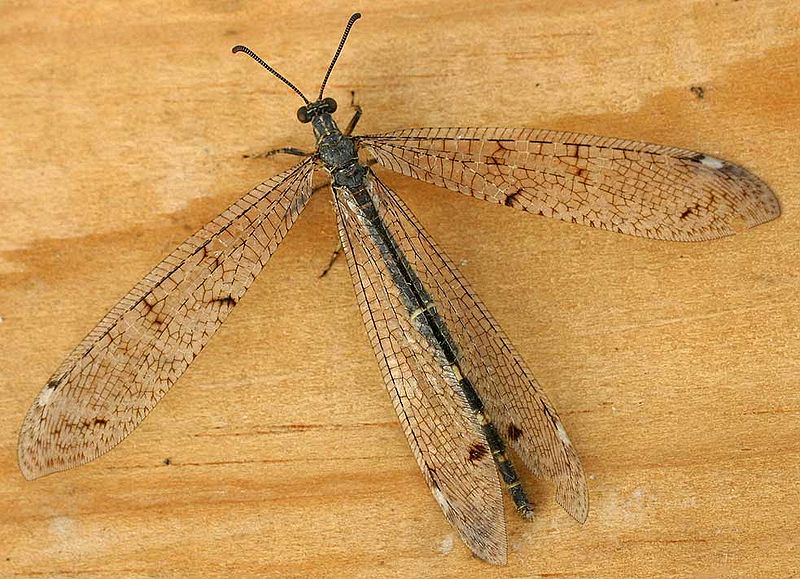
The antlions are a group of about 2,000 species of insect in the neuropteran family Myrmeleontidae. They are known for the predatory habits of their larvae, which mostly dig pits to trap passing ants or other prey. In North America, the larvae are sometimes referred to as doodlebugs because of the marks they leave in the sand. The adult insects are less well known due to their relatively short lifespans in comparison with the larvae. Adults, sometimes known as antlion lacewings, mostly fly at dusk or just after dark and may be mistakenly identified as dragonflies or damselflies.
AI overview
Antlions are a family of about 2,000 insect species whose larvae are famous for digging cone-shaped pits in sand to trap ants and other small prey. While the larvae are well-known (called "doodlebugs" in North America for the marks they leave), the adult antlion lacewings are less familiar to most people because they live much shorter lives and are mostly active at dusk or nighttime.
AI-generated from the Wikipedia summary — may contain errors.
Species
Myrmeleontidae
FAMILY
- KingdomAnimalia
- PhylumArthropoda
- ClassInsecta
- OrderNeuroptera
- FamilyMyrmeleontidae
蟻蛉的幼蟲——蟻獅 蟻獅的巢穴 蟻蛉是脈翅目蟻蛉科昆蟲的成員。蟻獅是稱呼此科的幼蟲,而成蟲被稱之為蟻蛉。 蟻獅會經歷完全變態過程。幼蟲會在沙地上製造出漏斗狀的陷阱(蟻之地獄),好讓螞蟻或木蝨之類的動物掉落下來並吃掉。
via GBIF
Article
17 sectionsContents
- Etymology
- Description
- Distribution
- Life-cycle
- Ecology
- Pit-building species
- Evolution
- Taxonomy
- Stange (2004) classification
- Michel ''et al.'' (2017) classification
- Machado ''et al.'' (2018) classification
- Jones (2019) classification
- In culture and folklore
- See also
- Notes
- References
- External links
The antlions are a group of about 2,000 species of insect in the neuropteran family Myrmeleontidae. They are known for the predatory habits of their larvae, which mostly dig pits to trap passing ants or other prey. In North America, the larvae are sometimes referred to as doodlebugs because of the marks they leave in the sand. The adult insects are less well known due to their relatively short lifespans in comparison with the larvae. Adults, sometimes known as antlion lacewings, mostly fly at dusk or just after dark and may be mistakenly identified as dragonflies or damselflies.
Antlions have a worldwide distribution. The greatest diversity occurs in the tropics, but a few species are found in cold-temperate locations, one such being the European Euroleon nostras. They most commonly occur in dry and sandy habitats where the larvae can easily excavate their pits, but some larvae hide under debris or ambush their prey among leaf litter.