Macédoine du Nord
Also known as Republic of North Macedonia, FYROM, FYR Macedonia, Former Yugoslav Republic of Macedonia, Republic of Macedonia, Macedonia
pays du sud-est de l’Europe
AI overview
North Macedonia is a landlocked country in Southeast Europe bordered by Greece, Albania, Bulgaria, Kosovo, and Serbia, with its capital in Skopje and a population of over 1.83 million people who are primarily ethnic Macedonians with significant Albanian and other minority populations. It occupies roughly the northern third of the broader geographical region of Macedonia and serves as an important crossroads between different Balkan nations and ethnic communities.
AI-generated from the Wikipedia summary — may contain errors.
Weather now
cached 8h ago20°clear sky
40% 4.0 m/s OpenWeatherMap
7-day forecast
via Open-Meteo
Country
- Capital
- Skopje
- Population
- 1,822,612
- Region
Travel guide
Understand
The country officially changed its name from the Republic of Macedonia (Macedonian: Македонија, Makedonija) to the Republic of North Macedonia in February 2019 in order to settle a dispute over its name with Greece. However, hardly any Macedonian refers to their country as "North Macedonia"; instead, they continue to use "Macedonia" and find "North" to be offensive. It was also known as "the former Yugolav Republic of Macedonia (FYROM)" prior to the official name change.
North Macedonia is a country with several ethnic minorities. The majority of the population is ethnic Macedonian and Orthodox Christian but there is also a significant Albanian Muslim minority, and Albanians form majorities in areas in the northwest.
Get in
thumb|450px|Visa policy of North Macedonia
See
thumb|Ohrid is known for its countless churches. thumb|The rugged landscapes of Galičica National Park.
This lovely, compact country has a surprising myriad of attractions to offer. It's a fascinating mix of the ancient Balkan, the laid-back Mediterranean and the hip and happening vibe of modern Europe.
It all starts in lively Skopje, the country's main city and the centre of its economy. It offers great shopping and party opportunities, but also grand historic monuments. The 5th century Tvrdina Kale Fortress is one of the main landsmarks, together with the beautiful Sveti Spas Church, the charming old Ottoman bazaar Čaršija and the Kameni Most. This 600 year old Stone Bridge will take you right onto the city's main square, where a gigantic statue of Alexander the Great awaits. If you're up for a hike, make your way up to the enormous Millennium Cross on top of Vodno mountain, or take the rope railway to get the same views with less effort. If summer makes the city hard to bear, follow the locals to the cool shores of Lake Matka just out of town, where you can explore the gorge and caves through hikes and kayak tours.
Smaller but a visitor's favourite is the city of Ohrid, famous for its countless Byzantine churches. Beautifully situated on Lake Ohrid, this place is listed by UNESCO as both a cultural and a natural monument. It's home to one of the most prominent collections of Byzantine icons in the world, second only to that of the famous Tretiakov Gallery in Moscow, as …
Eat
Article · Français
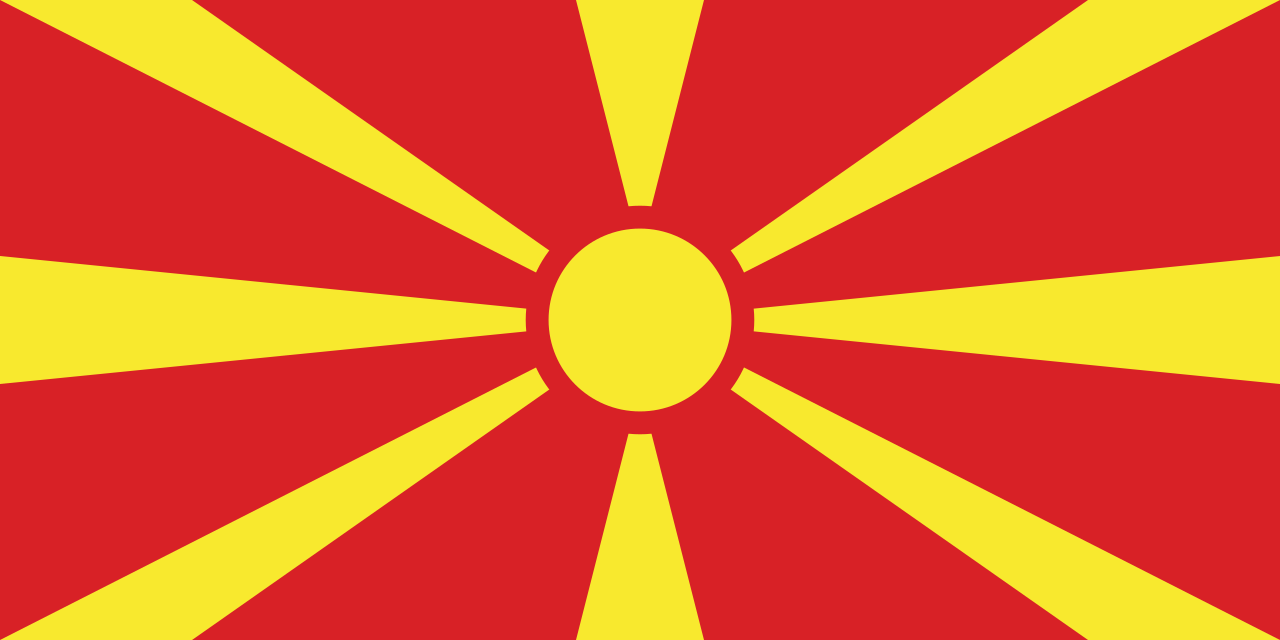
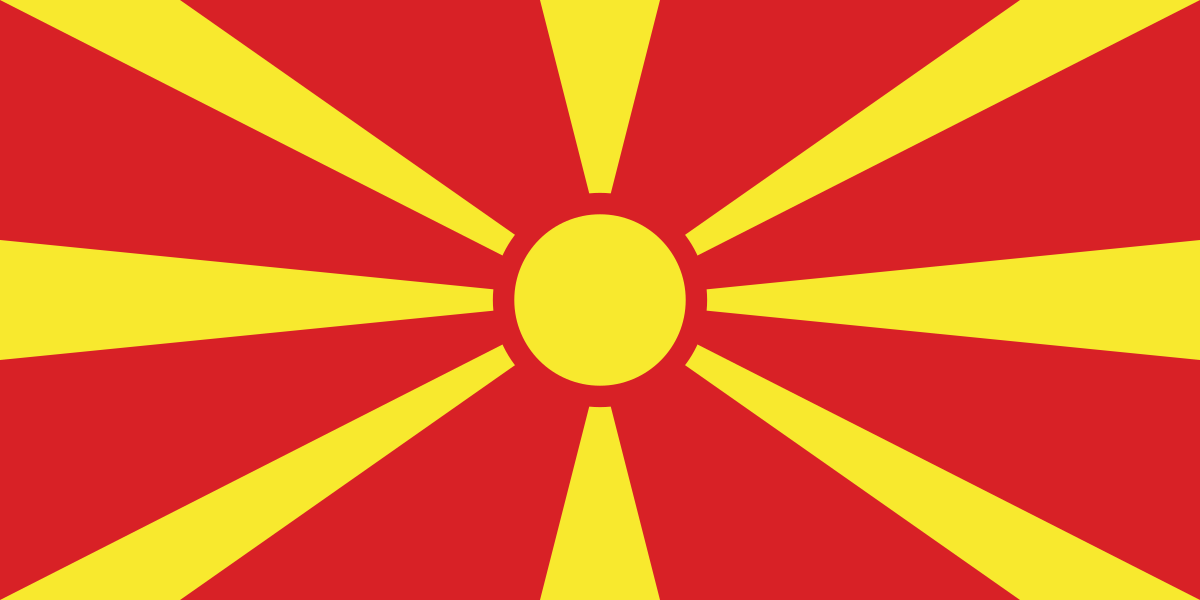
La Macédoine du Nord (en macédonien : Северна Македонија (Severna Makedonija) ; en albanais : Maqedonia e Veriut), en forme longue la république de Macédoine du Nord (en macédonien : Република Северна Македонија (Republika Severna Makedonija) ; en albanais : Republika e Maqedonisë së Veriut), est un pays d'Europe du Sud situé dans la partie centrale de la péninsule des Balkans. Sans accès à la mer, la Macédoine du Nord partage des frontières avec la Grèce, la Bulgarie, la Serbie, le Kosovo et l’Albanie. Elle occupe approximativement la moitié nord de la Macédoine géographique, qui s'étend aussi en Grèce et en Bulgarie. Le pays est principalement montagneux et compte une cinquantaine de lacs. La Macédoine du Nord est une république constitutionnelle unitaire ayant un régime parlementaire. Son drapeau est constitué d'un soleil jaune à huit rayons sur un ciel rouge, son hymne national est Denes nad Makedonija (« Aujourd'hui sur la Macédoine ») et sa fête nationale, qui commémore l'insurrection d'Ilinden, est le 2 août. Elle a pour capitale Skopje et pour langues officielles le macédonien et l'albanais. Sa monnaie est le denar depuis 1992. La Macédoine du Nord est un des États successeurs de la république fédérative socialiste de Yougoslavie, dont elle a déclaré son indépendance en 1991 sous le nom de « république de Macédoine ». Cependant, en raison d'un différend sur son nom avec la Grèce, le pays devient membre de l'Organisation des Nations unies en 1993 sous le nom provisoire d'« ancienne république yougoslave de Macédoine » ou « ex-république yougoslave de Macédoine », en abrégé « ARYM » (en macédonien : Поранешна Југословенска Република Македонија (Poranešna Jugoslovenska Republika Makedonija)). Un accord est finalement trouvé le 12 juin 2018 entre le gouvernement de Macédoine et le gouvernement grec afin de renommer le pays en « république de Macédoine du Nord », accord entré officiellement en vigueur le 12 février 2019. La population de la Macédoine du Nord est de 1,8 million d'habitants en 2021. Sa plus grande ville est la capitale Skopje, suivie par Kumanovo, Bitola, Prilep et Tetovo. Par sa position en Europe, le territoire de la république a connu de nombreuses occupations et migrations, les plus marquantes étant l'âge byzantin, l'arrivée des Slaves au VIe siècle, puis une domination ottomane longue de cinq siècles. Ces présences ont façonné une culture riche en influences, puisqu'en plus des citoyens appartenant au peuple macédonien d'origine slave, le pays compte d'importantes minorités albanaise, turque et rom. La Macédoine du Nord compte une majorité d'habitants chrétiens orthodoxes, mais aussi une importante communauté musulmane. Longtemps isolée après son indépendance, elle a connu une transition difficile à l'économie de marché. Elle se classe en effet parmi les États européens avec un indice de développement humain des plus bas. L'adhésion du pays à l'Union européenne a été définie comme la principale priorité stratégique par le gouvernement macédonien en 2006. Les négociations d'adhésion ont formellement été ouvertes par le Conseil européen le 26 mars 2020. Elle est membre de l'Organisation des Nations unies, du Conseil de l'Europe, de l'Organisation internationale de la francophonie et de l'Organisation du traité de l'Atlantique nord.
Gallery (16)
On the map
2 mapped locations
Connections
Categories
1991 establishments in the Republic of MacedoniaCountries and territories where Albanian is an official languageCountries in EuropeCountries in the BalkansHarv and Sfn no-target errorsLandlocked countriesMember states of NATOMember states of the Council of EuropeMember states of the Organisation internationale de la FrancophonieMember states of the United NationsNorth Macedonia