
File:Padma_Bhushan_India_IIe_Klasse.jpg · Wikimedia Commons · See Wikimedia Commons
Padma Bhushan
Sign in to savethird-highest civilian award of India
Key facts
- Type
- National Civilian
- Country
- India
- Presented by
- President of India
- Obverse
- A centrally located lotus flower is embossed, and the text "Padma" written in Devanagari script is placed above, and the text "Bhushan" is placed below the lotus.
- Reverse
- A platinum State Emblem of India placed in the centre with the national motto of India, " Satyameva Jayate " (Truth alone triumphs) in Devanagari Script
- Established
- 1954 ; 72 years ago ( 1954 )
- Website
- padmaawards .gov .in
- Next higher
- Padma Vibhushan
- Next lower
- Sarvottam Yudh Seva Medal (military), Padma Shri (civilian)
via Wikipedia infobox
Official website
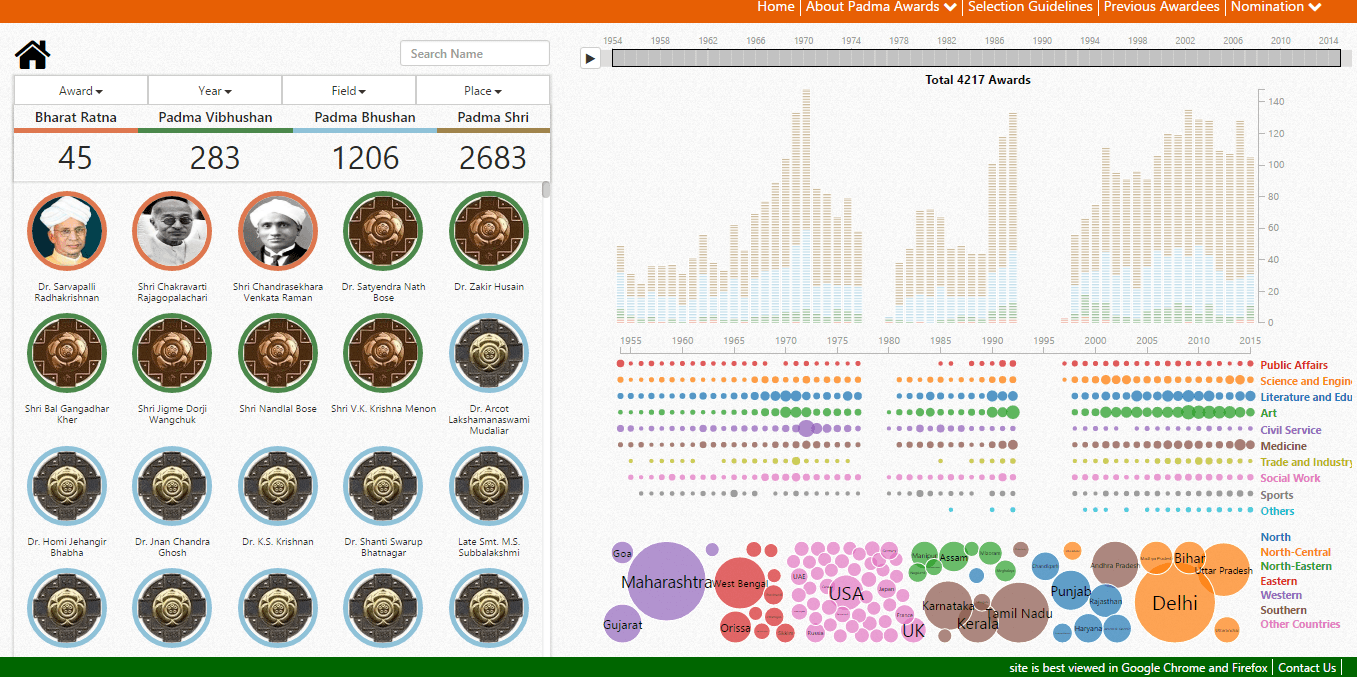
Padma Awards
dashboard-padmaawards.gov.in →Link to the official site · 498 chars · not written by Vinony
Wikidata facts
- Country
- India
- Official website
- dashboard-padmaawards.gov.in/?Award=Padma%20Bhushan
- Image
- Padma Bhushan India IIe Klasse.jpg
Show 8 more facts
- conferred by
- Union Council of Ministers of India
- Commons category
- Padma Bhushan
- inception
- 1954-00-00
- category for recipients of this award
- Category:Recipients of the Padma Bhushan
- native label
- पद्म भूषण
- quantity
- 1229
- next higher rank
- Padma Vibhushan
- next lower rank
- Padma Shri
Sources (1)
via Wikidata · CC0
~14 min read
Encyclopedic overview
The Padma Bhushan (IAST: Padma Bhūṣaṇa, lit. 'Lotus Decoration' is the third-highest civilian award in the Republic of India, after the Bharat Ratna and the Padma Vibhushan, and followed by the Padma Shri. Instituted on 2 January 1954, the award is given for "distinguished service of a high order ... without distinction of race, occupation, position or sex". The award criteria include "service in any field, including service rendered by Government servants," including doctors and scientists, but exclude those working with the public sector undertakings. As of 2026, the award has been bestowed on 1354 individuals, including 41 posthumous and 103 non-citizen recipients.
The Padma Awards Committee is constituted every year by the Prime Minister of India and the recommendations for the award are submitted between 1 May and 15 September. The recommendations are received from all the state and the union territory governments, as well as from Ministries of the Government of India, Bharat Ratna and Padma Vibhushan awardees, the Institutes of Excellence, Ministers, Chief Ministers and Governors of States, Members of Parliament, and private individuals. The committee later submits its recommendations to the Prime Minister and the President of India for further approval. The award recipients are announced on 26 January, the Republic Day of India.
Excerpted from Wikipedia’s “Padma Bhushan” article, available under the CC BY-SA 4.0 licence.