Encyclopedia of Life · EOL (see source)
Pamphiliidae
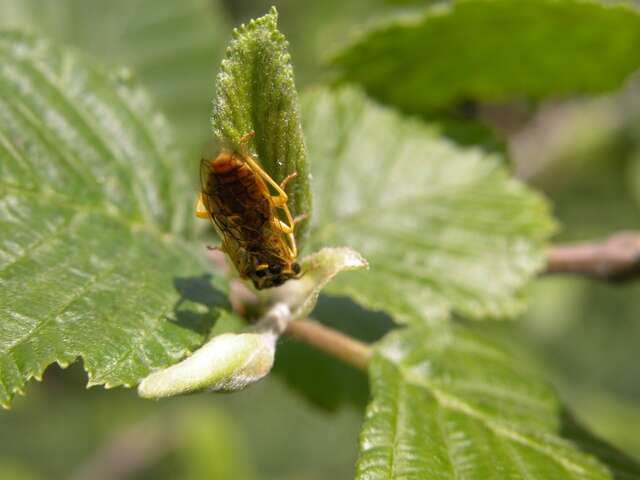
Sign in to savePamphiliidae (sometimes incorrectly spelled Pamphilidae) is a small family within Symphyta, containing some 200 species from the temperate regions of North America and Eurasia. The larvae feed on plants (often conifers), using silk to build webs or tents, or to roll leaves into tubes in which they feed, thus earning them the common names leaf-rolling sawflies or web-spinning sawflies. Some species are gregarious and the larvae live in large groups. Fossils of Pamphiliidae have been dated to the Jurassic period.
Species
FAMILY
- KingdomAnimalia
- PhylumArthropoda
- ClassInsecta
- OrderHymenoptera
- FamilyPamphiliidae
Larven der Birnengespinstblattwespe in ihrem Gespinst. Die Familie der Gespinstblattwespen (Pamphiliidae) gehört zur Unterordnung der Pflanzenwespen (Symphyta). Zur Familie werden etwa 300 Arten gezählt, wovon 60 in Europa vorkommen, zwei Drittel aller Arten sind aus Ostasien bekannt. Alle Arten leben innerhalb der Holarktis.
via GBIF
Museum specimens
- Specimen records
- 103
- With media
- 6
- Family
- Pamphiliidae
- Collections
- UCM, UAM, MSU, UCSB, PSUC, SDNHM
- Recorded in
- United States, Mexico, Canada
Wikidata facts
- Instance of
- taxon
- Parent taxon
- Pamphilioidea
- Image
- Acantholyda nemoralis 1 beentree.jpg
Show 5 more facts
- taxon rank
- family
- Commons category
- Pamphiliidae
- taxon name
- Pamphiliidae
- taxon common name
- spinnvepser
- topic's main category
- Category:Pamphiliidae
Sources (1)
via Wikidata · CC0
~2 min read
Encyclopedic overview
3 sectionsContents
- Taxonomy
- References
- External links
Pamphiliidae (sometimes incorrectly spelled Pamphilidae) is a small family within Symphyta, containing some 200 species from the temperate regions of North America and Eurasia. The larvae feed on plants (often conifers), using silk to build webs or tents, or to roll leaves into tubes in which they feed, thus earning them the common names leaf-rolling sawflies or web-spinning sawflies. Some species are gregarious and the larvae live in large groups. Fossils of Pamphiliidae have been dated to the Jurassic period.
They are distinguished from the closely related Megalodontesidae by their simple, filiform antennae.
Excerpted from Wikipedia’s “Pamphiliidae” article, available under the CC BY-SA 4.0 licence.