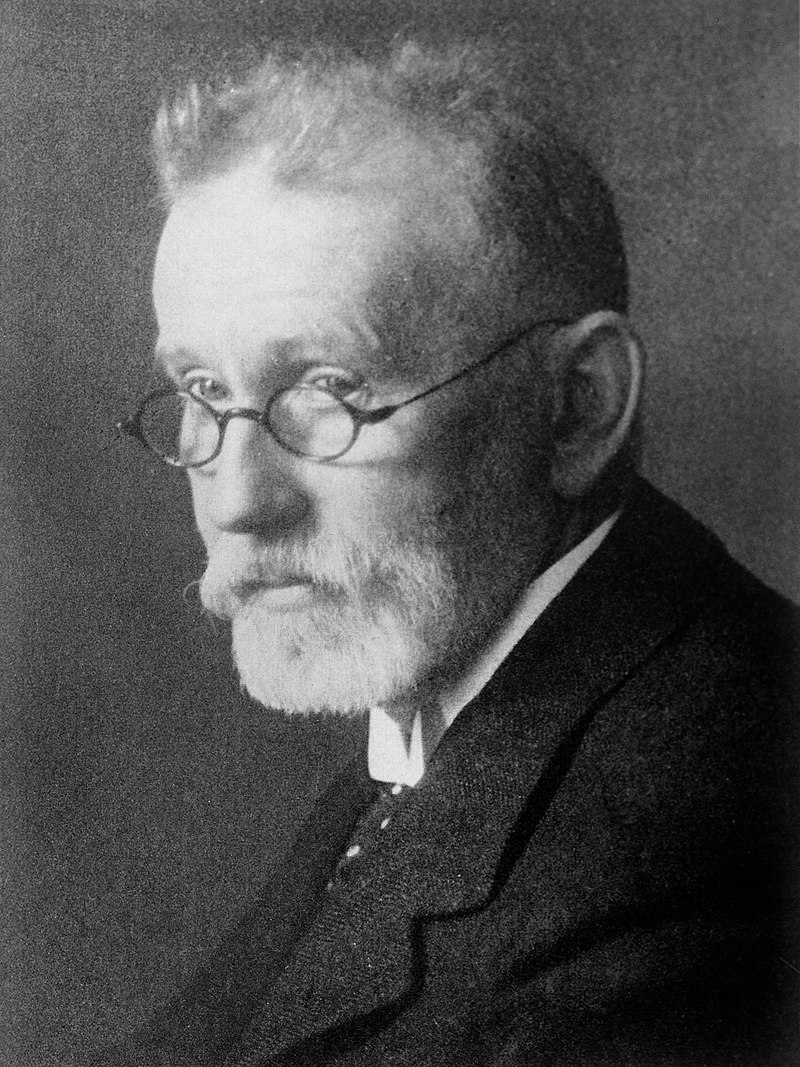
File:Paul_Ehrlich_1915.jpg · Wikimedia Commons · See Wikimedia Commons
Paul Ehrlich
Sign in to savebiólogo de Reino da Prússia
OverviewAI-generated
Paul Ehrlich was an immunologist, inventor, physician, and university teacher born in Strzelin in 1854. He held citizenship in the Kingdom of Prussia and the German Empire. His academic work focused on immunology, bacteriology, chemistry, and chemotherapy. He earned a doctorate under advisors Karl Weigert and Robert Koch. Ehrlich worked in Freiburg im Breisgau, Berlin, Göttingen, and Frankfurt. He spoke German.
Ehrlich received the Nobel Prize in Physiology or Medicine. He was also awarded the Bavarian Maximilian Order for Science and Art, the Liebig Medal, and the Croonian Medal and Lecture. He was a member of the Royal Society, the Royal Swedish Academy of Sciences, the Accademia Nazionale dei Lincei, and the Académie Nationale de Médecine. His notable works include *Die Wertbemessung des Diphtherieheilserums und deren theoretische Grundlagen* and *Über Salvarsan und Neosalvarsan*.
He died of a stroke in Bad Homburg vor der Höhe in 1915. His manner of death was natural causes. He is buried in the Old Jewish Cemetery. Ehrlich is described in the Brockhaus and Efron Encyclopedic Dictionary and the Jewish Encyclopedia of Brockhaus and Efron.
Synthesized by Vinony from 32 facts across 4 sources: Wikidata, Open Library, Nobel Prize, Vinony collections. Generated from structured data (not the Wikipedia text) and checked against those facts — may still contain errors.
Person · Open Library
- Born
- 1854
- Died
- 1915
- Works
- 99
Top works
- Abhandlungen über Salvarsan (Ehrlich-Hata-Präparat 606 gegen Syphilis)
- Die Wertbemessung des Diphtherieheilserums und deren theoretische Grundlagen
- Über die neuesten Ergebnisse auf dem Gebiete der Trypanosomenforschung
- La chimiothérapie expérimentale des spirilloses
- Ueber continuirliche Thallinzuführung und deren Wirkung beim Abdominaltyphus
via Open Library + Wikidata
Nobel Prize
- The Nobel Prize in Physiology or Medicine1908
“in recognition of their work on immunity”
Shared · 1/2 portion
Wikidata facts
- Instance of
- human
- Given name
- Paul
- Family name
- Ehrlich
- Gender
- male
- Citizenship
- German Empire
- Place of birth
- Strzelin
- Place of death
- Bad Homburg vor der Höhe
- Occupation
- pharmacologist
- Educated at
- University of Freiburg
- Employer
- Charité
- Languages spoken
- German
- Academic degree
- doctorate
- Doctoral advisor
- Robert Koch
- Student of
- Friedrich Theodor von Frerichs
- Doctoral student
- Georgy Gabrichevsky
- Field of work
- chemotherapy
- Image
- Paul Ehrlich by Franz Wilhelm Voigt 2014.031.jpg
- Work location
- Frankfurt
Show 14 more facts
- member of
- Romanian Academy
- Commons category
- Paul Ehrlich
- date of birth
- 1854-03-14
- date of death
- 1915-08-20
- cause of death
- stroke
- topic's main category
- Category:Paul Ehrlich
- manner of death
- natural causes
- Commons gallery
- Paul Ehrlich
- nominated for
- Nobel Prize in Physiology or Medicine
- different from
- Paul R. Ehrlich
- name in native language
- Paul Ehrlich
- place of burial
- Old Jewish Cemetery
- writing language
- German
- interested in
- chemistry
via Wikidata · CC0
Article · Português
Paul Ehrlich (Strzelin, 14 de março de 1854 — Bad Homburg, 20 de agosto de 1915) foi um biólogo bacteriologista alemão. Recebeu o Nobel de Fisiologia ou Medicina de 1908. Ficou famoso pelo seu trabalho em imunologia, hematologia e quimioterapia. Considerado o pai da quimioterapia, é o autor do conceito de "". Deu um enorme contributo para o tratamento da sífilis através da criação do salvarsan e do neosalvarsan. Também lhe é atribuída a primeira observação empírica da barreira hemato-encefálica.
Abstract from DBpedia / Wikipedia · CC BY-SA
Gallery (12)
Available in 80 languages
- Español
- Français
- Deutsch
- 中文
- 日本語
- Русский
- Português
- Italiano
- العربية
- Armenian
- azb
- Azerbaijani
- Bahasa Indonesia
- Bangla
- Basque
- Belarusian
- Bosnian
- Bulgarian
Show 61 more
- Catalan
- Central Kurdish
- Croatian
- Czech
- Danish
- Egyptian Arabic
- Esperanto
- Estonian
- Filipino
- Finnish
- Galician
- Georgian
- Greek
- Hebrew
- Hungarian
- Icelandic
- Ido
- Irish
- Javanese
- Kannada
- Kazakh
- Latin
- Latvian
- Low German
- Luxembourgish
- Malagasy
- Malay
- Malayalam
- Mazanderani
- Mingrelian
- Mongolian
- Nederlands
- Norwegian
- Occitan
- Polski
- Quechua
- Romanian
- Sanskrit
- Scots
- Scottish Gaelic
- Serbian
- Serbian (Latin)
- Silesian
- simple
- Slovenian
- Svenska
- Swahili
- Tiếng Việt
- Türkçe
- Ukrainian
- Urdu
- Uzbek
- Waray
- Welsh
- Western Panjabi
- Wu Chinese
- Yoruba
- zh_min_nan
- فارسی
- ไทย
- 한국어
via Wikidata sitelinks · CC0