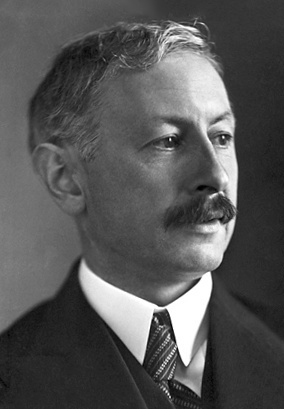
File:Paul_Karrer.jpg · Wikimedia Commons · See Wikimedia Commons
Paul Karrer was a Swiss chemist who made important discoveries about vitamins and other organic compounds during the 20th century. His work earned him the Nobel Prize in Chemistry and significantly advanced scientific understanding of how these substances function in living organisms.
AI-generated from the Wikipedia summary — may contain errors.
Nobel Prize
- The Nobel Prize in Chemistry1937
“for his investigations on carotenoids, flavins and vitamins A and B2”
Shared · 1/2 portion
Wikidata facts
- Instance of
- human
- Given name
- Paul
- Gender
- male
- Citizenship
- Switzerland
- Place of birth
- Moscow
- Place of death
- Zurich
- Occupation
- biochemist
- Position held
- rector
- Educated at
- University of Zurich
- Employer
- University of Zurich
- Languages spoken
- German
- Field of work
- organic chemistry
- Image
- UAZ DOK.005.059 Karrer.tif
Show 10 more facts
- place of burial
- Fluntern Cemetery
- member of
- Accademia Nazionale dei Lincei
- Commons category
- Paul Karrer
- date of birth
- 1889-04-21
- date of death
- 1971-06-18
- nominated for
- Nobel Prize in Chemistry
- name in native language
- Paul Karrer
- municipal affiliation of a Swiss national
- Teufenthal
- interested in
- organic chemistry
- P8168
- Christ Pantocrator
via Wikidata · CC0
~4 min read
Encyclopedic overview
Paul Karrer (21 April 1889 – 18 June 1971) was a Swiss organic chemist best known for his research on vitamins. He and British chemist Norman Haworth won the Nobel Prize for Chemistry in 1937.
Biography
Excerpted from Wikipedia’s “Paul Karrer” article, available under the CC BY-SA 4.0 licence.
Available in 65 languages
- Español
- Français
- Deutsch
- 中文
- 日本語
- Русский
- Português
- Italiano
- العربية
- Albanian
- Albanian
- azb
- Azerbaijani
- Bahasa Indonesia
- Bangla
- Basque
- Belarusian
- Bulgarian
Show 46 more
- Catalan
- Croatian
- Czech
- Danish
- Egyptian Arabic
- Estonian
- Finnish
- Galician
- Georgian
- Hakka Chinese
- Hebrew
- Hungarian
- Ido
- Kannada
- Latin
- Lithuanian
- Low German
- Malay
- Marathi
- Mazanderani
- Mingrelian
- Nederlands
- Norwegian
- Occitan
- Polski
- Romanian
- Scottish Gaelic
- Serbian
- Serbian (Latin)
- simple
- Slovak
- Svenska
- Swahili
- Tatar
- Tiếng Việt
- Türkçe
- Ukrainian
- Urdu
- Uzbek
- Western Panjabi
- Wu Chinese
- Yoruba
- zh_min_nan
- فارسی
- ไทย
- 한국어
via Wikidata sitelinks · CC0