Hazzi, Nicolás A.;Valderrama-Ardila, Carlos;Brescovit Daniele Polotow, Antonio D.;Simó, Miguel
Phoneutria
Sign in to saveAlso known as Brazilian wandering spiders
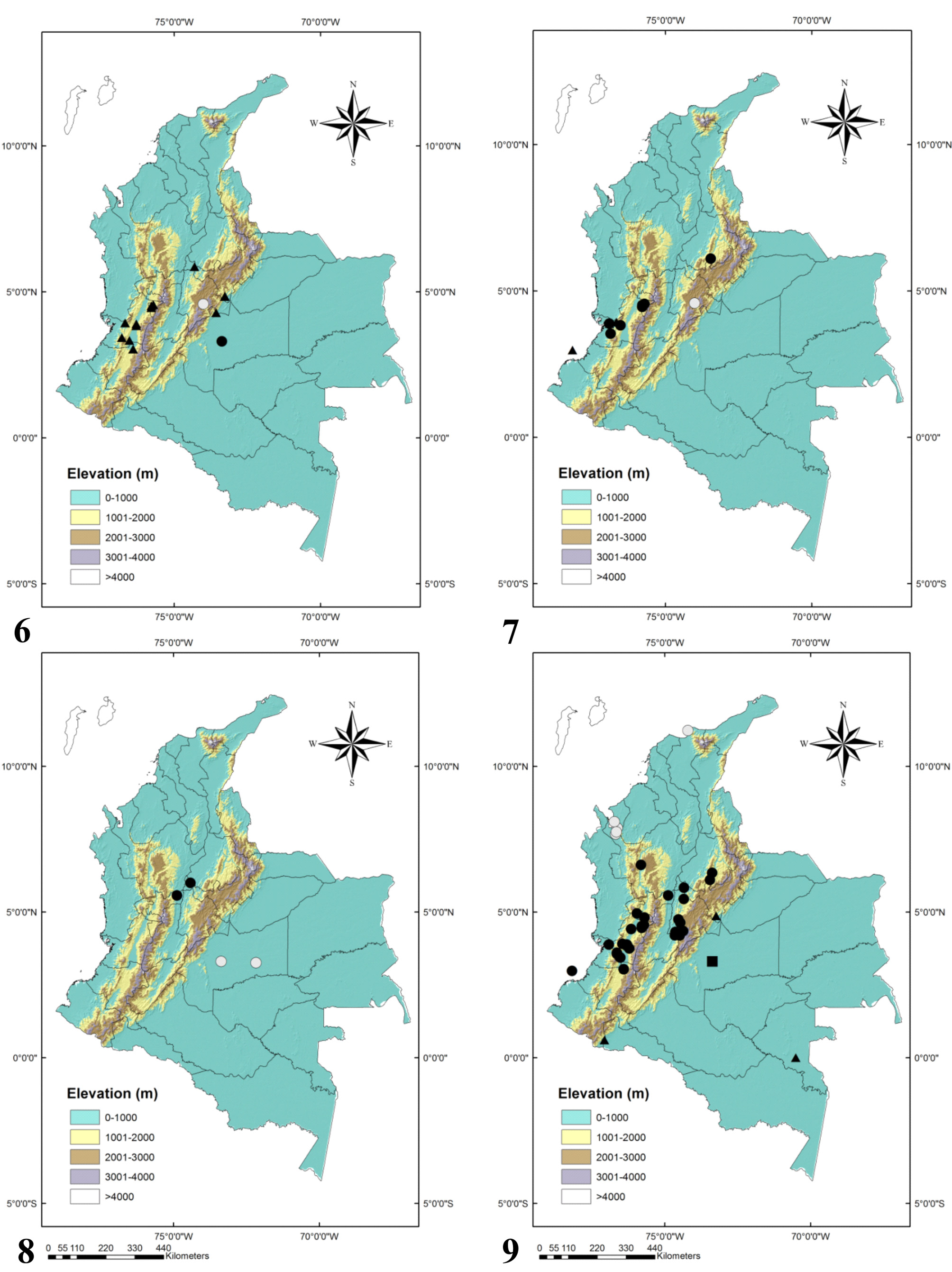
thumb|in Ecuador Phoneutria is a genus of spiders in the family Ctenidae. They are mainly found in northern South America, with one species in Central America. Members of the genus are commonly referred to as Brazilian wandering spiders. Other English names include armed spiders (armadeiras in Brazilian Portuguese) and banana spiders (a name shared with several others).
Species
GENUS
- KingdomAnimalia
- PhylumArthropoda
- ClassArachnida
- OrderAraneae
- FamilyCtenidae
巴西流浪蜘蛛(学名:Phoneutria nigriventer)與近親巴西遊走蛛(Phoneutria fera)同為世界上毒性最強的蜘蛛之一[來源請求],又被稱為香蕉蜘蛛,因為牠喜歡躲藏在香蕉樹裡,主要分布在中南美洲,毒性大概可以毒死一隻老鼠[來源請求],牠的毒性屬於神經毒,毒性會使神經失控、呼吸困難,嚴重時可能喪命,被牠咬到要迅速就醫,這種蜘蛛如果受到威脅會擺起跳舞姿勢來做出警告。 根據《國際財經時報》網站報導,美國威斯康辛大學的科學家發現,經研究後,科學家成功利用毛蟲細胞基因改造製造出PnTx2-6,快至20分鐘內見效。巴西漫遊蜘蛛的毒液含有名為「PnTx2-6」的成份,可引致陰莖持續勃起症,持續達幾小時。 巴西遊走蛛(Phoneutria fera)體型較大,除了會捕捉昆蟲外,也以小型脊椎動物為食。巴西遊蛛屬於夜行性動物,白天躲在香蕉樹上或樹洞裡,晚上出來覓食。 取自“https://zh.wikipedia.org/w/index.php?title=巴西流浪蜘蛛&oldid=52524815” 分类:櫛足蛛科隐藏分类:自2014年2月扩充中的条目自2014年2月语调不适于维基百科的条目拒绝当选首页新条目推荐栏目的条目自2014年2月缺少来源的条目含有多个问题的条目TaxoboxLatinName本地相关图片与维基数据不同有未列明来源语句的条目
via GBIF
Museum specimens
- Specimen records
- 37
- Family
- Ctenidae
- Collections
- UNM, MCZ, ZMUC, MNRJ, MZLU, MPEG
- Recorded in
- Costa Rica, Peru, Ecuador, Brasil
Wikidata facts
- Instance of
- taxon
- Parent taxon
- Ctenidae
- Image
- Aranha armadeira(Phoneutria nigriventer) por Rodrigo Tetsuo Argenton (4).jpg
Show 4 more facts
- taxon rank
- genus
- taxon name
- Phoneutria
- Commons category
- Phoneutria
- topic's main category
- Category:Phoneutria
Sources (1)
via Wikidata · CC0
~16 min read
Encyclopedic overview
11 sectionsContents
- Description
- Taxonomy
- Species
- Behaviour
- Distribution
- Banana shipments
- Medical significance
- Reported cases
- Reports of deaths
- Footnotes
- External links
thumb|in Ecuador Phoneutria is a genus of spiders in the family Ctenidae. They are mainly found in northern South America, with one species in Central America. Members of the genus are commonly referred to as Brazilian wandering spiders. Other English names include armed spiders (armadeiras in Brazilian Portuguese) and banana spiders (a name shared with several others).
==Description== The spiders in the genus can grow to have a leg span of . Their body length ranges from . While some other araneomorph spiders have a longer leg span, the largest Phoneutria species have the longest body and the greatest body weight in this group. The genus is distinguished from other related genera such as Ctenus by the presence of dense prolateral scopulae (a dense brush of fine hairs) on the pedipalp tibiae and tarsi in both sexes. Phoneutria are easily confused with several other non-medically significant ctenids, especially Cupiennius, in which the recently described C. chiapanensis also has bright red hairs on the chelicerae. Additionally, some Phoneutria species lack red hairs on the chelicerae, making it an unreliable identification feature. The presence of a dark linear stripe or stripes on the frontal (dorsal) palps and the presence of a single thin black line running anterior-posterior along the dorsal carapace may help identify Phoneutria. Other features are the strong ventral marking on the underside of the legs with contrasting dark mid-segments and lighter joints, and the pattern on the ventral (underside) of the abdomen with several rows of black dots, or an overall reddish color.
Excerpted from Wikipedia’s “Phoneutria” article, available under the CC BY-SA 4.0 licence.