Thomas Læssøe · https://creativecommons.org/licenses/by-nc/4.0/
Ramariopsis
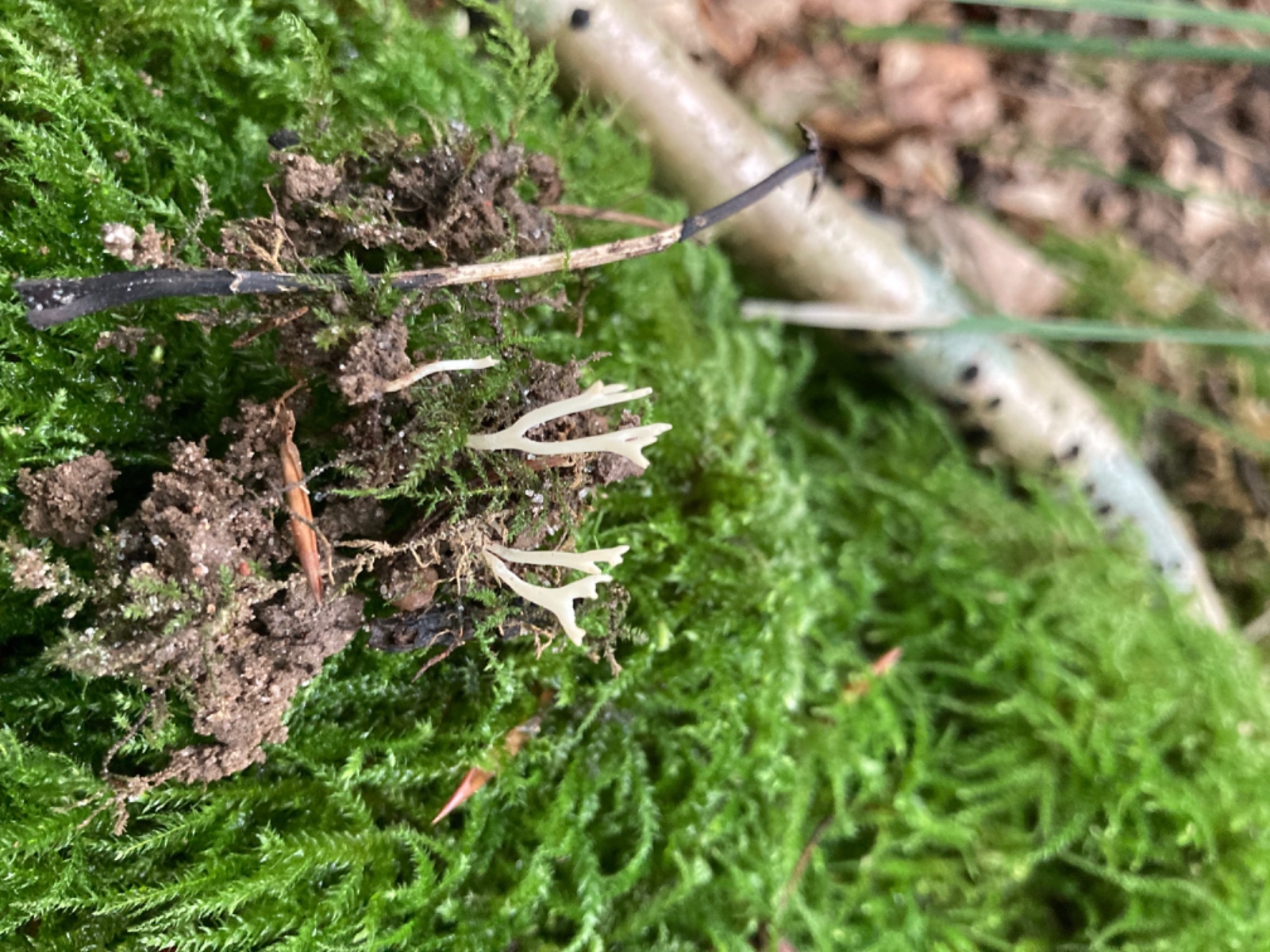
Sign in to saveRamariopsis is a genus of coral fungi in the family Clavariaceae. The genus has a collectively widespread distribution and contains about 40 species. The name means 'having the appearance of Ramaria'.
Species
GENUS
- KingdomFungi
- PhylumBasidiomycota
- ClassAgaricomycetes
- OrderAgaricales
- FamilyClavariaceae
Die Wiesenkorallen (Ramariopsis) sind eine Gattung aus der Ordnung der Champignonverwandten[1] und umfassen Arten mit überwiegend korallenförmigen und oft lebhaft gefärbten Fruchtkörpern. Sie besiedeln meist Grünland, worauf auch der deutsche Trivialname „Wiesenkorallen“ Bezug nimmt. Die Typusart der Gattung ist die Weißliche Wiesenkoralle (Ramariopsis kunzei).[2] Inhaltsverzeichnis 1 Merkmale 1.1 Makroskopische Merkmale 1.2 Mikroskopische Merkmale 2 Ökologie 3 Arten (Auswahl) 4 Quellen 4.1 Einzelnachweise 5 Weblinks Merkmale Makroskopische Merkmale Die Fruchtkörper der Wiesenkorallen sind mehr oder weniger deutlich gestielt, meist korallenartig dichotom bis polytom verzweigt und besitzen zylindrische bis abgeplattete Äste mit spitzen oder abgerundeten Enden.[3] Die Trama ist brüchig bis relativ zäh[3] und verfärbt sich mit alkoholischem Eisen(II)-sulfat (FeSO4) grün bis schwärzlich-grün[4]. Das Farbspektrum reicht von weiß, gelb über orange und violett bis hin zu grünlich.[3] Das Sporenpulver hat eine weiße bis gelbliche Farbe.[4] Mikroskopische Merkmale Die Hyphenstruktur ist monomitisch aufgebaut. Die mehr oder minder angeschwollenen Hyphen besitzen Schnallen an den Septen. Die
via GBIF
Museum specimens
- Specimen records
- 197
- With media
- 100
- Family
- Clavariaceae
- Collections
- NY, US, FH, MEL, DUKE, UNICAMP
- Recorded in
- United States, Guyana, Trinidad And Tobago, Australia, Brazil, Costa Rica, China, New Zealand
Wikidata facts
- Instance of
- taxon
- Parent taxon
- Clavariaceae
- Image
- Ramariopsis kunzei Kaldari 01.jpg
Show 5 more facts
- Commons category
- Ramariopsis
- taxon rank
- genus
- taxon name
- Ramariopsis
- topic's main category
- Category:Ramariopsis
- taxon author citation
- (Donk) Corner
Sources (2)
via Wikidata · CC0
~4 min read
Encyclopedic overview
7 sectionsContents
- Taxonomy
- Description
- Distribution
- Species
- See also
- References
- External links
Ramariopsis is a genus of coral fungi in the family Clavariaceae. The genus has a collectively widespread distribution and contains about 40 species. The name means 'having the appearance of Ramaria'.
==Taxonomy== Ramariopsis was originally defined as a subgenus of Clavaria by Dutch mycologist Marinus Anton Donk in 1933. Several European species similar to the type, Clavaria kunzei, were included: Clavaria subtilis, Clavaria pyxidata, Clavaria angulispora, and Clavaria pulchella. In Donk's concept, defining characteristics of the group included small, branching, fruitbodies with a stipe, and an almost cartilaginous consistency to the flesh. Spores are small and hyaline (translucent), spherical to ellipsoid, and have a surface ornamentation ranging from echinulate (spiny) to verruculose (covered with small warts). E.J.H. Corner promoted the subgenus to generic status in his 1950 world monograph of clavarioid fungi.
Excerpted from Wikipedia’s “Ramariopsis” article, available under the CC BY-SA 4.0 licence.
Gallery (6)
Available in 14 languages
via Wikidata sitelinks · CC0