Category
page 1Agaricales genera
%20(6266440221).jpg)
Agaricus
Agaricus is a genus of mushroom-forming fungi containing both edible and poisonous species, with over 400 members worldwide and possibly again as many disputed or newly discovered species. The genus includes the common ("button") mushroom (A. bisporus) and the field mushroom (A. campestris), the dominant cultivated mushrooms of the West.

Amanita
The genus Amanita contains about 600 described species of agarics, including some of the most toxic known mushrooms found worldwide, as well as some well-regarded edible species (and many species of unknown edibility). The genus is responsible for 95% of fatalities resulting from mushroom poisoning, with the death cap accounting for 90% of fatalities every year. The most potent toxin synthesized by this genus is .

Pleurotus
Pleurotus is a genus of gilled mushrooms with species known as oyster, abalone, or tree mushrooms. It includes some of the most commonly cultivated edible mushrooms in the world, such as P. ostreatus. Additionally, some species have been used in the mycoremediation of pollutants.

Psilocybe
Psilocybe ( ) is a genus of gilled mushrooms, growing worldwide, in the family Hymenogastraceae. Many species contain the psychedelic compounds psilocybin and psilocin.

Armillaria
Armillaria is a genus of fungi that includes the A. mellea species ('honey fungus') that live on trees and woody shrubs. It includes about 10 species formerly categorized summarily as A. mellea. Armillaria sp. are long-lived and form the largest living fungi in the world. The largest known specimen (an A. ostoyae) covers more than in Oregon and is estimated to be 2,500 years old. Some species of Armillaria display bioluminescence.

Lycoperdon
Lycoperdon is a genus of puffball mushrooms. The genus has a widespread distribution and contains about 50 species. In general, it contains the smaller species such as the pear-shaped puffball and the gem-studded puffball. It was formerly classified within the now-obsolete order Lycoperdales, as the type genus which, following a restructuring of fungal taxonomy brought about by molecular phylogeny, has been split. Lycoperdon is now placed in the family Agaricaceae of the order Agaricales.

Mycena
Mycena is a genus of about 500 species of fungi.

Tricholoma
Tricholoma is a genus of fungus that contains many fairly fleshy white-spored gilled mushrooms which are found worldwide generally growing in woodlands. These are ectomycorrhizal fungi, existing in a symbiotic relationship with various species of coniferous or broad-leaved trees. The generic name derives from and although only a few species (such as T. vaccinum) have shaggy caps which fit this description.

Cortinarius
thumb|Cortinarius violaceus|C. violaceus

Inocybe
Inocybe is a genus of mushroom-forming fungi, with over 1,000 species. Its members are mycorrhizal, and some evidence shows that the high degree of speciation is due to adaptation to different trees and possibly also local habitats.

Coprinus
thumb|234px|Cross-section of a Coprinus mushroom gill, showing basidia (magnified 400×)

Marasmius
Marasmius is a genus of mushroom-forming fungi in the family Marasmiaceae. It contains about 500 species of agarics, of which a few, such as Marasmius oreades, are edible. However, most members of this genus are small, unimpressive brown mushrooms. Their humble appearance contributes to their not being readily distinguishable to non-specialists, and they are therefore seldom collected by mushroom hunters. Several of the species are known to grow in the characteristic fairy ring pattern.

Clitocybe
Clitocybe is a genus of mushrooms characterized by white, off-white, buff, cream, pink, or light-yellow spores, gills running down the stem, and pale white to brown or lilac coloration. They are primarily saprotrophic, decomposing forest ground litter. There are estimated to be around 300 species in the widespread genus.

Lepiota
Lepiota is a genus of gilled mushrooms in the family Agaricaceae. All Lepiota species are ground-dwelling saprotrophs with a preference for rich, calcareous soils. Basidiocarps (fruit bodies) are agaricoid with whitish spores, typically with scaly caps and a ring on the stipe. Around 400 species of Lepiota are currently recognized worldwide. Many species are poisonous, some lethally so.
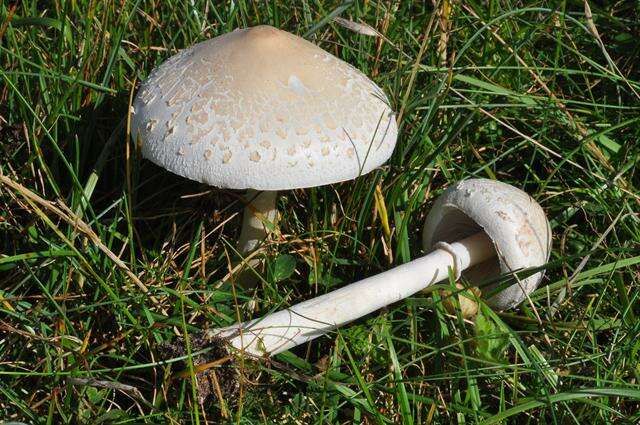
Macrolepiota
Macrolepiota is a genus of white spored, gilled mushrooms of the family Agaricaceae. The best-known member is the parasol mushroom (M. procera). The widespread genus contains about 40 species.

Entoloma
Entoloma is a genus of fungi in the order Agaricales. Called pinkgills in English, basidiocarps (fruit bodies) are typically agaricoid (gilled mushrooms), though a minority are gasteroid. All have salmon-pink basidiospores which colour the gills at maturity and are angular (polyhedral) under a microscope. The genus is large, with almost 2000 species worldwide. Most species are saprotrophic, but some are ectomycorrhizal, and a few are parasitic on other fungi. The type, Entoloma sinuatum, is one of several Entoloma species that are poisonous, typically causing mild to severe gastrointestinal il

Hygrocybe
Hygrocybe is a genus of agarics (gilled fungi) in the family Hygrophoraceae. Called waxcaps in English (sometimes waxy caps in North America), basidiocarps (fruit bodies) are often brightly coloured and have dry to waxy caps, white spores, and smooth, ringless stems.

Hygrophorus
Hygrophorus is a genus of agarics (gilled mushrooms) in the family Hygrophoraceae. Called "woodwaxes" in the UK or "waxy caps" (together with Hygrocybe species) in North America, basidiocarps (fruit bodies) are typically fleshy, often with slimy caps and lamellae that are broadly attached to decurrent. All species are ground-dwelling and ectomycorrhizal (forming an association with living trees) and are typically found in woodland. Around 100 species are recognized worldwide. Fruit bodies of several species are considered edible and are sometimes offered for sale in local markets.

Pluteus
Pluteus is a large genus of fungi with over 300 species. They are wood rotting saprobes with pink spore prints and gills that are free from the stem.

Hypholoma
Hypholoma is a genus of fungi which are quite well known due to the commonness of sulphur tuft (Hypholoma fasciculare) on stumps in temperate woodlands. Species in this genus are easily recognizable because the dark spores create a distinctive greenish effect on the yellow cap underside. Hypholoma means "mushrooms with threads" because of the thread-like veil that connects the cap to the stem when young and for the bundles of rhizomorphs which radiate outwards from the stem base.
Other well-known species are H. capnoides and H. lateritium.
.jpg)
Volvariella
Volvariella is a genus of fungi with deep salmon-pink gills and spore prints.

Psathyrella
Psathyrella is a large genus of about 400 species, and is similar to the genera Coprinellus, Coprinopsis, Coprinus and Panaeolus, usually with a thin cap and white or yellowish white hollow stem. The caps do not self digest as do those of Coprinellus and Coprinopsis. Some also have brown spores rather than black. These fungi are often drab-colored, difficult to identify, and all members are considered inedible or worthless (for eating) and so they are often overlooked. However they are quite common and can occur at times when there are few other mushrooms to be seen. The first report of a gill

Conocybe
Conocybe is a genus of mushrooms with Conocybe tenera as the type species and at least 243 other species. There are at least 50 different species in North America.
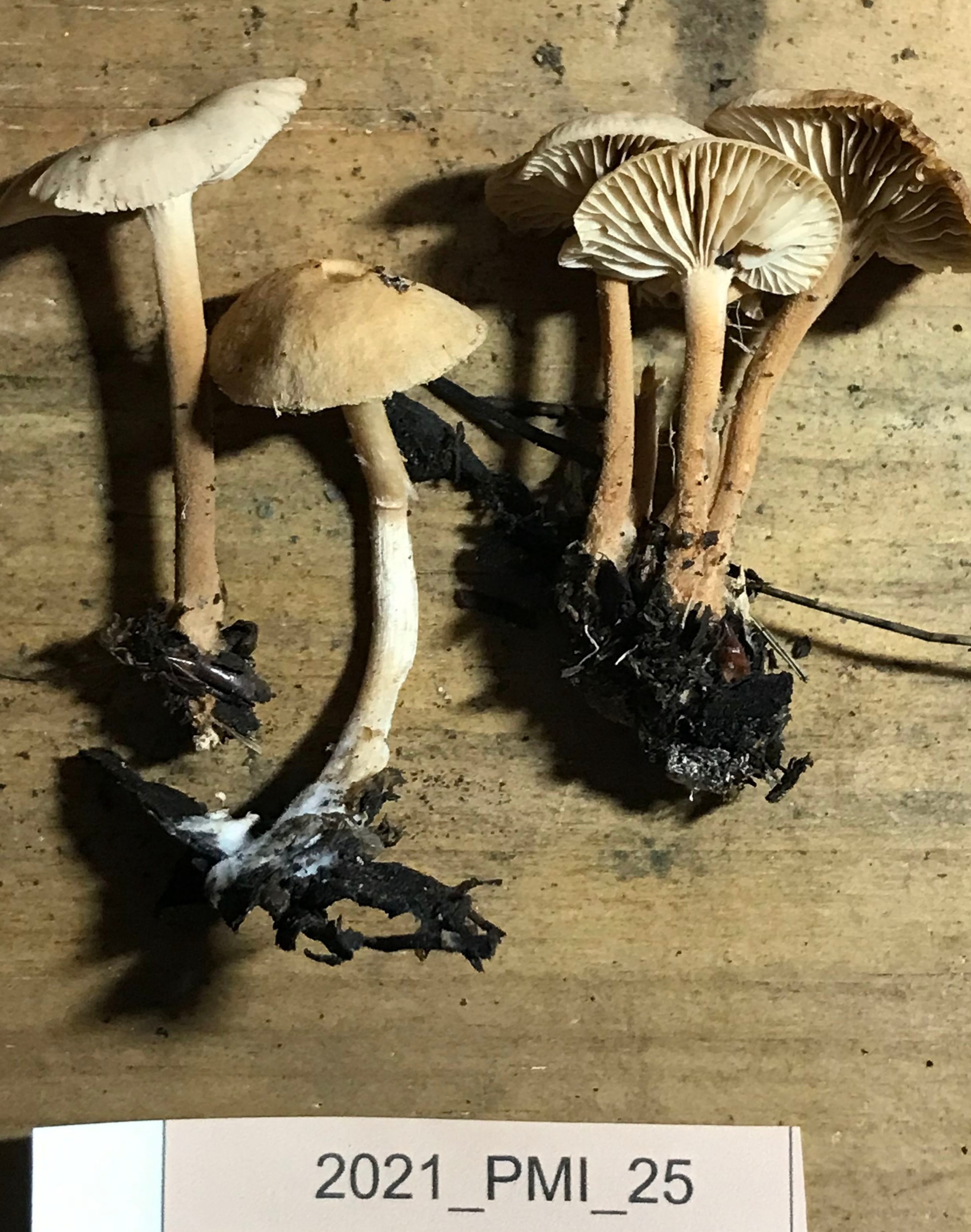
Gymnopus
Gymnopus is a genus of fungus in the family Omphalotaceae. The genus has a widespread, cosmopolitan distribution and contains about 300 species.

Agrocybe
Agrocybe is a genus of mushrooms in the family Strophariaceae (previously placed in the Bolbitiaceae). The genus has a widespread distribution, and contains about 100 species.
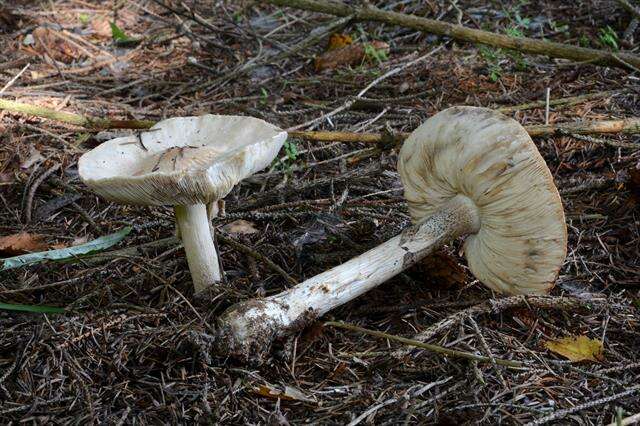
Limacella
Limacella is a genus of mushroom-forming fungi in the family Amanitaceae in order Agaricales. Some of the species have been classified as members of genus Lepiota. Limacella was described by mycologist Franklin Sumner Earle in 1909.

Bovista
Bovista is a genus of fungi commonly known as the true puffballs. It was formerly classified within the now-obsolete order Lycoperdales, which, following a restructuring of fungal taxonomy brought about by molecular phylogeny, has been split; the species of Bovista are now placed in the family Agaricaceae of the order Agaricales. Bovista species have a collectively widespread distribution, and are found largely in temperate regions of the world. Various species have historically been used in homeopathic preparations.

Gymnopilus
Gymnopilus is a genus of gilled mushrooms within the fungal family Hymenogastraceae containing over 200 rusty-orange spored mushroom species.

Lyophyllum
Lyophyllum is a genus of about 40 species of fungi, widespread in north temperate regions.

Clavaria
Clavaria is a genus of fungi in the family Clavariaceae. Species of Clavaria produce basidiocarps (fruit bodies) that are either cylindrical to club-shaped or branched and coral-like. They are often grouped with similar-looking species from other genera, when they are collectively known as the clavarioid fungi. All Clavaria species are terrestrial and most (if not all) are believed to be saprotrophic (decomposing dead plant material). In Europe, they are typical of old, mossy, unimproved grassland. In North America and elsewhere, they are more commonly found in woodlands.

Lepista
Lepista is a genus of mushroom-forming fungi. According to the Dictionary of the Fungi (10th edition, 2008), the widespread genus contains approximately 50 species. In 1969, Howard Bigelow and Alex H. Smith designated the group as subgenus of Clitocybe.

Cyathus

Flammulina
Flammulina is a genus of fungi in the family Physalacriaceae. The genus, widespread in temperate regions, has been estimated to contain 10 species.
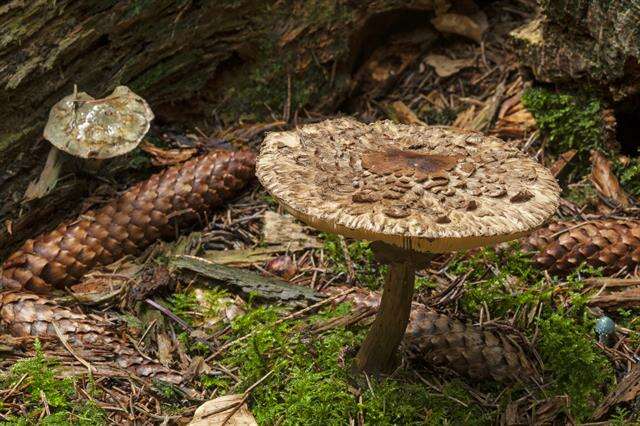
Chlorophyllum
Chlorophyllum is a genus of large toadstools that are similar in appearance to the true parasol mushroom (Macrolepiota). The genus Chlorophyllum was originally created in 1898, a time when spore color was the deciding factor for differentiating genera. It was termed in order to describe the poisonous green-spored C. molybdites which shared many characteristics of the mushrooms within the genus Lepiota but lacked the all-important white spores. The name derives from Greek Chloro meaning green and phyllo meaning leaf (or gill in this case). It remained as a monotypic genus until recently wh
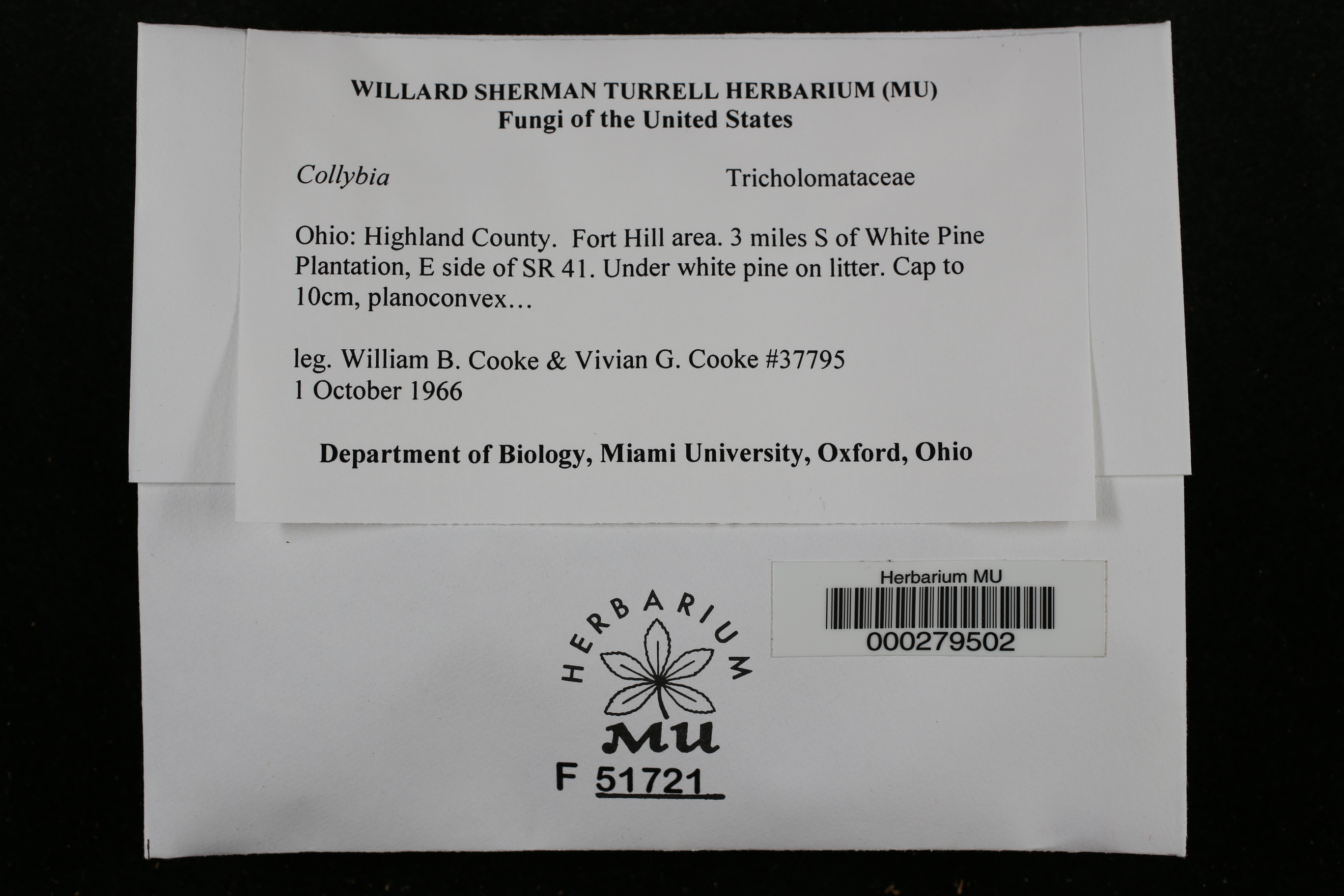
Collybia
thumb|Collybia phyllophila|Collybia phyllophila, the frosty funnel
thumb|Collybia nuda, the blewit
thumb|Collybia brunneocephala, the brown blewit
thumb|Collybia cirrhata, the piggyback shanklet
thumb|right|Collybia tuberosa, the lentil shanklet, grows on the decaying remains of other fungi or vegetation

Panaeolus
Panaeolus is a genus of small, black-spored, saprotrophic agarics. The word Panaeolus is Greek for "all variegated", alluding to the spotted gills of the mushrooms produced.

Hebeloma
Hebeloma is a genus of fungi in the family Hymenogastraceae. Found worldwide, it contains the poison pie or fairy cakes (Hebeloma crustuliniforme) and the ghoul fungus (H. aminophilum), from Western Australia, which grows on rotting animal remains.

Calvatia
Calvatia is a genus of puffball mushrooms that includes the giant puffball C. gigantea. It was formerly classified within the now-obsolete order Lycoperdales, which, following a restructuring of fungal taxonomy brought about by molecular phylogeny, has been split; the puffballs, Calvatia spp. are now placed in the family Lycoperdaceae of the order Agaricales.
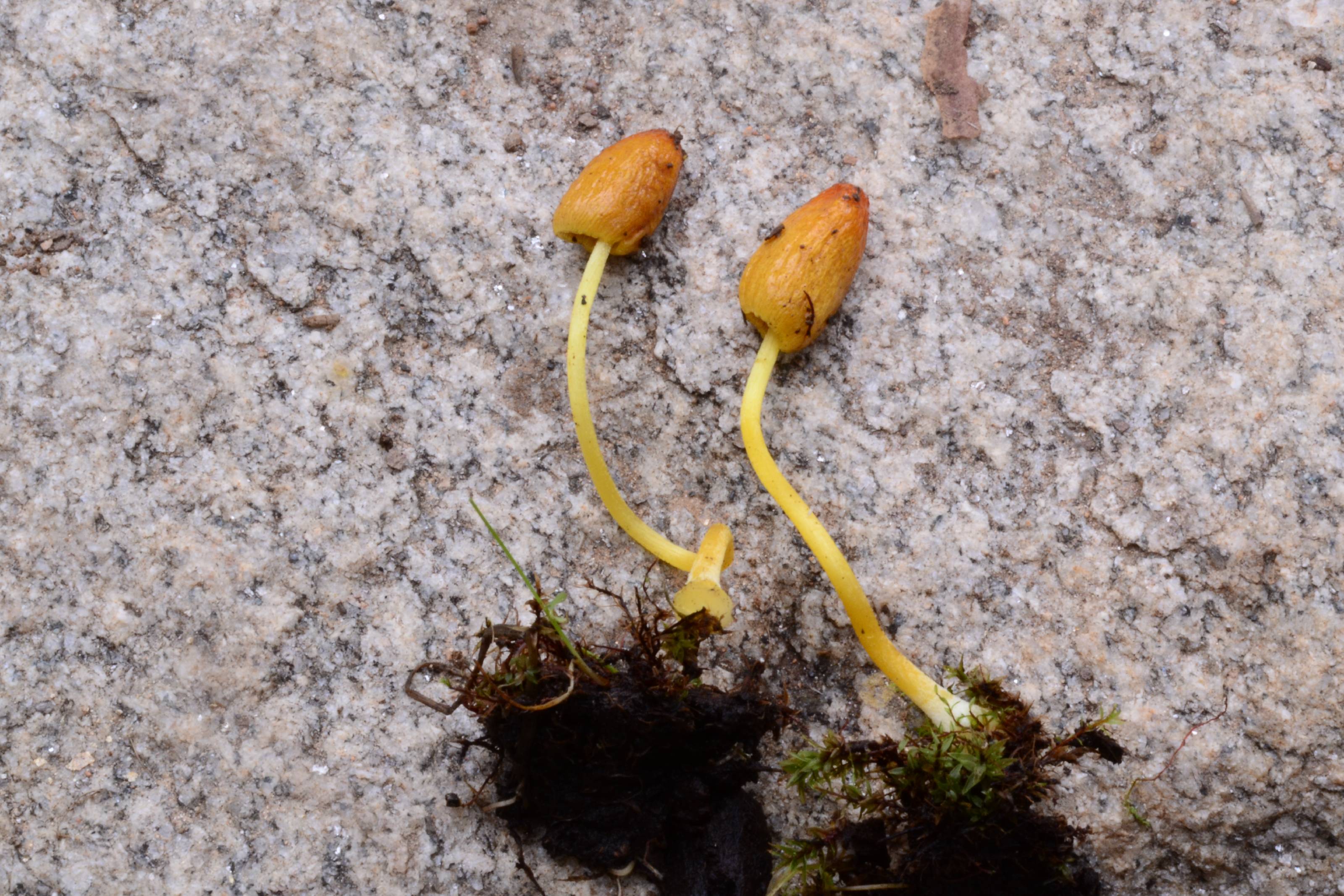
Bolbitius
Bolbitius is a genus of small mushrooms in the family Bolbitiaceae.
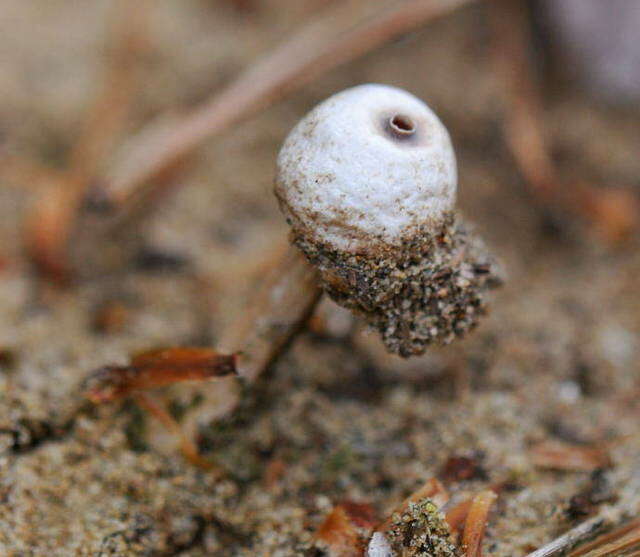
Tulostoma
Tulostoma is a genus of fungi in the family Agaricaceae. Species in the genus are commonly known as stalkballs, or stalked puffballs. Fossils of Tulostoma have been reported from 12 million year old rocks in central England and 13.5 million year old coals from Slovakia.

Melanoleuca
Melanoleuca is a poorly known genus of saprotrophic mushrooms traditionally classified in the family Tricholomataceae. DNA studies have determined that this genus is closely related to Amanita and Pluteus and that it does not belong to the family Tricholomataceae.

Coprinopsis
Coprinopsis is a genus of mushrooms in the family Psathyrellaceae.'' Coprinopsis was split out of the genus Coprinus'' based on molecular data.
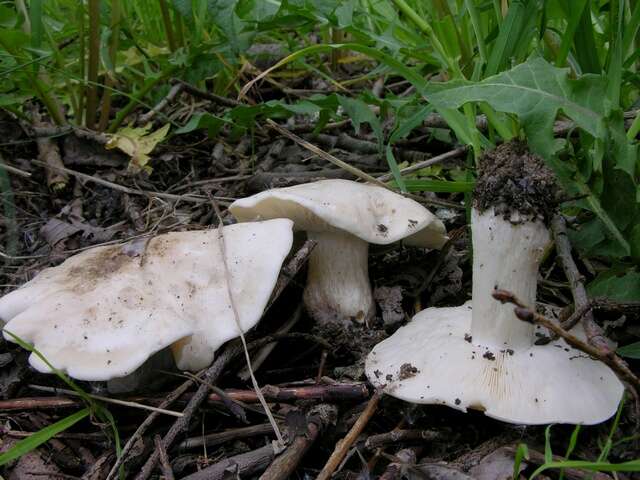
Calocybe
Calocybe is a small genus of about 40 species of mushroom, including St. George's mushroom, which is edible, and milky mushroom, which is edible and is cultivated in India. There are not many species of this genus in Britain. The name is derived from the Ancient Greek terms kalos "pretty", and cubos "head". Around nine species are found in neotropical regions.

Leucoagaricus
thumb|Leucoagaricus leucothites
alt=Leucoagaricus nympharum|thumb|Leucoagaricus nympharum
%20Bresinsky%20%26%20Besl%201018098506.jpg)
Omphalotus
Omphalotus is a genus of basidiomycete mushroom, in the family Omphalotaceae, formally circumscribed by Victor Fayod in 1889. Members have the traditional cap and stem structure. They are saprobic, and fruit in clumps on the ground, adjacent to host trees. The best known and type species is the jack-o'-lantern mushroom (Omphalotus olearius). Species of Omphalotus have been mistaken for chanterelles. All Omphalotus species are presumed poisonous, causing gastrointestinal symptoms. Some Omphalotus species have bioluminescent properties.

Leucocoprinus
Leucocoprinus is a genus of fungi in the family Agaricaceae. The best-known member is the distinctive yellow mushroom Leucocoprinus birnbaumii, which is found in plant pots and greenhouses worldwide. The type species is Leucocoprinus cepistipes. The genus has a widespread distribution and since many members of the Leucoagaricus genus were transferred to Leucocoprinus in 2024 it contains over 240 recognised species. Prior to this reclassification species described as Leucocoprinus often tended to be found in tropical regions whereas many species described as Leucoagaricus were found in temperat
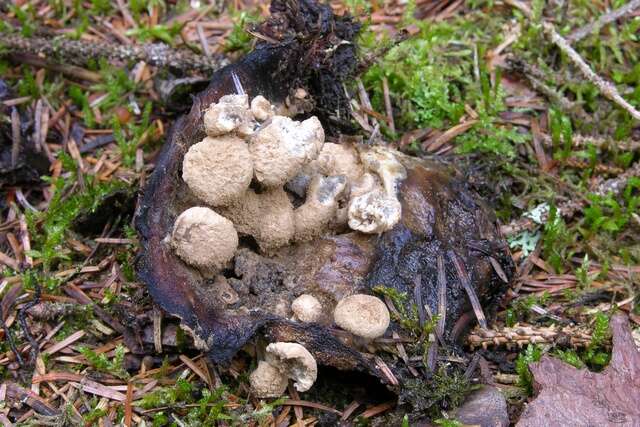
Asterophora
Asterophora is a genus of fungi that grow as parasites on mushrooms. The genus contains four species, which have a widespread distribution, especially in temperate areas. The most recently described species, A. salvaterrensis, was found in Pinus pinaster forests in Galicia (northwest Iberian Peninsula). Asterophora species are characterized by the massive production of chlamydospores in their fruit bodies and by the production of carminophilous lysosomes in their basidia. A frequently used but synonymous genus name is Nyctalis. The chlamydospores have been classified in the genus Ugola, which

Cystoderma
Cystoderma is a genus of fungi in the family Agaricaceae or Cystodermataceae. Its family position is in doubt and the family "Cystodermataceae" and tribe "Cystodermateae" have been proposed to include this group following recent molecular work.
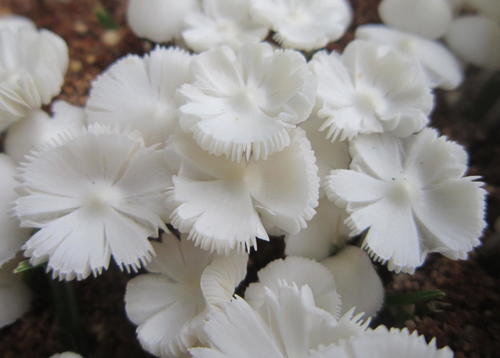
Termitomyces
Termitomyces is a genus of basidiomycete fungi known as termite mushrooms in Lyophyllaceae family farmed by fungus-growing termites. The fungi and the termites interdepend to live, as the termites house and culture the fungi, and the fungi in turn provide foods for the termites. Often after a raining, the fungi grow mushrooms, which are edible and highly regarded for their flavor.

Cystolepiota
Cystolepiota is a genus of mushroom-forming fungi in the family Agaricaceae.
%20Singer.jpg)
Marasmiellus
Marasmiellus is a genus of fungi in the family Omphalotaceae. The widespread genus, circumscribed by American mycologist William Murrill in 1915, contains over 250 species. The name comes from the Greek marasmus meaning wasting.

Coprinellus
Coprinellus is a genus of mushroom-forming fungi in the family Psathyrellaceae. The genus was circumscribed by the Finnish mycologist Petter Adolf Karsten in 1879. Most Coprinellus species were transferred from the once large genus Coprinus. Molecular studies published in 2001 redistributed Coprinus species to Psathyrella, or the segregate genera Coprinopsis and Coprinellus.
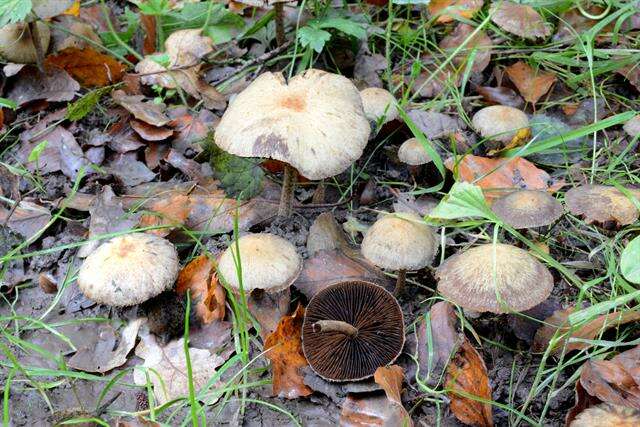
Lacrymaria
genus of fungi
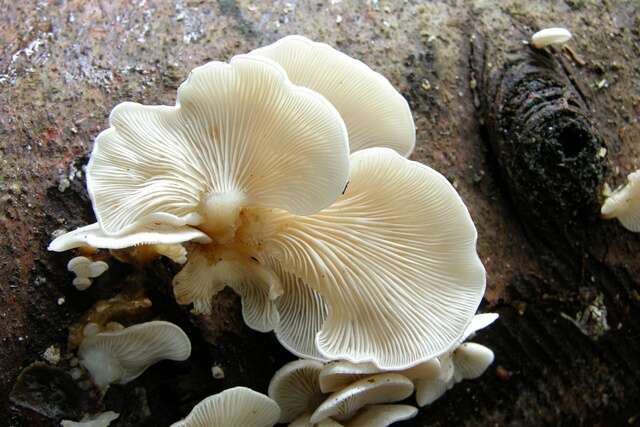
Panellus
Panellus is a genus of fungi in the family Mycenaceae. The species are small to medium, typically pleurotoid and sometimes bioluminescent.

Laccaria
Laccaria is a genus around 100 species of fungus found in both temperate and tropical regions of the world. They are mycorrhizal. The type species is Laccaria laccata, commonly known as the deceiver. Other notable species include L. bicolor, and the amethyst deceiver (L. amethystina), sometimes incorrectly written as L. amethystea. Because some Laccaria species have the ability to grow vegetatively and/or germinate from basidiospores in culture, they are often used as experimental systems for studies of ectomycorrhizal basidiomycetes. They have a tetrapolar mating system, meanin
%20Corner%20156686.jpg)
Clavulinopsis
Clavulinopsis is a genus of coral fungi in the family Clavariaceae. The genus, first described scientifically by Casper van Overeem in 1923, has a widespread distribution.

Lentinula
Lentinula is a small genus of wood-inhabiting agarics. The neotropical species Lentinula boryana (= L. cubensis) is the type species. However, the best-known species is L. edodes, the shiitake. The genus was erected by Franklin Sumner Earle in 1909, and as of 2023 contains ten species, principally found in tropical regions.

Kuehneromyces
Kuehneromyces is a genus of agaric fungi in the family Strophariaceae. The genus was circumscribed by mycologists Rolf Singer and Alexander H. Smith in 1946.
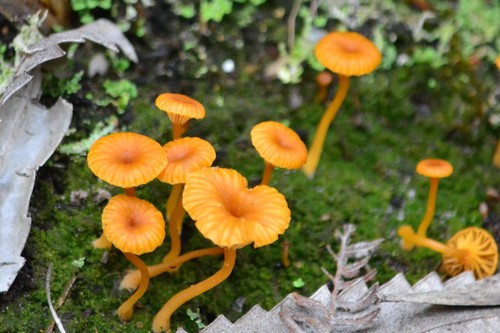
Cantharellula
Cantharellula is a genus of mushroom-forming fungi in the family Hygrophoraceae. The genus was described by mycologist Rolf Singer in 1936.

Rhodocollybia
Rhodocollybia is a genus of Basidiomycete mushroom. Species in this genus, formerly classified as a subgenus in Collybia, have fairly large caps (typically larger than broad), and have a pinkish-tinted spore print. Microscopically, they are characterized by having spores and basidia that are dextrinoid—staining deep reddish to reddish-brown with Melzer's reagent when tested for amyloidity. Rhodocollybia species are commonly found in temperate North America and Europe, and infrequently in Central and South America.