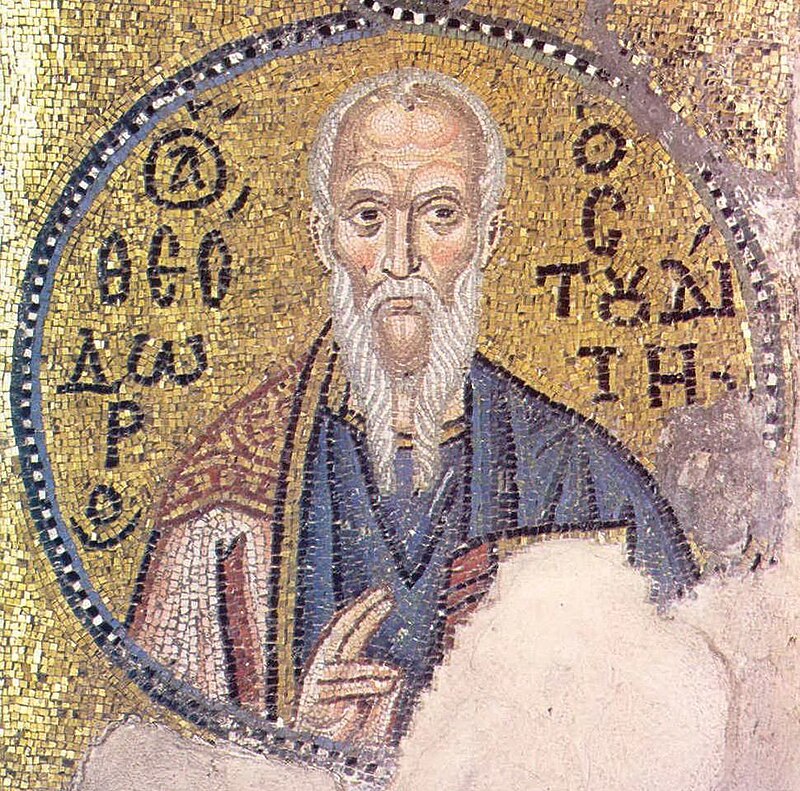
File:Studite.jpg · Wikimedia Commons · See Wikimedia Commons
Key facts
- Born
- 759 , Constantinople , (modern-day Istanbul , Turkey )
- Died
- 11 November 826 (aged 66/67) , Cape Akritas, (modern-day Tuzla, Istanbul , Turkey )
- Venerated in
- Catholic Church , Eastern Orthodox Church
- Feast
- 11 November (East), 12 November (West)
via Wikipedia infobox
Wikidata facts
- Instance of
- human
- Gender
- male
- Citizenship
- Byzantine Empire
- Place of birth
- Constantinople
- Place of death
- Bithynia
- Occupation
- composer
- Position held
- hegumen
- Languages spoken
- Ancient Greek
- Religion
- Eastern Orthodoxy
- Student of
- Plato of Sakkoudion
- Image
- Studite.jpg
Show 7 more facts
- Commons category
- Theodore Studite
- date of birth
- 0759-01-01
- date of death
- 0826-11-11
- canonization status
- saint
- feast day
- November 11
- described by source
- Encyclopædia Britannica 11th edition
- writing language
- medieval Greek
via Wikidata · CC0
Works in European collections
5 objects attributed to Theodore the Studite, held across European museums, libraries & archives · via Europeana

B. Theodori Studitae, ... Sermones catechetici CXXXIV. : in anni totius festa, eiusdemque testamentum
B. Theodori Studitae... Catechetici sermons CXXXIV, in anni totius Festa
Tu en hagiois patros hēmōn Theodōru tu Studitu ta heuriskomena panta. = S. P. N. Theodori Studitae opera omnia
Vetervm Aliqvot Scriptorvm, Qvi In Galliæ Bibliothecis, maximè Benedictinorum, latuerant, Spicilegivm. 3. Tomus tertius continet 1. Tractatum Nicetii Episcopi De Virgilijs Seruorum Dei. 2 Eivsdem Tractatum de Bono Psalmodiæ. 3. S. Theodori Stvditæ Sermonem de S. Bartholomæo Apost. 4. S. Anselmi Tractatum asceticum ... 10. Chronicon Senoniense. O. B. Auctore Richerio Benedicto. 11. Historiam Vizeliacensis Monast. O. B. Auctore Hugone Pictauino

Palladii divi Evagrii discipuli Lausiaca quae dicitur historia et Theodoreti episc. Cyri Theophilēs, id est, religiosa historia : quorum uterque continet instituta, res gestas & miracula piorum virorum sui temporis
~24 min read
Encyclopedic overview
Theodore the Studite (Greek: Θεόδωρος ὁ Στουδίτης, romanized: Theodōros ho Stoudítes; 759–826), also known as Theodorus Studita and Saint Theodore of Stoudios/Studium, was a Byzantine Greek monk and abbot of the Stoudios Monastery in Constantinople. He played a major role in the revivals both of Byzantine monasticism and of classical literary genres in Byzantium. He is known as a zealous opponent of iconoclasm, one of several conflicts that set him at odds with both emperor and patriarch. Throughout his life he maintained letter correspondences with many important political and cultural figures of the Byzantine empire; this included many women, such as the composer and nun Kassia, who was much influenced by his teachings.
Biography
Excerpted from Wikipedia’s “Theodore the Studite” article, available under the CC BY-SA 4.0 licence.