
Tunisie
Also known as Republic of Tunisia, Tunisian Republic, tn, TUN
pays d'Afrique du Nord
AI overview
Tunisia is a North African country bordered by Algeria and Libya, with coastlines along the Mediterranean Sea that connect it to Italy and Malta. It is notable for its ancient archaeological sites like Carthage and the Great Mosque of Kairouan, as well as its distinctive architecture, traditional markets, and coastal landscapes.
AI-generated from the Wikipedia summary — may contain errors.
Weather now
cached 11h ago27°clear sky
64% 3.1 m/s OpenWeatherMap
7-day forecast
via Open-Meteo
Country
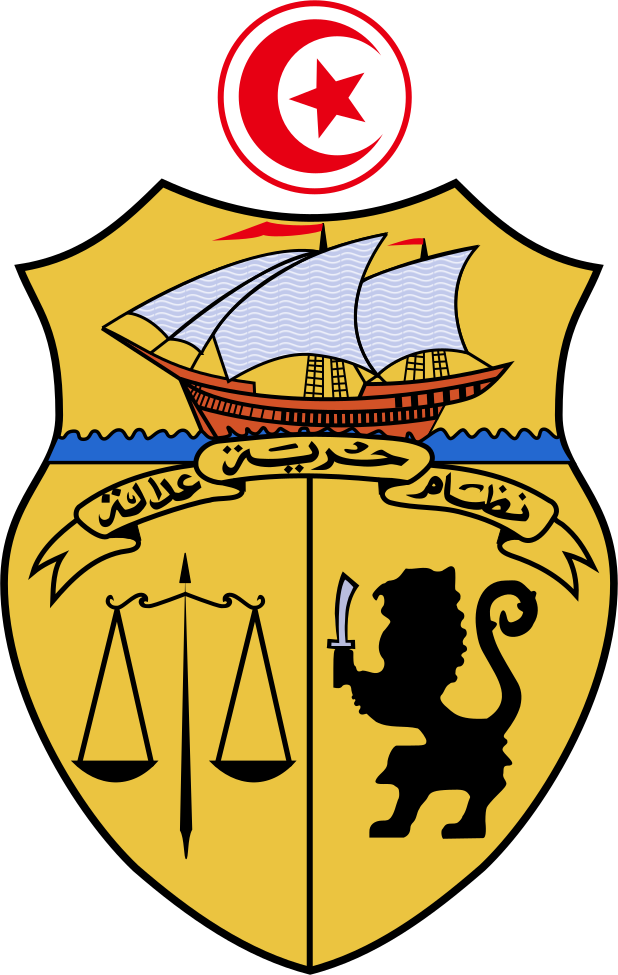
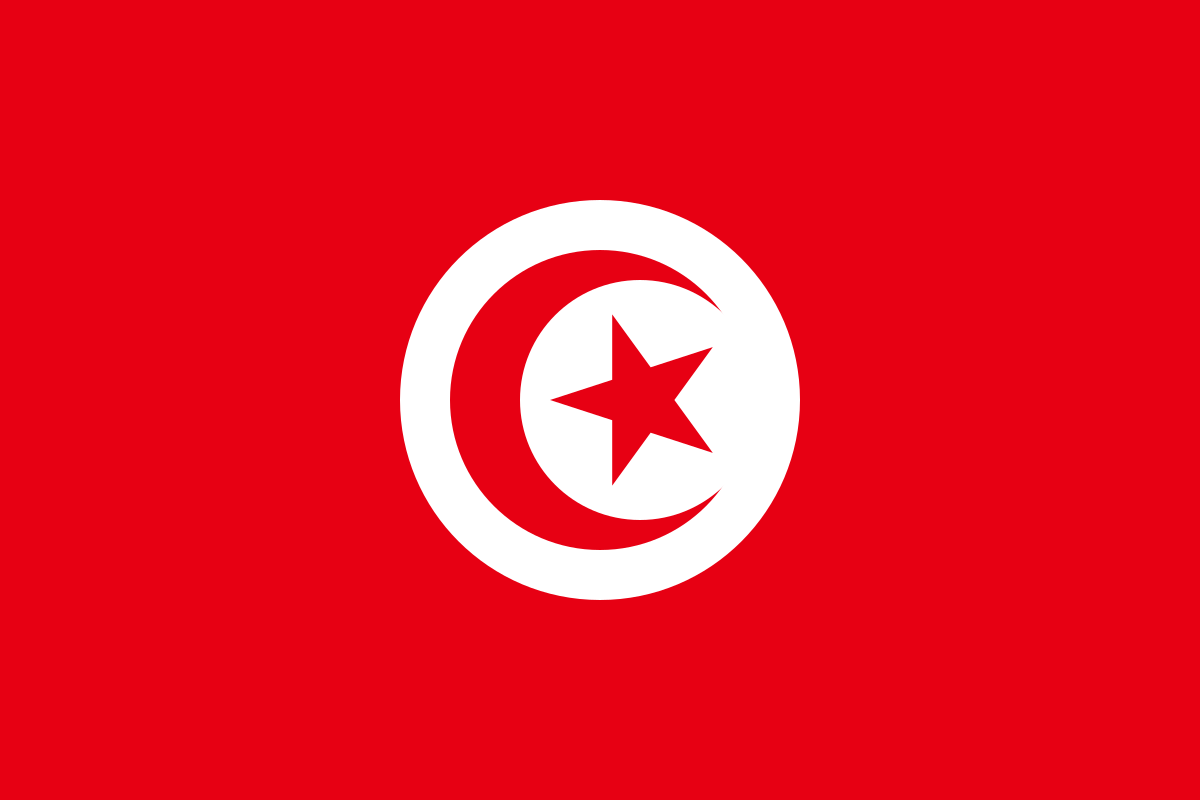
- Capital
- Tunis
- Population
- 11,972,169
- Region
Travel guide
Get in
thumb|250px|A map showing the visa requirements of Tunisia, with countries in green having visa-free access Tunisia depends a lot on tourism; therefore, many people can visit the country without a visa.
See
thumb|Byrsa Hills, some of the remains of Carthage
Eat
Tunisian cuisine has similarities with Middle Eastern cuisine, and mainly builds on the Northern African Maghreb tradition, with couscous and marqa stews (similar to the Moroccan tajine) forming the backbone of most meals. Distinguishing characteristics are the fiery harissa chili sauce, the heavy use of tiny olives which are abundant in the country, and the Tunisian tajine which, unlike the Moroccan dish of the same name, refers to a type of omelette-like pie prepared with a ragout of meat and/or vegetables mixed with herbs, legumes and even offal, enriched with eggs and cheese and baked in a deep pie dish until the eggs are just set, somewhat like an Italian frittata. Lamb forms the basis of most meat dishes and local seafood is plentiful. Pork and pork products are not widely available but can be found in some supermarkets and in some hotels in tourist areas.
thumb|A fiery plate of Harissa
Harissa: very hot spicy chili paste (sometimes made more mild with carrots or yogurt), served with bread and olive oil as a starter at almost any meal. Shorba Frik: lamb soup Coucha: shoulder of lamb cooked with turmeric and cayenne pepper Khobz Tabouna (pronounce Khobz Taboona): traditional oven baked bread Brik (pronounce Breek): very crispy thin pastry with a whole egg (Brik à l'œuf), parsley and onions and sometimes meat like minced lamb or tuna (Brik au thon). Very tasty as an inexpensive starter. Eat it very carefully with your fingers. Berber Lamb: Lamb cooked with potatoes, car…
Drink
Being a progressive Muslim-majority country, alcohol availability is restricted (but not greatly) to certain licensed (and invariably more expensive) restaurants, resort areas and Magasin Général shops. Large department stores (Carrefour at Marsa/Carthage and Hammamet) and some supermarkets (e.g. Monoprix) sell beer and wine, and some local and imported hard liquors, except during Muslim holidays. Female travelers should be aware that, outside resort and areas of significant tourist concentration, they may find themselves with a beer in a smoky bar full of men drinking in a rather dedicated fashion. Some bars will refuse to admit women, others may ask for a passport to check nationality. Look around a bar before you decide to imbibe!
Article · Français
La Tunisie (en arabe : تونس, tūnis , [ˈtuːnɪs]), en forme longue la République tunisienne (en arabe : الجمهورية التونسية, al-jumhūriyya at-tūnisiyya ), est un État d'Afrique du Nord bordé au nord et à l'est par la mer Méditerranée (1 566 km de côtes), à l'ouest par l'Algérie avec 965 km de frontière commune et au sud-est par la Libye avec 459 km de frontière. Souverain depuis 1956, sa capitale Tunis est située dans le Nord-Est du pays, au fond du golfe du même nom. Plus de 30 % de la superficie du territoire est occupée par le désert du Sahara, le reste étant constitué de régions montagneuses et de plaines fertiles. La Tunisie est le foyer de la culture capsienne, une culture mésolithique qui a duré de 10 000 à 6 000 avant notre ère et à qui la ville de Gafsa a donné son nom. Elle est aussi le berceau de la civilisation carthaginoise qui atteint son apogée au IIIe siècle av. J.-C., avant de faire partie du royaume berbère de la Numidie unifiée, puis de devenir une province importante de l'Empire romain, période pendant laquelle elle est pendant quelques décennies sous domination vandale. Longtemps appelée « régence de Tunis », notamment sous la domination ottomane, la Tunisie passe sous protectorat français le 12 mai 1881 avec la signature du traité du Bardo. À l'indépendance, le 20 mars 1956, elle devient d'abord une monarchie constitutionnelle ayant pour souverain Lamine Bey, dix-neuvième et dernier bey régnant de la dynastie des Husseinites. Mais, le 25 juillet 1957, la république est proclamée et le leader nationaliste Habib Bourguiba devient le premier président de la République tunisienne. Il modernise le pays qu'il dirige pendant trente ans, marqués à la fin par le clientélisme et la montée de l'islamisme. En 1987, il est déposé par le Premier ministre Zine el-Abidine Ben Ali, qui poursuit les principaux objectifs du « bourguibisme » tout en libéralisant l'économie mais exerce une présidence autoritaire et policière, caractérisée par l'importance de la corruption. Ben Ali est chassé le 14 janvier 2011 par une révolution populaire et se réfugie en Arabie saoudite, à Djeddah sous le coup, avec son épouse Leïla Ben Ali, d'un mandat d'arrêt international. Intégrée aux principales instances de la communauté internationale telles que l'ONU ou la Cour pénale internationale, la Tunisie fait également partie de l'Union du Maghreb arabe, de la Ligue arabe, de la Grande zone arabe de libre-échange, du Marché commun de l'Afrique orientale et australe, de l'Organisation de la coopération islamique, de l'Union pour la Méditerranée, de l'Union africaine, de l'Organisation internationale de la francophonie, du Groupe des 77, de la Communauté des États sahélo-sahariens et du mouvement des non-alignés. La Tunisie a également conclu un accord d'association avec l'Union européenne et obtenu le statut d'allié majeur non-membre de l'OTAN. Durant la période 2020-2021, le pays est un membre non permanent du Conseil de sécurité des Nations unies.
Abstract from / Wikipedia · CC BY-SA
Gallery (59)
On the map
6 mapped locations
Connections
Categories
1956 establishments in TunisiaCountries and territories where Arabic is an official languageCountries in AfricaCountries in North AfricaMaghrebi countriesMember states of the African UnionMember states of the Arab LeagueMember states of the Organisation internationale de la FrancophonieMember states of the Organisation of Islamic CooperationMember states of the Union for the MediterraneanMember states of the United Nations