Encyclopedia of Life · EOL (see source)
Species
SPECIES
- KingdomBacteria
- PhylumProteobacteria
- ClassGammaproteobacteria
- OrderEnterobacterales
- FamilyVibrionaceae
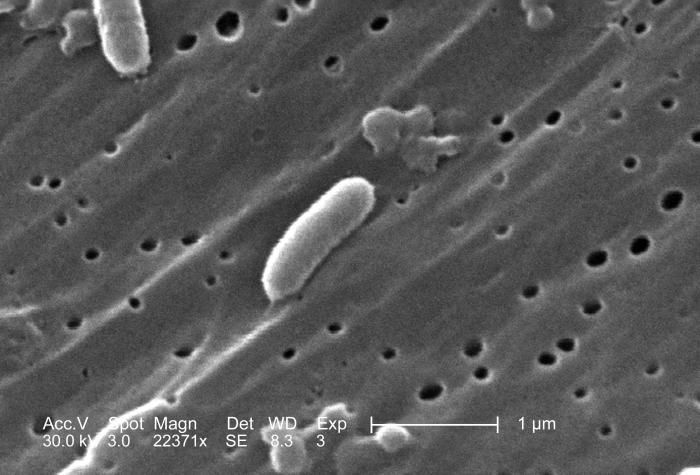
霍亂弧菌(Vibrio cholerae)是革蘭氏陰性菌,菌體短小呈逗點狀,有單鞭毛、菌毛,部分有莢膜。共分為155個血清群,其中O1群和O139群可引起霍亂。
via GBIF
Museum specimens
- Specimen records
- 13
- Family
- Vibrionaceae
- Collections
- CIAD, NHMUK
- Recorded in
- Mexico
Research
14,591 papers- Vibrio cholerae at the Intersection of Immunity and the Microbiome.mSphere · 2019
- Vibrio cholerae.Trends in microbiology · 2019
- The chemosensory systems of Vibrio cholerae.Molecular microbiology · 2020
- Vibrio cholerae serogroup O5 was responsible for the outbreak of gastroenteritis in Czechoslovakia in 1965.Microbial genomics · 2024
- Vibrio cholerae O139 Bengal.Journal of clinical microbiology · 1994
via PubMed
Wikidata facts
Show 8 more facts
- taxon name
- Vibrio cholerae
- Commons category
- Vibrio cholerae
- taxon rank
- species
- has effect
- cholera
- taxon common name
- Kommabacillus
- Gram staining
- gram-negative bacteria
- short name
- V. cholerae
via Wikidata · CC0
~27 min read
Encyclopedic overview
Vibrio cholerae is a species of Gram-negative, facultative anaerobe and comma-shaped bacteria. The bacteria naturally live in brackish or saltwater where they attach themselves easily to the chitin-containing shells of crabs, shrimp, and other shellfish. Some strains of V. cholerae are pathogenic to humans and cause a deadly disease called cholera, which can be derived from the consumption of undercooked or raw marine life species or drinking contaminated water.
V. cholerae was first described by Félix-Archimède Pouchet in 1849 as some kind of protozoa. Filippo Pacini correctly identified it as a bacterium and from him, the scientific name is adopted. The bacterium as the cause of cholera was discovered by Robert Koch in 1884. Sambhu Nath De isolated the cholera toxin and demonstrated the toxin as the cause of cholera in 1959.
Excerpted from Wikipedia’s “Vibrio cholerae” article, available under the CC BY-SA 4.0 licence.