Category
page 11st-century Romans

Augustus
Augustus (born Gaius Octavius; 23 September 63 BC – 19 August AD 14), also known as Octavian (), was the founder of the Roman Empire and the first Roman emperor from 27 BC until his death in AD 14. The reign of Augustus initiated an imperial cult and an era of imperial peace (the or ) in which the Roman world was largely free of armed conflict. The principate, a style of government where the emperor showed nominal deference to the Senate, was established during his reign and lasted until the Crisis of the Third Century.

Plutarch
Plutarch (; , Ploútarchos, ; before AD 50 – after 120) was a Greek and later Roman Middle Platonist philosopher, historian, biographer, essayist, and priest at the Temple of Apollo in Delphi. He is known primarily for his Parallel Lives, a series of biographies of illustrious Greeks and Romans, and Moralia, a collection of essays and speeches. Upon becoming a Roman citizen, he was possibly named Lucius Mestrius Plutarchus ().

Seneca
Roman Stoic philosopher, statesman and dramatist (c. 4 BCE–65 CE)

Ptolemy
Claudius Ptolemy (; , ; ; – 160s/170s AD), better known mononymously as Ptolemy, was a Greco-Roman mathematician, astronomer, astrologer, geographer, and music theorist who wrote about a dozen scientific treatises, three of which were important to later Byzantine, Islamic, and Western European science. The first was his astronomical treatise now known as the Almagest, originally entitled '''' (, 'Mathematical Treatise'). The second is the Geography, which is a thorough discussion on maps and the geographic knowledge of the Greco-Roman world. The third is the astrological treatise in which he a
Titus Livius
Titus Livius (; 59 BC – AD 17), known in English as Livy ( ), was a Roman historian. He wrote a monumental history of Rome and the Roman people, titled , covering the period from the earliest legends of Rome before the traditional founding in 753 BC through the reign of Augustus in Livy's own lifetime. He was on good terms with members of the Julio-Claudian dynasty and was a friend of Augustus. Livy encouraged Augustus’s young grandnephew, the future emperor Claudius, to take up the writing of history.

Pliny the Elder
1st-century Roman military commander and writer

Epictetus
Epictetus ( ; , Epíktētos; 50 135 AD) was a Greek Stoic philosopher. He was born into slavery at Hierapolis, Phrygia (present-day Pamukkale, in western Turkey) and lived in Rome until his banishment, after which he spent the rest of his life in Nicopolis in northwestern Greece.
.png)
Hadrian
Hadrian ( ; born Publius Aelius Hadrianus, 24 January 76 – 10 July 138) was Roman emperor from 117 to 138. Hadrian was born in Italica, in the present-day Andalusian province of Seville in southern Spain, an Italic settlement in Hispania Baetica; his gens Aelia came from the town of Hadria in eastern Italy. He was a member of the Nerva–Antonine dynasty.

Clement I
4th Pope of the Catholic Church

Andrew the Apostle
religious figure of the Christian faith

Pliny the Younger
Roman lawyer, author and magistrate (61 – c.113)

Juvenal
Decimus Junius Juvenalis (), known in English as Juvenal ( ; AD 55–128), was a Roman poet. He is the author of the Satires, a collection of satirical poems. The details of Juvenal's life are unclear, but references in his works to people from the late first and early second centuries suggest that he began writing no earlier than that time. One recent scholar argues that his first book was published in 100 or 101. A reference to a political figure dates his fifth and final surviving book to sometime after 127.

Pontius Pilatus
fifth Prefect of the Roman province of Judaea, from AD 26–36

Linus
2nd Pope of the Catholic Church

Josephus
Flavius Josephus (born Yosef ben Mattityahu; ) was a Roman–Jewish historian and military leader. Best known for writing The Jewish War, he was born in Jerusalem—then part of the Roman province of Judea—to a father of priestly descent and a mother who claimed Hasmonean royal ancestry.

Suetonius
Gaius Suetonius Tranquillus (), commonly referred to as Suetonius ( ; – after AD 122), was a Roman historian who wrote during the early Imperial era of the Roman Empire. His most important surviving work is De vita Caesarum, commonly known in English as The Twelve Caesars, a set of biographies of 12 successive Roman rulers from Julius Caesar to Domitian. Other works by Suetonius concerned the daily life of Rome, politics, oratory, and the lives of famous writers, including poets, historians, and grammarians. A few of these books have partially survived, but many have been lost.

Anacletus
3rd pope and bishop of Rome from c. 79 to c. 92 AD

Martial
Marcus Valerius Martialis (known in English as Martial ; March, between 38 and 41 AD – between 102 and 104 AD) was a Roman and Celtiberian poet born in Bilbilis, Hispania (modern Spain), best known for his twelve books of Epigrams, published in Rome between AD 86 and 103, during the reigns of the emperors Domitian, Nerva and Trajan. In these poems he satirises city life and the scandalous activities of his acquaintances and romanticises his provincial upbringing. A total of 1,561 epigrams written by him have survived, of which 1,235 are in elegiac couplets.

Evaristus
5th Pope of the Catholic Church from c. 99 to c. 107

Petronius
Gaius Petronius Arbiter (; ; ; sometimes Titus Petronius Niger) was a Roman courtier during the reign of Nero (). He is generally believed to be the author of the Satyricon, a satirical novel believed to have been written during the Neronian era.

Lucan
Marcus Annaeus Lucanus (3 November AD 39 – 30 April AD 65), better known in English as Lucan (), was a Roman poet, born in Corduba, Hispania Baetica (present-day Córdoba, Spain). He is regarded as one of the outstanding figures of the Imperial Latin period, known in particular for his epic Pharsalia. His youth and speed of composition set him apart from other poets.
%2C%20frontispiece.jpg)
Quintilian
Marcus Fabius Quintilianus (; – ) was a Roman educator and rhetorician born in Hispania, widely referred to in medieval schools of rhetoric and in Renaissance writing. In English translation, he is usually referred to as Quintilian ( ), although the alternate spellings of Quintillian and Quinctilian are occasionally seen, the latter in older texts.

Philo of Alexandria
Philo of Alexandria (; ; ; ), also called '''''', was a Hellenistic Jewish philosopher who lived in Alexandria, in the Roman province of Egypt.
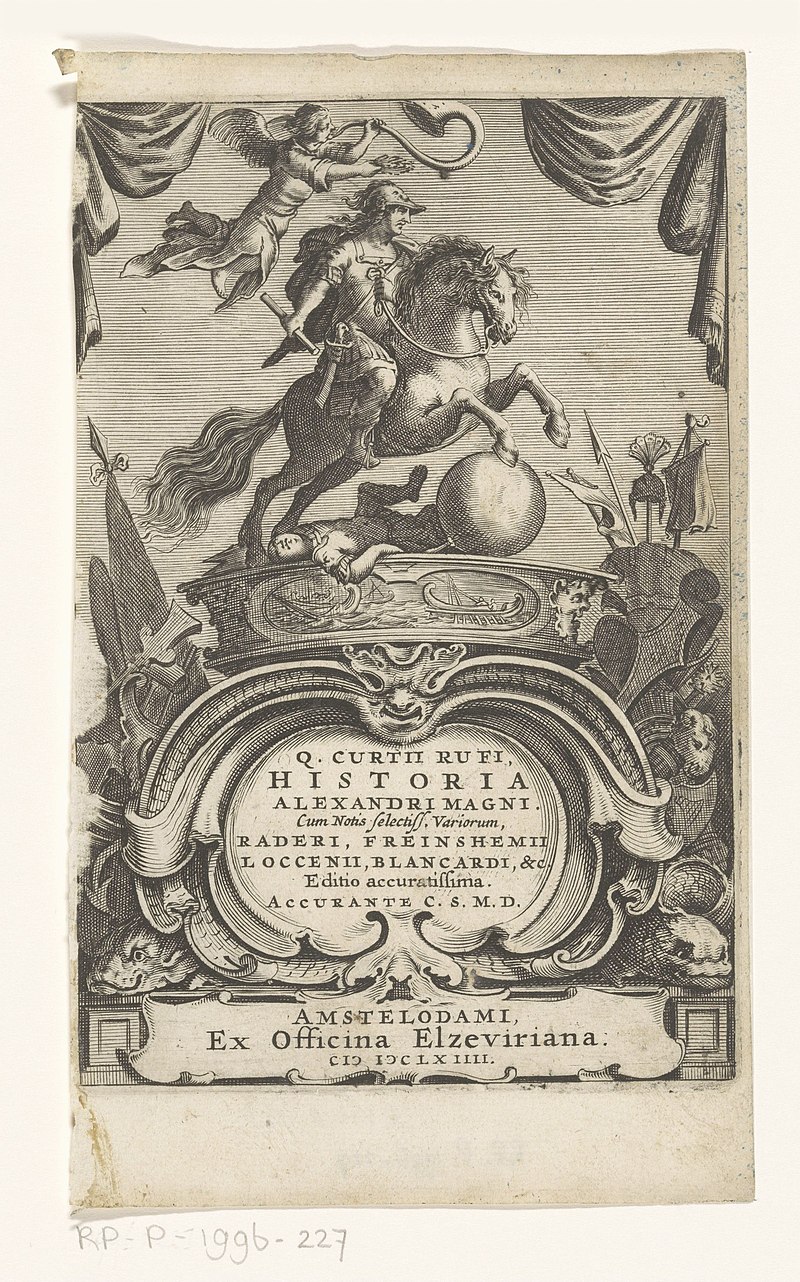
Quintus Curtius Rufus
Roman historian

Appian
Appian of Alexandria (; ; ; ) was a Greek historian with Roman citizenship who prospered during the reigns of the Roman Emperors Trajan, Hadrian, and Antoninus Pius.
Arrian
Arrian of Nicomedia (; Greek: Arrianós; ; )

Polycarp
Polycarp (; , Polýkarpos; ; AD 69 155) was a Christian bishop of Smyrna. According to the Martyrdom of Polycarp, he died a martyr, bound and burned at the stake, then stabbed when the fire failed to consume his body. Polycarp is regarded as a saint and Church Father in the Eastern Orthodox Church, the Catholic Church, Oriental Orthodox Churches, Lutheranism, and Anglicanism.

Seneca the Elder
Roman scholar, writer and historian (54 BC-c.39 AD)

Persius
thumb|Persius
Aulus Persius Flaccus (; 4 December 3424 November 62 AD) was a Roman poet and satirist of Etruscan origin. In his works, poems and satire, he shows a Stoic wisdom and a strong criticism for what he considered to be the stylistic abuses of his poetic contemporaries. His works, which became very popular in the Middle Ages, were published after his death by his friend and mentor, the Stoic philosopher Lucius Annaeus Cornutus.

Marcus Velleius Paterculus
Roman historian, soldier and senator (c.19 BC - c. AD 31)

Columella
Roman writer on agriculture

Valerius Maximus
early 1st century AD Roman professional rhetorician, historian and author

Publius Quinctilius Varus
ancient Roman politician and governor; known for being defeated by the Germans led by Arminius at the battle of the Teutoburg Forest

Pomponius Mela
Roman geographer of the first century

Frontinus
Sextus Julius Frontinus (c. 40 – 103 AD) was a Roman civil engineer, author, soldier and senator of the late 1st century AD. He was a successful general under Domitian, commanding forces in Roman Britain, and on the Rhine and Danube frontiers. A novus homo, he was consul three times. Frontinus ably discharged several important administrative duties for Nerva and Trajan. However, he is best known to the post-Classical world as an author of technical treatises, especially De aquaeductu, dealing with the aqueducts of Rome.

Gaius Valerius Flaccus
1st-century Roman poet and writer

Dio Chrysostom
Greek orator, writer, philosopher and historian (c. 40 – c. 115)

Gaius Julius Hyginus
Roman freedman and writer (c. 64 BC – AD 17)

Agrippina the Elder
Member of Julio-Claudian dynasty (c. 14 BC–AD 33)

Simon Magus
religious figure who confronted Peter
Gaius Caesar
eldest son of Marcus Vipsanius Agrippa and Julia the Elder, Emperor Augustus' only daughter, also adopted by Augustus as his own child

Longinus
thumb|Illustration from the Rabbula Gospels, AD 586: Longinus is labelled "".
Longinus (Greek: Λογγίνος) is the name of a Roman soldier who supposedly pierced the side of Jesus with a lance, who in apostolic and some modern Christian traditions is described as a convert to Christianity. His name first appeared in the apocryphal Gospel of Nicodemus. The lance is called in Catholic Christianity the "Holy Lance" (lancea) and the story is related in the Gospel of John during the Crucifixion. This act is said to have created the last of the Five Holy Wounds of Christ.

Julia the Elder
daughter of Emperor Augustus (39 BC – AD 14)

Agrippa II
king of Chalcis (Syria) from Herodian dynasty (28-100)

Gaius Musonius Rufus
1st century AD Roman Stoic philosopher

Gnaeus Domitius Corbulo
Roman general, father of empress Domitia Longina

Antonia Minor
youngest daughter of Octavia Minor and Mark Antony

Britannicus
Tiberius Claudius Caesar Britannicus (12 February AD 41 – 11 February AD 55), usually called Britannicus, was the son of Roman Emperor Claudius and his third wife, Valeria Messalina. For a time, he was considered his father's heir, but that changed after his mother's downfall in 48, when it was revealed she had engaged in a bigamous marriage without Claudius' knowledge. The next year, his father married Agrippina the Younger, Claudius' fourth and final marriage. Their marriage was followed by the adoption of Agrippina's son, Lucius Domitius Ahenobarbus, whose name became Nero as a result. His

Lucius Caesar
grandson of emperor Augustus (17 BC - AD 2)
.jpg)
Onesimus
Onesimus (, meaning "useful") was a Christian mentioned in the New Testament. He was a slave to Philemon, a Christian, and is the subject of Paul's Epistle to Philemon.

Publius Sulpicius Quirinius
thumb|upright=1.4|Mary, mother of Jesus|Mary and Joseph register for the census before Governor Quirinius. Byzantine mosaic at the [[Chora Church, Constantinople 1315–1320.]]
Publius Sulpicius Quirinius (c. 51 BC – AD 21), also translated as Cyrenius, was a Roman aristocrat. After the banishment of the ethnarch Herod Archelaus from the tetrarchy of Judea in AD 6, Quirinius was appointed legate governor of Syria, to which the province of Judaea had been added for census purposes.
Vibia Sabina
Roman Empress, wife of Emperor Hadrian

Stachys the Apostle
second bishop of Byzantium from AD 38 to AD 54

Drusus Julius Caesar
son of Emperor Tiberius

Livilla
Claudia Livia (Classical Latin: CLAVDIA•LIVIA; – AD 31) was the only daughter of Nero Claudius Drusus and Antonia Minor and sister to Roman Emperor Claudius and general Germanicus, and thus paternal aunt of emperor Caligula and maternal great-aunt of emperor Nero, as well as the niece and daughter-in-law of Tiberius. She was named after her grandmother, Augustus' wife Livia Drusilla, and commonly known by her family nickname Livilla ("little Livia"). She was born after Germanicus and before Claudius.
Antonia Major
eldest daughter of Octavia Minor and Mark Antony
Cornelius the Centurion
first Gentile to convert to Christianity

Marcus Gavius Apicius
1st century BC Roman aristocrat and gourmet

Berenice
1st century CE member of the Herodian Dynasty that ruled the Roman province of Judaea

Julia the Younger
daughter of Marcus Vipsanius Agrippa and Julia the Elder (19 BC-c. 29 AD)