Category
page 2Apex predators

long-finned pilot whale
species of mammal

Cuban crocodile
species of reptile

freshwater crocodile
species of reptile

Orinoco crocodile
species of reptile

false gharial
freshwater crocodile of the Crocodylidae family with a very thin and elongated snout

eurypterid
Eurypterids, often informally called sea scorpions, are a group of extinct marine arthropods that form the order Eurypterida. The earliest known eurypterids date to the Tremadocian stage of the Ordovician period, 480 million years ago. The group is likely to have appeared first during the Late Cambrian period. With approximately 250 species, the Eurypterida is the most diverse Paleozoic chelicerate order. Following their appearance during the Ordovician, eurypterids became major components of marine faunas during the Silurian, from which the majority of eurypterid species have been described.

Red-tailed Hawk
species of bird

Alligator snapping turtle
heaviest freshwater turtle in the world

Python sebae
species of reptile

Basilosaurus
Basilosaurus (meaning "king lizard") is a genus of large, predatory, prehistoric archaeocete whale from the late Eocene, approximately 41.3 to 33.9 million years ago (mya). First described in 1834, it was the first archaeocete and prehistoric whale known to science. Fossils attributed to the type species B. cetoides were discovered in the southeastern United States. The generic name, meaning "king lizard", was given due to the initial misconception about the fossil material as that of a giant reptile. The animal was later found to be an early marine mammal, prompting attempts at renaming the c

Sri Lankan leopard
subspecies of mammal

great hammerhead
species of shark (Sphyrna mokarran)

short-finned pilot whale
species of Oceanic dolphins

Burmese python
species of large nonvenomous snake

Southern Giant Petrel
species of bird

Morelet's crocodile
species of reptiless

apex predator
predator residing at the top of a food chain, with no predators of its own

Liopleurodon
Liopleurodon (; meaning 'smooth-sided teeth') is an extinct genus of carnivorous pliosaurid plesiosaurs that lived from the Callovian stage of the Middle Jurassic to the Kimmeridgian stage of the Late Jurassic period (approximately 166 to 155 million years ago). The type species is L. ferox, which is probably the only valid species. Some studies also include the second species L. pachydeirus, but this latter is considered as a probable junior synonym of L. ferox due to its lack of viable diagnosis. Fossils attributed to Liopleurodon, including some skeletons, are mainly known from Europe, with

Crocodylus novaeguinae
species of reptile

Blakiston`s Eagle Owl
species of bird
%20(Cleveland%20Shale%20Member%2C%20Ohio%20Shale%2C%20Upper%20Devonian%3B%20Rocky%20River%20Valley%2C%20Cleveland%2C%20Ohio%2C%20USA)%2025%20(34091142396).jpg)
Dunkleosteus
Dunkleosteus is an extinct genus of large arthrodire ("jointed-neck") fish that existed during the Late Devonian period, about 382–358 million years ago. It was a pelagic fish inhabiting open waters, and one of the first vertebrate apex predators of any ecosystem. Fossils of Dunkleosteus have been found in the United States, Canada, Poland, Belgium, and Morocco.

alligator gar
Ray-finned euryhaline fish related to the bowfin in the infraclass Holostei

Perentie
The perentie (Varanus giganteus) is a species of monitor lizard. It is one of the largest living lizards, after the Komodo dragon, Asian water monitor, and the crocodile monitor. Found west of the Great Dividing Range in the arid areas of Australia, it is rarely seen because of its shyness and the remoteness of much of its range from human habitation. The species is considered to be a least-concern species according to the International Union for Conservation of Nature.

Panthera pardus melas
subspecies of mammal

Phorusrhacidae
Phorusrhacids, colloquially known as terror birds, are an extinct family of large carnivorous, mostly flightless birds that were among the largest apex predators in South America during the Cenozoic era. Their definitive fossil records range from the Middle Eocene to the Late Pleistocene around , though some specimens suggest that they were present since the Early Eocene.

Varanus salvadorii
species of reptile

Deinosuchus
Deinosuchus is an extinct genus of eusuchian, either an alligatoroid crocodilian or a stem-group crocodilian, which lived during the Late Cretaceous around . The first remains were discovered in North Carolina (United States) in the 1850s, and the genus was first described in 1909. Additional fragments were discovered in the 1940s and were later incorporated into an influential, though inaccurate, skull reconstruction at the American Museum of Natural History. Knowledge of Deinosuchus remains incomplete, but better cranial material found in recent years has expanded scientific understanding of

Platanista minor
species of mammal

Aquila spilogaster
species of bird

Galapagos Hawk
species of bird

Carcharodontosauridae
Carcharodontosauridae (carcharodontosaurids; from the Greek καρχαροδοντόσαυρος, carcharodontósauros: "shark-toothed lizards") is a group of carnivorous theropod dinosaurs. In 1931, Ernst Stromer named Carcharodontosauridae as a family, which, in modern paleontology, indicates a clade within Carnosauria. Carcharodontosaurids include some of the largest land predators ever known: Giganotosaurus, Mapusaurus, Carcharodontosaurus, and Tyrannotitan all rivaled Tyrannosaurus in size. Estimates give a maximum weight of for the largest carcharodontosaurids, while the smallest carcharodontosaurids were

salmon shark
species of shark (Lamna ditropis)

Gorgonopsia
Gorgonopsia (from the Greek Gorgon, a mythological beast, and 'aspect') is an extinct clade of sabre-toothed therapsids from the Middle to the Upper Permian, roughly between 270 and 252 million years ago. They are characterised by a long and narrow skull, as well as elongated upper and sometimes lower canine teeth and incisors which were likely used as slashing and stabbing weapons. Postcanine teeth are generally reduced or absent. For hunting large prey, they possibly used a bite-and-retreat tactic, ambushing and taking a debilitating bite out of the target, and following it at a safe distanc

Esox masquinongy

Hatzegopteryx
Hatzegopteryx ("Hațeg basin wing") is a genus of azhdarchid pterosaur found in the late Maastrichtian deposits of the Densuș-Ciula Formation, an outcropping in Transylvania, Romania. It is known only from the type species, Hatzegopteryx thambema, named by paleontologists Eric Buffetaut, Dan Grigorescu, and Zoltan Csiki in 2002 based on parts of the skull and humerus. Additional specimens, including a neck vertebra, were later placed in the genus, representing a range of sizes. The largest of these remains indicate it was among the biggest pterosaurs, with an estimated wingspan of .

Sarcosuchus
Sarcosuchus (), from Ancient Greek σάρξ (sárx), meaning "flesh", and Σοῦχος (Soûkhos), meaning "Sobek", is an extinct genus of crocodyliform that lived during the Early Cretaceous, from the late Hauterivian to the early Albian stages, 130 to 112 million years ago of what is now Africa and South America. It was one of the largest pseudosuchians, with the largest specimen of S. imperator reaching approximately long and weighing up to . It is known from two species; S. imperator from the early Albian Elrhaz Formation of Niger, and S. hartti from the Late Hauterivian of northeastern Brazil. Other

Andrewsarchus
Andrewsarchus (), meaning "Andrews' ruler", is an extinct genus of artiodactyl that lived during the Middle Eocene in what is now China. The genus was first described by Henry Fairfield Osborn in 1924 with the type species A. mongoliensis based on a largely complete cranium. A second species, A. crassum, was described in 1977 based on teeth. A mandible, formerly described as Paratriisodon, does probably belong to Andrewsarchus as well. The genus has been historically placed in the families Mesonychidae or Arctocyonidae, or was considered to be a close relative of whales. It is now regarded as
saber-toothed cat
name of various species of extinct mammals
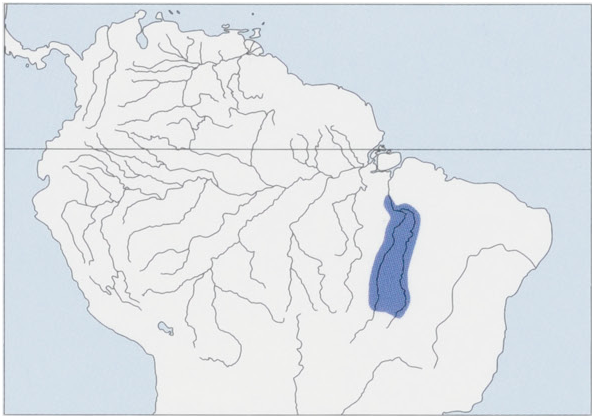
Inia araguaiaensis
species of mammal

Postosuchus
Postosuchus, meaning "Crocodile from Post", is an extinct genus of rauisuchid reptiles comprising two species, P. kirkpatricki and P. alisonae, that lived in what is now North America during the Late Triassic. Postosuchus is a member of the clade Pseudosuchia, the lineage of archosaurs that includes modern crocodilians (the other main group of archosaurs is Avemetatarsalia, the lineage that includes all archosaurs more closely related to birds than to crocodilians). Its name refers to Post Quarry, a place in Texas where many fossils of the type species, P. kirkpatricki, were found.

Zənzibar leopard
subspecies of mammal

West African crocodile
species of reptile

Inostrancevia
Inostrancevia is an extinct genus of large carnivorous therapsids which lived during the Late Permian in what is now European Russia and Southern Africa. The first-known fossils of this gorgonopsian were discovered in the context of a long series of excavations carried out from 1899 to 1914 in the Northern Dvina, Russia. Among these are two near-complete skeletons embodying the first described specimens of this genus, being also the first gorgonopsian identified in Russia. Several other fossil materials were discovered there, and the various finds led to confusion as to the exact number of val
Platanista
genus of freshwater dolphin

Cymbospondylus
Cymbospondylus (meaning "cupped vertebrae") is an extinct genus of large ichthyosaurs, of which it is among the oldest representatives, that lived from the Lower to Middle Triassic in what are now North America and Europe. The first known fossils of this taxon are a set of more or less complete vertebrae which were discovered in the 19th century in various mountain ranges of Nevada, in the United States, before being named and described by Joseph Leidy in 1868. It is in the beginning of the 20th century that more complete fossils were discovered through several expeditions to the Fossil Hill M

Chilabothrus angulifer
species of reptile

Prognathodon
Prognathodon is an extinct genus of marine lizard belonging to the mosasaur family. It is classified as part of the Mosasaurinae subfamily, alongside genera like Mosasaurus and Clidastes. Prognathodon has been recovered from deposits ranging in age from the Campanian to the Maastrichtian in the Middle East, Europe, New Zealand, Africa and North America.

Morelia amethistina
species of reptile

Purussaurus
Purussaurus is a genus of extinct giant caimans that lived in the Americas during the Miocene epoch, from the Friasian to the Huayquerian in the SALMA classification. It is known from skull material found in the Brazilian and Peruvian Amazon, Argentina, Colombian Villavieja Formation, Panamanian Culebra Formation, Urumaco, and Socorro Formations of northern Venezuela.

Drymarchon
Drymarchon is a genus of large non-venomous colubrid snakes, commonly known as indigo snakes or cribos, found in the Southeastern United States, Mexico, Central America, and South America.

Bagarius yarrelli
species of fish

green moray
species of fish

Bolivian river dolphin
subspecies of mammal

Python natalensis
snake species

Cuban gar
species of fish

Eastern indigo snake
species of reptile

Morelia kinghorni
species of reptile

terror skink
species of skink

Prestosuchidae
Prestosuchidae (in its widest usage) is a polyphyletic grouping of carnivorous archosaurs that lived during the Triassic. They were large active terrestrial apex predators, ranging from around in length. They succeeded the Erythrosuchidae as the largest archosaurs of their time. While resembling erythrosuchids in size and some features of the skull and skeleton, they were more advanced in their erect posture and crocodile-like ankle, indicating more efficient gait. "Prestosuchids" flourished throughout the whole of the middle, and the early part of the late Triassic, and fossils are so far kno

Crocodylus halli
species of crocodile