Category
page 1Araceae genera

Anthurium
Anthurium (; Schott, 1829) is a genus of about 1,000 species of flowering plants, the largest genus of the arum family, Araceae. General common names include anthurium, tailflower, flamingo flower, pigtail plant, and laceleaf.

Lemna
Lemna is a genus of free-floating aquatic plants referred to by the common name "duckweed". They are morphologically divergent members of the arum family Araceae. These rapidly growing plants have found uses as a model system for studies in community ecology, basic plant biology, ecotoxicology, and production of biopharmaceuticals, and as a source of animal feeds for agriculture and aquaculture. Currently, 14 species of Lemna are recognised.

Arum
Arum is a genus of flowering plants in the family Araceae. They are native to Europe, northern Africa, and western and central Asia, with the highest species diversity in the Mediterranean region. Frequently called arum lilies, they are not closely related to the true lilies Lilium. Plants in the closely related genus Zantedeschia are also called 'arum lilies'.

Aglaonema
Aglaonema is a genus of flowering plants in the arum family, Araceae. They are native to tropical and subtropical regions of Asia and New Guinea. They are known commonly as Chinese evergreens.

Alocasia
Alocasia is a genus of rhizomatous or tuberous, broad-leaved, perennial, flowering plants from the family Araceae. There are about 90 accepted species native to tropical and subtropical Asia and eastern Australia. Around the world, many growers widely cultivate a range of hybrids and cultivars as ornamentals.

Philodendron
Philodendron is a large genus of flowering plants in the family Araceae. , the Plants of the World Online accepted 625 species; other sources accept different numbers. Regardless of number of species, the genus is the second-largest member of the family Araceae, after genus Anthurium. Taxonomically, the genus Philodendron is still poorly known, with many undescribed species. Many are grown as ornamental and indoor plants. The name derives from the Greek words philo- 'love, affection' and dendron 'tree'. The generic name, Philodendron, is often used as the English name.

Dieffenbachia
Dieffenbachia, commonly known as dumb cane or leopard lily, is a genus of tropical flowering plants in the family Araceae. It is native to the New World Tropics from Mexico and the West Indies south to Argentina. Some species are widely cultivated as ornamental plants, especially as houseplants, and have become naturalized on a few tropical islands.

Spathiphyllum
Spathiphyllum is a genus of about 60 species of monocotyledonous flowering plants in the family Araceae, native to tropical regions of the Americas and southeastern Asia. Certain species of Spathiphyllum are commonly known as spath or peace lilies.
%205.jpg)
Amorphophallus
Amorphophallus is a large genus of some 200 tropical and subtropical tuberous herbaceous plants from the arum family (Araceae), native to Asia, Africa, Australia and various oceanic islands. The genus includes the Titan arum (A. titanum) of Indonesia, which has the largest inflorescence in the genus, and is known as the 'corpse flower' for the pungent odour it produces during its flowering period, which can take up to seven years of growth before it occurs.

Zantedeschia
Zantedeschia () is a genus of eight species of herbaceous, perennial, flowering plants in the aroid family, Araceae, native to southern Africa (from South Africa northeast to Malawi). The genus has been introduced, in some form, on every continent other than Antarctica.

Colocasia
thumb|Elephant ear plant with yellow blossomthumb|Elephant ear plant with blossom

Monstera
Monstera is a genus of 59 species of flowering plants in the arum family, Araceae, native to tropical regions of central and south America.

Caladium
Caladium () is a genus of flowering plants in the family Araceae. They are often known by the common name elephant ear (which they share with the closely related genera Alocasia, Colocasia, and Xanthosoma), heart of Jesus, and angel wings. There are over 1000 named cultivars of Caladium bicolor from the original South American plant.
%206.jpg)
Epipremnum
Epipremnum is a genus of flowering plants in the family Araceae, found in tropical forests from China, the Himalayas, and Southeast Asia to Australia the western Pacific. They are evergreen perennial vines climbing with the aid of aerial roots. They may be confused with other Monstereae such as Rhaphidophora, Scindapsus and Amydrium.

Wolffia
right|thumb|Close-up of floating aquatic plants: Spirodela polyrrhiza and [[Wolffia globosa; the very tiny Wolffia plants are under long.]]

Arisaema
thumb|right|Arisaema tortuosum
%20flower%2C%20my%20back%20yard%2C%20Gurgaon%2C%20India.jpg)
Xanthosoma
Xanthosoma is a genus of flowering plants in the arum family, Araceae. The genus is native to tropical America but widely cultivated and naturalized in other tropical regions. Several are grown for their starchy corms, an important food staple of tropical regions, known variously as malanga, otoy, otoe, cocoyam (or new cocoyam), tannia, tannier, yautía, macabo, ocumo, macal, taioba, dasheen, quequisque, ʻape and (in Papua New Guinea) as Singapore taro (taro kongkong). Many other species, including especially Xanthosoma roseum, are used as ornamental plants; in popular horticultural literature

Syngonium
Syngonium is a genus of flowering plants in the family Araceae, native to tropical rainforests in southern Mexico, the West Indies, and Central and South America. They are vines growing to heights of 10–20 m or more in trees. Their leaves change shape according to the plant's stage of growth; adult leaf forms are often much more lobed than the juvenile forms usually seen on small house plants. The scientific name of the genus comes from the Greek words σύν (syn - plus, z) and γονή (gone - gonada) and refers to the fused ovaries of female flowers.
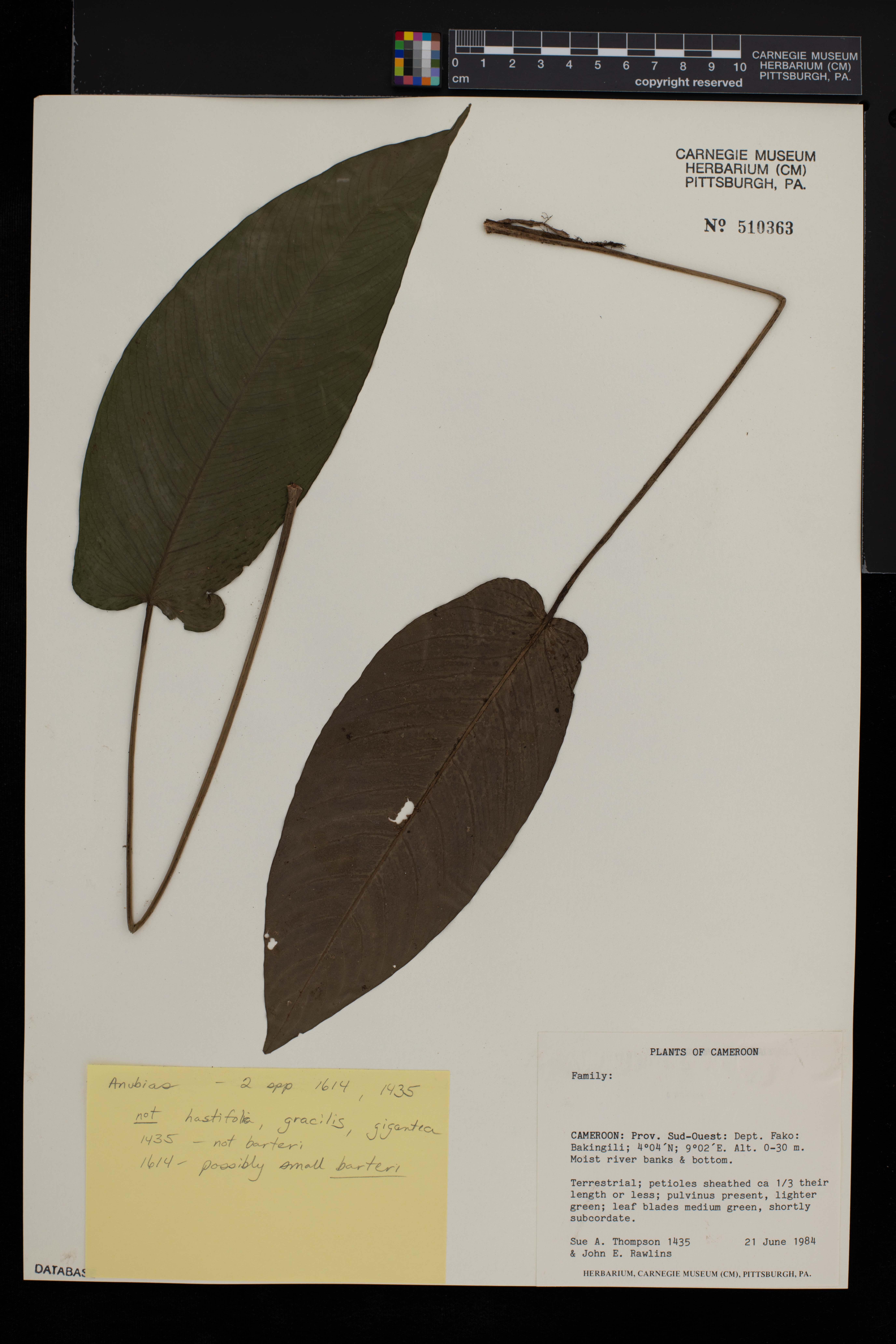
Anubias
Anubias is a genus of aquatic and semi-aquatic flowering plants in the family Araceae, native to tropical central and western Africa. They primarily grow in rivers and streams but can also be found in marshes. They are characterized by broad, thick, dark leaves that come in many different forms. The genus was revised in 1979 and since then its nomenclature has been stable. Species can be determined by using mostly characteristics of the inflorescence. Because of the often shady places where the plants grow, the genus was named after the Egyptian god Anubis, the god of the afterlife. The genus
Spirodela
Spirodela is a genus of aquatic plants, one of several genera containing plants commonly called duckweed. Spirodela species are members of the Araceae under the APG II system. They were formerly members of the Lemnaceae.

Lysichiton
Lysichiton is a genus in the family Araceae. These plants are known commonly as skunk cabbage or less often as swamp lantern. The spelling Lysichitum is also found. The genus has two species, one found in north-east Asia (Japan and Russian Far East), the other in north-west America (Aleutians to Santa Cruz County in California).

Cryptocoryne
Cryptocoryne is a genus of aquatic plants from the family Araceae. The genus is naturally distributed in tropical regions of India, Southeast Asia and New Guinea. The English common name "water trumpet" refers to their inflorescence, a spadix enclosed by a spathe (typical for the whole family), which resembles a trumpet. The genus is commonly referred to as Crypts by aquarium hobbyists.

Dracunculus
genus of plants

Arisarum
Arisarum is a genus of flowering plants in the family Araceae. It is native to the Mediterranean region, east to the Caucasus and west to Macaronesia.
thumb|Seeds of Arisarum simorrhinum Durieu
thumb|Seedlings of Arisarum simorrhinum Durieu

Pothos
genus of plants
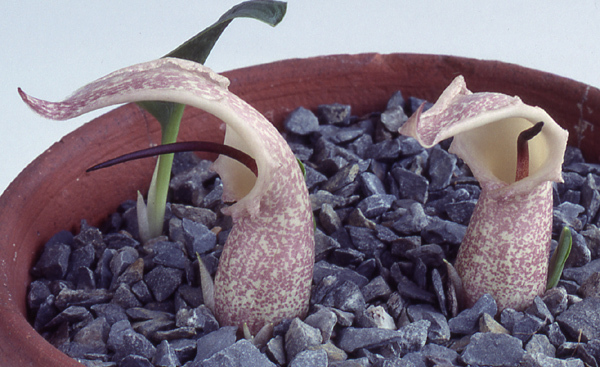
Biarum
Biarum is a genus of flowering plants in the family Araceae. It is composed of plants that are native to the Middle East, southern Europe (Spain, Portugal, Italy, Balkans), and North Africa. Biarum are often found growing in rock crevices and graveled soil composed largely of limestone.

Cyrtosperma
Cyrtosperma is a genus of flowering plants in the family Araceae. The genus went through considerable taxonomic changes in the 1980s, and as a result is now considered to be native only to Southeast Asia and some Pacific islands. Previously, the genus was thought to be widespread from Asia to Africa and South America, but the African and South American species were subsequently moved into separate genera. Cyrtosperma is now known to be most prominent in New Guinea. The genus Cyrtosperma is unique in this regard because it is the only known big genus in Araceae that is known to be found east of

Scindapsus
Scindapsus is a genus of flowering plants in the family Araceae. It is native to Southeast Asia, New Guinea, Queensland, and a few western Pacific islands. The species Scindapsus pictus is common in cultivation.

Symplocarpus
Symplocarpus is a genus of flowering plants in the family Araceae, native to United States, Canada and eastern Asia. The genus is characterized by having large leaves and deep root systems with contractile roots used for changing the plant's level with the ground. Symplocarpus species grow from a rhizome and their leaves release a foul odor when crushed.

Homalomena
Homalomena is a genus of flowering plants in the family Araceae. Homalomena are native to tropical Asia and China. Many Homalomena have a strong smell of anise. The name derives apparently from a mistranslated Malayan vernacular name, translated as , meaning flat, and mene = moon.

Dracontium
Dracontium is a genus of flowering plants similar to those of Amorphophallus. Unlike Amorphophallus which is found in the Old World, this genus has a New World distribution and is native to South America, Central America, southern Mexico, and the West Indies.

Pinellia
Pinellia is a genus of plants in the family Araceae native to East Asia (China, Korea, Japan). Its species are commonly called green dragons due to the color and shape of the inflorescence, which possesses a green, hooded spathe from which protrudes a long, tongue-like extension of the spadix. The leaves vary greatly in shape among different species, from simple and cordate to compound with three to many leaflets. Pinellia reproduces rapidly from seed and many species also produce bulbils on the leaves. Both characteristics have allowed some species to become weedy in temperate areas outside t

Typhonium
Typhonium is a genus in the family Araceae native to eastern and southern Asia, New Guinea, and Australia. It is most often found growing in wooded areas.

Eminium
Eminium is a genus of flowering plants in the family Araceae. The genus ranges from Turkey and Egypt east to Central Asia. Usually they can be found growing in barren areas in sand or stony soil. The foliage of Eminium resembles Helicodiceros and its inflorescence and fruit resembles those of Biarum.

Rhaphidophora
Rhaphidophora is a genus in the family Araceae, occurring from tropical Africa eastwards through Malesia and Australasia to the Western Pacific. The genus consists of approximately 100 species.

Montrichardia
Montrichardia is a genus of flowering plants in the family Araceae. It contains two species, Montrichardia arborescens and Montrichardia linifera, and one extinct species Montrichardia aquatica. The genus is helophytic and distributed in tropical America (West Indies, Belize, Brazil, Colombia, Costa Rica, French Guiana, Guatemala, Guyana, Honduras, Nicaragua, Panama, Peru, Puerto Rico, Suriname, Trinidad, Tobago, and Venezuela). The extinct species M. aquatica is known from fossils found in a Neotropical rainforest environment preserved in the Paleocene Cerrejón Formation of Colombia. Living M
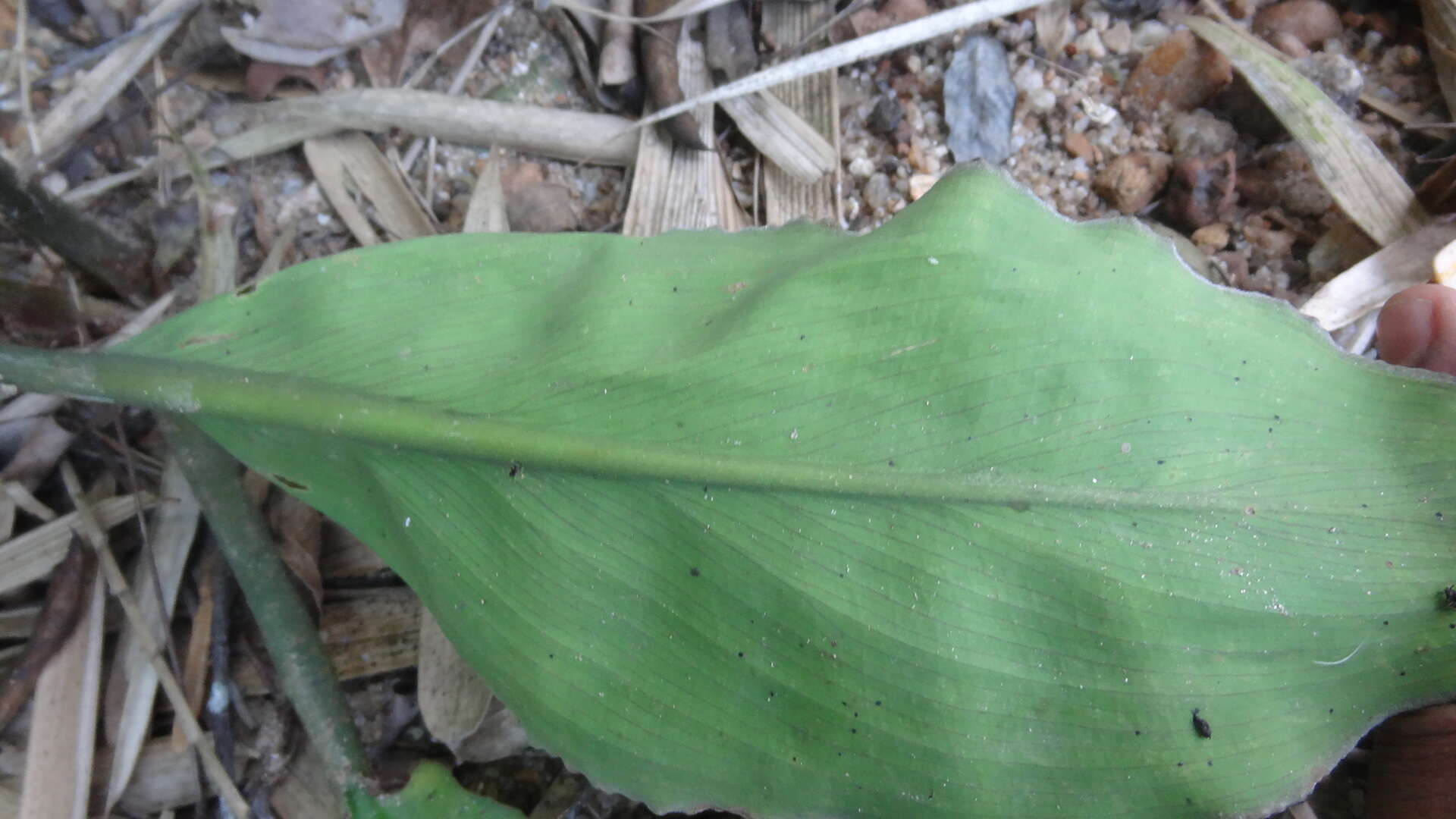
Lagenandra
Lagenandra is a genus of aquatic (to semi-aquatic) flowering plants in the aroid family, Araceae, endemic to the Indian subcontinent (Bangladesh, India and Sri Lanka). The genus has gradually become more known through the aquascaping and aquarium hobby, in which several related Araceae genera are already highly prized and grown on a large scale (notably Anubias, Bucephalandra and Cryptocoryne); Lagenandra, however, is still relatively rare in cultivation or private collections.

Anaphyllum
Anaphyllum is a genus of flowering plants in the family Araceae. It consists of two species. They are found in marshes, have leaves with some pinnation, and have a twisted spathe. The two species in this genus are similar in appearance to those in the genus Anaphyllopsis.
Anaphyllopsis
Anaphyllopsis is a genus of flowering plants in the family Araceae, native to northern South America.

Anadendrum
Anadendrum is a genus of flowering plants in the family Araceae. It is native to China and Southeast Asia.
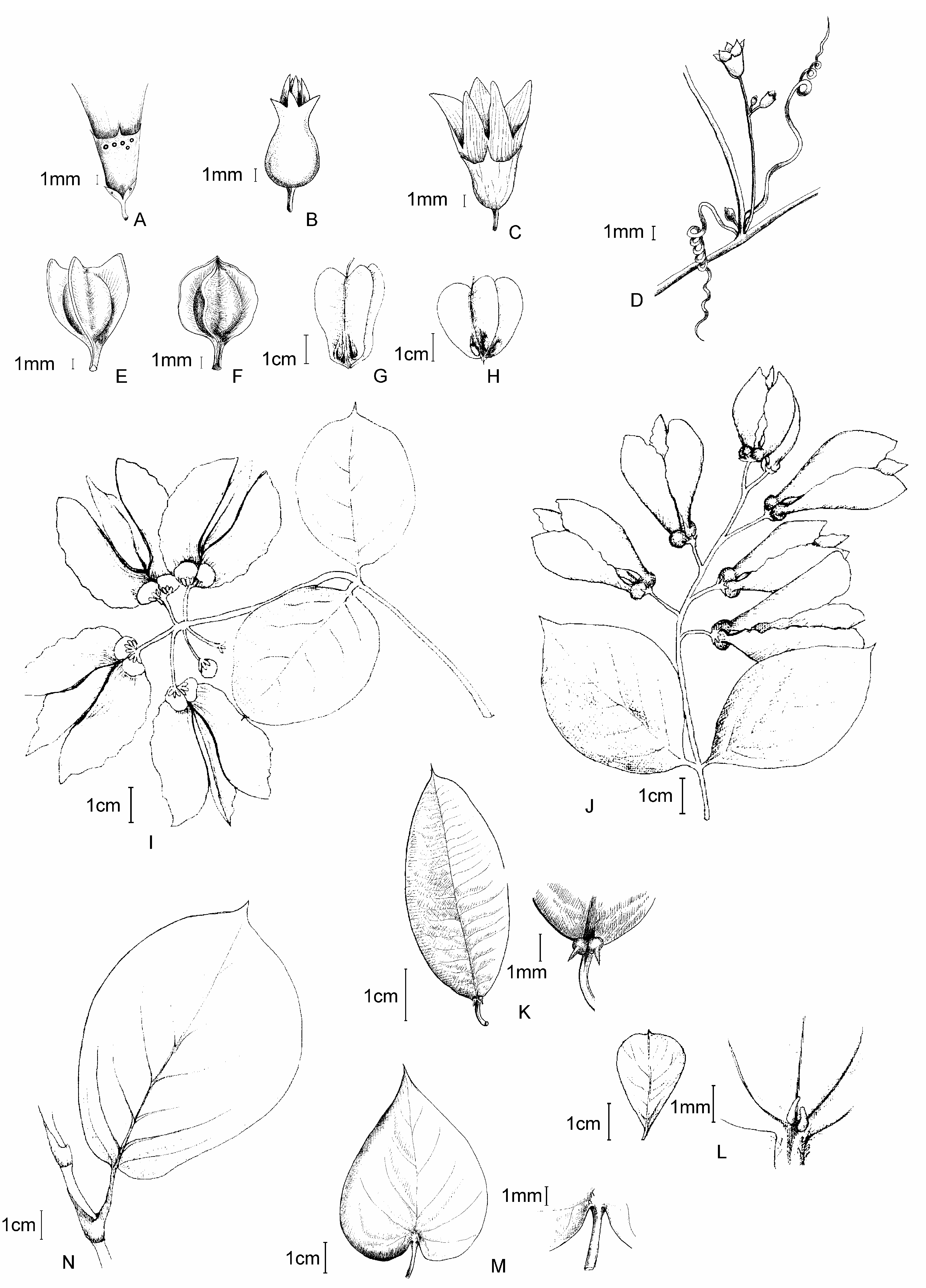
Peltandra
Peltandra, the arrow arums, is a genus of plants in the family Araceae. It is native to the eastern United States, eastern Canada, and Cuba.

Cercestis
Cercestis is a genus of flowering plants in the family Araceae. The species in this genus are all climbers and are native to Africa. At intervals along the stem they produce long leafless shoots called flagella. Many of the species in Cersestis show signs of fenestration.
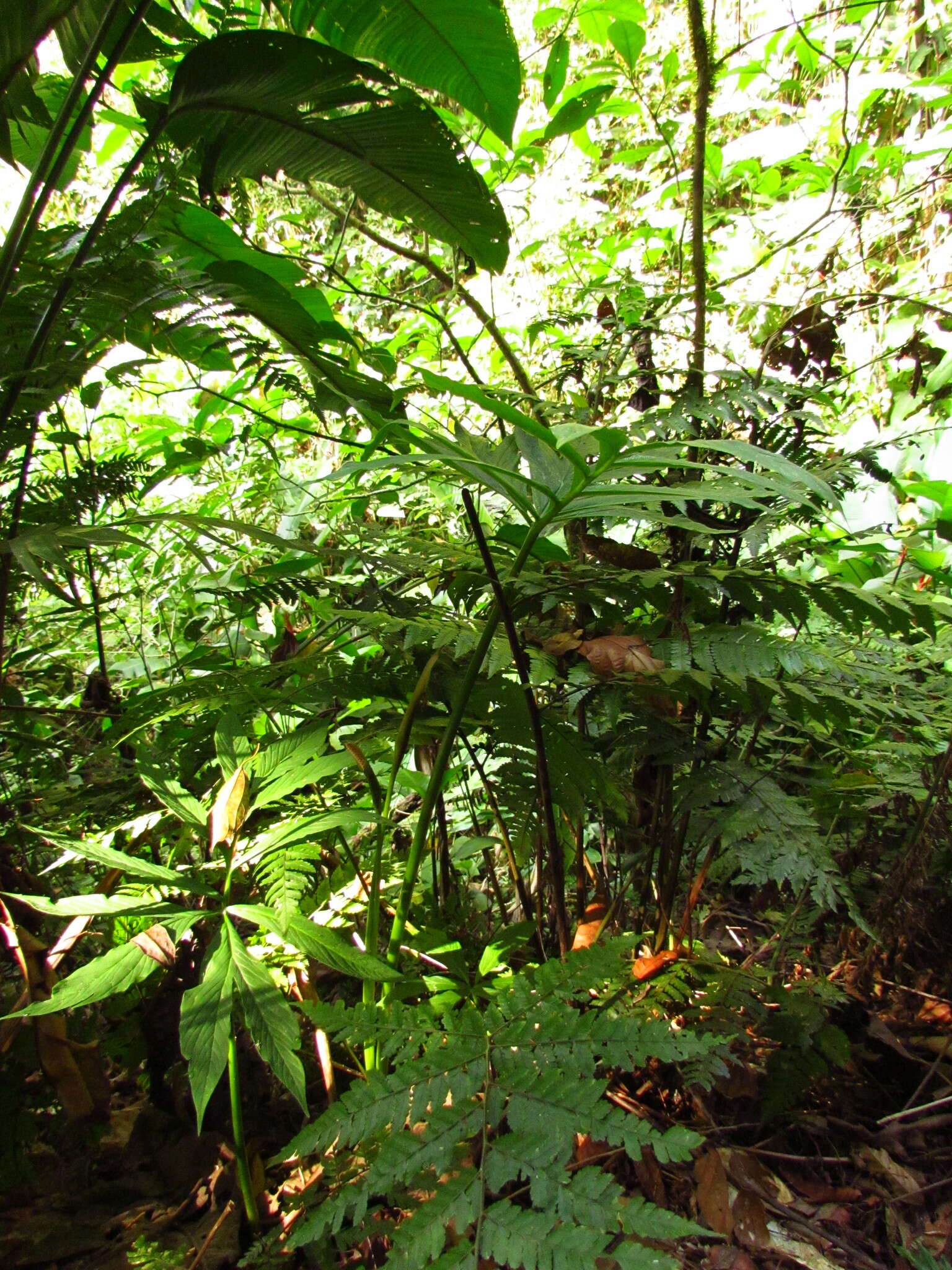
Asterostigma
Asterostigma is a genus of flowering plants in the family Araceae. It is native to Brazil and Argentina. The leaves are pinnate and the plant is tuberous.
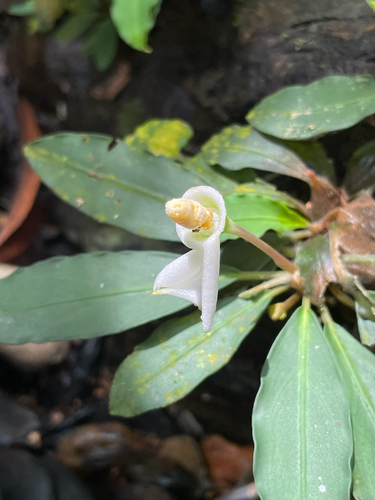
Bucephalandra
Bucephalandra is a genus of flowering plants in the family Araceae. There are 30 species of Bucephalandra which have been discovered in Borneo and have been formally described by S.Y. Wong and P.C. Boyce. So far, all described species have only been recorded from Borneo. Bucephalandra are usually found growing as dense mats over stones or rocks in streams or rivers in moist tropical forest.
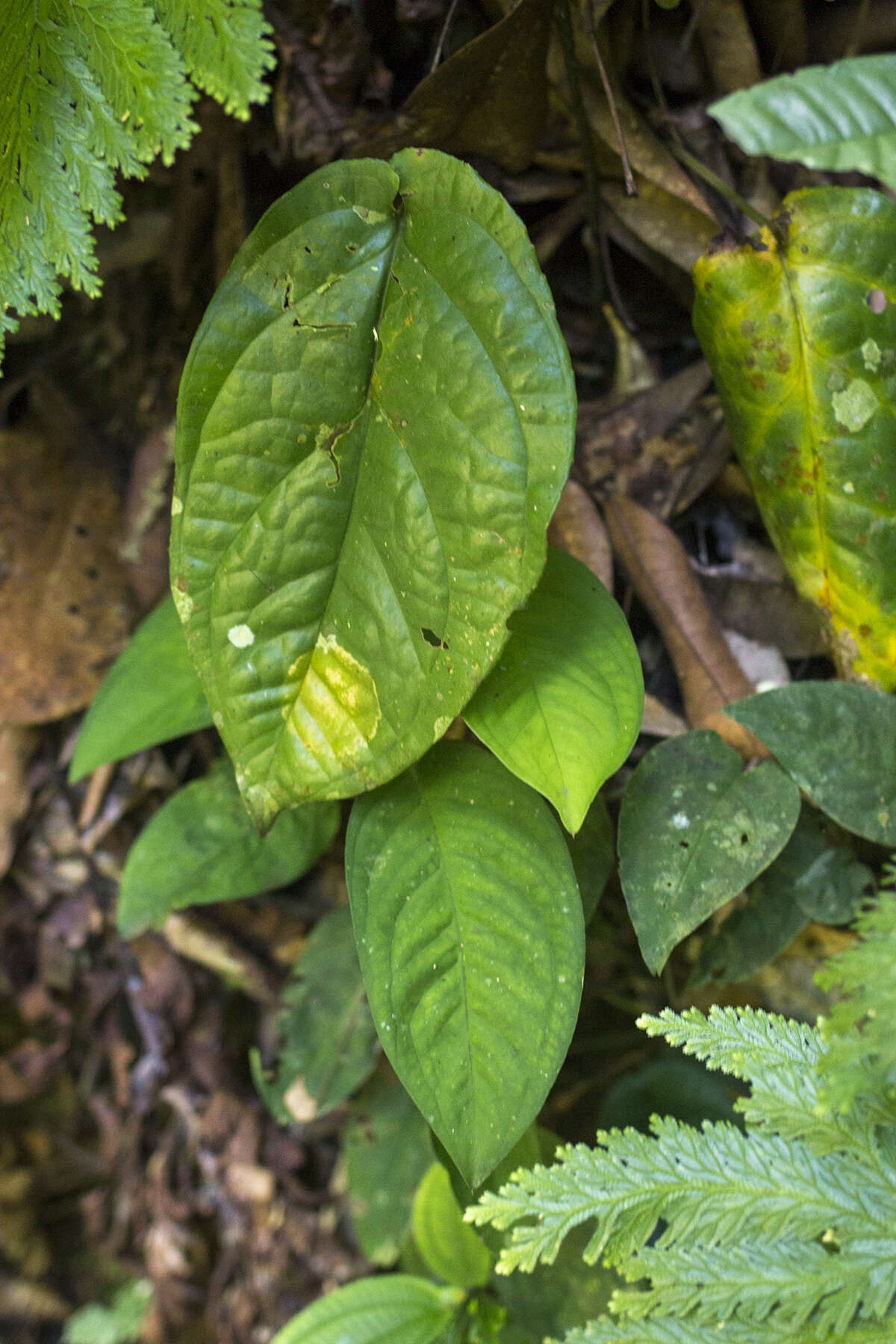
Amydrium
Amydrium is a genus of primarily epiphytic, climbing plants in the arum and aroid family Araceae, that is native to Southeast Asia, South China and New Guinea.

Alloschemone
Alloschemone is a genus of evergreen root climbing plants in the family Araceae that is native to the Amazon region of Bolivia and Brazil. There are only two species in the genus and both are extremely rare. These two species are Alloschemone occidentalis and Alloschemone inopinata. At one point in history, the genus Alloschemone was dissolved and added to Scindapsus, but it has since been reinstated after further observations of the plants.

Anchomanes
Anchomanes is a genus of flowering plants in the family Araceae. The genus is native to tropical Africa.

Dracontioides
Dracontioides is a genus of flowering plants in the family Araceae. It was long thought to contain only a single species until a second species was described in 2005. Both are endemic to Brazil.
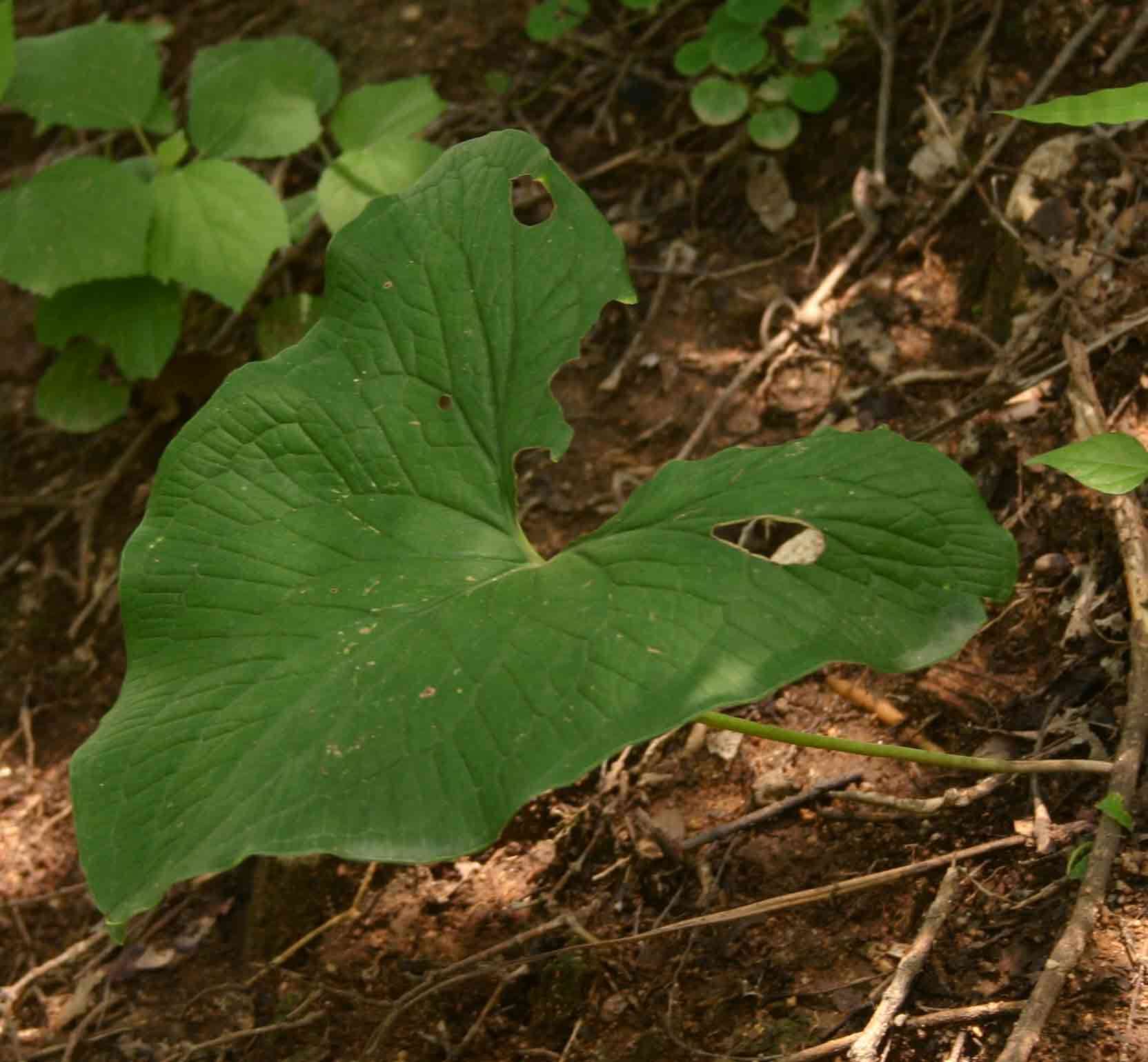
Stylochaeton
Stylochaeton is a genus of flowering plants in the family Araceae that is native to Africa. Stylochaeton are rhizomatous with hastate leaves. Flowering in this genus is said to be quite uncommon. Stylochaeton is the sole genus in the tribe Stylochaetoneae.

Lasia
Lasia is a genus of flowering plants in the family Araceae, native to Asia and New Guinea. The genus contains only two known species, Lasia spinosa and Lasia concinna. Lasia was believed to be a monotypic genus until 1997 when a wild population of Lasia concinna was discovered in a farmer's paddy field in West Kalimantan, Indonesia. The farmer had been growing them for their edible young leaves. This species of Lasia had been known of previously only from a single specimen at the Bogor Botanic Gardens, formally described in 1920. Prior to 1997, the specimen was believed to have been a hybrid b

Aridarum
Aridarum is a genus of flowering plants in the family Araceae. All of the known species in this genus are rheophytic and are endemic to the Island of Borneo. The plant is aquatic and has willow-shaped leaves that are able to take strong currents without sustaining damage.
Arophyton
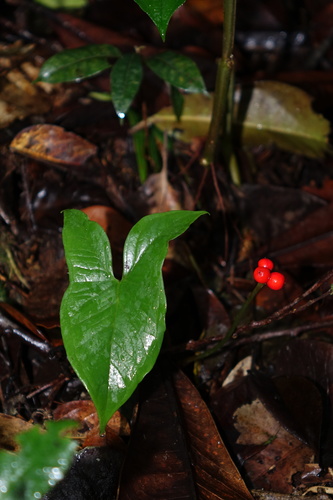
Arophyton is a genus of flowering plants in the family Araceae. It consists of 7 species that are found only in northeast Madagascar. Arophyton are tuberous plants with a few rhizomatous species that go through a dormant period during the dry season.

Culcasia
Culcasia is a genus of flowering plants in the family Araceae, native to tropical Africa. Most of its species are climbers and resemble Cercestis, except that they do not produce flagella.

Rhodospatha
Rhodospatha is a genus of plants in family Araceae. It is native to South America, Central America, and southern Mexico.
Carlephyton
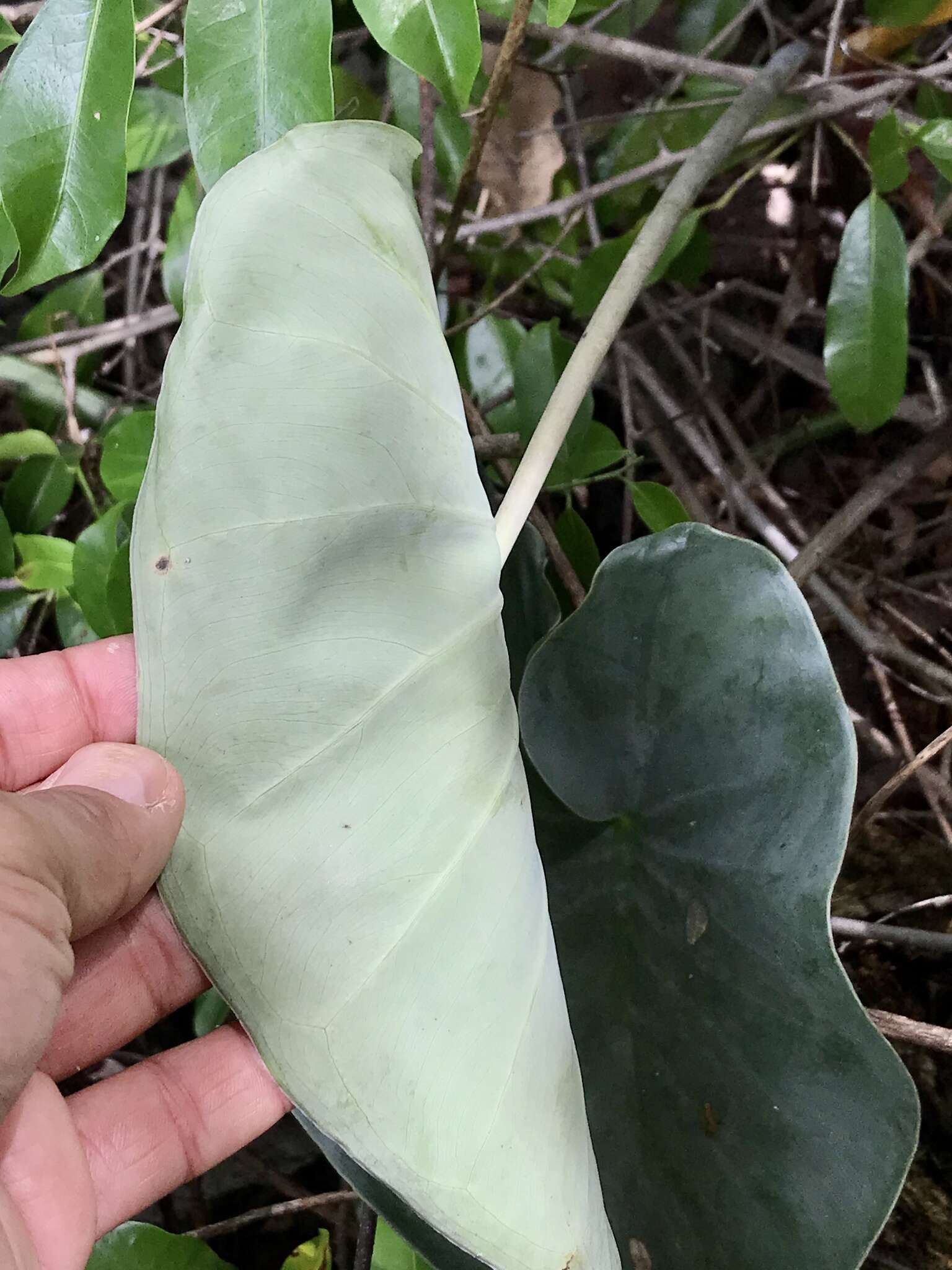
Carlephyton is a genus of four species in the family Araceae, all endemic to Madagascar.

Stenospermation
Stenospermation is a genus of plant in family Araceae native to South America and Central America.

Schismatoglottis
thumb|Schismatoglottis asperata
thumb|Schismatoglottis calyptrata
thumb|Variegated Schismatoglossis calyptrata
thumb|Schismatoglottis scintillans
thumb|Schismatoglottis wallichii

Chlorospatha
thumb | right | Chlorospatha lehmannii
Chlorospatha is a genus of flowering plants in the family Araceae. Chlorospatha can be found from Costa Rica, Panama, Colombia, Ecuador, and Peru.

Urospatha
thumb|Urospatha grandis habit
thumb|Upper spathe and leaves of [[Urospatha sagittifolia]]
Sauromatum
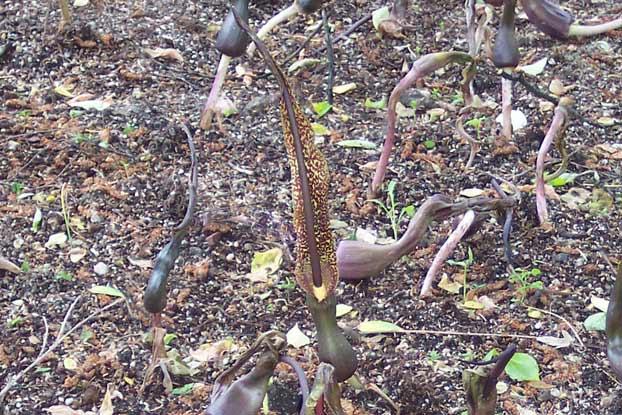
Sauromatum is a genus of flowering plants in the family Araceae. The genus is native to tropical Africa, tropical Asia, and the Arabian Peninsula. Their inflorescences last for only a few hours to a day and give off an unpleasant smell. The inflorescence disperses its odor by heating up.