Category
page 1Basidiomycota families

Agaricaceae
The Agaricaceae are a family of basidiomycete fungi and include the genus Agaricus, as well as basidiomycetes previously classified in the families Tulostomataceae, Lepiotaceae, and Lycoperdaceae.

Amanitaceae
The Amanitaceae are a family of mushroom-forming fungi. The family, also commonly called the amanita family, is in order Agaricales, the gilled mushrooms. The family consists primarily of the large genus Amanita, but also includes the smaller genera Catatrama, Limacella, Limacellopsis, Saproamanita, and Zhuliangomyces.

Russulaceae
The Russulaceae are a diverse family of fungi in the order Russulales, with roughly 1,900 known species and a worldwide distribution. They comprise the brittlegills and the milk-caps, well-known mushroom-forming fungi that include some edible species. These gilled mushrooms are characterised by the brittle flesh of their fruitbodies.

Boletaceae
The Boletaceae are a family of mushroom-forming fungi, primarily characterised by small pores on the spore-bearing hymenial surface (at the underside of the mushroom), instead of gills as are found in most agarics. Nearly as widely distributed as the agarics, the family is renowned for hosting some prime edible species highly sought after by mushroom hunters worldwide, such as the cep or king bolete (Boletus edulis). A number of rare or threatened species are also present in the family, that have become the focus of increasing conservation concerns. As a whole, the typical members of the famil
Tricholomataceae
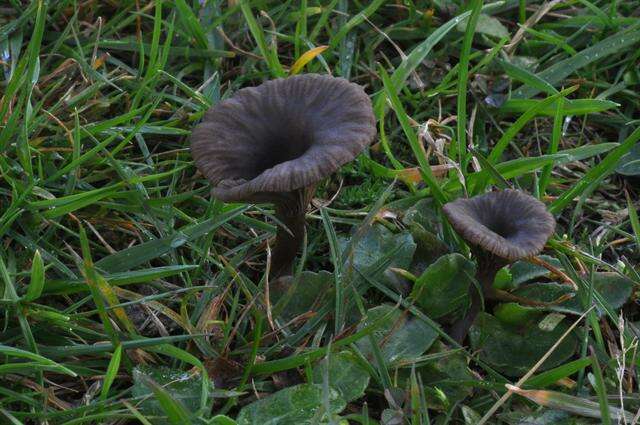
The Tricholomataceae are a large family of fungi within the order Agaricales. Originally a classic "wastebasket taxon", the family included any white-, yellow-, or pink-spored genera in the Agaricales not already classified as belonging to e.g. the Amanitaceae, Lepiotaceae, Hygrophoraceae, Pluteaceae, or Entolomataceae.

Cortinariaceae
The Cortinariaceae are a large family of gilled mushrooms found worldwide, containing over 3200 species. The family takes its name from its largest genus, the varied species of the genus Cortinarius. Many genera formerly in the Cortinariaceae have been placed in various other families, including Hymenogastraceae, Inocybaceae and Bolbitiaceae.

Marasmiaceae
The Marasmiaceae are a family of fungi in the order Agaricales. Basidiocarps (fruit bodies) are most frequently agarics (gilled mushrooms), but occasionally cyphelloid (in the genus Cellypha). According to a 2008 estimate, the family contained 54 genera and 1590 species, but molecular research, based on cladistic analysis of DNA sequences, has led to a more restricted family concept, so that the Marasmiaceae included just 13 genera, and some 1205 species. It was reduced further down in 2020, to 10 genera and about 700 species.
Cantharellaceae
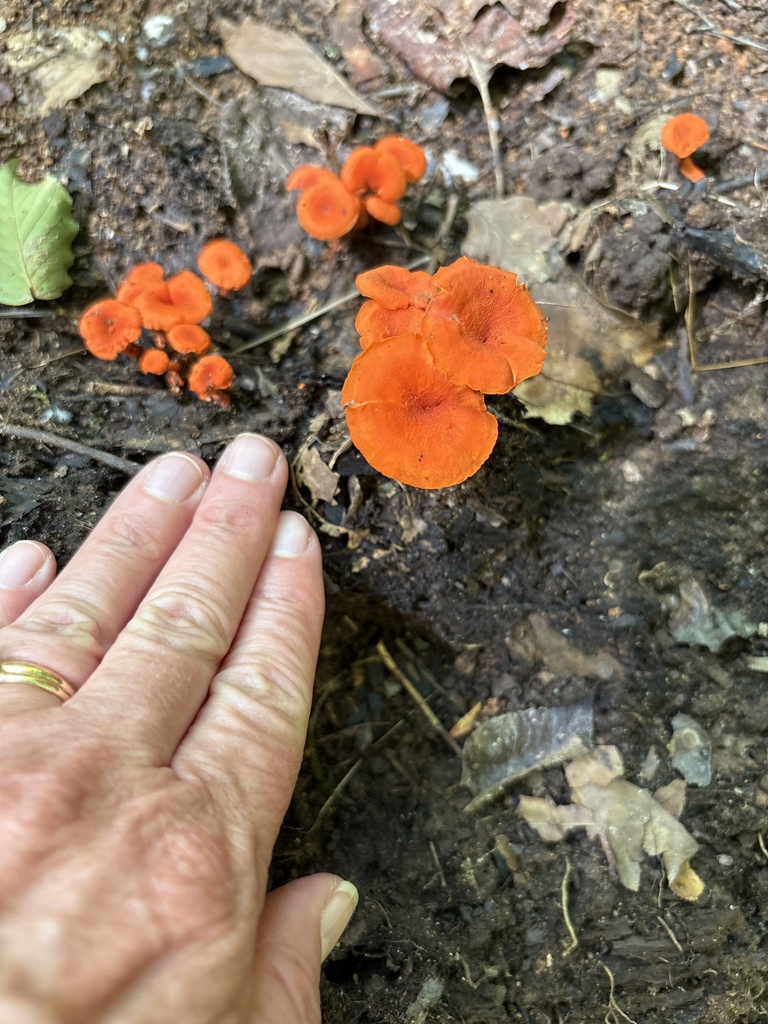
The Cantharellaceae are a family of fungi in the order Cantharellales. The family contains the chanterelles and related species, a group of fungi that superficially resemble agarics (gilled mushrooms) but have smooth, wrinkled, or gill-like hymenophores (spore-bearing undersurfaces). Species in the family are ectomycorrhizal, forming a mutually beneficial relationship with the roots of trees and other plants. Many of the Cantharellaceae, including the chanterelle (Cantharellus cibarius), the Pacific golden chanterelle (Cantharellus formosus), the horn of plenty (Craterellus cornucopioides), an

Phallaceae
thumb|Fresh stinkhorn mushroom

Strophariaceae
The Strophariaceae are a family of fungi in the order Agaricales. Under an older classification, the family covered 18 genera and 1316 species. The species of Strophariaceae have red-brown to dark brown spore prints, while the spores themselves are smooth and have an apical germ pore. These agarics are also characterized by having a cutis-type pileipellis. Ecologically, all species in this group are saprotrophs, growing on various kinds of decaying organic matter. The family was circumscribed in 1946 by mycologists Rolf Singer and Alexander H. Smith.
Entolomataceae
The Entolomataceae are a family of fungi in the order Agaricales. The family contains eight genera and 2250 species, the majority of which are in Entoloma. Basidiocarps (fruit bodies) are typically agaricoid (mushrooms with gills), but a minority are cyphelloid, secotioid, or gasteroid. All produce pink basidiospores that are variously angular (polyhedral), ridged, or nodulose. Species are mostly saprotrophic, though a few are parasitic on other fungi. The family occurs worldwide.

Psathyrellaceae
The Psathyrellaceae are a family of dark-spored agarics that generally have rather soft, fragile fruiting bodies, and are characterized by black, dark brown, rarely reddish, or even pastel-colored spore prints. About 50% of species produce fruiting bodies that dissolve into ink-like ooze when the spores are mature via autodigestion. Prior to phylogenetic research based upon DNA comparisons, most of the species that autodigested were classified as Coprinaceae, which contained all of the inky-cap mushrooms. However, the type species of Coprinus, Coprinus comatus, and a few other species, were fo

Bolbitiaceae
The Bolbitiaceae are a family of mushroom-forming basidiomycete fungi. A 2008 estimate placed 17 genera and 287 species in the family. Bolbitiaceae was circumscribed by mycologist Rolf Singer in 1948.
Clavariaceae
The Clavariaceae are a family of fungi in the order Agaricales. Originally the family contained most of the clavarioid fungi (club and coral fungi), but in its current sense is more restricted, albeit with a greater diversity of basidiocarp (fruit body) forms. Basidiocarps are variously clavarioid or agaricoid (mushroom-shaped), less commonly corticioid (effused, crust-like) or hydnoid (with pendant spines).

Hydnaceae
The Hydnaceae are a family of fungi in the order Cantharellales. Originally the family encompassed all species of fungi that produced basidiocarps (fruit bodies) having a hymenium (spore-bearing surface) consisting of slender, downward-hanging tapering extensions referred to as "spines" or "teeth", whether they were related or not. This artificial but often useful grouping is now more generally called the hydnoid or tooth fungi. In the strict, modern sense, the Hydnaceae are limited to the genus Hydnum and related genera, with basidiocarps having a toothed or poroid hymenium. Species in the fa

Pucciniaceae
The Pucciniaceae are a family of rust fungi that cause plant diseases, mainly on cereals such as wheat. The family contains over 4900 species: many of them in the type genus Puccinia.

Tremellaceae
The Tremellaceae are a family of fungi in the order Tremellales. The family is cosmopolitan and contains both teleomorphic and anamorphic species, most of the latter being yeasts. All teleomorphs in the Tremellaceae are parasites of other fungi, though the yeast states are widespread and not restricted to hosts. Basidiocarps (fruit bodies), when produced, are gelatinous.
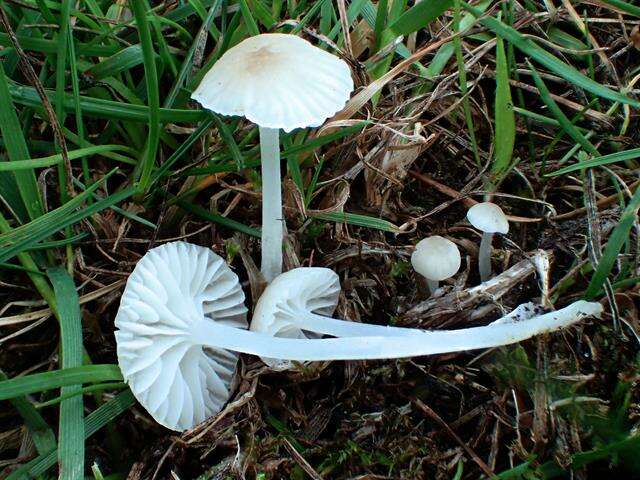
Mycenaceae
The Mycenaceae are a family of fungi in the order Agaricales. According to the Dictionary of the Fungi (10th edition, 2008), the family contains 10 genera and 705 species. This is one of several families that were separated from the Tricholomataceae as a result of phylogenetic analyses. Taxa in the Mycenaceae are saprobic, have a cosmopolitan distribution, and are found in almost all ecological zones. The family was circumscribed by Caspar van Overeem in 1926.
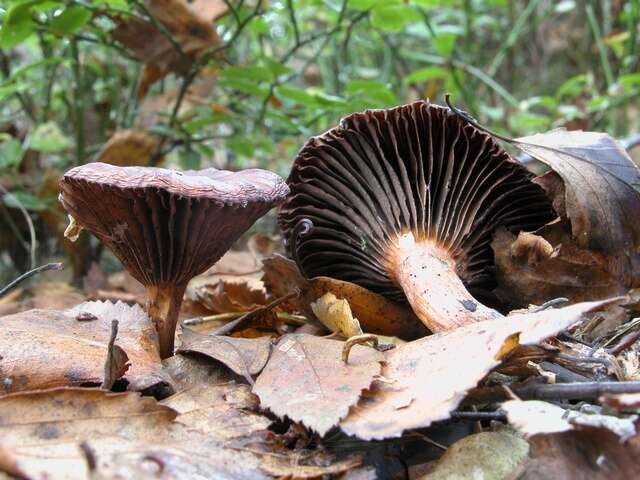
Gomphidiaceae
The Gomphidiaceae are a family of mushroom-forming fungi in the order Boletales. Unlike other boletes, all members of Gomphidiaceae (except for Gomphogaster) are agarics, having gills instead of pores. Member genera include Chroogomphus, Cystogomphus, Gomphidius and Gomphogaster, the last being a monotypic genus (i.e. with a single species) that may be incorporated into Gomphidius in the future after molecular assessment. The similarly named genus Gomphus is unrelated to this family. Another genus Brauniellula has since been sunk into Chroogomphus.

Auriculariaceae
The Auriculariaceae are a family of fungi in the order Auriculariales. Species within the family were formerly referred to the "heterobasidiomycetes" or "jelly fungi", since many have gelatinous basidiocarps (fruit bodies) that produce spores on septate basidia. Around 100 species are known worldwide. All are believed to be saprotrophic, most growing on dead wood. Fruit bodies of several Auricularia species are cultivated for food on a commercial scale, especially in China.

Albatrellaceae
The Albatrellaceae are a family of fungi in the order Russulales. The family contains 9 genera and more than 45 species.

Paxillaceae
The Paxillaceae are a family of mushroom-forming fungi bearing close affinity to the boletes. Collectively, the family contains nine genera and 78 species. The type genus is Paxillus, containing fungi with decurrent gills, and Gyrodon, which has members with decurrent pores, among others. French mycologist René Maire had erected the family in 1902, placing it between the agarics and boletes and recognizing the groups' similarities with the latter group. Maire's usage of the name was later deemed to be invalid, and the genus authority is attributed to Johannes Paulus Lotsy. Molecular research c
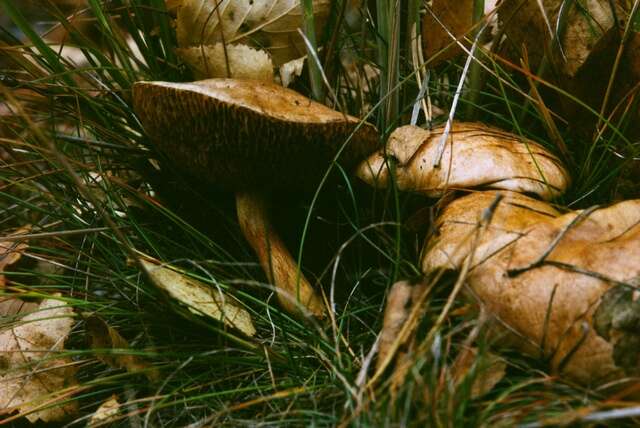
Suillaceae
The Suillaceae are a family of fungi in the order Boletales (suborder Suillineae), containing the boletus-like Suillus, the small truffle-like Truncocolumella, as well as the monotypic genus Psiloboletinus. As of 2008, there are 54 species in the family. Gastrosuillus, once considered a distinct genus, has been shown with molecular analysis to be a recent evolutionary derivative of Suillus. Fuscoboletinus, described by Pomerleau and Smith in 1962, has also been subsumed into Suillus.
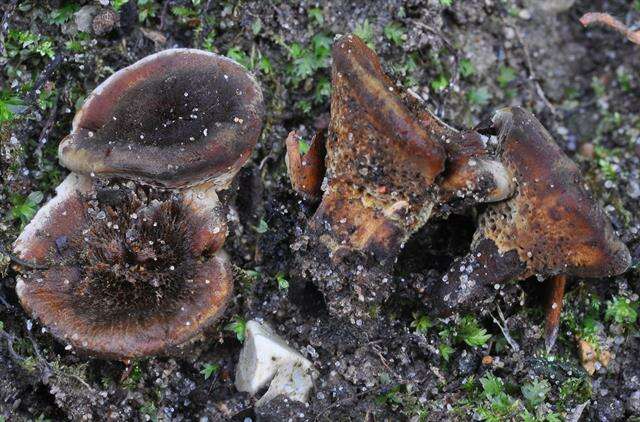
Hymenochaetaceae
The Hymenochaetaceae are a family of fungi in the order Hymenochaetales. The family contains several species that are implicated in many diseases of broad-leaved and coniferous trees, causing heart rot, canker and root diseases, and also esca disease of grapevines.

Gomphaceae
The Gomphaceae are a diverse family of fungi belonging in what is classically known as the Phallales or cladistically as the gomphoid-phalloid clade. In 2008, the family had 13 genera and 287 species.
Bondarzewiaceae
The Bondarzewiaceae are a family of fungi in the order Russulales. The type species for both its genus and the family as a whole, Bondarzewia montana, closely resembles members of Polyporales (and was formerly placed there), but has ornamented spores like those of Lactarius or Russula. This characteristic suggested the relationship between physically dissimilar species that eventually led to the restructuring of Russulales (and other taxa) using molecular phylogeny. According to the Dictionary of the Fungi (10th edition, 2008), the family contains 8 genera and 48 species.
Auriscalpiaceae
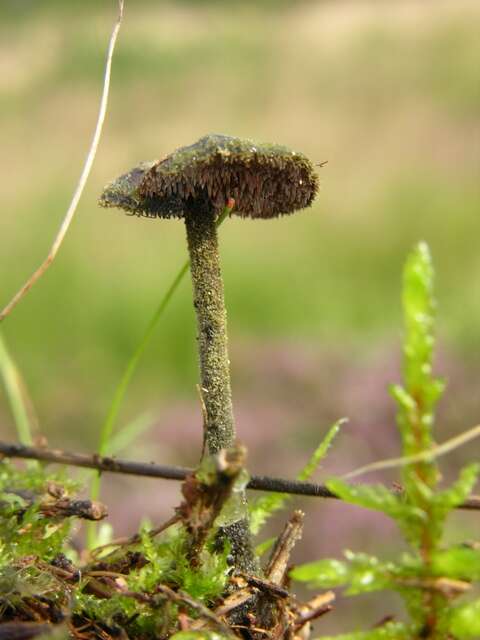
The Auriscalpiaceae are a family of fungi in the order Russulales. Like much of the Russulales, it has been defined through molecular phylogeny, and includes physically dissimilar species, such as the tooth fungus Auriscalpium and the gilled, often shelf-like members of Lentinellus.

Rhizopogonaceae
The Rhizopogonaceae are a family of fungi in the order Boletales. The family, first named and described by botanists Ernst Albert Gäumann and Carroll William Dodge in 1928, contains 2 genera and 151 species. The genus Fevansia, formerly thought to belong in the Rhizopogonaceae, was found to belong in the Albatrellaceae in a molecular phylogenetics study.
Hericiaceae
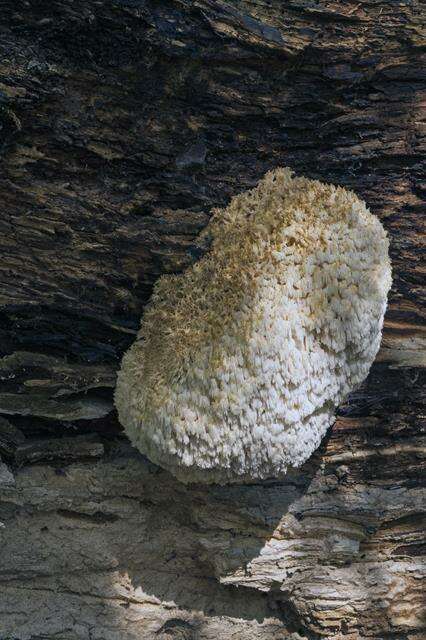
The Hericiaceae are a family of fungi in the order Russulales. The best known genus is Hericium, species of which are valued for their medicinal properties in Oriental medicine. Taxa are mainly known from north temperate regions, and are saprobic on rotting wood. Phylogenetic analysis suggests that Hericiaceae belongs to the russuloid clade of homobasidiomycetes, and morphological and molecular evidence links it with the families Auriscalpiaceae, Bondarzewiaceae and Echinodontiaceae. Originally proposed in 1961 by Taisiya Lvovna Nikolayeva as a subfamily of Hydnaceae, Hericiaceae was formally
Ustilaginaceae
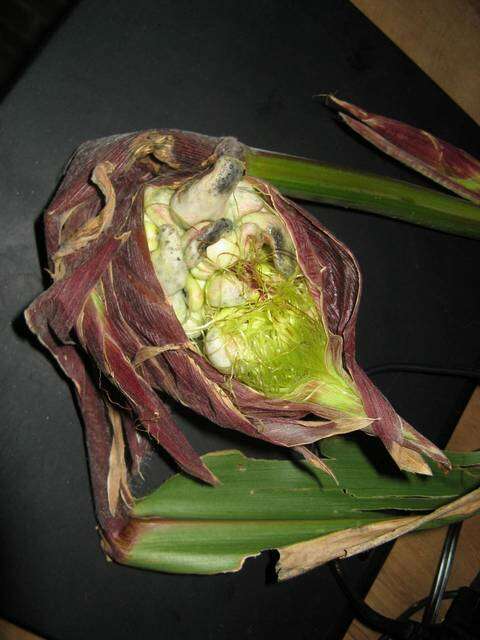
The Ustilaginaceae are a family of smut fungi in the order Ustilaginomycetes. Collectively, the family contains 17 genera and 607 species.
Coniophoraceae
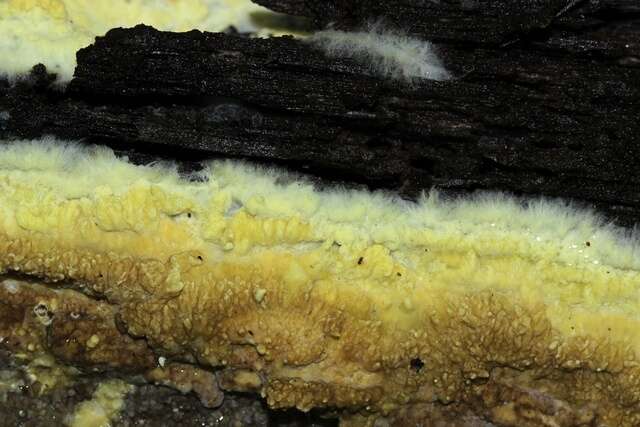
The Coniophoraceae are a family of fungi in the Boletales order. The family contains 6 genera and 28 species.
Sclerodermataceae
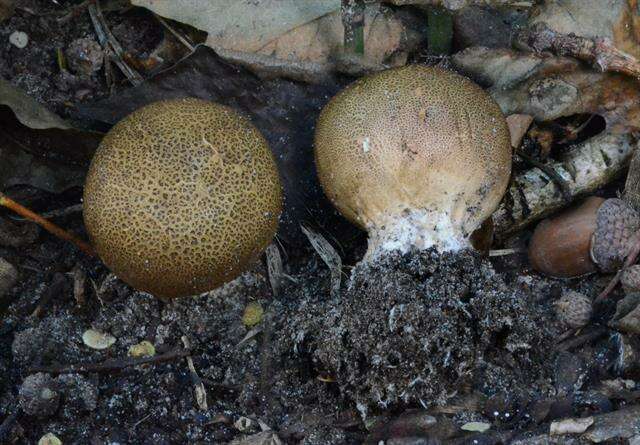
The Sclerodermataceae are a family of fungi in the order Boletales, containing several genera of unusual fungi that little resemble boletes. Taxa, which include species commonly known as the ‘hard-skinned puffballs’, ‘earthballs’, or 'earthstars', are widespread in both temperate and tropical regions. The best known members include the earthball Scleroderma citrinum, the dye fungus Pisolithus tinctorius and the 'prettymouths' of the genus Calostoma.
Dacrymycetaceae
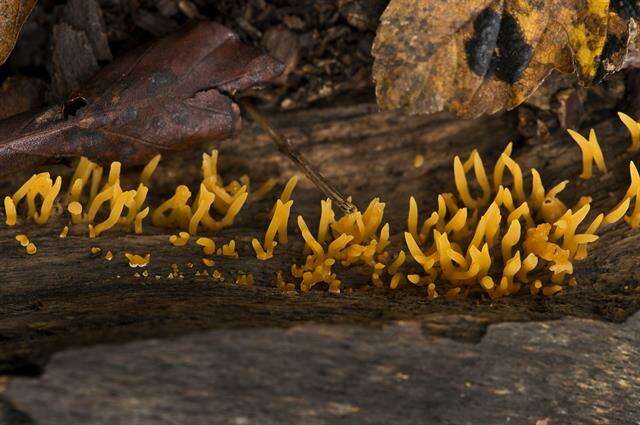
The Dacrymycetaceae are a family of fungi in the order Dacrymycetales. Species are saprotrophs and occur on dead wood. Their distribution is worldwide. Basidiocarps (fruit bodies) are ceraceous (waxy) to gelatinous, often yellow to orange, and variously clavarioid, disc-shaped, cushion-shaped, spathulate (spoon-shaped), or corticioid (effused).
Tilletiaceae
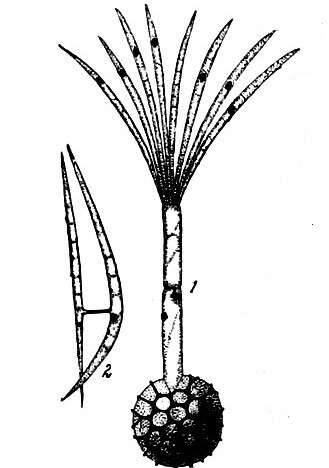
REDIRECT Tilletiales

Tapinellaceae
The Tapinellaceae are a family of fungi in the order Boletales. Members of this family are: Bondarcevomyces, Pseudomerulius, and Tapinella.
Cyphellaceae
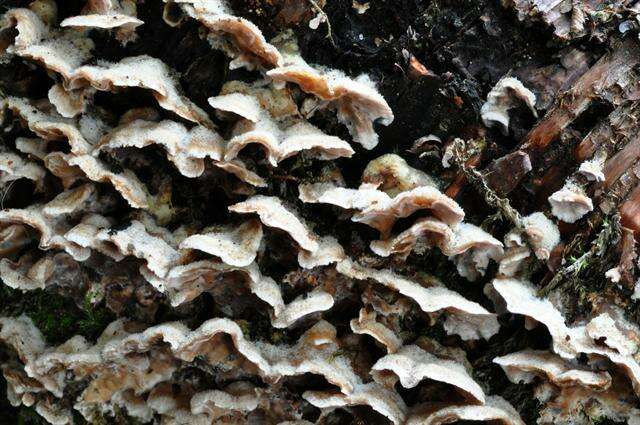
The Cyphellaceae are a family of fungi in the order Agaricales. The family contains 16 genera and, in 2008, 31 species. Its sister group is the Porotheleaceae, both of which are in the 'marasmioid clade'.

Clavulinaceae
The Clavulinaceae are a family of fungi in the order Cantharellales. The family is not well defined, but currently comprises species of clavarioid (club and coral) fungi as well as some corticioid (crust- and patch-forming) fungi. These species are nutritionally diverse, some being ectomycorrhizal, others wood-rotting saprotrophs, others lichenized, and yet others lichenicolous (growing on or parasitizing lichens).

Stereaceae
The Stereaceae are a family of corticioid fungi in the Russulales order. Species in the family have a widespread distribution, are lignicolous or terrestrial (in leaf litter), and typically saprobic. According to the Dictionary of the Fungi, the family contains 22 genera and 125 species.
Peniophoraceae
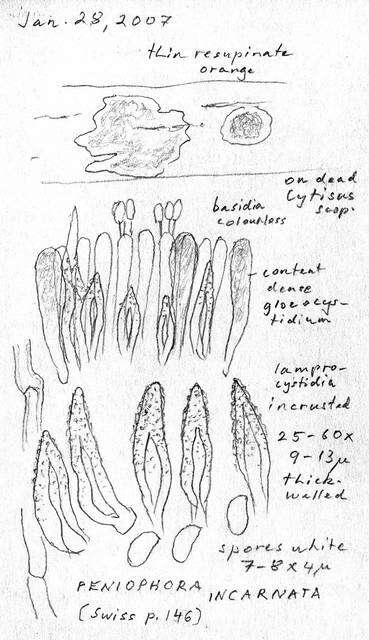
The Peniophoraceae are a family of fungi in the order Russulales. Species of this family have a cosmopolitan distribution and are mostly saprobic, causing rots of standing and fallen wood. According to 2025 data the family contains 16 genera and 416 species.
Pterulaceae
The Pterulaceae are a family of fungi in the order Agaricales. According to a 2008 estimate, the family contained 99 species previously distributed among 12 genera. More recent data from molecular phylogenetic reconstruction showed that members of the genus Parapterulicium are unrelated to Pterulaceae and also polyphyletic. A new genus Baltazaria was created and both genera were moved to Russulales, to families Lachnocladiaceae and Peniophoraceae respectively.
Hygrophoropsidaceae
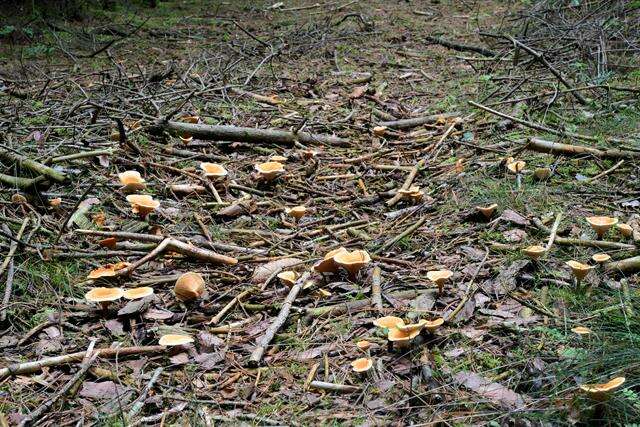
The Hygrophoropsidaceae are a family of mushrooms that are gilled in appearance but lie within the Boletales. The family contains 18 species within two genera: Leucogyrophana and Hygrophoropsis, with the best-known member being the "false chanterelle", Hygrophoropsis aurantiaca. Hygrophoropsidaceae was circumscribed by French mycologist Robert Kühner in 1980, with Hygrophoropsis as the type genus. Unlike most members of the Boletales, Hygrophoropsidaceae species are saprophytic wood-rotting fungi that cause brown rot in their hosts. The genera Austropaxillus and Tapinella, once placed in this

Bankeraceae
The Bankeraceae are a family of fungi in the order Thelephorales. Taxa are terrestrial, and ectomycorrhizal with plant species in families such as Pinaceae or Fagaceae. The family was circumscribed by Marinus Anton Donk in 1961. According to a 2008 estimate, the family contains 6 genera and 98 species.
Thelephoraceae
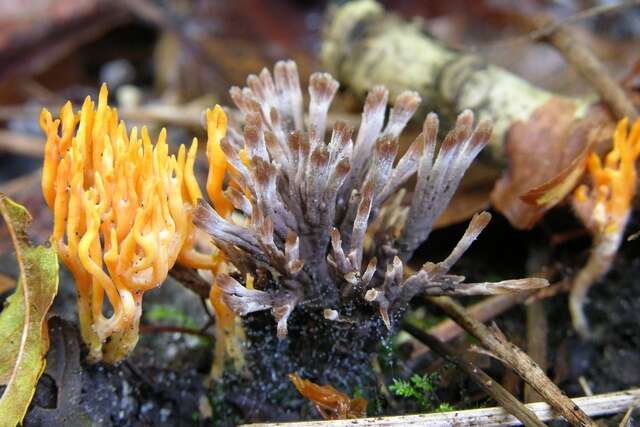
The Thelephoraceae are a family of fungi in the order Thelephorales. This grouping of mushrooms is commonly known as the "leathery earthfans".
Echinodontiaceae
The Echinodontiaceae are a family of crust fungi in the order Russulales. Species of this family, divided amongst two genera—Echinodontium and Laurilia—have a widespread distribution, although they are especially predominant in north temperate zones. They are parasitic or saprobic on wood, and may cause white rot of angiosperms and gymnosperms.
Aphelariaceae
The Aphelariaceae are a family of fungi in the order Cantharellales. The family contains a small group of tropical and subtropical clavarioid fungi, but is not well characterized and has not been the subject of published research.
Boletinellaceae
The Boletinellaceae are a small family of mushroom-forming fungi, primarily characterized by small pores on the underside of the cap rather than gills. Though in the order Boletales, research shows they and Gyroporaceae are more closely related to earthballs of Sclerodermataceae than Boletaceae.
Lachnocladiaceae
The Lachnocladiaceae are a family of fungi in the order Russulales. Based on 2025 data, this family currently only includes a single genus and three species. Other genera that belonged in the family in the past have been moved to Peniophoraceae based on latest molecular phylogenetic studies.
Niaceae
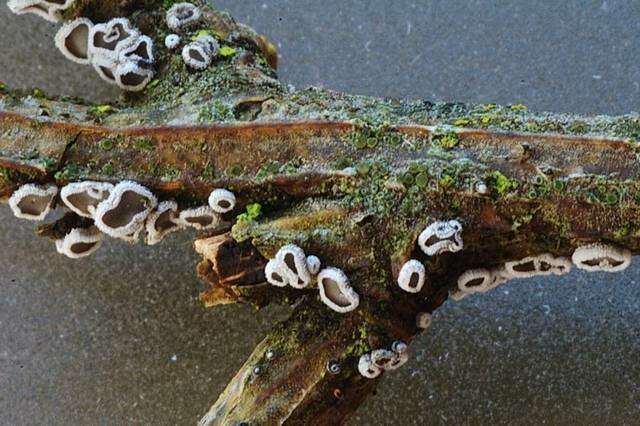
The Niaceae are a family of fungi in the order Agaricales. The family contains six genera and 56 species. GBIF (in 2022), accepted 10 genera and 278 species.
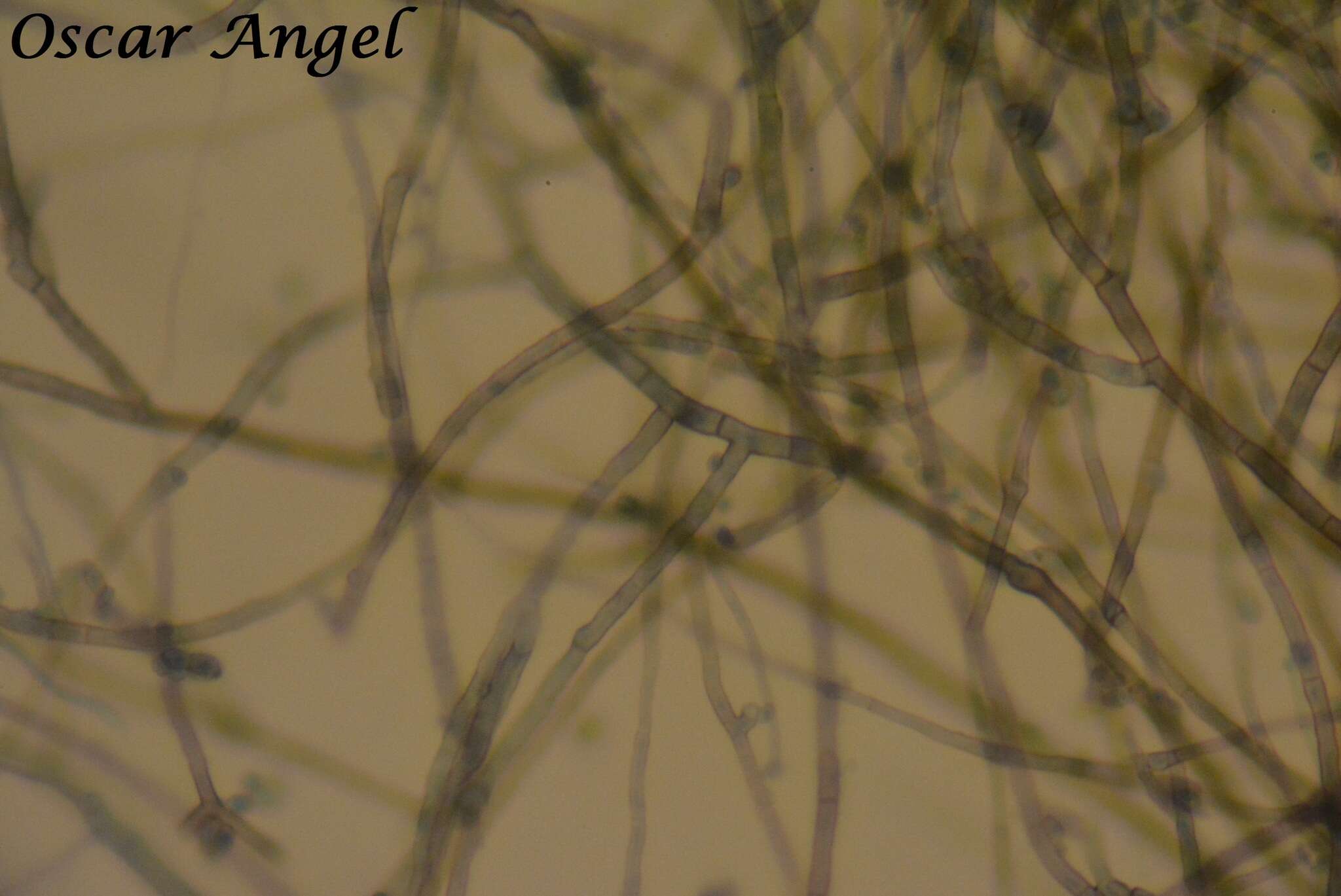
Ceratobasidiaceae
The Ceratobasidiaceae are a family of fungi in the order Cantharellales. All species within the family have basidiocarps (fruit bodies) that are thin and effused. They have sometimes been included within the corticioid fungi or alternatively within the "heterobasidiomycetes". Species are saprotrophic, but some are also facultative plant pathogens or are associated with orchid mycorrhiza. Genera of economic importance include Ceratobasidium and Rhizoctonia, both of which contain plant pathogenic species causing diseases of commercial crops and turf grass.

Cronartiaceae
The Cronartiaceae are a family of rust fungi in the order Uredinales.
Phragmidiaceae
The Phragmidiaceae are a family of rust fungi in the order Pucciniales. The family contains 14 genera and 164 species.

Botryobasidiaceae
The Botryobasidiaceae are a family of fungi in the order Cantharellales. The family contains a group of corticioid fungi that form thin, web-like basidiocarps. Some species form asexual anamorphs producing chlamydospores. All are believed to be wood-rotting or litter-rotting saprotrophs. None is known to be of any economic importance.

Microbotryaceae
Microbotryaceae is a family of Basidiomycota fungi in the order Microbotryales.
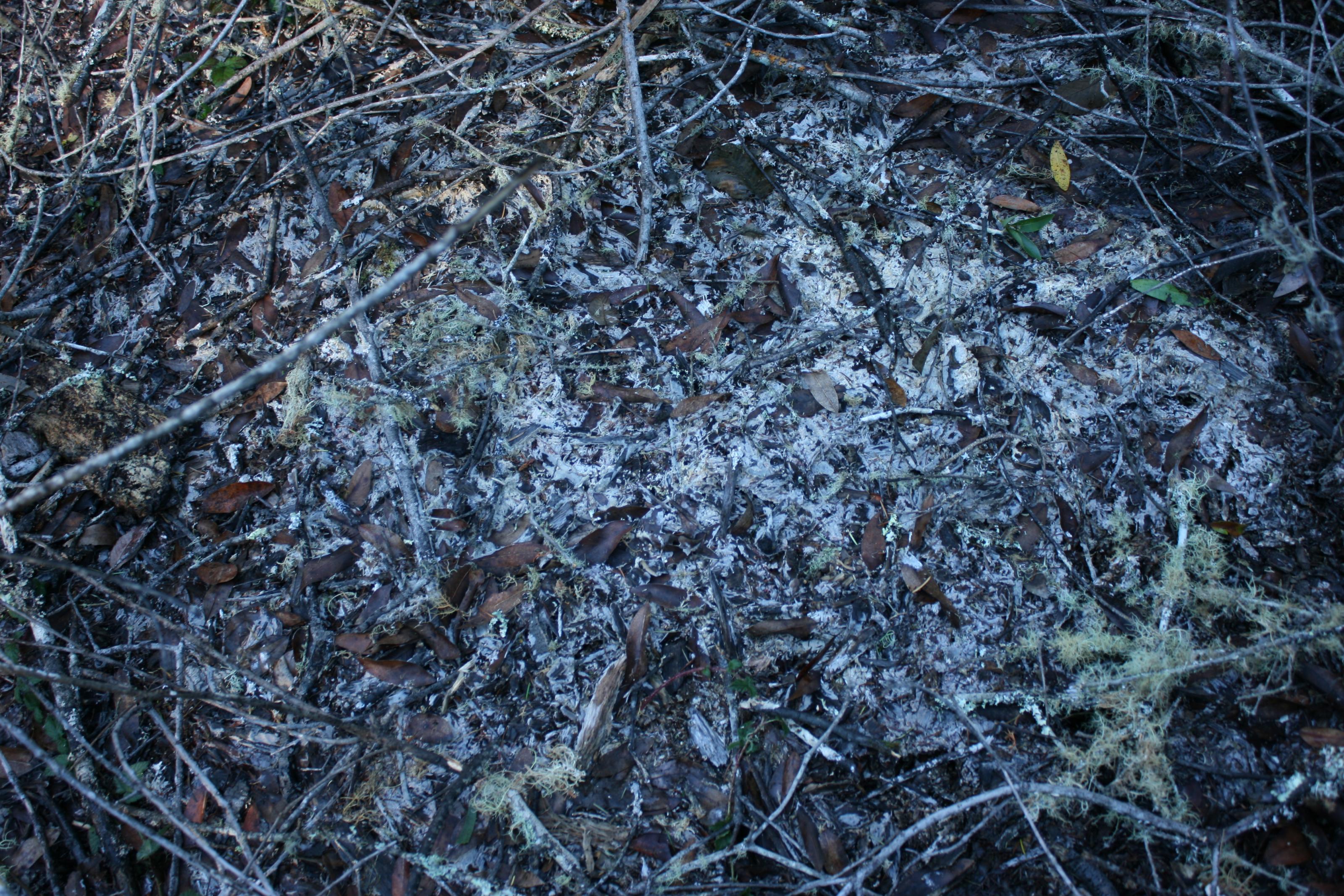
Corticiaceae
The Corticiaceae are a family of fungi in the order Corticiales. The family formerly included almost all the corticioid (patch- or crust-forming) fungi, whether they were related or not, and as such was highly artificial. In its current sense, however, the name Corticiaceae is restricted to a comparatively small group of corticioid genera within the Corticiales.

Atheliaceae
Atheliaceae is a family of mostly corticioid fungi placed in the order Atheliales. Both the order and the family were described by the Swiss mycologist Walter Jülich in 1981 along with three other families, Lobuliciaceae, Byssocorticiaceae, Pilodermataceae and Tylosporaceae discovered in 2020. According to a 2008 estimate, the family contains 20 genera and approximately 100 species. However, many genera formerly considered to belong in the Atheliaceae have since been moved to other families, including Amylocorticiaceae, Albatrellaceae, and Hygrophoraceae. Despite being a relatively small group

Tulasnellaceae
The Tulasnellaceae are a family of fungi in the order Cantharellales. The family comprises mainly effused (patch-forming) fungi formerly referred to the "jelly fungi" or heterobasidiomycetes. Species are wood- or litter-rotting saprotrophs, but many are also endomycorrhizal associates of orchids and some have also been thought to form ectomycorrhizal associations with trees and other plants.
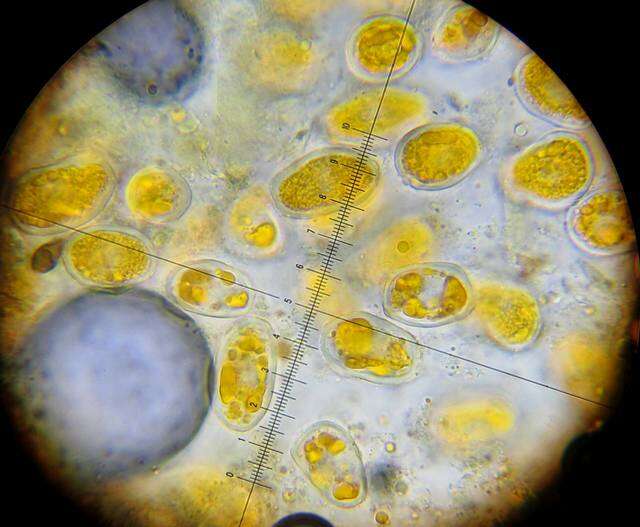
Pucciniastraceae
The Pucciniastraceae are a family of rust fungi in the order Pucciniales. The family contains 11 genera and 158 species.
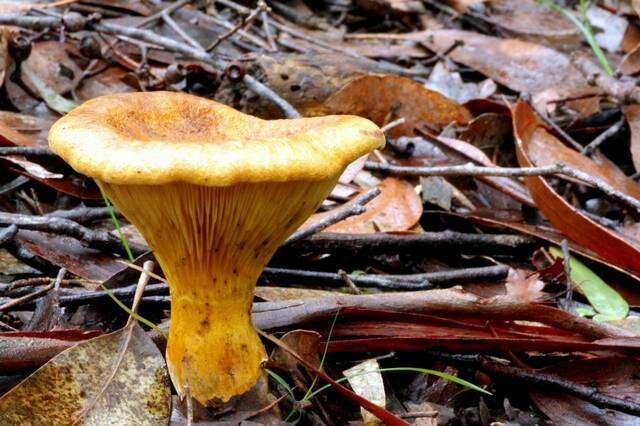
Serpulaceae
The Serpulaceae are a family of fungi in the Boletales order. According to the Dictionary of the Fungi (10th edition, 2008), the family contains 4 genera and 20 species. However, a molecular phylogenetics study showed that the genus Neopaxillus, which was formerly placed in this family, belongs in the family Crepidotaceae in the order Agaricales.

Coleosporiaceae
The Coleosporiaceae are a family of rust fungi in the order Pucciniales. The family contains 6 genera and 131 species. It was updated in 2020, to 7 genera and 173 species.

Melampsoraceae
Melampsoraceae are a family of rust fungi in the order Pucciniales. The family is monotypic, containing the single genus Melampsora, which contains about 90 species.