Category
page 1Cosmetics chemicals

Aloe
thumb|180px|Succulent plants, such as this aloe, store water in their enlarged fleshy leaves, stems, or roots, as shown in this split aloe leaf. This allows them to survive in arid environments.
thumb|alt=Aloe Vera houseplant|Spikes on an Aloe Vera houseplant

glycerol
Glycerol () is a sugar alcohol with chemical formula . It has three carbon atoms and as many hydroxyl groups. It is a colorless, odorless, sweet-tasting, viscous liquid at Standard Ambient Temperature and Pressure (SATP). Because of its three hydroxyl groups, glycerol is miscible with water and is hygroscopic in nature.

acetone
Acetone (2-propanone or dimethyl ketone) is an organic compound with the formula . It is the simplest and smallest ketone (). It is a colorless, highly volatile, and flammable liquid with a characteristic pungent odor.

talc
Talc, or talcum, is a clay mineral composed of hydrated magnesium silicate, with the chemical formula . Talc in powdered form, often combined with corn starch, is used as baby powder. This mineral is used as a thickening agent and lubricant. It is an ingredient in ceramics, paints, and roofing material. It is a main ingredient in many cosmetics. It occurs as foliated to fibrous masses, and in an exceptionally rare crystal form. It has a perfect basal cleavage and an uneven flat fracture, and it is foliated with a two-dimensional platy form.

guanine
Guanine () (symbol G or Gua) is one of the four main nucleotide bases found in the nucleic acids DNA and RNA, the others being adenine, cytosine, and thymine (uracil in RNA). In DNA, guanine is paired with cytosine. The guanine nucleoside is called guanosine.

sunflower oil
oil pressed from the seed of Helianthus annuus

silicone
thumb|Silicone caulk can be used as a basic sealant against water and air penetration.

DL-malic acid
group of stereoisomers

castor oil
vegetable oil obtained by pressing the seeds of the Castor plant, Ricinus communis

petroleum jelly
chemical substance used as lubricating agent
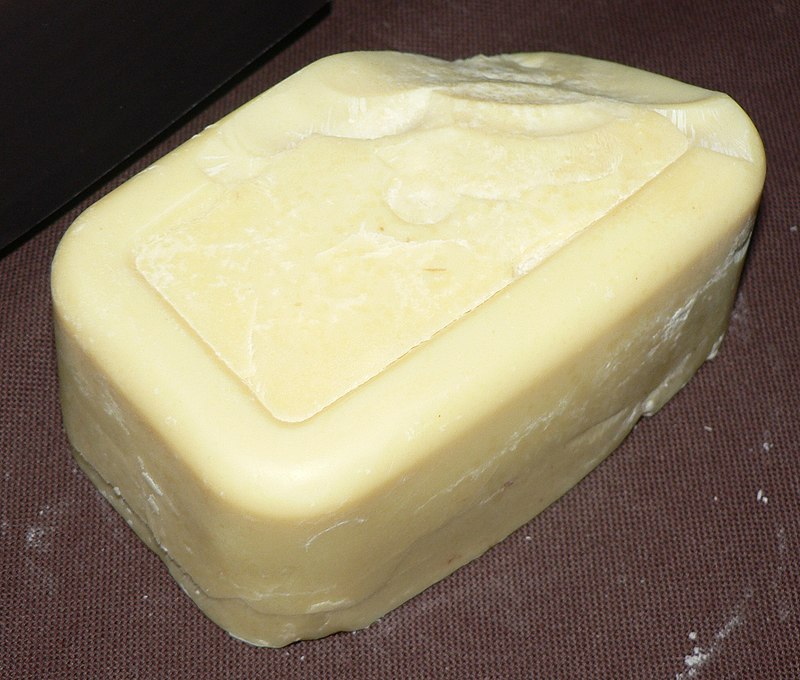
cocoa butter
pale-yellow, edible vegetable fat extracted from the cocoa bean

Vitellaria paradoxa
Vitellaria paradoxa (formerly Butyrospermum parkii), commonly known as shea tree, shi tree (, also ), or vitellaria, is a tree of the family Sapotaceae. It is the only species in the genus Vitellaria, and is indigenous to Africa.
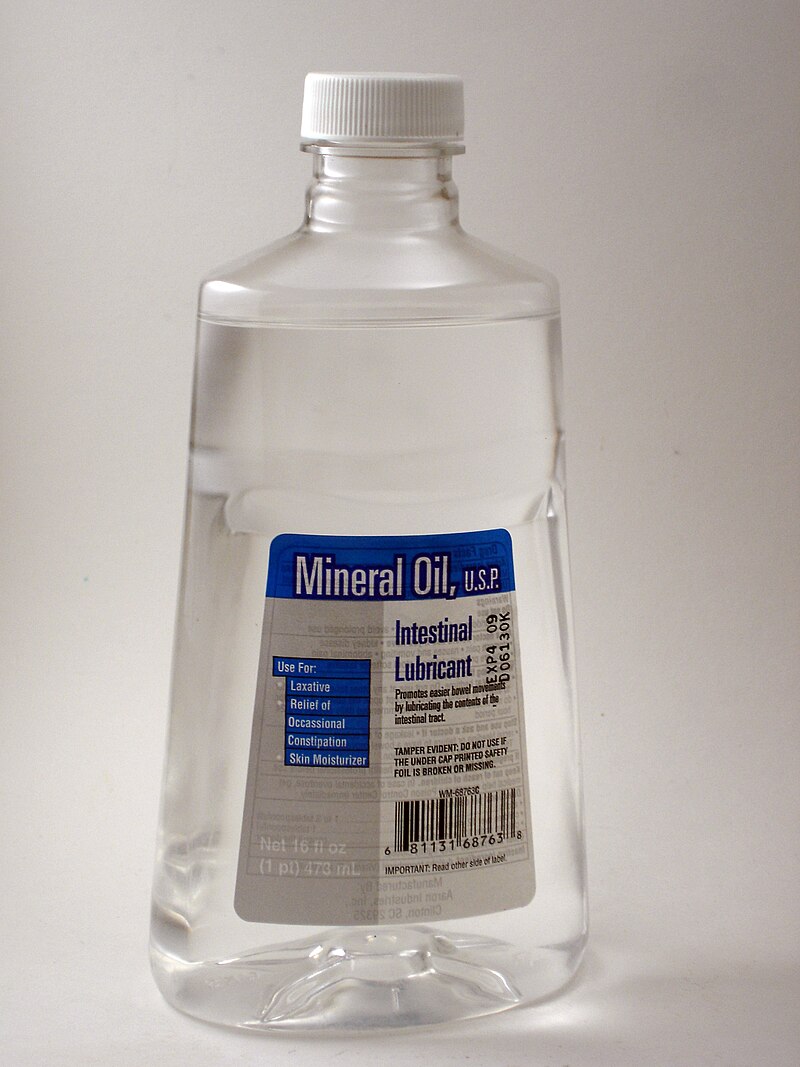
mineral oil
liquid mixture of higher alkanes from a mineral source, particularly a distillate of petroleum
(RS)-propylene glycol
pair of enantiomers
allantoin
Allantoin is a chemical compound with formula C4H6N4O3. It is also called 5-ureidohydantoin or glyoxyldiureide. It is a diureide of glyoxylic acid. Allantoin is a major metabolic intermediate in most organisms including animals, plants and bacteria, though not humans. It is produced from uric acid, which itself is a degradation product of nucleic acids, by action of urate oxidase (uricase). Allantoin also occurs as a natural mineral compound (IMA symbol Aan).

dihydroxyacetone
Dihydroxyacetone (; DHA), also known as glycerone, is a simple saccharide (a triose) with formula .
argan oil
argan oil is found in argan tree

spermaceti
thumb|Left to right: A sample of solid raw spermaceti, a spermaceti wax candle and a bottle of sperm oil.
Spermaceti , one of the fractions of sperm oil, is a waxy substance found in the head cavities of the sperm whale (and, in smaller quantities, in the oils of other whales). Spermaceti is created in the spermaceti organ inside the whale's head. This organ may contain as much as of spermaceti. It has been extracted by whalers since the 17th century for human use in cosmetics, textiles, and candles.

tocopherol
Tocopherols (; TCP) are a class of organic compounds comprising various methylated phenols, many of which have vitamin E activity. Because the vitamin activity was first identified in 1936 from a dietary fertility factor in rats, it was named tocopherol, from Greek and , that is 'to carry a pregnancy', with the ending -ol signifying its status as a chemical alcohol.

azulene
Azulene is an aromatic organic compound and an isomer of naphthalene. Naphthalene is colourless, whereas azulene is dark blue. The compound is named after its colour, as "azul" is Spanish for blue. Two terpenoids, vetivazulene (4,8-dimethyl-2-isopropylazulene) and guaiazulene (1,4-dimethyl-7-isopropylazulene), that feature the azulene skeleton are found in nature as constituents of pigments in mushrooms, guaiac wood oil, and some marine invertebrates.
carnauba wax
natural plant wax
cetyl alcohol
chemical compound
canthaxanthin
Canthaxanthin is a keto-carotenoid pigment widely distributed in nature. Carotenoids belong to a larger class of phytochemicals known as terpenoids. The chemical formula of canthaxanthin is C40H52O2. It was first isolated in edible mushrooms. It has also been found in green algae, bacteria, crustaceans, and bioaccumulates in fish such as carp, golden grey mullet, seabream and trush wrasse.
DL-erythrulose
D-Erythrulose (also known as erythrulose) is a tetrose carbohydrate with the chemical formula C4H8O4. It has one ketone group and so is part of the ketose family. It is used in some self-tanning cosmetics, in general, combined with dihydroxyacetone (DHA).
selenium disulfide
mixture of selenium sulfides

DL-panthenol
Panthenol (also called pantothenol) is the alcohol analog of pantothenic acid (vitamin B5), and is thus a provitamin of B5. In organisms, it is quickly oxidized to pantothenic acid. It is a viscous transparent liquid at room temperature. Panthenol is used in pharmaceutical and children's products as a moisturizer and to hasten wound healing.
myristyl alcohol
1-Tetradecanol, or commonly myristyl alcohol (from Myristica fragrans – the nutmeg plant), is a straight-chain saturated fatty alcohol, with the molecular formula CH3(CH2)12CH2OH. It is a white waxy solid that is practically insoluble in water, soluble in diethyl ether, and slightly soluble in ethanol.

trolamine
Triethanolamine (TEOA) is an organic compound with the chemical formula . It is a colourless, viscous liquid. It is both a tertiary amine and a triol. A triol is a molecule with three alcohol groups. Approximately 150,000 tonnes were produced in 1999. It is a colourless compound although samples may appear yellow because of impurities.
sodium laureth sulfate
chemical compound
levomenol
Bisabolol, or more formally α-(−)-bisabolol or also known as levomenol, is a natural monocyclic sesquiterpene alcohol. It is a colorless viscous oil that is the primary constituent of the essential oil from German chamomile (Matricaria recutita) and Myoporum crassifolium. High concentrations of bisabolol can also be found in certain medicinal cannabis cultivars. It is poorly soluble in water and glycerine, but soluble in ethanol. The enantiomer, α-(+)-bisabolol, is also found naturally but is rare. Synthetic bisabolol is usually a racemic mixture of the two, α-(±)-bisabolol. It is the terpenoi

polydimethylsiloxane
Polydimethylsiloxane (PDMS), also known as dimethylpolysiloxane or dimethicone, is a silicone polymer with a wide variety of uses, from cosmetics to industrial lubrication and passive daytime radiative cooling.
jojoba oil
oil produced from the seeds of jojoba
alpha hydroxy acid
any carboxylic acid having hydroxyl group attached to α position in relation to carboxyl group
pyrithione zinc
chemical compound
bimatoprost
Bimatoprost, sold under the brand name Lumigan among others, is a medication used to treat high pressure inside the eye including glaucoma. Specifically it is used for open angle glaucoma when other agents are not sufficient. It may also be used to increase the size of the eyelashes. It is used as an eye drop and effects generally occur within four hours.

guaiazulene
Guaiazulene, also azulon or 1,4-dimethyl-7-isopropylazulene, is a dark blue crystalline hydrocarbon. A derivative of azulene, guaiazulene is a bicyclic sesquiterpene that is a constituent of some essential oils, mainly oil of guaiac and chamomile oil, which also serve as its commercial sources. Various soft corals also contain guaiazulene as a principal pigment. Its low melting point makes guaiazulene difficult to handle, in contrast to the crystalline nature of the parent azulene. The electronic structure (and colors) of guaiazulene and azulene are very similar.

microbead
thumb|400px|Microbead legislation around the world
Microbeads are manufactured solid plastic particles of less than one millimeter in their largest dimension. They are most frequently made of polyethylene but can be of other petrochemical plastics such as polypropylene and polystyrene.
They are used in exfoliating personal care products, toothpastes, and in biomedical and health-science research.
polyacrylic acid
anionic polyelectrolyte polymer
dipropylene glycol
mixture of isomers

cyclomethicone 5
Decamethylcyclopentasiloxane, also known as D5 and D5, is an organosilicon compound with the formula . It is a colorless and odorless liquid that is slightly volatile. It is used in various cosmetic products. It also is used as a dry cleaning solvent and has been marketed as an "eco-friendly" and "green" alternative to perchloroethylene in the 2000s, under the tradename GreenEarth. Decamethylcyclopentasiloxane is persistent in nature and bioaccumulative. Decamethylcyclopentasiloxane is acutely non-toxic but its long-term health effects are unknown.
isopropyl palmitate
chemical compound
isopropyl myristate
chemical compound
piroctone olamine
chemical compound
macadamia oil
non-volatile oil expressed from the nut meat of the macadamia
cocamidopropyl betaine
mixture of chemical compounds
oleyl alcohol
chemical compound
DMDM hydantoin
chemical compound
glycol distearate
diester which is produced from stearic acid and ethylene glycol
sodium lauroyl sarcosinate
chemical compound
ethylhexyl palmitate
chemical compound
1-tridecanol
1-Tridecanol (Tridecanol) is an organic compound with the formula . It is a colorless oily solid that is classified as a primary alcohol.
iodopropynyl butylcarbamate
chemical compound
GHK-Cu
chemical compound

behentrimonium chloride
chemical compound
stearamidopropyl dimethylamine
chemical compound
sodium myreth sulfate
chemical compound
omidenepag
Omidenepag, sold under the brand name Eybelis among others, is a medication used for the treatment of glaucoma and ocular hypertension.
acetyl hexapeptide-3
chemical compound
marula oil
oil from the seeds of Sclerocarya birrea
Rice bran wax