Category
page 1Dietary supplements

calcium
Calcium is a chemical element; it has symbol Ca and atomic number 20. As an alkaline earth metal, calcium is a reactive metal that forms a dark oxide-nitride layer when exposed to air. Its physical and chemical properties are most similar to its heavier homologues strontium and barium. It is the fifth most abundant element in Earth's crust, and the third most abundant metal, after iron and aluminium. The most common calcium compound on Earth is calcium carbonate, found in limestone and the fossils of early sea life; gypsum, anhydrite, fluorite, and apatite are also sources of calcium. The name

Cichorium intybus
thumb|Botanical illustration (1885)

Ziziphus jujuba
Jujube (UK ; US or ), sometimes jujuba, scientific name Ziziphus jujuba, and also called red date, Chinese date, and Chinese jujube, is a species in the genus Ziziphus in the buckthorn family Rhamnaceae. It is often confused with the closely related Indian jujube, Z.mauritiana. The jujube tolerates a diverse range of climates, from temperate to tropical. Its origin is thought to be in eastern Asia, but it has been widely dispersed through cultivation, and is today cultivated in gardens as a shrub as well as in agriculture as a food crop. Its fruit is eaten freshly harvested as well as dried an

Citrus × aurantium
species of plant, the bitter orange

gelatin
thumb|right|Sheet (or leaf) gelatin for cooking.

colostrum
thumb|On the left is breast milk of the human expressed on day 4 of lactation, and on the right is [[breast milk expressed on day 8. Colostrum gives the milk a yellowish hue.]]
thumb|Bovine colostrum (beestings) next to spray-dried colostrum powder

tryptophan

Astragalus
genus of plants

dietary fiber
indigestible portion of food derived from plants

L-glutamine
thumb|Glutamine ball and stick model spinning
Glutamine (symbol Gln or Q) is an α-amino acid that is used in the biosynthesis of proteins. Its side chain is similar to that of glutamic acid, except the carboxylic acid group is replaced by an amide. It is classified as a charge-neutral, polar amino acid. It is non-essential and conditionally essential in humans, meaning the body can usually synthesize sufficient amounts of it, but in some instances of stress, the body's demand for glutamine increases, and glutamine must be obtained from the diet. It is encoded by the codons CAA and CAG. It is n

Centella asiatica
species of plant

creatine
thumb|Creatine monohydrate powder
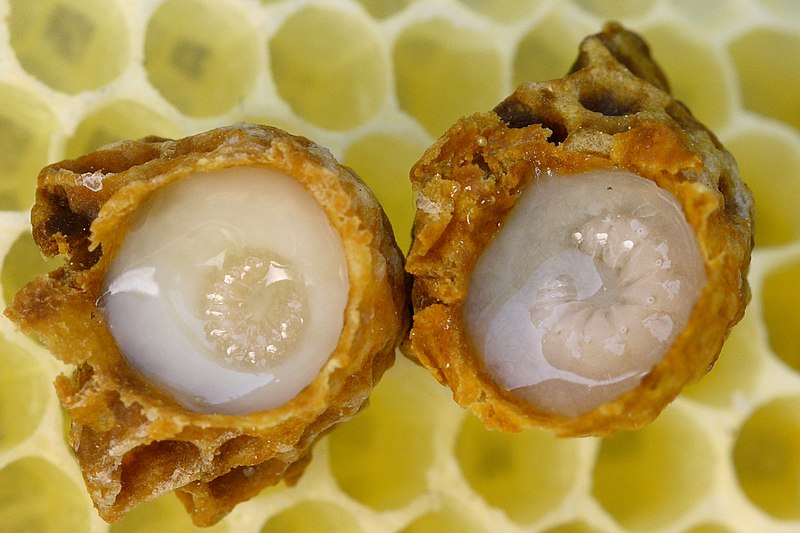
royal jelly
secretion from the glands in the hypopharynx of nurse bees

Ganoderma lucidum
species of fungus
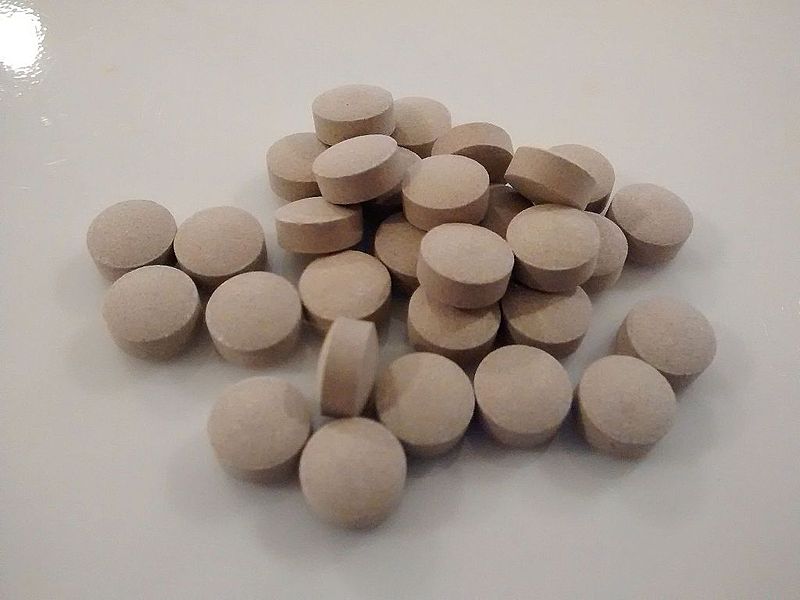
dietary supplement
product that provides additional source of nutrients

choline
Choline is a cation with the chemical formula . Choline forms various salts, such as choline chloride and choline bitartrate. An essential nutrient for animals, it is a structural component of phospholipids and cell membranes.

lycopene
Lycopene is an organic compound classified as a tetraterpene and a carotene. Lycopene (from the Neo-Latin Lycopersicon, the name of a former tomato genus) is a bright red carotenoid hydrocarbon found in tomatoes and other red fruits and vegetables.

linseed oil
yellowish oil obtained from the dried, ripened seeds of the flax plant

Polygonatum
Polygonatum , also known as '''King Solomon's-seal, Solomon's seal, or sealwort''', is a genus of flowering plants. In the APG III classification system, it is placed in the family Asparagaceae, subfamily Convallarioideae (formerly the family Ruscaceae). It has also been classified in the former family Convallariaceae and, like many lilioid monocots, was formerly classified in the lily family, Liliaceae. The genus is distributed throughout the temperate Northern Hemisphere. Most of the approximately 63 species occur in Asia, with 20 endemic to China.

fish oil
oil derived from the tissues of oily fish
carnitine
Carnitine is a quaternary ammonium compound involved in metabolism in most mammals, plants, and some bacteria. In support of energy metabolism, carnitine transports long-chain fatty acids from the cytosol into mitochondria to be oxidized for free energy production, and also participates in removing products of metabolism from cells. Given its key metabolic roles, carnitine is concentrated in tissues like skeletal and cardiac muscle that metabolize fatty acids as an energy source. Generally individuals, including strict vegetarians, synthesize enough L-carnitine in vivo.
herbalism
study and use of medicinal properties of plants

Chlorella
Chlorella is a genus of about thirteen species of single-celled or colonial green algae of the division Chlorophyta. The cells are spherical in shape, about 2 to 10 μm in diameter, and are without flagella. Their chloroplasts contain the green photosynthetic pigments chlorophyll-a and -b. In ideal conditions cells of Chlorella multiply rapidly, requiring only carbon dioxide, water, sunlight, and a small amount of minerals to reproduce.
D-glucosamine
Glucosamine (C6H13NO5) is an amino sugar and a prominent precursor in the biochemical synthesis of glycosylated proteins and lipids. Glucosamine is part of the structure of two polysaccharides, chitosan and chitin. Glucosamine is one of the most abundant monosaccharides. It is produced commercially by the hydrolysis of shellfish exoskeletons or, less commonly, by fermentation of a grain such as corn or wheat. Glucosamine has various names depending on the country and its intended use.

Lonicera japonica
species of plant

spirulina
Dry biomass of cyanobacteria belonging to genus Limnospira, used as dietary supplement and food

bee pollen
fermented pollen

Schisandra chinensis
species of plant

Momordica cochinchinensis
Gac, from the Vietnamese (), scientific name Momordica cochinchinensis, is a species of plant in the melon and cucumber family Cucurbitaceae native to countries throughout Southeast Asia and to Queensland, Australia. It is notable for its vivid orange-reddish color resulting from a mix of beta-carotene and lycopene.

goji
thumb|right|220px|Lycium barbarum berries (Tibetan goji) from Ningxia
thumb|right|220px|Lycium chinense berries (Chinese wolfberry)
cod liver oil
dietary supplement derived from liver of cod fish
Milo
Australian brand of chocolate-based products
sports drink
oral electrolytic infusion
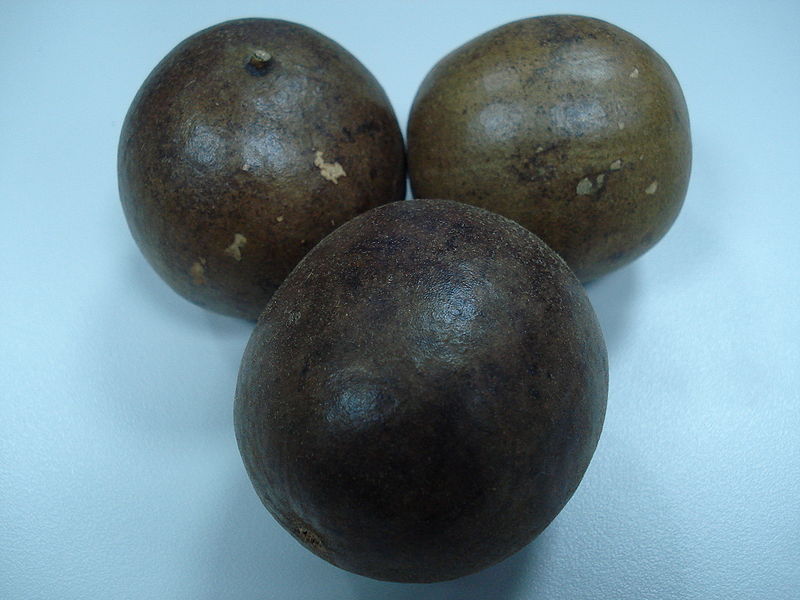
Siraitia grosvenorii
species of plant whose fruit extract is 300 times sweeter than sugar

árnica
Peumus boldus, commonly known as boldo (from the Mapuche name foḻo), is a species of tree in the family Monimiaceae and the only species in the genus Peumus. It is endemic to the central region of Chile, between 33° and 40° southern latitude. Boldo has also been introduced to Europe and North Africa, though it is not often seen outside botanical gardens.
papain
Papain, also known as papaya proteinase I, is a cysteine protease () enzyme present in papaya (Carica papaya) and mountain papaya (Vasconcellea cundinamarcensis). It is the namesake member of the papain-like protease family.
S-adenosylmethionine
chemical compound found in all domains of life with largely unexplored effects
chondroitin sulfate
class of compounds; sulfated glycosaminoglycan

Senna obtusifolia
species of legume
carnosine
Carnosine (beta-alanyl-L-histidine) is a dipeptide molecule, made up of the amino acids beta-alanine and histidine. It is highly concentrated in muscle and brain tissues. Carnosine was discovered by Russian chemist Vladimir Gulevich.
whey protein
protein supplement from milk
genistein
Genistein (C15H10O5) is a plant-derived, aglycone isoflavone. Genistein has the highest content of all isoflavones in soybeans and soy products, such as tempeh. As a type of phytoestrogen, genistein is classed as an endocrine disrupting chemical due to its estrogenic activity in vitro and in vivo. Consequently, excessive consumption of soy products has been linked to disruption of the reproductive organs, such as the uterus, breast, and testis.
dimethyl sulfone
Dimethyl sulfone (DMSO2) is an organosulfur compound with the formula . It is also known by several other names including methyl sulfone and (especially in alternative medicine) methylsulfonylmethane (MSM). This colorless solid features the sulfonyl functional group and is the simplest of the sulfones. It is relatively inert chemically and is able to resist decomposition at elevated temperatures. It occurs naturally in some primitive plants, is present in small amounts in many foods and beverages, and is marketed (under the MSM name) as a dietary supplement. It is sometimes used as a cutting a

Gynostemma pentaphyllum
species of plant

wheatgrass
thumb|275px|Indoor-grown wheatgrass 8–10 days before harvest.
thumb|Spelt grass grown outdoors. With a deeper green color than wheat.
sodium selenite
chemical compound

Angelica sinensis
species of plant
bromelain
Bromelain is an enzyme extract derived from the stems of pineapples, although it exists in all parts of the fresh plant and fruit. The extract has a history of folk medicine use. As a culinary ingredient, it may be used as a meat tenderizer.
Iron supplement
dietary supplement containing iron
pyridoxamine
Pyridoxamine (PM) is one form of vitamin B6. Chemically it is based on a pyridine ring structure, with hydroxyl, methyl, aminomethyl, and hydroxymethyl substituents. It differs from pyridoxine by the substituent at the 4-position. The hydroxyl at position 3 and aminomethyl group at position 4 of its ring endow pyridoxamine with a variety of chemical properties, including the scavenging of free radical species and carbonyl species formed in sugar and lipid degradation and chelation of metal ions that catalyze Amadori reactions.
diosmin
Diosmin (diosmetin 7-O-rutinoside), a flavone glycoside of diosmetin, is manufactured from citrus fruit peels as a phlebotonic non-prescription dietary supplement used to aid treatment of hemorrhoids or chronic venous diseases, mainly of the legs.
N,N-dimethylglycine
Dimethylglycine (DMG) is a derivative of the amino acid glycine with the structural formula (CH3)2NCH2COOH. It can be found in beans and liver, and has a sweet taste. It can be formed from trimethylglycine upon the loss of one of its methyl groups. It is also a byproduct of the metabolism of choline.
.jpg)
Rehmannia
Rehmannia is a genus of seven species of flowering plants in the order Lamiales and family Orobanchaceae, which is native to China and Japan. It has been placed as the only member of the monotypic tribe Rehmannieae, but molecular phylogenetic studies suggest that it forms a clade with Triaenophora. Contrary to the vast majority of the taxa of Orobanchaceae, Rehmannia is not parasitic.
beta-hydroxy beta-methylbutyric acid
chemical compound
chromium picolinate
chemical compound
Chlorophyllin
Chlorophyllin refers to any one of a group of closely related water-soluble salts that are semi-synthetic derivatives of chlorophyll, differing in the identity of the cations associated with the anion. Its most common form is a sodium/copper derivative used as a food additive and in alternative medicine. As a food coloring agent, copper complex chlorophyllin is known as natural green 3 and has the E number E141.

Soylent
American brand of meal replacement products
red yeast rice
type of fermented rice
fucoidan
Fucoidan is a long-chain sulfated polysaccharide found in various species of brown algae, such as seaweed, and in marine invertebrates. Fucoidan occurs in the cell walls of seaweed serving structural roles.
.jpg)
ginseng
thumb|right|200px|A root of cultivated Korean ginseng (Panax ginseng)