Category
page 2E-number additives

succinic acid
dicarboxylic acid

anthocyanins
right|thumb|Purple cauliflower contains anthocyanins.
thumb|right|Anthocyanins are glycosides of [[anthocyanidins, the basic chemical structure of which is shown here.]]

stearic acid
chemical compound

DL-malic acid
group of stereoisomers

gum arabic
natural gum obtained from Acacia sensu lato tree sap

adipic acid
chemical compound

D-sorbitol
Sorbitol (), less commonly known as glucitol (), is a sugar alcohol with a sweet taste which the human body metabolizes slowly. It can be obtained by reduction of glucose, which changes the converted aldehyde group (−CHO) to a primary alcohol group (−CH2OH). Most sorbitol is made from potato starch, but it is also found in nature, for example in apples, pears, peaches, and prunes. It is converted to fructose by sorbitol-6-phosphate 2-dehydrogenase. Sorbitol is an isomer of mannitol, another sugar alcohol; the two differ only in the orientation of the hydroxyl group on carbon2. While similar, t

lysozyme family
Lysozyme (, 'muramidase, N-acetylmuramide glycanhydrolase; systematic name peptidoglycan N-acetylmuramoylhydrolase') is an antimicrobial enzyme produced by animals that forms part of the innate immune system. It is a glycoside hydrolase that catalyzes the following process:

shellac
right|thumb|upright=1.4|Some of the many different colors of shellac
thumb|right|Shellac in alcohol

lycopene
Lycopene is an organic compound classified as a tetraterpene and a carotene. Lycopene (from the Neo-Latin Lycopersicon, the name of a former tomato genus) is a bright red carotenoid hydrocarbon found in tomatoes and other red fruits and vegetables.
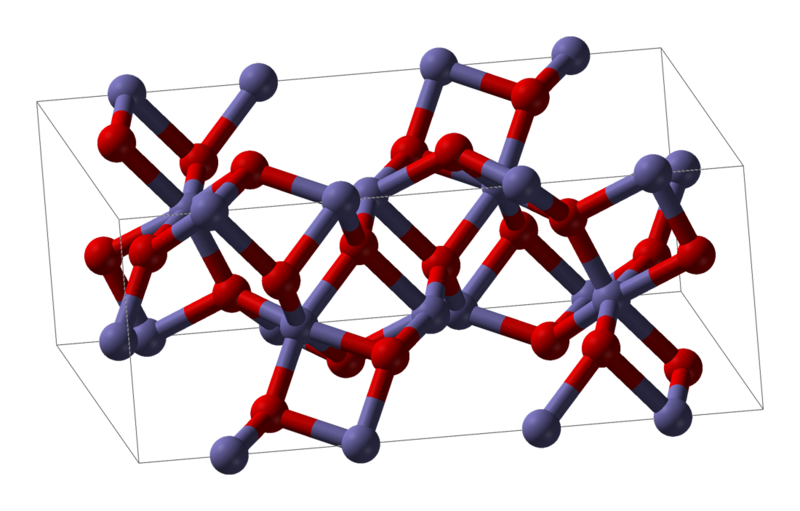
iron(III) oxide
chemical compound

propionic acid
chemical compound

fumaric acid
chemical compound

sodium nitrite
chemical compound

ammonia solution
aqueous solution of ammonia

edetic acid
chemical compound used for industrial and chemical purpose

calcium sulfate
laboratory and industrial chemical

Dactylopius coccus
The cochineal ( , ; Dactylopius coccus) is a scale insect in the suborder Sternorrhyncha, from which the natural dye carmine is derived. A primarily sessile parasite native to tropical and subtropical South America through North America (Mexico and the Southwest United States), this insect lives on cacti in the genus Opuntia, feeding on plant moisture and nutrients. The insects are found on the pads of prickly pear cacti, collected by brushing them off the plants, and dried.

sodium acetate
chemical compound

xylitol
Xylitol is an organic compound with the formula . Two other isomeric sugar alcohols exist. It is a colorless or white crystalline solid. It is classified as a polyalcohol and a sugar alcohol, specifically an alditol. Of the common sugar alcohols, only sorbitol is more soluble in water.

sodium cyclamate
Cyclamate is an artificial sweetener. It is 30–50 times sweeter than sucrose (table sugar), making it the least potent of the commercially used artificial sweeteners. It is often used with other artificial sweeteners, especially saccharin; the mixture of 10 parts cyclamate to 1 part saccharin is common and masks the off-tastes of both sweeteners. It is less expensive than most sweeteners, including sucralose, and is stable under heating. Safety concerns led to it being banned in a few countries, though the European Union considers it safe.

methenamine
Hexamethylenetetramine (HMTA), also known as 1,3,5,7-tetraazaadamantane, is a heterocyclic organic compound with diverse applications. It has the chemical formula (CH2)6N4 and is a white crystalline compound that is highly soluble in water and polar organic solvents. It is useful in the synthesis of other organic compounds, including plastics, pharmaceuticals, explosives, and rubber additives. The compound is also used medically for certain conditions. It sublimes in vacuum at 280°C. It has a tetrahedral cage-like structure similar to adamantane. The four vertices are occupied by nitrogen atom

magnesium chloride
chemical compound

potassium sulfate
chemical compound

aluminium sulfate
chemical compound

lecithin
class=skin-invert-image|thumb|300px|POPC, an example of a [[phosphatidylcholine, a type of phospholipid in lecithin. Shown in – choline residue and phosphate group; – glycerol residue; – monounsaturated fatty acid residue; – saturated fatty acid residue.]]
thumb|The different forms of lecithin – powder, two different concentration liquids, granular and powder lecithin

isobutane
Isobutane, also known as '''i-butane, 2-methylpropane or methylpropane''', is a chemical compound with molecular formula HC(CH3)3. An isomer of butane, it is a colorless, odorless gas. Isobutane is the simplest alkane with a tertiary carbon atom, and is used as a precursor molecule in the petrochemical industry, such as in the synthesis of isooctane.

curcumin
Curcumin is a bright yellow chemical produced by plants of the Curcuma longa species. It is the principal curcuminoid of turmeric (Curcuma longa), a member of the ginger family, Zingiberaceae. It is sold as an herbal supplement, cosmetics ingredient, food flavoring, and food coloring.
magnesium hydroxide
inorganic compound

tartrazine
Tartrazine is a synthetic lemon yellow azo dye primarily used as a food coloring. It is also known as E number E102, C.I. 19140, FD&C Yellow 5, Yellow 5 Lake, Acid Yellow 23, Food Yellow 4, and trisodium 1-(4-sulfonatophenyl)-4-(4-sulfonatophenylazo)-5-pyrazolone-3-carboxylate.
benzyl alcohol
chemical compound
lutein
Lutein (; from Latin luteus meaning "yellow") is a xanthophyll and one of 600 known naturally occurring carotenoids. Lutein is synthesized only by plants, and like other xanthophylls is found in high quantities in green leafy vegetables such as spinach, kale and yellow carrots. In green plants, xanthophylls act to modulate light energy and serve as non-photochemical quenching agents to deal with triplet chlorophyll, an excited form of chlorophyll which is overproduced at high light levels during photosynthesis.
potassium aluminium sulfate dodecahydrate
chemical compound

Amorphophallus konjac
species of plant
sodium benzoate
chemical compound
sodium sulfite
chemical compound

sucralose
thumb|Sucralose: (C12H19Cl3O8) Black Carbon, White Hydrogen, Green Chlorine, Red Oxygen
Sucralose is an artificial sweetener and sugar substitute. In the European Union, it is also known under the E number E955. It is produced by chlorination of sucrose, selectively replacing three of the hydroxy groups—in the C1 and C6 positions of the fructose portion and the C4 position of the glucose portion—to give a 1,6-dichloro-1,6-dideoxyfructose–4-chloro-4-deoxygalactose disaccharide. Sucralose is about 600 times sweeter than sucrose (table sugar), 3 times as sweet as both aspartame a
(RS)-propylene glycol
pair of enantiomers
sorbic acid
chemical compound

D-(-)-mannitol
Mannitol is a type of sugar alcohol used as a sweetener and medication. It is used as a low-calorie sweetener as it is poorly absorbed by the intestines. As a medication, it is used to decrease pressure in the eyes, as in glaucoma, and to lower increased intracranial pressure. Medically, it is given by injection or inhalation. Effects typically begin within 15 minutes and last up to 8 hours.
acesulfame potassium
Organic synthetic salt used as a low-calorie sweetener
potassium hexacyanidoferrate(II)
chemical compound

erythritol
Erythritol (, ) is an organic compound, the naturally occurring achiral meso four-carbon sugar alcohol (or polyol). It is the reduced form of either D- or L-erythrose and one of the two reduced forms of erythrulose. It is used as a food additive and sugar substitute. It is synthesized from corn using enzymes and fermentation. Its formula is , or HO(CH2)(CHOH)2(CH2)OH.

carbon black
chemical substance
potassium acetate
chemical compound
Potassium sodium L-tartrate tetrahydrate
chemical compound
stannous chloride
chemical compound
potassium sorbate
chemical compound
.jpg)
carrageenan
thumb|Underwater Eucheuma farming in the [[Philippines for carrageenan production]]
Carrageenans or carrageenins ( ; ) are a family of natural linear sulfated polysaccharides. They are extracted from red edible seaweeds. Carrageenans are widely used in the food industry for their gelling, thickening, and stabilizing properties. Their main application is in dairy and meat products, due to their strong binding to food proteins. Carrageenans have emerged as a promising candidate in tissue engineering and regenerative medicine applications as they resemble animal glycosaminoglycans (GAGs). They ar
D-gluconic acid
product of glucose oxidation

microcline
Microcline (KAlSi3O8) is an important igneous rock-forming tectosilicate mineral. It is a potassium-rich alkali feldspar. It is common in granite and pegmatites. Microcline forms during slow cooling of orthoclase. Sanidine is a polymorph of alkali feldspar stable at yet higher temperature. Microcline has cross-hatch twinning that forms as a result of the transformation of monoclinic orthoclase into triclinic microcline.
sunset yellow FCF
chemical compound
calcium acetate
chemical compound
Sodium hydrogen sulfite
chemical compound
carmoisine
Azorubine, also known as carmoisine, is an azo dye consisting of two naphthalene subunits. It is a red solid. It is mainly used in foods that are heat-treated after fermentation. It has E number E122.
guar gum
thickening and stabilizing substance used in food and industrial applications
tricalcium phosphate
chemical compound Ca₃P₂O₈
maltitol
Maltitol is a sugar alcohol (a polyol) used as a sugar substitute and laxative. It has 75–90% of the sweetness of sucrose (table sugar) and nearly identical properties, except for browning. It is used to replace table sugar because it is half as calorific, does not promote tooth decay, and has a somewhat lesser effect on blood glucose. In chemical terms, maltitol is known as '4-O-α-glucopyranosyl--sorbitol'. It is used in commercial products under trade names such as Lesys, Maltisweet and SweetPearl.
indigotindisulfonate sodium
chemical compound

diphosphate
In chemistry, pyrophosphates are phosphorus oxyanions that contain two phosphorus atoms in a linkage. A number of pyrophosphate salts exist, such as disodium pyrophosphate () and tetrasodium pyrophosphate (), among others. Often pyrophosphates are called diphosphates. The parent pyrophosphates are derived from partial or complete neutralization of pyrophosphoric acid. The pyrophosphate bond is also sometimes referred to as a phosphoanhydride bond, a naming convention which emphasizes the loss of water that occurs when two phosphates form a new bond, and which mirrors the nomenclature for anhyd