Category
page 1Extant Rupelian first appearances
.jpg)
Cervidae
A deer (: deer) or true deer is a hoofed ruminant ungulate of the family Cervidae (informally the deer family). Cervidae is divided into subfamilies Cervinae (which includes muntjac, elk, red deer, and fallow deer) and Capreolinae (which includes reindeer, white-tailed deer, roe deer, and moose). Male deer of almost all species (except the water deer), as well as female reindeer, grow and shed new antlers each year. These antlers are bony extensions of the skull and are often used for combat between males.

stork
Storks are large, long-legged, long-necked wading birds with long, stout bills. They belong to the family Ciconiidae, and make up the order Ciconiiformes . Ciconiiformes previously included a number of other families, such as herons and ibises, but those families have been moved to the order Pelecaniformes.

Anatidae
The Anatidae are the biological family of water birds that includes ducks, geese, and swans. The family has a cosmopolitan distribution, occurring on all the world's continents except Antarctica. These birds are adapted for swimming, floating on the water surface, and, in some cases, diving in at least shallow water. The family contains around 174 species in 43 genera (the magpie goose is no longer considered to be part of the Anatidae and is now placed in its own family, Anseranatidae).
Trochilidae
Hummingbirds are birds native to the Americas and comprise the biological family Trochilidae. With approximately 375 species and 113 genera, they occur from Alaska to Tierra del Fuego, but most species are found in Central and South America. As of 2026, 21 hummingbird species are listed as endangered or critically endangered, with about 255 species declining in population.

sloth
alt=Sloth |thumb|Three-toed sloth crossing a road in Costa Rica
Sloths are a Neotropical group of xenarthran mammals constituting the suborder Folivora, including the extant arboreal tree sloths and extinct terrestrial ground sloths. Noted for their slowness of movement, tree sloths spend most of their lives hanging upside down in the trees of the tropical rainforests of South America and Central America. Sloths are considered to be most closely related to anteaters, together making up the xenarthran order Pilosa.

Phasianidae
Phasianidae is a family of heavy, ground-living birds, which includes pheasants, grouse, partridges, junglefowl, chickens, turkeys, Old World quail, and peafowl. The family includes many of the most popular gamebirds. The family includes 185 species divided into 54 genera. It was formerly broken up into two subfamilies, the Phasianinae and the Perdicinae. However, this treatment is now known to be paraphyletic and polyphyletic, respectively, and more recent evidence supports breaking it up into two subfamilies: Rollulinae and Phasianinae, with the latter containing multiple tribes within two c

Scolopacidae
Scolopacidae is a large family of shorebirds, or waders, which mainly includes many species known as sandpipers, but also others such as woodcocks, curlews, and snipes. Most of these species eat small invertebrates picked out of the mud or soil. There is no evidence that different lengths of bills enable multiple species to feed in the same habitat, particularly on the coast, without direct competition for food. On sandy beaches, species with different bill lengths feed on the only abundant invertebrate, such as mole crabs Emerita.

Pteromyini
tribe of mammals

basking shark
species of shark

Procellariidae
The family Procellariidae is a group of seabirds that comprises the fulmarine petrels, the gadfly petrels, the diving petrels, the prions, and the shearwaters. This family is part of the bird order Procellariiformes (or tubenoses), which also includes the albatrosses and the storm petrels.

Platyrrhini
infraorder of mammals

Buttonquail
Buttonquail or hemipodes are members of a small family of ground birds, Turnicidae, in the order Charadriiformes. Despite their name and resemblance, they bear absolutely no taxonomic relationship to Old World quail of the tribe Coturnicini under the order Galliformes, especially smaller species like the king quail (erroneously called "button quail").

Jacanidae
The jacanas (sometimes referred to as Jesus birds or lily trotters) are a group of tropical waders in the family Jacanidae. They are found in the tropical regions around the world. They are noted for their elongated toes and toenails that allow them to spread out their weight while foraging on floating or semi-emergent aquatic vegetation. They are also among the somewhat rare groups of birds in which females are larger, and several species maintain harems of males in the breeding season with males solely responsible for incubating eggs and taking care of the chicks.

Chaetodontidae
The butterflyfish are a group of conspicuous tropical marine fish of the family Chaetodontidae; the bannerfish and coralfish are also included in this group. The approximately 129 species in 12 genera are found mostly on the reefs of the Atlantic, Indian, and Pacific Oceans. A number of species pairs occur in the Indian and Pacific Oceans, members of the huge genus Chaetodon.
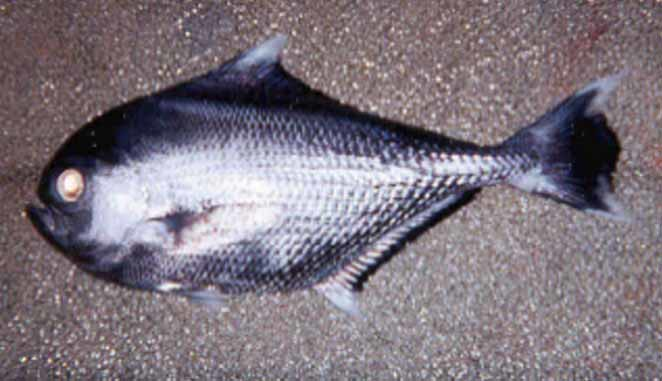
Bramidae
Pomfrets are scombriform fish belonging to the family Bramidae. The family currently includes 20 species across seven genera. Several species are important food sources for humans, especially Brama brama in South Asia. The earlier form of the pomfret's name was "", a word which probably ultimately comes from Portuguese pampo, referring to various fish such as the blue butterfish (Stromateus fiatola). The fish meat is white in color.

Myotis
genus of mammals

Fistularia
The cornetfishes or flutemouths are a small family, the Fistulariidae, of extremely elongated fish in the order Syngnathiformes. The family consists of a single genus, Fistularia, with four species, found worldwide in tropical and subtropical marine environments.
.jpg)
gundi
Gundis or comb rats are a group of small, stocky, African rodents in the family Ctenodactylidae. They live in rocky deserts across Northern Africa. The family comprises four living genera and five species (Speke's gundi, Felou gundi, Val's or desert gundi, common or North African gundi and Mzab gundi), as well as numerous extinct genera and species. They are in the superfamily Ctenodactyloidea. Local people in northern Africa have always known about gundis, however they first came to the notice of Western naturalists in Tripoli in 1774, and were given the name gundi mice. While they are not re
.jpg)
tapir
Tapirs ( ) are large herbivorous mammals belonging to the family Tapiridae. They are similar in shape to a pig, with a short, prehensile nose trunk (proboscis). Tapirs inhabit jungle and forest regions of South and Central America and Southeast Asia. They are one of three extant branches of Perissodactyla (odd-toed ungulates), alongside equines and rhinoceroses. Only a single genus, Tapirus, is extant. Tapirs migrated into South America during the Pleistocene epoch from North America after the formation of the Isthmus of Panama as part of the Great American Interchange. Tapirs were present acr

Nycticorax
Nycticorax is a genus of night herons. The name Nycticorax means "night raven" and derives from the Ancient Greek νύκτος, nuktos "night" and κοραξ, korax, "raven". It refers to the largely nocturnal feeding habits of this group of birds, and the croaking crow-like call of the best known species, the black-crowned night heron.

Megadermatidae
Megadermatidae, or false vampire bats, are a family of bats found from central Africa, eastwards through southern Asia, and into Australia. They are relatively large bats, ranging from 6.5 cm to 14 cm in head-body length. They have large eyes, very large ears and a prominent nose-leaf. They have a wide membrane between the hind legs, or uropatagium, but no tail. Many species are a drab brown, but some are white, bluish-grey or even olive-green, helping to camouflage them against their preferred roosting environments.

Pelophylax
Pelophylax is a genus of true frogs widespread in Eurasia, with a few species ranging into northern Africa. This genus was erected by Leopold Fitzinger in 1843 to accommodate the green frogs of the Old World, which he considered distinct from the brown pond frogs of Carl Linnaeus' genus Rana.

ground squirrels
tribe of squirrels

Sebastes
Sebastes is a genus of marine ray-finned fish belonging to the subfamily Sebastinae part of the family Scorpaenidae, most of which have the common name of rockfish. A few are called ocean perch, sea perch or redfish instead. They are found in the Atlantic and Pacific Oceans.

pipefish
Pipefishes or pipe-fishes (Syngnathinae) are a subfamily of small fishes, which, together with the seahorses and seadragons (Phycodurus and Phyllopteryx), form the family Syngnathidae. The name comes from Ancient Greek σύν (sún), meaning "together", and γνάθος (gnáthos), meaning "jaw", referring to the fused jaw that the subfamily's species have in common.

Mobula
Mobula is a genus of rays in the family Mobulidae that is found worldwide in tropical and warm, temperate seas. Some authorities consider this to be a subfamily of the Myliobatidae (eagle rays). Species of this genus are often collectively referred to as "devil rays", "flying mobula", or simply "flying rays", due to their propensity for breaching, sometimes in a spectacular manner. These rays gather in groups and leap out of the surface into the air up to around before splashing back into the water.

Buccinum undatum
edible marine gastropod
.jpg)
Chaetodon
Chaetodon is a tropical fish genus in the family Chaetodontidae. Like their relatives, they are known as "butterflyfish". This genus is by far the largest among the Chaetodontidae, with about 90 living species included here, though most might warrant recognition as distinct genera.
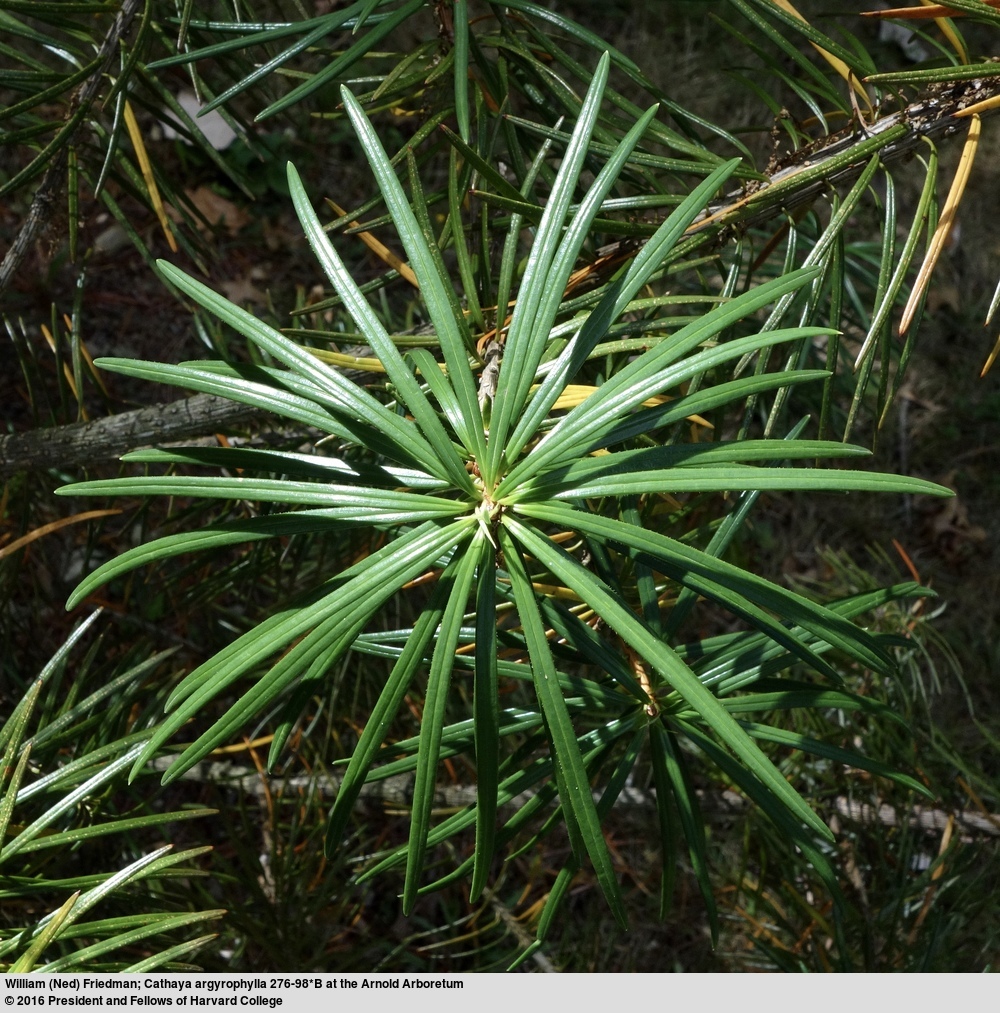
Cathaya
Cathaya is a genus in the pine family, Pinaceae, with one known living species, Cathaya argyrophylla. In foliage and cone morphology, Cathaya has been considered a member of the subfamily Laricoideae, closely related to Pseudotsuga and Larix, but more recent genetic studies have suggested a closer relationship to Pinus and Picea in the subfamily Pinoideae. A second species, C. nanchuanensis, is now treated as a synonym, as it does not differ from C. argyrophylla in any characters.
.jpg)
Lates
Lates is a genus of freshwater and euryhaline lates perches belonging to the family Latidae. The generic name is also used as a common name, lates, for many of the species.
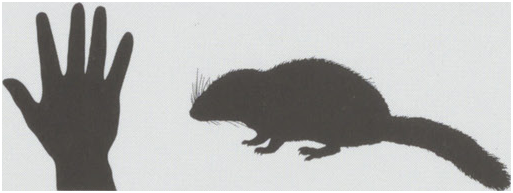
Diatomyidae
Diatomyidae is a family of hystricomorph rodents. It is represented by a single living species, Laonastes aenigmamus, native to Laos in Southeast Asia. Fossil species are known from the Oligocene and Miocene of Asia and eastern Europe.

Scarus
Scarus is a genus of parrotfishes. With 52 currently recognised extant species, it is by far the largest parrotfish genus. The vast majority are found at reefs in the Indo-Pacific, but a small number of species are found in the warmer parts of the eastern Pacific and the western Atlantic, with a single species, Scarus hoefleri in the eastern Atlantic.
Sillago
Sillago is a genus of fish in the family Sillaginidae and the only non-monotypic genus in the family. Distinguishing the species can be difficult, with many similar in appearance and colour, forcing the use of swim bladder morphology as a definitive feature. All species are benthic in nature and generally coastal fish, living in shallow, protected waters although there are exceptions. Minor fisheries exist around various species of Sillago, making them of minor importance in most of their range. This genus has the widest distribution of any smelt-whiting genus, spanning much of the Indo-Pacifi

Calamus
genus of fishes
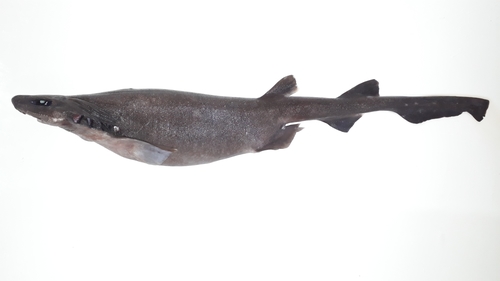
Bythaelurus
Bythaelurus is a genus of sharks belonging to the family Pentanchidae, the deepwater catsharks. The genus Bythaelurus Compagno 1988 was first described as a subgenus of Halaelurus Gill 1862 based on several morphological characteristics including a soft body with thin skin, a bluntly rounded snout without a pointed, knob-like tip, and eyes not noticeably elevated on the dorsal surface of the head. Members of this genus are generally found in deep water and have more somber body coloration.
Coryphaenoides
Coryphaenoides is a genus of rattails which is found in all oceans of the world. They are found in deep waters and C. yaquinae, recorded to , is the only member in the family known from the hadal zone.
Ariommatidae
Ariommatidae is a family of marine ray-finned fishes which are classified within the suborder Stromateoidei of the order Scombriformes.

Pontinus
Pontinus is a genus of marine ray-finned fish belonging to the family Scorpaenidae, the scorpionfishes. The scorpionfishes in this genus are distributed in the tropical and warm temperate parts of the Atlantic, Indian and Pacific oceans.
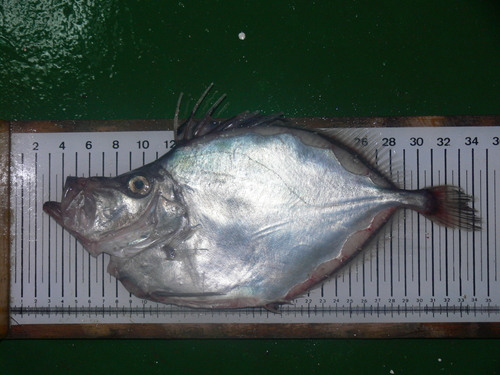
Zenopsis
Zenopsis is a genus of dories, a group of marine fish. There are five extant species, but the genus is also known from fossils dating back to the Oligocene epoch. They largely resemble the better-known John Dory, and are typically found in relatively deep water, below normal scuba diving depth.

Pici
suborder of birds
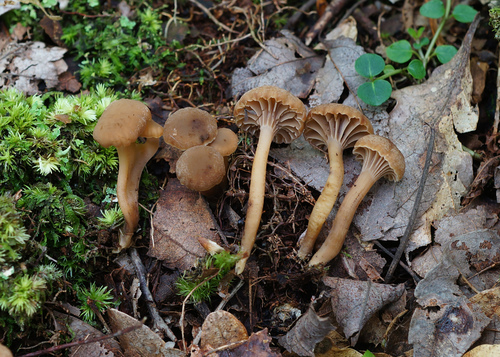
Hymenocephalus
genus of fishes
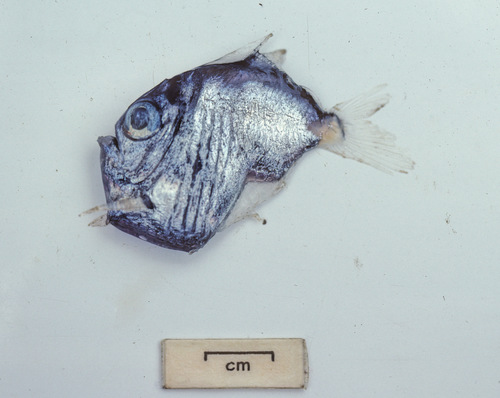
Sternoptyx
Sternoptyx is an oceanic ray-finned fish genus which belongs in the family Sternoptychidae. This is the type genus of the Sternoptychidae, as well as the marine hatchetfish subfamily Sternoptychinae.
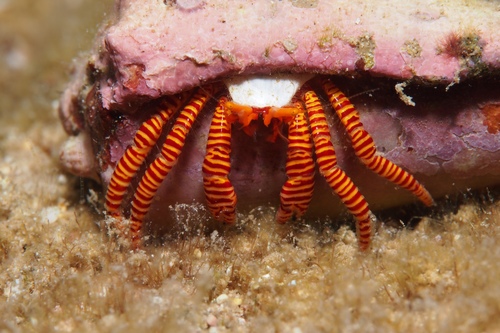
Ciliopagurus
Ciliopagurus is a genus of hermit crabs, of the family Diogenidae, which are sometimes referred to as the "left-handed hermit crabs", because in contrast to most other hermit crabs, the left chela (claw) is enlarged instead of the right. They are found in the Indo-Pacific region and in the eastern Atlantic Ocean.
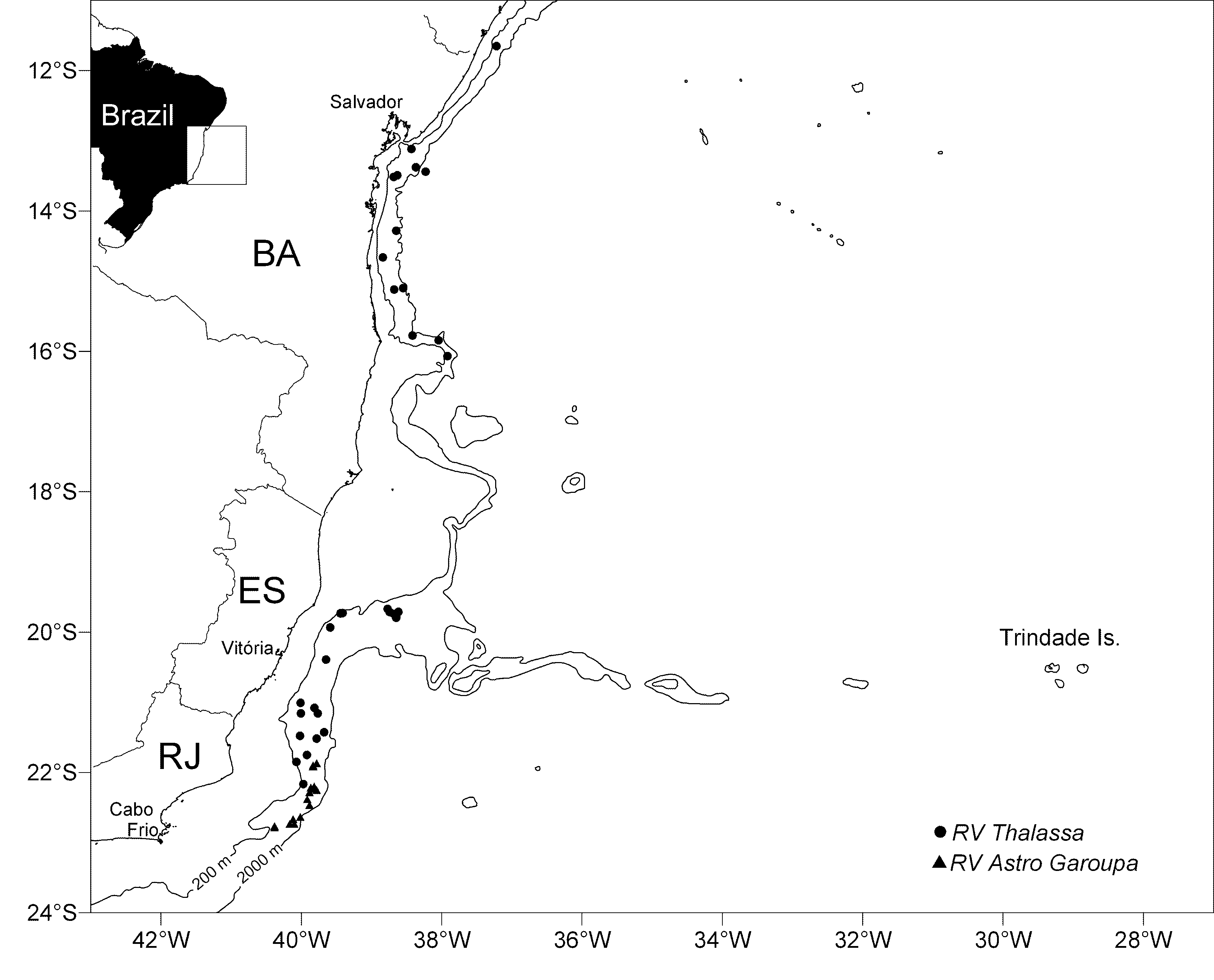
Polyipnus
Polyipnus is a genus of oceanic ray-finned fish in the family Sternoptychidae. This is the largest genus of the marine hatchetfishes subfamily Sternoptychinae and indeed of the entire Sternoptychidae. It is not quite as apomorphic as their relatives; it may be that the genus is actually a paraphyletic assemblage of less advanced Sternoptychinae and would need to be split.
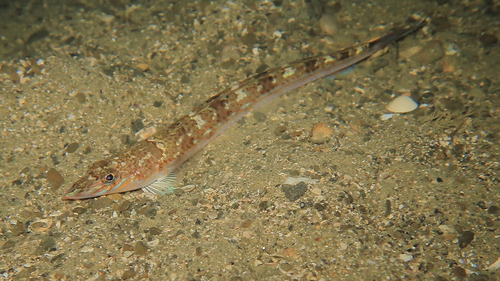
Hemerocoetes
Hemerocoetes is a genus of ray-finned fishes belonging to the family Hemerocoetidae.
Scopelarchoides
Scopelarchoides is a genus of pearleyes.

Psenes
Psenes is a genus of driftfishes native to the Indian, Atlantic and Pacific oceans.