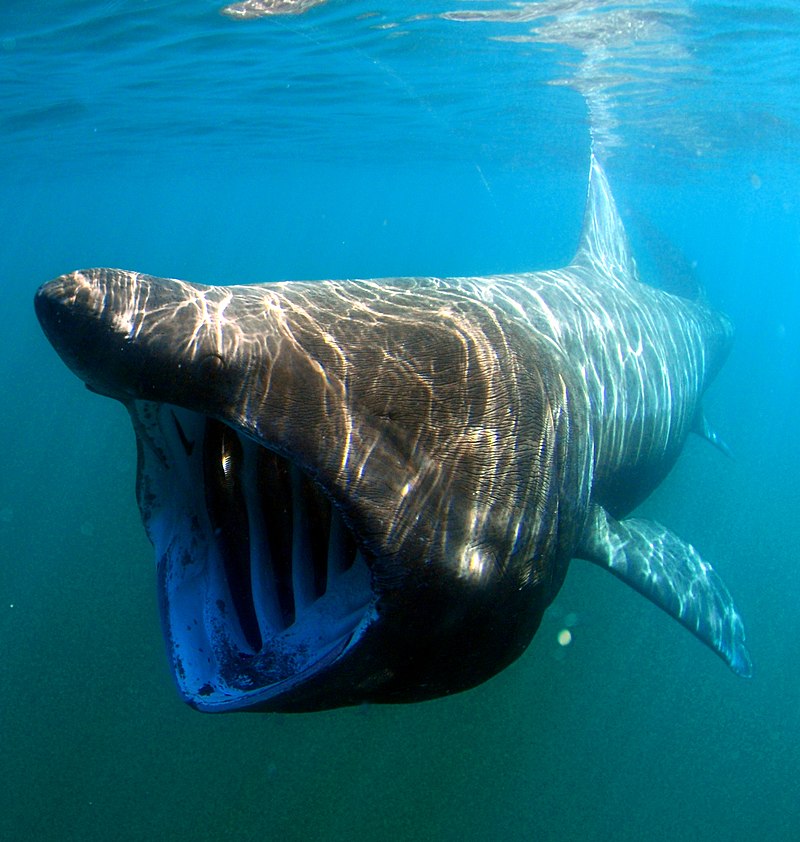
File:Cetorhinus_maximus_by_greg_skomal.JPG · Wikimedia Commons · See Wikimedia Commons
OverviewAI-generated
The basking shark, scientifically named *Cetorhinus maximus*, is a species within the family Cetorhinidae. It belongs to the order Lamniformes, class Elasmobranchii, and phylum Chordata. The taxon is classified under the genus *Cetorhinus* and has an accepted status in biological records. Its authority is cited as (Gunnerus, 1765).
This marine organism is also referred to by the common names Peregrino and Pelerin. The species has a recorded range in Brazil. According to the IUCN Red List, the basking shark holds an Endangered status, a designation noted in the 2021 assessment.
Synthesized by Vinony from 22 facts across 4 sources: Wikidata, WoRMS, IUCN Red List, Vinony graph. Generated from structured data (not the Wikipedia text) and checked against those facts — may still contain errors.
Species
Endangeredbasking shark
Species
- PhylumChordata
- ClassElasmobranchii
- OrderLamniformes
- FamilyCetorhinidae
via IUCN
Wikidata facts
- Instance of
- taxon
- Parent taxon
- Cetorhinus
- Image
- 202411 Cetorhinus maximus.svg
Show 8 more facts
- taxon rank
- species
- IUCN conservation status
- Endangered status
- taxon name
- Cetorhinus maximus
- Commons category
- Cetorhinus maximus
- Commons gallery
- Cetorhinus maximus
- taxon common name
- morski pes orjak
- taxon range
- Brazil
- short name
- C. maximus
via Wikidata · CC0
~17 min read
Encyclopedic overview
The basking shark (Cetorhinus maximus) is the second-largest living shark and fish, after the whale shark. It is one of three plankton-eating shark species, along with the whale shark and megamouth shark. Typically, basking sharks reach 7.9 m (26 ft) in length, but large individuals have been known to grow more than 10 m (33 ft) long. It is usually greyish-brown, with mottled skin, with the inside of the mouth being white in colour. The caudal fin has a strong lateral keel and a crescent shape. Other common names include bone shark, elephant shark, sailfish, and sunfish.
The basking shark is a cosmopolitan migratory species found in all the world's temperate oceans. A slow-moving filter feeder, its common name derives from its habit of feeding at the surface, appearing to be basking in the warmer water there. It has anatomical adaptations for filter-feeding, such as a greatly enlarged mouth and highly developed gill rakers. Its snout is conical, and the gill slits extend around the top and bottom of its head. The gill rakers, dark and bristle-like, are used to catch plankton as water filters through the mouth and over the gills. The teeth are numerous, often numbering 100 per row. The teeth are very small, have a single conical cusp, are curved backwards, and are the same on both the upper and lower jaws. This species has the smallest weight-for-weight brain size of any shark, reflecting its relatively passive lifestyle.
Excerpted from Wikipedia’s “basking shark” article, available under the CC BY-SA 4.0 licence.
Gallery (9)
Available in 60 languages
- Español
- Français
- Deutsch
- 中文
- 日本語
- Русский
- Português
- Italiano
- العربية
- Armenian
- Asturian
- Bahasa Indonesia
- Balinese
- Basque
- be_x_old
- Belarusian
- Bulgarian
- Catalan
Show 41 more
- Cebuano
- Corsican
- Croatian
- Czech
- Danish
- Egyptian Arabic
- Esperanto
- Estonian
- Faroese
- Finnish
- Galician
- Greek
- Hebrew
- Hungarian
- Icelandic
- Irish
- Kazakh
- Kyrgyz
- Macedonian
- Navajo
- Nederlands
- Norwegian
- Norwegian Nynorsk
- Polski
- Serbian
- Serbian (Latin)
- simple
- Slovak
- Slovenian
- Svenska
- Tamil
- Tiếng Việt
- Türkçe
- Ukrainian
- Urdu
- Waray
- Welsh
- Western Panjabi
- فارسی
- ไทย
- 한국어
via Wikidata sitelinks · CC0