Category
page 1Extant Triassic first appearances

Hymenoptera
Hymenoptera is a large order of insects, comprising the sawflies, wasps, bees, and ants. Over 150,000 living species of Hymenoptera have been described, in addition to over 2,000 extinct ones. Many of the species are parasitic. Females typically have a special ovipositor for inserting eggs into hosts or places that are otherwise inaccessible. This ovipositor is often modified into a stinger. The young develop through holometabolism (complete metamorphosis)—that is, they have a wormlike larval stage and an inactive pupal stage before they reach adulthood.

Trichoptera
The caddisflies (order Trichoptera) are a group of insects with aquatic larvae and terrestrial adults. There are approximately 14,500 described species, most of which can be divided into the suborders Integripalpia and Annulipalpia on the basis of the adult mouthparts. Integripalpian larvae construct a portable casing to protect themselves as they move around looking for food, while annulipalpian larvae make themselves a fixed retreat in which they remain, waiting for food to come to them. The affinities of the small third suborder Spicipalpia are unclear, and molecular analysis suggests it ma

Heteroptera
The Heteroptera are a group of about 40,000 species of insects in the order Hemiptera. They are sometimes called "true bugs", though that name more commonly refers to the Hemiptera as a whole. "Typical bugs" might be used as a more unequivocal alternative, since the heteropterans are most consistently and universally termed "bugs" among the Hemiptera. "Heteroptera" is Greek for "different wings": most species have forewings with both membranous and hardened portions (called hemelytra); members of the primitive sub-group Enicocephalomorpha have completely membranous wings.
.jpg)
Araucaria
Araucaria (; original pronunciation: [a.ɾawˈka. ɾja]) is a genus of evergreen coniferous trees in the family Araucariaceae. While today they are largely confined to the Southern Hemisphere, during the Jurassic and Cretaceous they were globally distributed. There are 20 extant species in New Caledonia (where 14 species are endemic, see New Caledonian Araucaria), eastern Australia (including Norfolk Island), New Guinea, Argentina, Brazil, Chile and Uruguay.

Coccoidea
superfamily of insects

Nautilidae
A nautilus (; ) is any of the various species within the cephalopod family Nautilidae. This is the sole extant family of the infraorder Nautilaceae and the suborder Nautilina.

Chironomidae
thumb|Two lake flies observed in Neenah, Wisconsin, after the yearly hatch in Lake Winnebago

Polyphaga
Polyphaga is the largest and most diverse suborder of beetles. It comprises 144 families in 16 superfamilies, and displays an enormous variety of specialization and adaptation, with over 350,000 described species, or approximately 90% of the beetle species discovered thus far.
%20larvae.jpg)
Symphyta
thumb|Larvae of Nematus septentrionalis
Sawflies are wasp-like insects that are in the suborder Symphyta within the order Hymenoptera. The common name comes from the saw-like appearance of the ovipositor, which females use to cut into the plants where they lay their eggs. The name is associated especially with the Tenthredinoidea, by far the largest superfamily in the suborder, with about 7,000 known species in the entire suborder. There are 8,000 described species in more than 800 genera.

Mygalomorphae
The Mygalomorphae, or mygalomorphs, are an infraorder of spiders, and comprise one of three major groups of living spiders with over 3,000 species, found on all continents except Antarctica. Many members are known as trapdoor spiders due to their creation of trapdoors over their burrows. Other prominent groups include Australian funnel web spiders and tarantulas, with the latter accounting for around one third of all mygalomorphs.

grasshopper
Grasshoppers are a group of insects belonging to the suborder Caelifera. They are amongst what are possibly the most ancient living groups of chewing herbivorous insects, dating back to the early Triassic, around 250 million years ago.

Tetrigidae
Tetrigidae is an ancient family in the order Orthoptera, which also includes similar families such as crickets, grasshoppers, and their allies. Species within the Tetrigidae are variously called groundhoppers, pygmy grasshoppers, pygmy devils or (mostly historical) "grouse locusts".

Osmunda
thumb|right|upright|Young plant

Spondylus
Spondylus is a genus of bivalve molluscs, the only genus in the family Spondylidae and subfamily Spondylinae. They are known in English as spiny oysters or thorny oysters (although they are not, in fact, true oysters, but are related to scallops).

Penaeidae
Penaeidae is a family of marine crustaceans in the suborder Dendrobranchiata, which are often referred to as penaeid shrimp or penaeid prawns. The Penaeidae contain many species of economic importance, such as the tiger prawn, whiteleg shrimp, Atlantic white shrimp, and Indian prawn. Many prawns are the subject of commercial fishery, and farming, both in marine settings, and in freshwater farms. Lateral line–like sense organs on the antennae have been reported in some species of Penaeidae. At , the myelinated giant interneurons of pelagic penaeid shrimp have the world record for impulse conduc
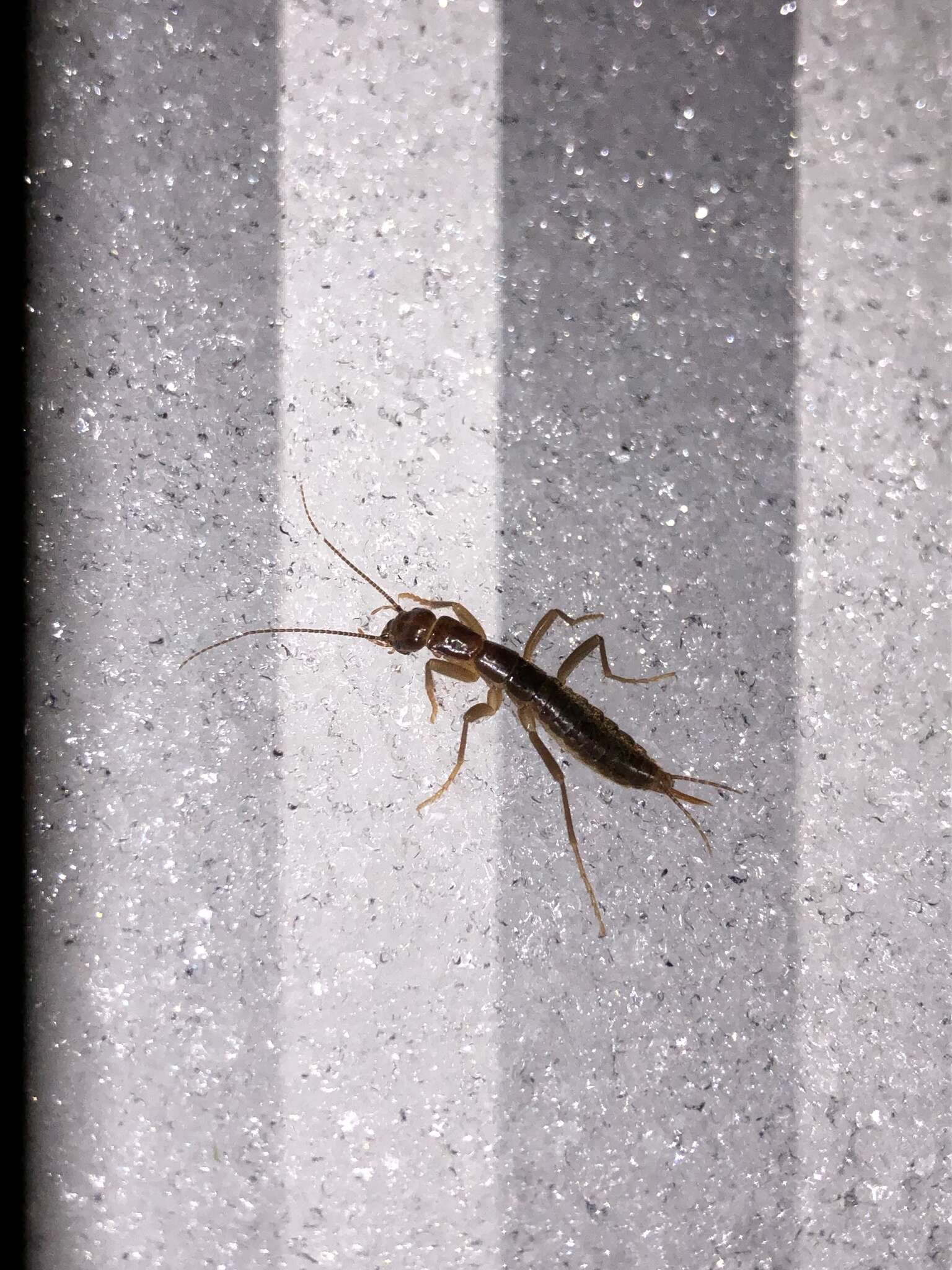
Grylloblattidae
Grylloblattidae, commonly known as the icebugs or ice crawlers, is a family of extremophile (psychrophile) and wingless insects that live in the cold on top of mountains and the edges of glaciers. They are the only living members of Grylloblattodea, which is generally considered an order. Alternatively, Grylloblattodea, along with Mantophasmatodea (rock crawlers), have been ranked as suborders of the order Notoptera. Grylloblattids are wingless insects mostly less than 3 cm long, with a head resembling that of a cockroach, with long antennae and having elongated cerci arising from the tip
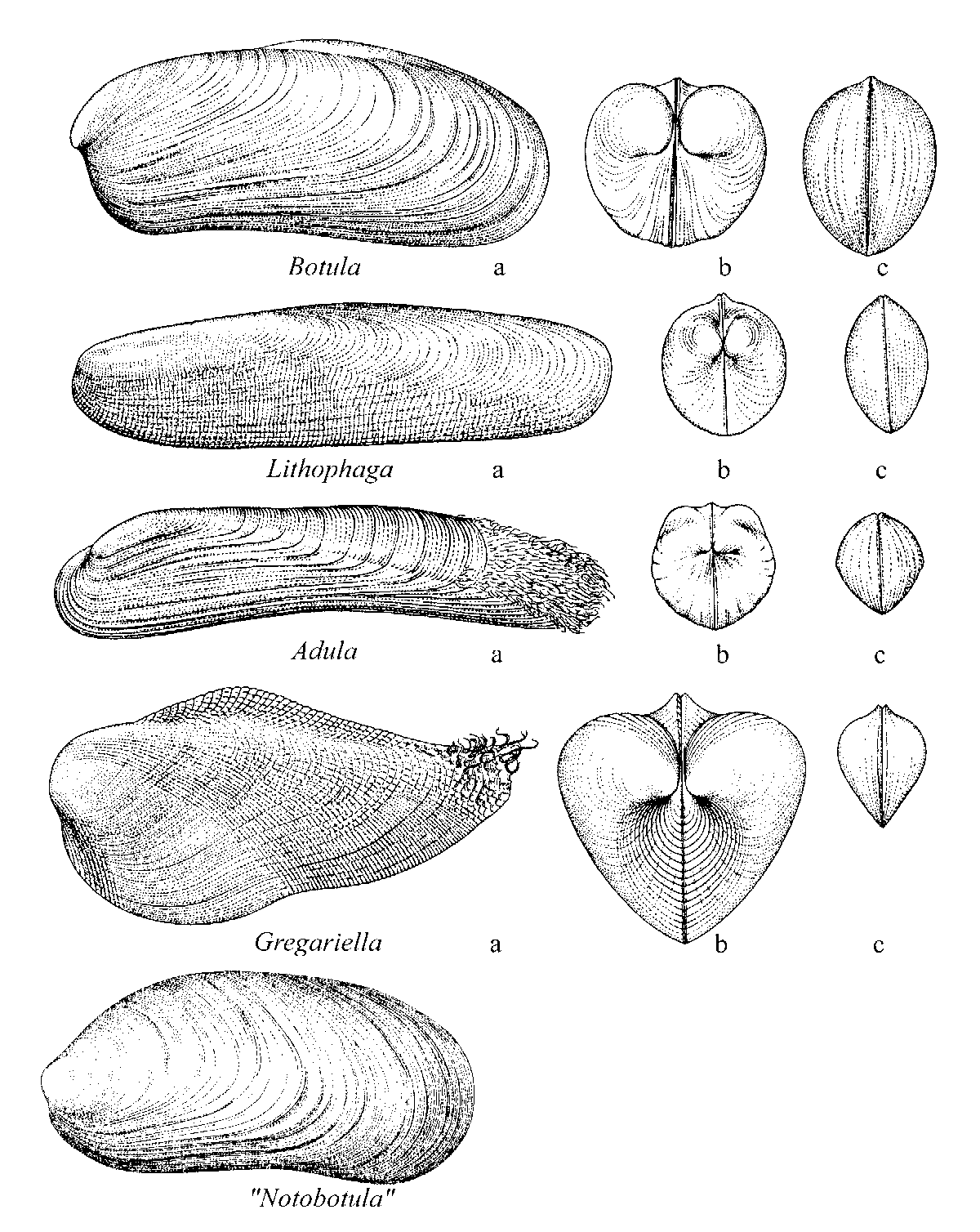
Lithophaga
Lithophaga, the date mussels, are a genus of medium-sized marine bivalve molluscs in the family Mytilidae. Some of the earliest fossil Lithophaga shells have been found in Mesozoic rocks from the Alps and from Vancouver Island.

Notoptera
Notoptera, also known as Xenonomia, is a clade of insects belonging to Polyneoptera. It contains two living groups, Mantophasmatidae (gladiators) native to southern Africa, and Grylloblattidae (ice crawlers) native to cold montane environments in the Northern Hemisphere. Both groups are wingless.
Meropeidae
Meropeidae is a family of tiny scorpionflies within the order Mecoptera with only three known living species, commonly referred to as "earwigflies" (or sometimes "forcepflies"), based on the earwig-like forceps-shaped male genitalia. The living species are the North American Merope tuber, the Western Australian Austromerope poultoni, and the recently discovered South American A. brasiliensis. The biology of these species is essentially unknown, and their larvae have never been seen. The adults have been suggested to probably be saprophagous, though they have never been observed feeding. The fo

Limulus
Limulus is a genus of horseshoe crab, with one extant species, the Atlantic horseshoe crab (Limulus polyphemus). One fossil species is currently assigned to the genus though several other species have been named, which have since been assigned to other genera.

Cerithium
Cerithium is a genus of small to medium-sized sea snails, marine gastropod molluscs in the family Cerithiidae, the ceriths.
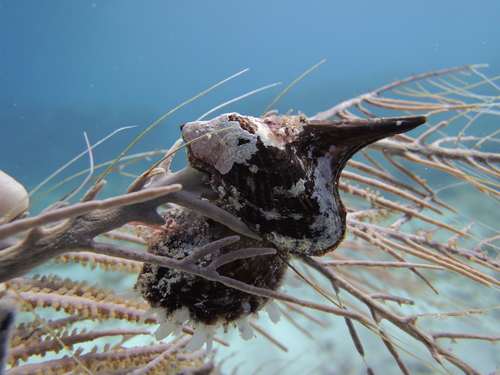
Pteria
genus of molluscs

Euspira
Euspira is a genus of medium-sized sea snails, marine gastropod molluscs in the subfamily Polinicinae of the family Naticidae, the moon snails.

Cidaris
Cidaris is a genus of pencil sea urchins.
Hymenopterida
Hymenopterida is a superorder of holometabolous (metamorphosing) insects. As originally circumscribed, it included Hymenoptera and the orders in Panorpida (Mecoptera, Siphonaptera, Diptera, Trichoptera and Lepidoptera). However, more recent studies find Hymenoptera as sister to the other members of Holometabola and the superorder is restricted to Hymenoptera.
Eomeropidae
Eomeropidae is a family of aberrant, flattened scorpionflies represented today by only a single living species, Notiothauma reedi, known from the Nothofagus forests in southern Chile, while all other recognized genera in the family are known only as fossils, with the earliest definitive fossil known from Liassic-aged strata, and the youngest from Paleogene-aged strata.
cricket
common name of insects

Trigoniidae
Trigoniidae is a taxonomic family of saltwater clams, marine bivalve mollusks in the superfamily Trigonioidea. There is only one living genus, Neotrigonia, but in the geological past this family was well represented, widespread and common. The shells of species in this family are morphologically unusual, with very elaborate hinge teeth, and the exterior of the shell is highly ornamented.
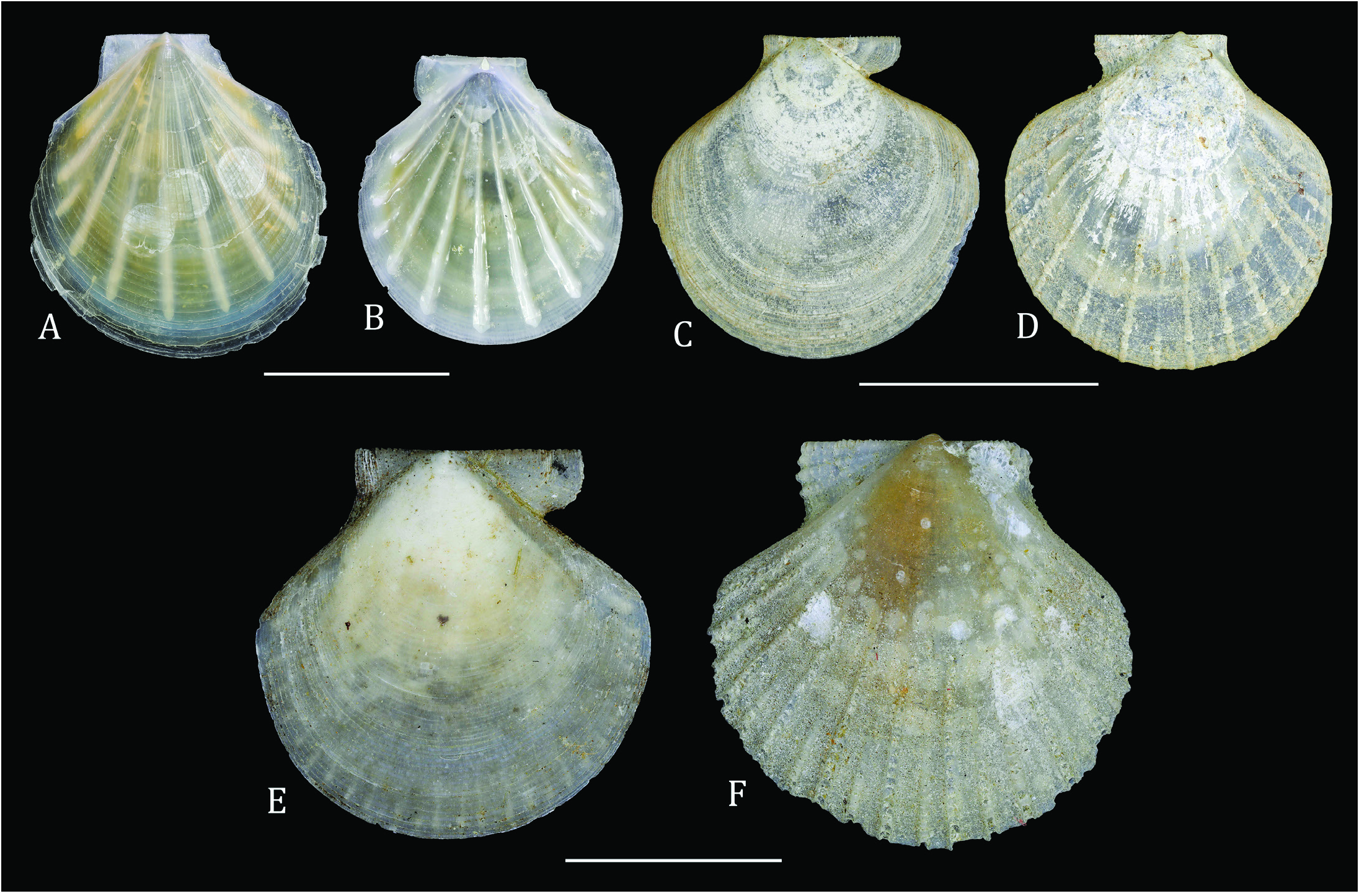
Propeamussiidae
Propeamussiidae, sometimes referred to as glass scallops mud scallops or mud pectens, are a taxonomic family of saltwater clams, marine bivalve molluscs in the order Pectinida. As members of the superfamily Pectinoidea, they are closely related to scallops. Extant species are small in size, poorly known, and inhabit deep waters. None of the species within this family has a common name.
Lopha
Lopha is a genus of marine bivalve molluscs in the family of Ostreidae.
Isocrinidae
Isocrinidae is one of four extant families of crinoids in the order Isocrinida.
Bourgueticrinida
Bourgueticrinida is an order of crinoids that typically live deep in the ocean. Members of this order are attached to the seabed by a slender stalk and are known as sea lilies. While other groups of crinoids flourished during the Permian, bourgueticrinids along with other extant orders did not appear until the Triassic, following a mass extinction event in which nearly all crinoids died out.

Pycnodonte
Pycnodonte is a genus of extinct oysters, fossil marine bivalve mollusks in the family Gryphaeidae, the foam oysters or honeycomb oysters. Shells of species in this genus are found around the world in fossil shell beds from the Valanginian (140.2 Ma) to the Early Pleistocene (0.781 Ma). They are a commonly found fossil in Cretaceous shellbeds of the Navesink Formation in New Jersey.
Teleosteomorpha
Teleosteomorpha is an infraclass of ray-finned fishes containing all teleost fish and their closest extinct relatives. Also in this group are two diverse Mesozoic fish orders, the Aspidorhynchiformes and the Pachycormiformes. Several other non-teleostomorph teleosteans existed throughout the Mesozoic, although not as dominant as the two main clades in the group.