Category
page 1Gram-positive bacteria

Staphylococcus
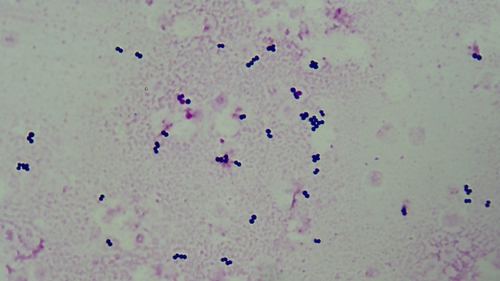
Staphylococcus, from Ancient Greek σταφυλή (staphulḗ), meaning "bunch of grapes", and (kókkos), meaning "kernel" or "Kermes", is a genus of Gram-positive bacteria in the family Staphylococcaceae from the order Bacillales. Under the microscope, they appear spherical (cocci), and form in grape-like clusters. Staphylococcus species are facultative anaerobic organisms (capable of growth both aerobically and anaerobically).

Streptococcus
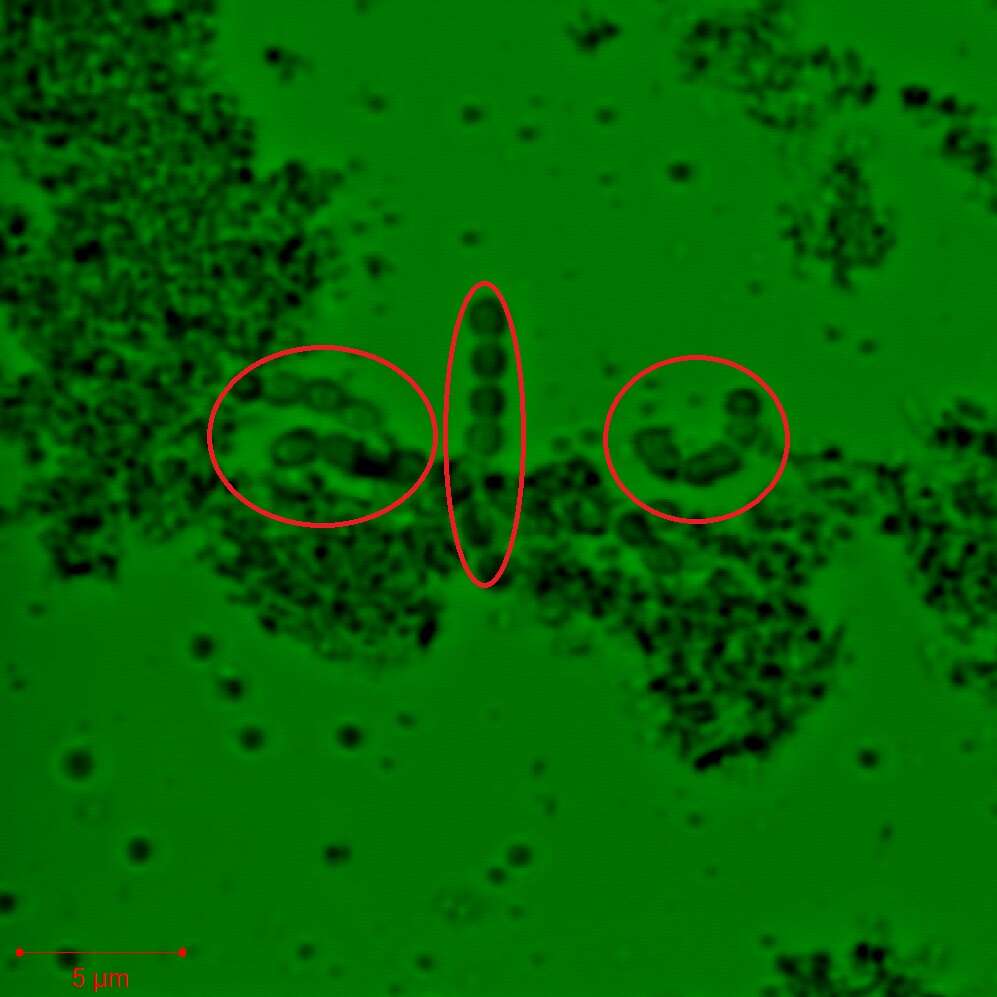
Streptococcus, from Ancient Greek στρεπτός (streptós), meaning "twisted", and κόκκος (kókkos), meaning "grain", is a genus of gram-positive spherical bacteria that belongs to the family Streptococcaceae, within the order Lactobacillales (lactic acid bacteria), in the phylum Bacillota. Cell division in streptococci occurs along a single axis, thus when growing they tend to form pairs or chains, which may appear bent or twisted. This differs from staphylococci, which divide along multiple axes, thereby generating irregular, grape-like clusters of cells. Most streptococci are oxidase-negative and

Staphylococcus aureus
species of bacterium

Bacillus
Bacillus, from Latin "bacillus", meaning "little staff, wand", is a genus of Gram-positive, rod-shaped bacteria, a member of the phylum Bacillota, with 266 named species. The term is also used to describe the shape (rod) of other so-shaped bacteria; and the plural Bacilli is the name of the class of bacteria to which this genus belongs. Bacillus species can be either obligate aerobes which are dependent on oxygen, or facultative anaerobes which can survive in the absence of oxygen. Cultured Bacillus species test positive for the enzyme catalase if oxygen has been used or is present.

gram-positive bacteria
bacteria that give a positive result in the Gram stain test, which is traditionally used to quickly classify bacteria into two broad categories according to their cell wall

Streptococcus pneumoniae
species of bacterium

Clostridium
Clostridium is a genus of anaerobic, Gram-positive bacteria. Species of Clostridium inhabit soils and the intestinal tracts of animals, including humans. This genus includes several significant human pathogens, including the causative agents of botulism and tetanus. It also formerly included an important cause of diarrhea, Clostridioides difficile, which was reclassified into the Clostridioides genus in 2016.

Lactobacillus
Lactobacillus is a genus of gram-positive bacteria within the Lactobacillaceae family. Members of the genus are aerotolerant anaerobes or microaerophilic, rod-shaped, and do not form endospores. Until 2020, the genus Lactobacillus comprised 261 phylogenetically, ecologically, and metabolically diverse species; a taxonomic revision of the genus reassigned many former Lactobacillus species to 25 genera (see below).

Clostridium botulinum
species of bacterium

Clostridium tetani
common soil bacterium and the causative agent of tetanus

Clostridium perfringens
species of bacteria
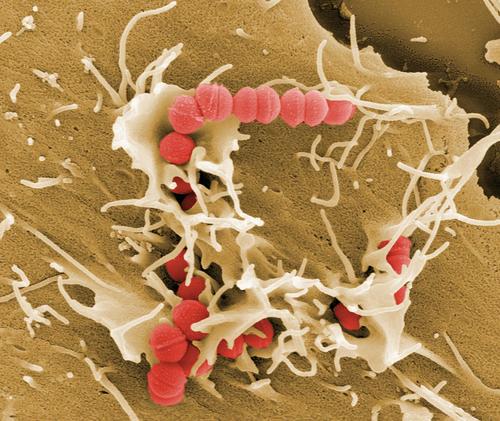
Streptococcus pyogenes
species of bacterium
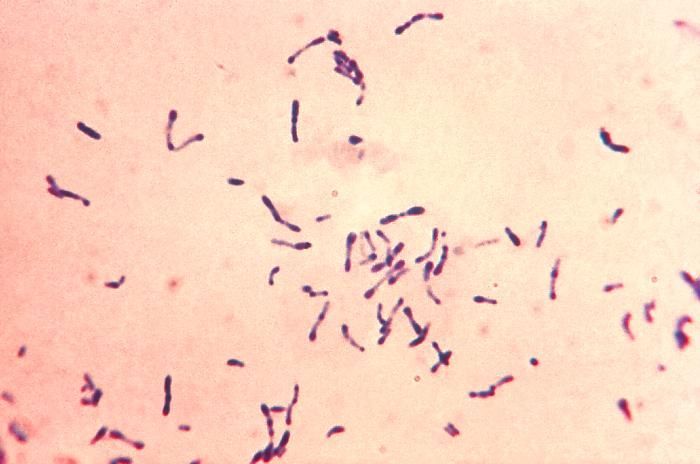
Corynebacterium diphtheriae
species of bacterium

Enterococcus
Enterococcus is a large genus of lactic acid bacteria of the phylum Bacillota. Enterococci are Gram-positive cocci that often occur in pairs (diplococci) or short chains, and are difficult to distinguish from streptococci on physical characteristics alone. Two species are common commensal organisms in the intestines of humans: E. faecalis (90–95%) and E. faecium (5–10%). Rare clusters of infections occur with other species, including E. durans, E. casseliflavus, E. gallinarum, and E. raffinosus.
lactic acid bacteria
type of bacteria
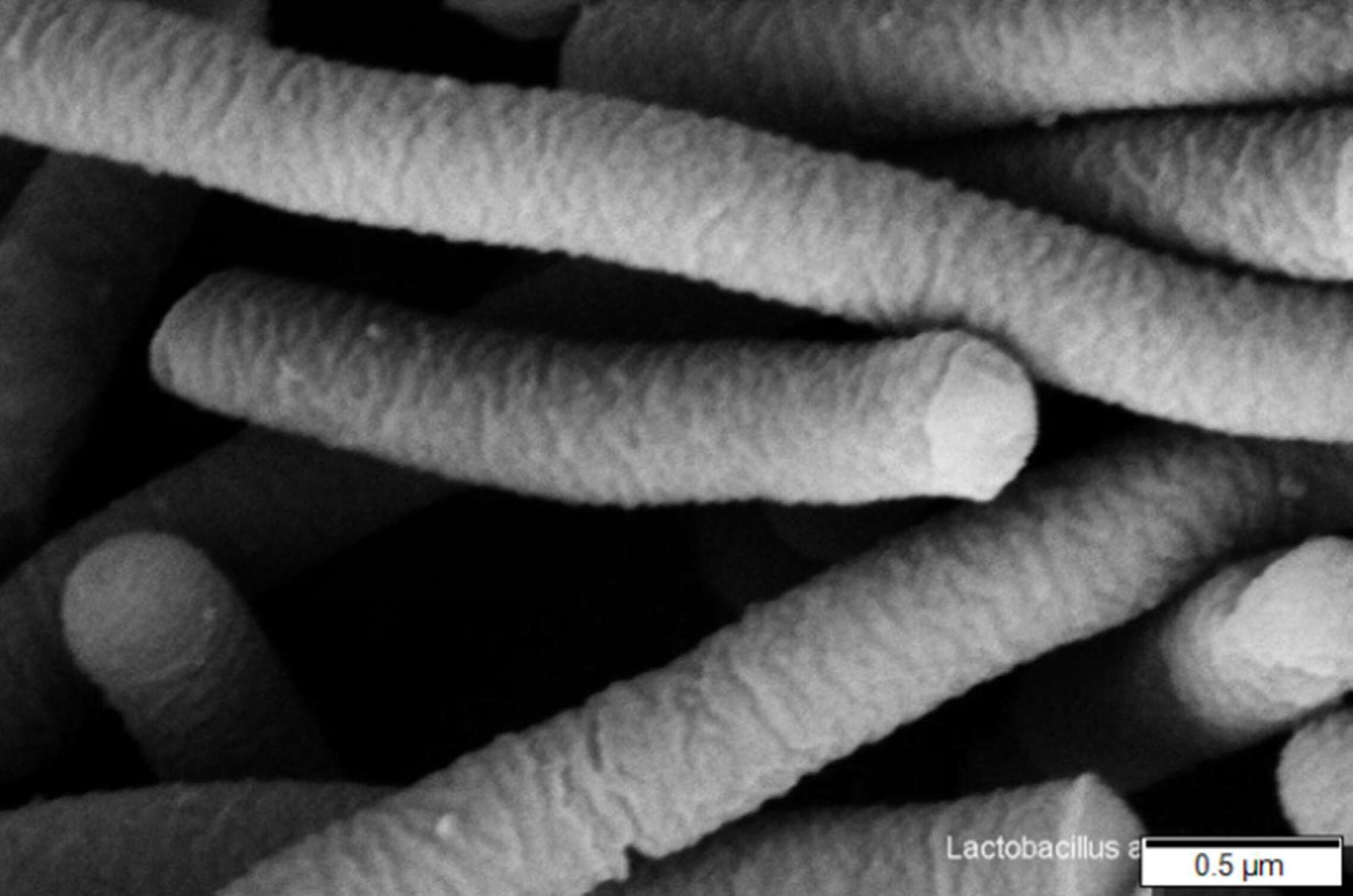
Lactobacillus acidophilus
species of bacterium
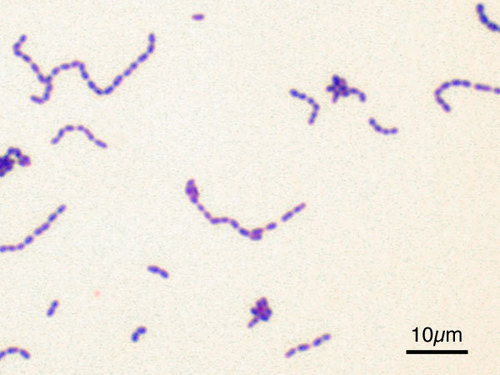
Streptococcus mutans
species of bacterium
Corynebacterium
Corynebacterium () is a genus of Gram-positive bacteria and most are aerobic. They are bacilli (rod-shaped), and in some phases of life they are, more specifically, club-shaped, which inspired the genus name (coryneform means "club-shaped").

Staphylococcus epidermidis
species of bacterium
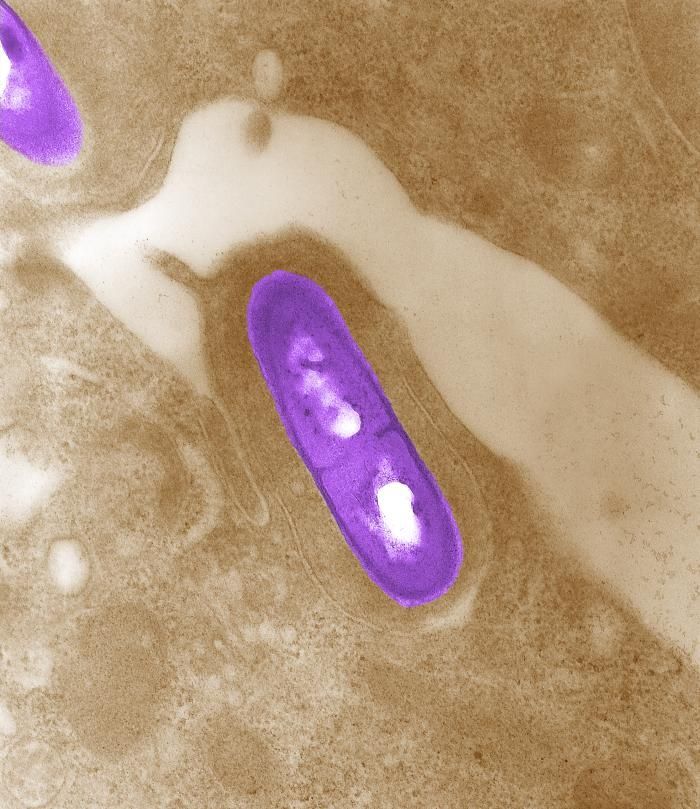
Bacillales
Bacillales, from Latin "bacillus", meaning "little staff, wand", are an order of Gram-positive bacteria, placed within the Bacillota. The Bacillales are the most productive order of the phylum "Firmicutes". Representative genera include Bacillus, Listeria and Staphylococcus.
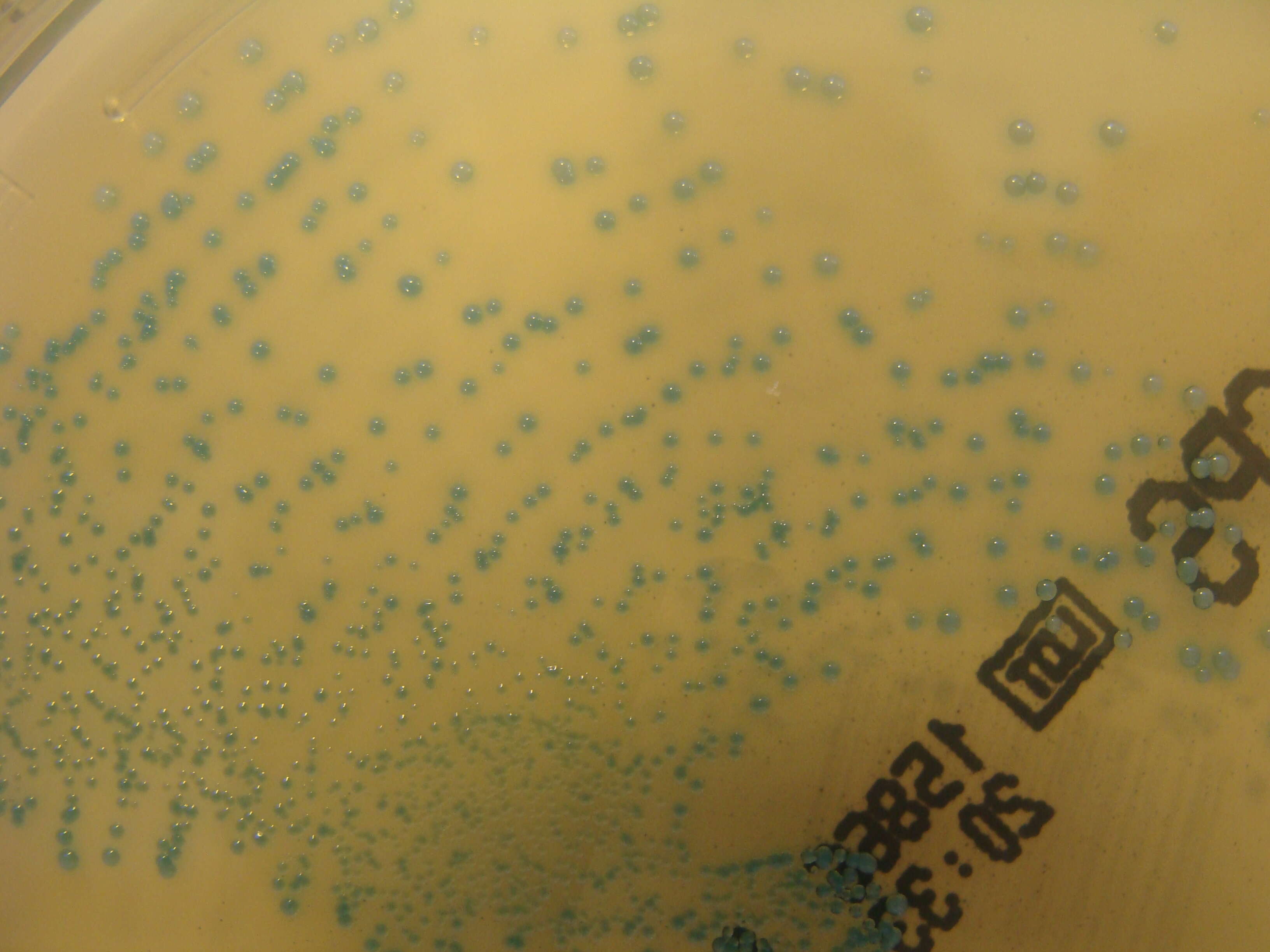
Streptococcus agalactiae
species of bacterium

Staphylococcus saprophyticus
species of bacterium
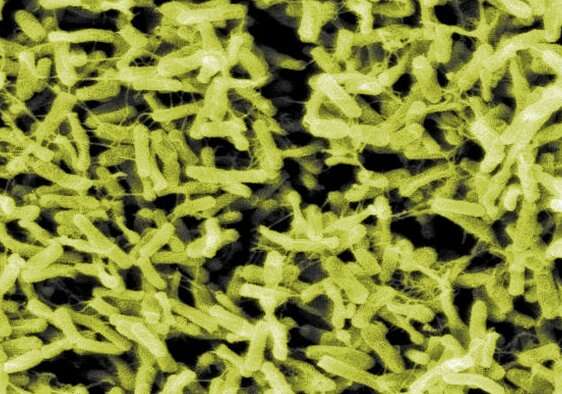
Clostridioides difficile
species of bacterium

Cutibacterium acnes
gram-positive bacterium
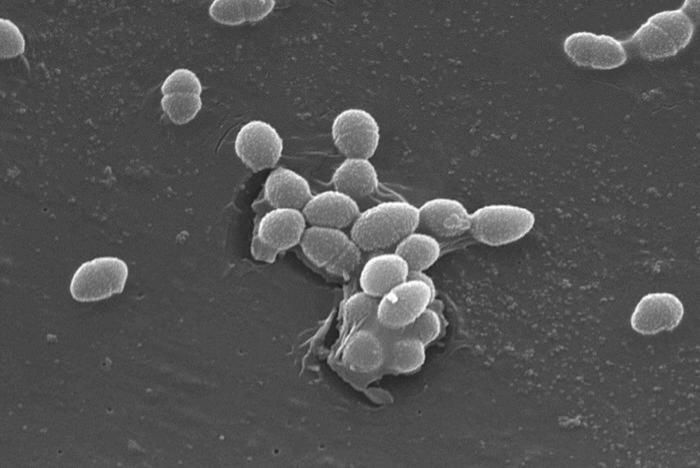
Enterococcus faecalis
species of bacterium

Lacticaseibacillus casei
species of bacterium
Actinomyces
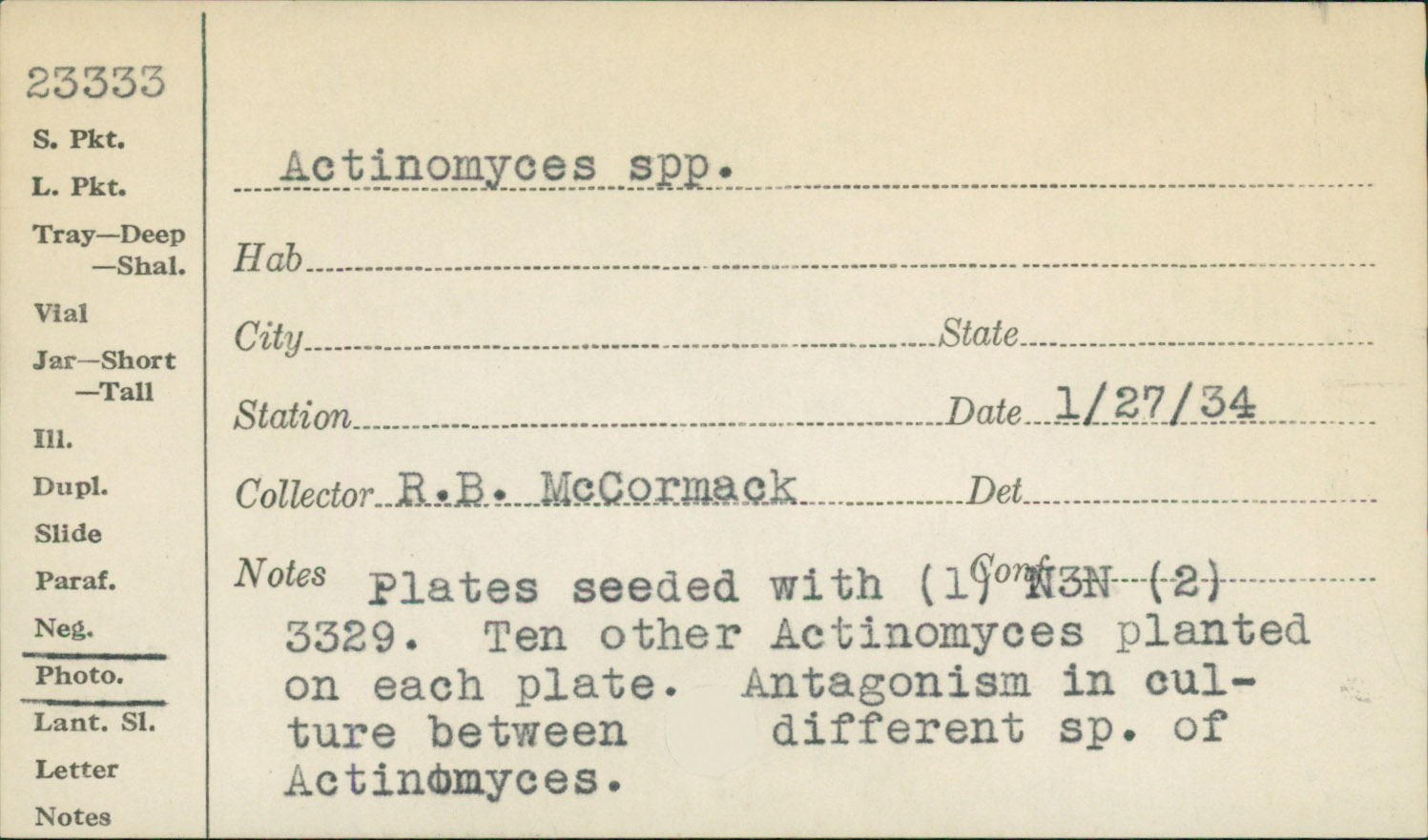
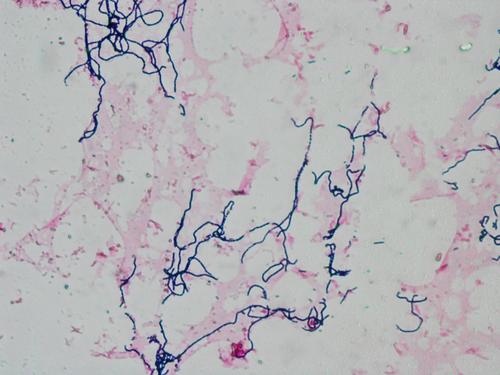
Actinomyces is a genus of the Actinomycetia class of bacteria. They all are Gram-positive and facultatively anaerobic, growing best under anaerobic conditions. While individual bacteria are rod-shaped, Actinomyces colonies form fungus-like branched networks of hyphae. The aspect of these colonies initially led to the incorrect assumption that the organism was a fungus and to the name Actinomyces, "ray fungus" (from Greek , ray or beam, and , fungus).
Lactococcus lactis
species of bacterium
Enterococcus faecium
species of bacterium
Listeriaceae
The Listeriaceae are a family of Gram-positive bacteria that includes two genera: Listeria and Brochothrix. They are short, rod-shaped bacteria that are aerobic or facultatively anaerobic. Spores are not formed, but under stress these bacteria can form filaments. Some species, namely Listeria monocytogenes, can cause human and animal listeriosis. While not all bacteria in the Listeriaceae family are considered a danger to humans, some are strongly associated with food borne illness or microbial spoilage, so they remain a topic of interest in agricultural industries.

Lactobacillus plantarum
species of bacterium

Clostridium butyricum
species of bacterium
Streptococcus thermophilus
species of bacterium

Clostridium acetobutylicum
species of bacterium

Streptococcus viridans
species of bacterium
Actinomyces israelii
species of bacterium
Streptococcus salivarius
species of bacterium

Sarcina
genus of bacteria
Streptococcus sanguinis
species of bacterium
Corynebacterium glutamicum
species of bacterium

Corynebacterium minutissimum
species of bacterium
Actinomycetota
The Actinomycetota (previously known as "Actinobacteria") are a diverse phylum of Gram-positive bacteria with high guanine-cytosine content (GC content or G+C content). They can be terrestrial or aquatic. They are of great importance to land flora because of their contributions to soil systems. In soil, they help decompose organic matter of dead organisms so the molecules can be taken up anew by plants. While this role is also played by fungi, actinomycetota are much smaller and likely do not occupy the same ecological niche. In this role, the colonies often grow extensive mycelia, as fungi do
Clostridium septicum
species of bacterium

Streptococcus suis
species of bacterium
Clostridium chauvoei
species of bacterium
Streptococcus mitis
species of bacterium
Staphylococcus xylosus
species of bacterium
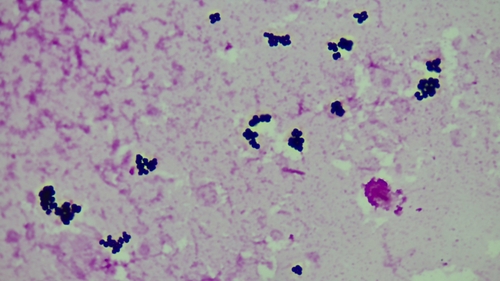
Staphylococcus haemolyticus
species of bacterium

Clostridium pasteurianum
species of bacterium
Staphylococcus lugdunensis
species of bacterium
Propionibacterium freudenreichii
species of bacterium
Carnobacteriaceae
The Carnobacteriaceae are a family of Gram-positive lactic acid bacteria.
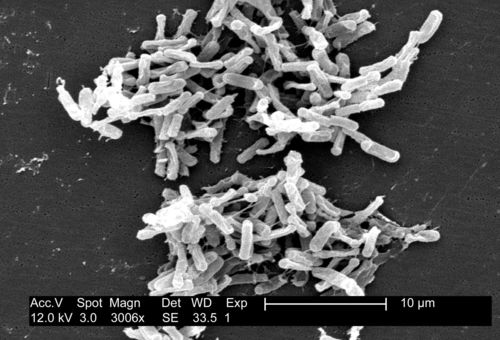
Clostridioides
Clostridioides is a genus of Gram-positive bacteria, which includes Clostridioides difficile, a human pathogen causing an infectious diarrhea.
Streptococcus oralis
species of bacterium
Clostridium sordellii
species of bacterium
Streptococcus iniae
species of bacterium
Sporosarcina
Sporosarcina is a genus of bacteria.
Enterococcus avium
species of bacterium
Streptococcus sobrinus
species of bacterium
Rhodococcus equi
species of bacterium