Category
page 1IARC Group 1 carcinogens

beryllium
Beryllium is a chemical element; it has symbol Be and atomic number 4. It is a steel-gray, hard, strong, lightweight and brittle alkaline earth metal. It is a divalent element that occurs naturally only in combination with other elements to form minerals. Gemstones high in beryllium include beryl (aquamarine, emerald, red beryl) and chrysoberyl. It is a relatively rare element in the universe, usually occurring as a product of the spallation of larger atomic nuclei that have collided with cosmic rays. Within the cores of stars, beryllium is depleted as it is fused into heavier elements. Beryll

arsenic

tobacco
thumb|Tobacco drying kiln in Myrtleford|Myrtleford, Victoria, Australia, 2018. This kiln was built in 1957, and moved to Rotary Park in 2000. Kilns of this design were built from the early 1930s through to the late 1960s.
thumb |Basma tobacco leaves drying in the sun at Pomak village in [[Xanthi, Greece]]

radon
Radon is a chemical element; it has symbol Rn and atomic number 86. It is a radioactive noble gas and is colorless and odorless. Of the three naturally occurring radon isotopes, only Rn has a sufficiently long half-life (3.825 days) for it to be released from the soil and rock where it is generated. Radon isotopes are the immediate decay products of radium isotopes.

cadmium
Cadmium is a chemical element; it has symbol Cd and atomic number 48. This soft, silvery-white metal is chemically similar to the two other stable metals in group 12, zinc and mercury. Like zinc, it demonstrates oxidation state +2 in most of its compounds, and like mercury, it has a lower melting point than the transition metals in groups 3 through 11. Cadmium and its congeners in group 12 are often not considered transition metals, in that they do not have partly filled d or f electron shells in the elemental or common oxidation states. The average concentration of cadmium in Earth's crust is

polonium
Polonium is a chemical element; it has symbol Po and atomic number 84. A rare and highly radioactive metal (although sometimes classified as a metalloid) with no stable isotopes, polonium is a chalcogen and chemically similar to selenium and tellurium, though its metallic character resembles that of its horizontal neighbours in the periodic table: thallium, lead, and bismuth. Due to the short half-life of all its isotopes, its natural occurrence is limited to tiny traces of the fleeting polonium-210 (with a half-life of 138 days) in uranium ores, as it is the penultimate daughter of natural ur

ethanol
Ethanol (also called ethyl alcohol, grain alcohol, drinking alcohol, or simply alcohol) is an organic compound with the chemical formula . It is an alcohol, with its formula also written as , or EtOH, where Et is the pseudoelement symbol for ethyl. Ethanol is a volatile, flammable, colorless liquid with a pungent taste. As a psychoactive depressant, it is the active ingredient in alcoholic beverages, and the second most consumed drug globally behind caffeine.

X-ray
thumb|Natural color X-ray photogram of a wine scene. Note the edges of hollow cylinders as compared to the solid candle.
thumb|William D. Coolidge|William Coolidge explains medical imaging and X-rays.

gasoline
thumb|Gasoline in a glass jar

opium
Opium (also known as poppy tears, or Lachryma papaveris) is the dried latex obtained from the seed capsules of the opium poppy Papaver somniferum. Approximately 12 percent of opium is made up of the analgesic alkaloid morphine, which is processed chemically to produce heroin and other synthetic opioids for medicinal use and for the illegal drug trade. Opium's main psychoactive alkaloids, primarily morphine, act on μ-opioid receptors, causing analgesia, with long-term use leading to tolerance and dependence. The latex also contains the closely related opiates codeine and thebaine, and non-analg

gamma ray
electromagnetic radiation of high frequency and high energy
2.png)
benzene
Benzene is an organic chemical compound with the molecular formula C6H6. The benzene molecule is composed of six carbon atoms joined in a planar hexagonal ring with one hydrogen atom attached to each. As it contains only carbon and hydrogen atoms, benzene is a hydrocarbon.

asbestos
Asbestos or asbestus ( ) is a group of naturally occurring, fibrous silicate minerals, used for thousands of years to create flexible objects that resist fire, such as fireproof fabrics, but are now known to be toxic and carcinogenic.

silicon dioxide
chemical compound

Areca catechu
species of plant
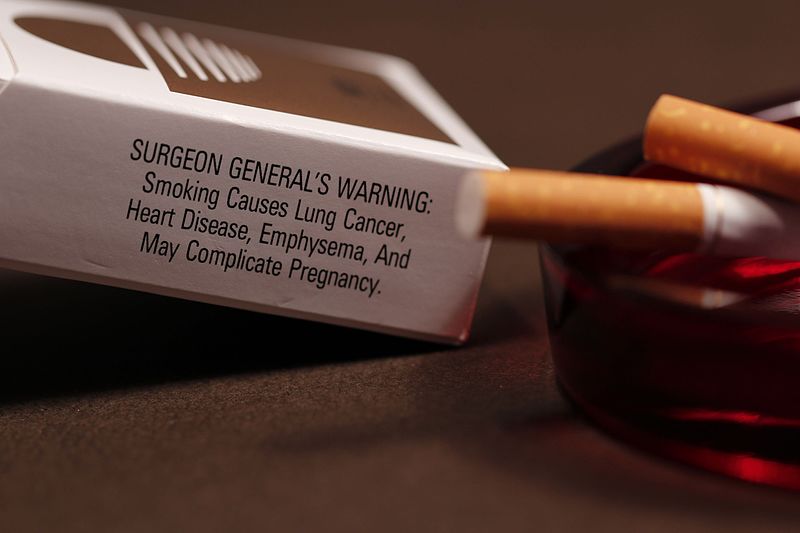
tobacco smoking
practice of burning tobacco and inhaling the resulting smoke

sunlight
thumb|right|The Sun, as seen from low Earth orbit overlooking the International Space Station. This sunlight is not filtered by the lower atmosphere, which blocks much of the solar spectrum.

mustard gas
chemical compound

soot
thumb|Emission of soot in the exhaust gas of a large diesel truck, without particle filters

arsenic trioxide
pharmaceutical drug

vinyl chloride
chemical compound
-Aflatoxin%20B1%20Structural%20Formulae%20V.1.svg)
aflatoxins
thumb|right|Chemical structure of Aflatoxin B1|aflatoxin B1

1,3-butadiene
1,3-Butadiene () is an organic compound with the formula CH2=CH-CH=CH2. It is a colorless gas that is easily condensed to a liquid. It is important industrially as a precursor to synthetic rubber. The molecule can be viewed as the union of two vinyl groups. It is the simplest conjugated diene.
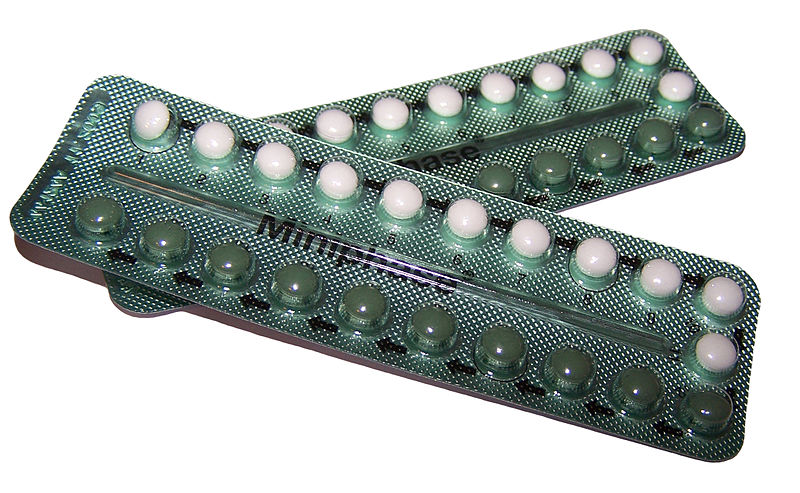
combined oral contraceptive pill
birth control method that includes a combination of an estrogen (estradiol) and a progestogen (progestin)

ethylene oxide
chemical compound

Aristolochia
Aristolochia () is a large plant genus with over 500 species that is the type genus of the family Aristolochiaceae. Its members are commonly known as birthwort, pipevine or '''Dutchman's pipe' and are widespread and occur in diverse climates. Some species, like A. utriformis and A. westlandii'', are threatened with extinction.

Epstein–Barr virus
virus of the herpes family
.jpg)
sawdust
thumb|Sawdust made with hand saw
thumb|:ja:オガ炭|Ogatan, Japanese [[charcoal briquettes made from sawdust]]
thumb|Sawdust vendors in Kashgar markets
gallium arsenide
chemical semiconductor compound
potassium dichromate
chemical compound
%2C%20Singapore%20-%2020150210.jpg)
hydrochlorothiazide
Hydrochlorothiazide, sold under the brand name Hydrodiuril among others, is a diuretic medication used to treat hypertension and swelling due to fluid build-up. Other uses include treating diabetes insipidus and renal tubular acidosis and to decrease the risk of kidney stones in hypercalciuria. Hydrochlorothiazide is taken by mouth and may be combined with other blood pressure medications as a single pill to increase effectiveness. Hydrochlorothiazide is a thiazide medication which inhibits reabsorption of sodium and chloride ions from the distal convoluted tubules of the kidneys, causing a na

arsenic trihydride
Arsine (IUPAC name: arsane) is an inorganic compound with the formula AsH3. This flammable, pyrophoric, and highly toxic pnictogen hydride gas is one of the simplest compounds of arsenic. Despite its lethality, it finds some applications in the semiconductor industry and for the synthesis of organoarsenic compounds. The term arsine is commonly used to describe a class of organoarsenic compounds of the formula AsH3−xRx, where R = aryl or alkyl. For example, As(C6H5)3, called triphenylarsine, is referred to as "an arsine".
acrylonitrile
Acrylonitrile is an organic compound with the formula and the structure . It is a colorless, volatile liquid. It has a pungent odor reminiscent of garlic or onions. Its molecular structure consists of a vinyl group () linked to a nitrile (). It is an important monomer for the manufacture of useful plastics such as polyacrylonitrile. It is toxic at low doses.
beryllium oxide
chemical compound

(RS)-cyclophosphamide
Cyclophosphamide (CP), also known as cytophosphane among other names, is a medication used as chemotherapy and to suppress the immune system. As chemotherapy it is used to treat lymphoma, multiple myeloma, leukemia, ovarian cancer, breast cancer, small cell lung cancer, neuroblastoma, and sarcoma. As an immune suppressor it is used in nephrotic syndrome, ANCA-associated vasculitis, and following organ transplant, among other conditions. It is taken by mouth or injection into a vein.
particulates
microscopic solid or liquid matter suspended in the Earth's atmosphere

tamoxifen
Tamoxifen, sold under the brand name Nolvadex among others, is a selective estrogen receptor modulator used to prevent breast cancer in women and men. It is also being studied for other types of cancer. It has been used for Albright syndrome. Tamoxifen is typically taken daily by mouth for five years for breast cancer.

trichloroethene
Trichloroethylene (TCE, IUPAC name: trichloroethene) is an organochloride with the formula C2HCl3, commonly used as an industrial degreaser. It is a clear, colourless, non-flammable, volatile liquid with a sweet chloroform-like pleasant mild smell and burning sweet taste. Trichloroethylene has been sold under a variety of trade names. Under the trade names Trimar and Trilene, it was used as a volatile anesthetic and as an inhaled obstetrical analgesic. Industrial abbreviations include trichlor, Trike, Tricky and tri. It should not be confused with the similar 1,1,1-trichloroethane, which was c

footwear industry
thumb|Woodcut of shoemakers from [[Frankfurt am Main, 1568.]]
thumb|Two shoemakers in Vietnam in 1923.

cyclosporine
Ciclosporin, also spelled cyclosporine and cyclosporin, is a calcineurin inhibitor, used as an immunosuppressant medication. It is taken orally or intravenously for rheumatoid arthritis, psoriasis, Crohn's disease, nephrotic syndrome, eczema, and in organ transplants to prevent rejection. It is also used as eye drops for keratoconjunctivitis sicca (dry eyes).

Paan
Hindi word for betel used for a stimulating and psychoactive preparation combined with areca nut and/or cured tobacco

areca nut
the seed of the areca palm

benzidine
Benzidine (trivial name), also called '''1,1'-biphenyl-4,4'-diamine''' (systematic name), is an organic compound with the formula (C6H4NH2)2. It is an aromatic amine. It is a component of a test for cyanide. Related derivatives are used in the production of dyes. Benzidine has been linked to bladder and pancreatic cancer.
nickel(II) chloride
chemical compound
lindane
Lindane, also known as '''gamma-hexachlorocyclohexane (γ-HCH), gammaxene, Gammallin and benzene hexachloride (BHC'''), is an organochlorine chemical and an isomer of hexachlorocyclohexane that has been used both as an agricultural insecticide and as a pharmaceutical treatment for lice and scabies.
cadmium chloride
chemical compound
cadmium sulfide
chemical compound

azathioprine
Azathioprine, sold under the brand name Imuran, among others, is an immunosuppressive medication. It is used for the treatment of rheumatoid arthritis, granulomatosis with polyangiitis, Crohn's disease, ulcerative colitis, and systemic lupus erythematosus, and in kidney transplants to prevent rejection. It is listed by the International Agency for Research on Cancer as a group 1 human carcinogen. It is taken by mouth or injected into a vein.
indoor tanning
tanning using an artificial source of ultraviolet light
hepatitis D
Human disease
hormone replacement therapy
administration of hormonal agents as medicines to replace certain missing hormones
![benzo[a]pyrene thumbnail](https://commons.wikimedia.org/wiki/Special:FilePath/Benzo(a)pyrene%20numbered.png)
benzo[a]pyrene
'Benzo[a]pyrene (BaP or B[a]P') is a polycyclic aromatic hydrocarbon and the result of incomplete combustion of organic matter at temperatures between and . The ubiquitous compound can be found in coal tar, tobacco smoke and many foods, especially grilled meats. The substance with the formula C20H12 is one of the benzopyrenes, formed by a benzene ring fused to pyrene. Its diol epoxide metabolites, more commonly known as BPDE, react with and bind to DNA, resulting in mutations and eventually cancer. It is listed as a Group 1 carcinogen by the IARC. In the 18th century a scrotal cancer of chimne

chrysotile
Chrysotile (/ˈkrɪsəˌtʌɪl/, /ˈkrɪsəˌtaɪl/, or /ˈkrɪsətɪl/) or white asbestos is the most commonly encountered form of asbestos, accounting for approximately 95% of the asbestos in the United States and a similar proportion in other countries. It is a soft, fibrous silicate mineral in the serpentine subgroup of phyllosilicates; as such, it is distinct from other asbestiform minerals in the amphibole group. Its idealized chemical formula is Mg(SiO)(OH). The material has physical properties which make it desirable for inclusion in building materials, but poses serious health risks when dispersed i
perfluorooctanoic acid
chemical compound
nickel(II) sulfate
chemical compound

nitrosamine
thumb|150px|Structure of the nitrosamino group

tacrolimus
Tacrolimus, sold under the brand name Prograf among others, is an immunosuppressive drug. After an allogenic organ transplant, the risk of organ rejection is moderate; tacrolimus is used to lower the risk of organ rejection. Tacrolimus is also sold as a topical medication for treating T cell-mediated diseases, such as eczema and psoriasis. For example, it is prescribed for severe refractory uveitis after a bone marrow transplant, exacerbations of minimal change disease, Kimura's disease, and vitiligo. It can be used to treat dry eye syndrome in cats and dogs.

phenacetin
Phenacetin (; acetophenetidin, '''N-(4-ethoxyphenyl)acetamide''') is a pain-relieving and fever-reducing drug, which was widely used following its introduction in 1887. It was withdrawn from medicinal use as dangerous from the 1970s (e.g., withdrawn in Canada in 1973, and by the U.S. Food and Drug Administration in 1983).
neutron radiation
Ionizing radiation that presents as free neutrons
coal tar
chemical mixture