Category
page 1Industrial gases

nitrogen
Nitrogen is a chemical element; it has symbol N and atomic number 7. Nitrogen is a nonmetal and the lightest member of group 15 of the periodic table, often called the pnictogens. It is a common element in the universe, estimated at seventh in total abundance in the Milky Way and the Solar System. At standard temperature and pressure, two atoms of the element bond to form N2, a colourless and odourless diatomic gas. N2 forms about 78% of Earth's atmosphere, making it the most abundant chemical species in air. Because of the volatility of nitrogen compounds, nitrogen is relatively rare in the s

neon
Neon is a chemical element; it has the symbol Ne and the atomic number 10. It is the second noble gas in the periodic table. Neon is a colorless, odorless, inert monatomic gas under standard conditions, with approximately two-thirds the density of air.

fluorine
Fluorine is a chemical element; it has symbol F and atomic number 9. It is the lightest halogen and exists at standard conditions as pale yellow diatomic gas. Fluorine is extremely reactive as it reacts with all other elements except for the light noble gases. In its elemental form it is highly toxic.

chlorine
Chlorine is a chemical element; it has symbol Cl and atomic number 17. The second-lightest of the halogens, it appears between fluorine and bromine in the periodic table and its properties are mostly intermediate between them. Chlorine is a yellow-green gas at room temperature. It is an extremely reactive element and a strong oxidising agent: among the elements, it has the highest electron affinity and the third-highest electronegativity on the revised Pauling scale, behind only oxygen and fluorine.
argon
Argon is a chemical element; it has symbol Ar and atomic number 18. It is in group 18 of the periodic table and is a noble gas. Argon is the third most abundant gas in Earth's atmosphere, at 0.934% (9340 ppmv). It is more than twice as abundant as water vapor (which averages about 4000 ppmv, but varies greatly), 23 times as abundant as carbon dioxide (400 ppmv), and more than 500 times as abundant as neon (18 ppmv). Argon is the most abundant noble gas in Earth's crust, comprising 0.00015% of the crust.

radon
Radon is a chemical element; it has symbol Rn and atomic number 86. It is a radioactive noble gas and is colorless and odorless. Of the three naturally occurring radon isotopes, only Rn has a sufficiently long half-life (3.825 days) for it to be released from the soil and rock where it is generated. Radon isotopes are the immediate decay products of radium isotopes.

xenon
Xenon is a chemical element; it has symbol Xe and atomic number 54. It is a dense, colorless, odorless noble gas found in Earth's atmosphere in trace amounts. Although generally unreactive, it can undergo a few chemical reactions such as the formation of xenon hexafluoroplatinate, the first noble gas compound to be synthesized.

methane
Methane ( , ) is a chemical compound that has the chemical formula (one carbon atom bonded to four hydrogen atoms). It is a group-14 hydride, the simplest alkane, and the main constituent of natural gas. The abundance of methane on Earth makes it an economically attractive fuel, although capturing and storing it is difficult because it is a gas at standard temperature and pressure. In the Earth's atmosphere methane is transparent to visible light but absorbs infrared radiation, acting as a greenhouse gas. Methane is an organic hydrocarbon, and among the simplest of organic compounds.

ammonia

carbon monoxide
chemical compound

ozone
Ozone (), also called trioxygen, is an inorganic molecule with the chemical formula ''''''. It is a pale-blue gas with a distinctively pungent odour. It is an allotrope of oxygen that is much less stable than the diatomic allotrope , breaking down in the lower atmosphere to (dioxygen). Ozone is formed from dioxygen by the action of ultraviolet (UV) light and electrical discharges within the Earth's atmosphere. It is present in very low concentrations throughout the atmosphere, with its highest concentration high in the ozone layer of the stratosphere, which absorbs most of the Sun's ultraviole

William Ramsay
Scottish chemist (1852–1916)

Joseph Priestley
English chemist, theologian, educator, and political theorist (1733–1804)

electrolysis
thumb|Illustration of a Hofmann voltameter|Hofmann electrolysis apparatus used in a school laboratory

ethane
Ethane ( , ) is a naturally occurring organic chemical compound with chemical formula . At standard temperature and pressure, ethane is a colorless, odorless gas. Like many hydrocarbons, ethane is isolated on an industrial scale from natural gas and as a petrochemical by-product of petroleum refining. Its chief use is as feedstock for ethylene production. The ethyl group is formally, although rarely practically, derived from ethane.

ethylene
Ethylene (IUPAC name: ethene) is a hydrocarbon which has the formula or . It is a colourless, flammable gas with a faint "sweet and musky" odour when pure. It is the simplest alkene (a hydrocarbon with carbon–carbon double bonds).

sulfur dioxide
chemical compound

acetylene
Acetylene (systematic name: ethyne) is a chemical compound with the formula and structure . It is a hydrocarbon and the simplest alkyne. This colorless gas is widely used as a fuel and a chemical building block. It is unstable in its pure form and thus is usually handled as a solution. Pure acetylene is odorless, but commercial grades usually have a marked odor due to impurities such as divinyl sulfide and phosphine.

hydrogen sulfide
chemical compound

propane
thumb|A 20 lb () steel propane cylinder. This cylinder is fitted with an overfill prevention device (OPD) valve, as evidenced by the trilobular handwheel.
Propane () is a three-carbon chain alkane with the molecular formula . It is a gas at standard temperature and pressure, but becomes liquid when compressed for transportation and storage. A by-product of natural gas processing and petroleum refining, it is often a constituent of liquefied petroleum gas (LPG), which is commonly used as a fuel in domestic and industrial applications and in low-emissions public transportation; other constituent
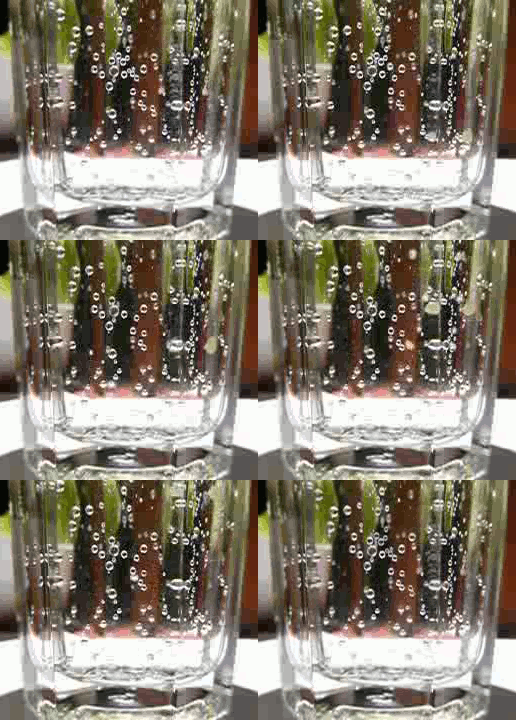
carbonated water
water containing dissolved carbon dioxide gas and intended for drinking
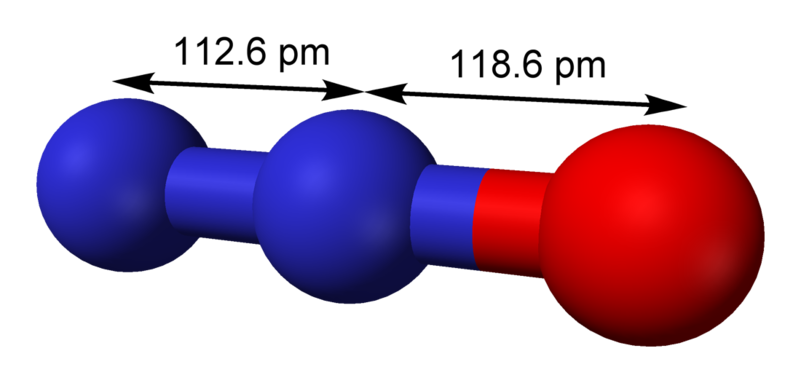
nitrous oxide
chemical compound

Joseph Black
Scottish physicist and chemist (1728–1799)

compressor
thumb|A small stationary high pressure breathing air compressor for filling scuba cylinders
thumb|A powerful compressor for street work. Model XASS from Atlas Copco circa 1985.
thumb|right|Natural gas compressor at a gas well
thumb|right|High pressure reciprocating compressor from Belliss and Morcom, used in the bottling industry
A compressor is a mechanical device that increases the pressure of a gas by reducing its volume. An air compressor is a specific type of gas compressor.

hydrogen chloride
chemical compound
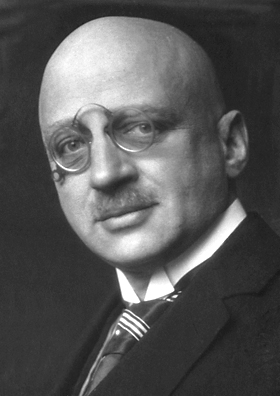
Haber-Bosch process
artificial nitrogen fixation process which is the main industrial procedure for the production of ammonia nowadays

phosphine
Phosphine (IUPAC name: phosphane) is a colorless, flammable, highly toxic compound with the chemical formula , classed as a pnictogen hydride. Pure phosphine is odorless, but technical grade samples have a highly unpleasant odor like rotting fish, due to the presence of substituted phosphine and diphosphane (). With traces of present, is spontaneously flammable in air (pyrophoric), burning with a luminous flame. Phosphine is a highly toxic respiratory poison, and is immediately dangerous to life or health at 50 ppm. Phosphine has a trigonal pyramidal structure.

nitrogen oxide
any chemical compound consisting of nitrogen and oxygen only

cryogenics
thumb|Liquid nitrogen|Nitrogen is a liquid under .
In physics, cryogenics is the production and behaviour of materials at very low temperatures.
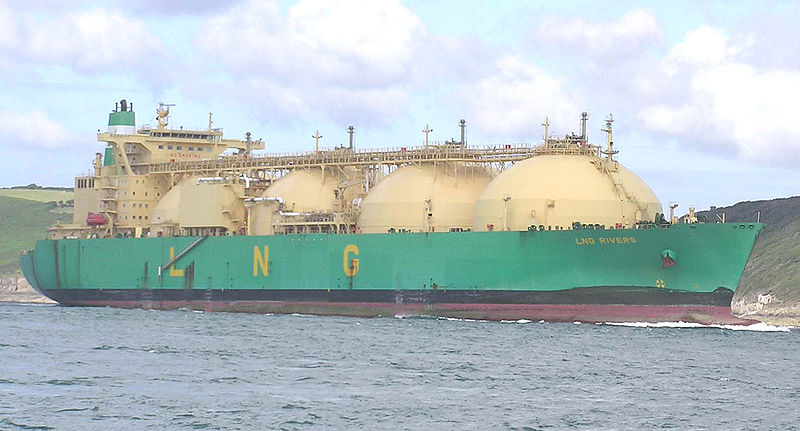
liquefied natural gas
natural gas converted to liquid form for storage or transport

hydrogen fluoride
chemical compound

liquid oxygen
one of the physical forms of elemental oxygen

refrigerant
Refrigerants are working fluids that carry heat from a cold environment to a warm environment while circulating between them. For example, the refrigerant in an air conditioner carries heat from a cool indoor environment to a hotter outdoor environment. Similarly, the refrigerant in a kitchen refrigerator carries heat from the inside the refrigerator out to the surrounding room. A wide range of fluids are used as refrigerants, with the specific choice depending on the temperature range needed and constraints related to the system involved.

Daniel Rutherford
British physician, chemist, botanist and physicist (1749–1819)
sulfur hexafluoride
chemical compound, non-toxic, climate-damaging gas

arsenic trihydride
Arsine (IUPAC name: arsane) is an inorganic compound with the formula AsH3. This flammable, pyrophoric, and highly toxic pnictogen hydride gas is one of the simplest compounds of arsenic. Despite its lethality, it finds some applications in the semiconductor industry and for the synthesis of organoarsenic compounds. The term arsine is commonly used to describe a class of organoarsenic compounds of the formula AsH3−xRx, where R = aryl or alkyl. For example, As(C6H5)3, called triphenylarsine, is referred to as "an arsine".
syngas
Syngas, or synthesis gas, is a mixture of hydrogen and carbon monoxide in various ratios. The gas often contains some carbon dioxide and methane. It is principally used for producing ammonia or methanol. Syngas is combustible and can be used as a fuel. Historically, it has been used as a replacement for gasoline when gasoline supply has been limited; for example, wood gas was used to power cars in Europe during WWII (in Germany alone, half a million cars were built or rebuilt to run on wood gas).
hydrogen economy
a proposed system of delivering energy using hydrogen
---No%2C1%20%E3%80%90%20Pictures%20taken%20in%20Japan%20%E3%80%91.jpg)
silane
Silane (Silicane) is an inorganic compound with chemical formula . It is a colorless, pyrophoric gas with a sharp, repulsive, pungent smell, somewhat similar to that of acetic acid. Silane is of practical interest as a precursor to elemental silicon. Silanes with alkyl groups are effective water repellents for mineral surfaces such as concrete and masonry. Silanes with both organic and inorganic attachments are used as coupling agents. They are commonly used to apply coatings to surfaces or as an adhesion promoter.
propellant
A propellant (or propellent) is a mass that is expelled or expanded in such a way as to create a thrust or another motive force in accordance with Newton's third law of motion, and "propel" a vehicle, projectile, or fluid payload. In vehicles, the engine that expels the propellant is called a reaction engine. Although technically a propellant is the reaction mass used to create thrust, the term "propellant" is often used to describe a substance which contains both the reaction mass and the fuel that holds the energy used to accelerate the reaction mass. For example, the term "propellant" is of
Carl von Linde
German engineer (1842-1934)
liquid hydrogen
liquid state of the element hydrogen
compressed air
air kept under a pressure that is greater than atmospheric pressure
boron trifluoride
chemical compound
inert gas
gas which does not undergo chemical reactions under given conditions
oxy-fuel welding and cutting
metalworking technique using a gaseous fuel and oxygen
liquid nitrogen
liquid state of the element nitrogen
town gas
fuel

diborane(6)
Diborane(6), commonly known as diborane, is the inorganic compound with the formula . It is a highly toxic, colorless, and pyrophoric gas with a repulsively sweet odor. Given its simple formula, diborane is a fundamental boron compound. It has attracted wide attention for its unique electronic structure. Several of its derivatives are useful reagents.
liquid helium
liquid state of the element helium

gasification
Gasification is a process that converts biomass- or fossil fuel-based carbonaceous materials into gases, including as the largest fractions: dinitrogen (N2), carbon monoxide (CO), dihydrogen (H2), and carbon dioxide (). This is achieved by reacting the feedstock material at high temperatures (typically >700 °C), without combustion, via controlling the amount of oxygen and/or steam present in the reaction. The resulting gas mixture is called syngas (from synthesis gas) or producer gas and is itself a fuel due to the flammability of the H2 and CO of which the gas is largely composed. Power

oxyhydrogen
thumb|right|Nineteenth-century electrolytic cell for producing oxyhydrogen
Oxyhydrogen is a mixture of hydrogen (H2) and oxygen (O2) gases. This gaseous mixture is used for torches to process refractory materials and was the first
air purifier
device to remove contaminants from the air
Kipp's apparatus
laboratory device for preparing gases
gas lighting
type of artificial light
fuel gas
combustible in gas form
.jpg)
blimp
thumb|right|300px|Goodyear GZ-20|The Spirit of Goodyear, one of the iconic [[Goodyear Blimps]]
A blimp, (/blɪmp/) less commonly called a non-rigid airship, is an airship (dirigible) without an internal structural framework or a keel. Unlike semi-rigid and rigid airships (e.g. Zeppelins), blimps rely on the pressure of their lifting gas (usually helium, rather than flammable hydrogen) and the strength of the envelope to maintain their shape. Blimps are known for their use in advertising, surveillance, and observation due to their maneuverability, slow speeds and steady flight capabilities.
oxygen concentrator
device which removes nitrogen from air
carbide lamp
acetylene-burning lamps
clathrate hydrate
crystalline solid containing molecules caged in a lattice of frozen water