Category
page 1Monoclonal antibodies
monoclonal antibody
monospecific antibody that is made by identical immune cells that are all clones of a unique parent cell
infliximab
Infliximab, a chimeric monoclonal antibody, sold under the brand name Remicade among others, is a medication used to treat a number of autoimmune diseases. This includes Crohn's disease, ulcerative colitis, rheumatoid arthritis, ankylosing spondylitis, psoriasis, psoriatic arthritis, and Behçet's disease. It is given by slow injection into a vein, typically at six- to eight-week intervals.
tocilizumab
Tocilizumab, sold under the brand name Actemra among others, is an immunosuppressive drug, used for the treatment of rheumatoid arthritis, systemic juvenile idiopathic arthritis, polyarticular juvenile idiopathic arthritis, giant cell arteritis, cytokine release syndrome, COVID19, and systemic sclerosis-associated interstitial lung disease (SSc-ILD). It is a recombinant humanized monoclonal antibody of the immunoglobulin IgG1 subclass against the interleukin-6 receptor (IL-6R). Interleukin 6 (IL-6) is a cytokine that plays an important role in immune response and is implicated in the pathogene
adalimumab
Adalimumab, sold under the brand name Humira and others, is a disease-modifying antirheumatic drug and monoclonal antibody used to treat rheumatoid arthritis, juvenile idiopathic arthritis, psoriatic arthritis, ankylosing spondylitis, Crohn's disease, ulcerative colitis, plaque psoriasis, hidradenitis suppurativa, and uveitis. It is administered by subcutaneous injection (injection under the skin). It works by inactivating tumor necrosis factor (TNF).
denosumab
Denosumab, sold under the brand name Prolia among others, is a human monoclonal antibody used for the treatment of osteoporosis, treatment-induced bone loss, metastases to bone, and giant cell tumor of bone.
omalizumab
Omalizumab, sold under the brand name Xolair among others, is an injectable medication to treat severe persistent allergic forms of asthma, nasal polyps, urticaria (hives), and immunoglobulin E-mediated food allergy.
secukinumab
Secukinumab, sold under the brand name Cosentyx among others, is a human IgG1κ monoclonal antibody used for the treatment of psoriasis, ankylosing spondylitis, psoriatic arthritis, and hidradenitis suppurativa. It binds to the protein interleukin (IL)-17A and is marketed by Novartis.

natalizumab
Natalizumab, sold under the brand name Tysabri among others, is a medication used to treat multiple sclerosis and Crohn's disease. It is a humanized monoclonal antibody against the cell adhesion molecule α4-integrin. It is given by intravenous infusion. The drug is believed to work by reducing the ability of inflammatory immune cells to attach to and pass through the cell layers lining the intestines and blood–brain barrier.
abciximab
Abciximab, a glycoprotein IIb/IIIa receptor antagonist manufactured by Janssen Biologics BV and distributed by Eli Lilly under the trade name ReoPro, is a platelet aggregation inhibitor mainly used during and after coronary artery procedures like angioplasty to prevent platelets from sticking together and causing thrombus (blood clot) formation within the coronary artery. It is a glycoprotein IIb/IIIa inhibitor.
casirivimab/imdevimab
Casirivimab/imdevimab, sold under the brand name REGEN‑COV among others, is a combination medicine used for the treatment and prevention of COVID19. It consists of two human monoclonal antibodies, casirivimab and imdevimab that must be mixed together and administered as an infusion or subcutaneous injection. The combination of two antibodies is intended to prevent mutational escape. It is also available as a co-formulated product. It was developed by the American biotechnology company Regeneron Pharmaceuticals.
golimumab
Golimumab, sold under the brand name Simponi, is a human monoclonal antibody which is used as an immunosuppressive medication. Golimumab targets tumor necrosis factor alpha (TNF-alpha), a pro-inflammatory molecule and hence is a TNF inhibitor. Reduction in C-reactive protein (CRP) levels, interleukin (IL)-6, intercellular adhesion molecules (ICAM)-1, matrix metalloproteinase (MMP)-3, and vascular endothelial growth factor (VEGF) demonstrates golimumab as an effective modulator of inflammatory markers and bone metabolism. Golimumab is given via subcutaneous injection.
ustekinumab
Ustekinumab, sold under the brand name Stelara among others, is a monoclonal antibody medication used for the treatment of Crohn's disease, ulcerative colitis, plaque psoriasis and psoriatic arthritis, targeting both IL-12 and IL-23. It is administered either by intravenous infusion or subcutaneous injection. The antibody targets a subunit of human interleukin 12 and interleukin 23, which are naturally occurring proteins that regulate the immune system and immune-mediated inflammatory disorders. Ustekinumab was developed by Centocor Ortho Biotech.

belimumab
Belimumab, sold under the brand name Benlysta, is a human monoclonal antibody that inhibits B-cell activating factor (BAFF), also known as B-lymphocyte stimulator (BLyS). It is approved in the United States and Canada, and the European Union to treat systemic lupus erythematosus and lupus nephritis.
eculizumab
Eculizumab, sold under the brand name Soliris among others, is a recombinant humanized monoclonal antibody used to treat paroxysmal nocturnal hemoglobinuria, atypical hemolytic uremic syndrome, generalized myasthenia gravis, and neuromyelitis optica. In people with paroxysmal nocturnal hemoglobinuria, it reduces both the destruction of red blood cells and need for blood transfusion, but does not appear to affect the risk of death. Eculizumab was the first medication approved for each of its uses, and its approval was granted based on small trials. It is given by intravenous infusion. It is a h
certolizumab pegol
pharmaceutical drug
basiliximab
Basiliximab, sold under the brand name Simulect, is a monoclonal antibody used to prevent rejection in kidney transplants. It is a chimeric mouse-human monoclonal antibody to the α chain (CD25) of the IL-2 receptor of T cells. It is used in combination with other medicines used to prevent organ rejection.
pertuzumab
Pertuzumab, sold under the brand name Perjeta among others, is a monoclonal antibody used in combination with trastuzumab and docetaxel for the treatment of metastatic HER2-positive breast cancer; it also used in the same combination as a neoadjuvant in early HER2-positive breast cancer.
abzyme
An abzyme (from antibody and enzyme), also called catmab (from catalytic monoclonal antibody), and most often called catalytic antibody or sometimes catab, is a monoclonal antibody with catalytic activity. Abzymes are usually raised in lab animals immunized against synthetic haptens, but some natural abzymes can be found in normal humans (anti-vasoactive intestinal peptide autoantibodies) and in patients with autoimmune diseases such as systemic lupus erythematosus, where they can bind to and hydrolyze DNA. To date abzymes display only weak, modest catalytic activity and have not proved to be
canakinumab
Canakinumab, sold under the brand name Ilaris, is a medication for the treatment of systemic juvenile idiopathic arthritis, active Still's disease, including adult-onset Still's disease, gout flares. It is a human monoclonal antibody targeted at interleukin-1 beta. It has no cross-reactivity with other members of the interleukin-1 family, including interleukin-1 alpha.
sarilumab
Sarilumab, sold under the brand name Kevzara, is a human monoclonal antibody medication against the interleukin-6 receptor. Regeneron Pharmaceuticals and Sanofi developed the drug for the treatment of rheumatoid arthritis (RA), for which it received US FDA approval on 22 May 2017 and European Medicines Agency approval on 23 June 2017.

ZMapp
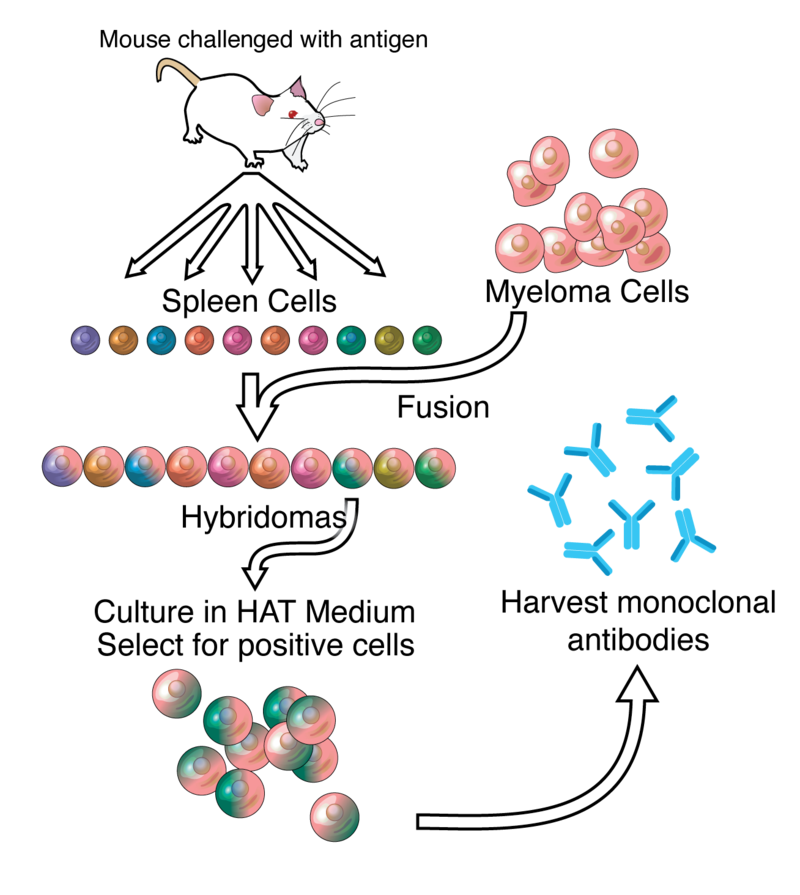
300px|thumb|right|Schematic representation of how monoclonal antibodies are generally made from hybridomas. To make ZMapp, the genes encoding for the antibodies were extracted from the hybridomas, genetically engineered to replace mouse components with human components, and [[transfected into tobacco plants.]]
evolocumab
Evolocumab, sold under the brand name Repatha, is a monoclonal antibody that is an immunotherapy medication for the treatment of hyperlipidemia.
ranibizumab
Ranibizumab, sold under the brand name Lucentis among others, is a monoclonal antibody fragment (Fab) created from the same parent mouse antibody as bevacizumab. It is an anti-angiogenic that is approved to treat the "wet" type of age-related macular degeneration (AMD, also ARMD), diabetic retinopathy, and macular edema due to branch retinal vein occlusion or central retinal vein occlusion.
fremanezumab
Fremanezumab, sold under the brand name Ajovy, is a medication used to prevent migraines. It is given by subcutaneous injection (injection under the skin).
alirocumab
Alirocumab, sold under the brand name Praluent, is a medication used as a second-line treatment for high cholesterol for adults whose cholesterol is not controlled by diet and statin treatment. It is a human monoclonal antibody that belongs to a novel class of anti-cholesterol drugs, known as PCSK9 inhibitors, and it was the first such agent to receive FDA approval. The FDA approval was contingent on the completion of further clinical trials to better determine efficacy and safety.
risankizumab
Risankizumab ( ), sold under the brand name Skyrizi ( ), is a humanized monoclonal antibody used for the treatment of plaque psoriasis, psoriatic arthritis, Crohn's disease, and ulcerative colitis. It is designed to target interleukin 23A (IL-23A). It is given by subcutaneous injection.
daclizumab
Daclizumab (trade name Zinbryta) is a therapeutic humanized monoclonal antibody which was used for the treatment of adults with relapsing forms of multiple sclerosis (MS). Daclizumab works by binding to CD25, the alpha subunit of the IL-2 receptor of T-cells.
Idarucizumab
Idarucizumab, sold under the brand name Praxbind, is a monoclonal antibody used as a reversal agent for dabigatran.
palivizumab
Palivizumab, sold under the brand name Synagis, is a monoclonal antibody produced by recombinant DNA technology used to prevent severe disease caused by respiratory syncytial virus (RSV) infections. It is recommended for infants at high-risk for RSV due to conditions such as prematurity or other medical problems including heart or lung diseases.

Sotrovimab
thumb|140px|A vial of Sotrovimab
Sotrovimab, sold under the brand name Xevudy, is a human neutralizing monoclonal antibody with activity against severe acute respiratory syndrome coronavirus 2, known as SARS-CoV-2. It was developed by GlaxoSmithKline and Vir Biotechnology, Inc. Sotrovimab is designed to attach to the spike protein of SARS-CoV-2.
ocrelizumab
Ocrelizumab, sold under the brand name Ocrevus, is a medication used for the treatment of multiple sclerosis. It is a humanized anti-CD20 monoclonal antibody. It targets CD20 marker on B lymphocytes and is an immunosuppressive drug. Ocrelizumab binds to an epitope that overlaps with the epitope to which rituximab binds. It is administered by intravenous infusion. The fixed-dose combination ocrelizumab/hyaluronidase is administered by subcutaneous injection.
vedolizumab
Vedolizumab, sold under the brand name Entyvio, is a monoclonal antibody medication developed by Takeda Oncology for the treatment of ulcerative colitis and Crohn's disease. It binds to integrin α4β7 (LPAM-1, lymphocyte Peyer's patch adhesion molecule 1, a dimer of Integrin alpha-4 and Integrin beta-7), blocking the α4β7 integrin results in gut-selective anti-inflammatory activity.
efalizumab
Efalizumab (brand name Raptiva) is a formerly available medication designed to treat autoimmune diseases, originally marketed to treat psoriasis. It is a recombinant humanized monoclonal antibody administered once weekly by subcutaneous injection. Efalizumab binds to the CD11a subunit of lymphocyte function-associated antigen 1 and acts as an immunosuppressant by inhibiting lymphocyte activation and cell migration out of blood vessels into tissues. Efalizumab was associated with fatal brain infections and was withdrawn from the market in 2009.
muromonab
Muromonab-CD3 (brand name Orthoclone OKT3, marketed by Janssen-Cilag) is an immunosuppressant medication given to reduce acute rejection in people with organ transplants. It is a monoclonal antibody targeted at the CD3 receptor, a membrane protein on the surface of T cells. It is the first monoclonal antibody to be approved for clinical use in humans.
ramucirumab
Ramucirumab(), sold under the brand name Cyramza, is a fully human monoclonal antibody (IgG1) used for the treatment of cancer. Ramucirumab is a human vascular endothelial growth factor receptor 2 (VEGFR2) antagonist. Ramucirumab was developed by ImClone Systems.
Romosozumab
Romosozumab, sold under the brand name Evenity ( or with the pin-pen merger, ), is a medication used to treat osteoporosis. It has been found to decrease the risk of fractures of the spine.
brentuximab vedotin
pharmaceutical drug
erenumab
Erenumab, sold under the brand name Aimovig, is a medication which blocks the calcitonin gene-related peptide receptor (CGRPR) for the prevention of migraine. It is administered by subcutaneous injection.

theralizumab
Theralizumab (also known as TGN1412, CD28-SuperMAB, and TAB08) is an immunomodulatory drug developed by immunologist of the University of Würzburg. It was withdrawn from development after inducing severe inflammatory reactions as well as chronic organ failure in the first-in-human study by Parexel in London in March 2006. The developing company, TeGenero Immuno Therapeutics (), a spin-off of the University of Würzburg around immunologist Thomas Hünig, co-founder and chief scientific officer (CSO) Thomas Hanke and chief executive officer (CEO) Benedikte Hatz went bankrupt later that year. The c
TNF inhibitor
pharmaceutical drug that suppresses the physiologic response to tumor necrosis factor (TNF)
galcanezumab
Galcanezumab, sold under the brand name Emgality, is a humanized monoclonal antibody used for the prevention of migraine. It is also used for the treatment of cluster headaches.
teplizumab
Teplizumab, sold under the brand name Tzield among others, is an anti-CD3 humanized monoclonal antibody that is the first approved treatment indicated to delay the onset of stage 3 type1 diabetes in people with stage 2 type1 diabetes.
ixekizumab
Ixekizumab, sold under the brand name Taltz, is an injectable medication for the treatment of autoimmune diseases. Chemically, it is a form of a humanized monoclonal antibody. The substance acts by binding interleukin 17A and neutralizing it, reducing inflammation.
humanized antibody
antibodies from non-human species with protein sequences modified to make them nearly identical with human antibodies
ibalizumab
Ibalizumab, sold under the brand name Trogarzo, is a non-immunosuppressive humanised monoclonal antibody that binds CD4, the primary receptor for HIV, and inhibits HIV from entering cells. It is a post-attachment inhibitor, blocking HIV from binding to the CCR5 and CXCR4 co-receptors after HIV binds to the CD4 receptor on the surface of a CD4 cell. Post-attachment inhibitors are a subclass of HIV drugs called entry inhibitors.
ravulizumab
Ravulizumab, sold under the brand name Ultomiris, is a humanized monoclonal antibody complement inhibitor medication designed for the treatment of paroxysmal nocturnal hemoglobinuria (PNH), atypical hemolytic uremic syndrome (aHUS), generalized myasthenia gravis (gMG), and neuromyelitis optica spectrum disorder (NMOSD). It is designed to bind to and prevent the activation of complement component 5 (C5).
bezlotoxumab
Bezlotoxumab, sold under the brand name Zinplava, is a human monoclonal antibody designed for the prevention of recurrence of Clostridioides difficile infections. Bezlotoxumab binds to Clostridioides difficile toxin B.
regdanvimab
Regdanvimab, sold under the brand name Regkirona, is a human monoclonal antibody used for the treatment of COVID-19. The antibody is directed against the spike protein of SARS-CoV-2. It is developed by Celltrion. The medicine is given by infusion (drip) into a vein.
raxibacumab
Raxibacumab is a human monoclonal antibody intended for the prophylaxis and treatment of inhaled anthrax. Its efficacy has been proven in rabbits and monkeys. In December 2012 raxibacumab was approved in the United States for the treatment of inhalational anthrax due to Bacillus anthracis in combination with appropriate antibacterial drugs, and for prophylaxis of inhalational anthrax when alternative therapies are not available or are not appropriate.

single-domain antibody
antibody fragment
faricimab
Faricimab, sold under the brand name Vabysmo ( ), is a monoclonal antibody used for the treatment of neovascular age-related macular degeneration (nAMD) and diabetic macular edema (DME). Faricimab is the first bispecific monoclonal antibody to target both vascular endothelial growth factor (VEGF) and angiopoietin 2 (Ang-2). By targeting these pathways, faricimab stabilizes blood vessels in the retina. It is given by intravitreal injection (injection into the eye) by an ophthalmologist.
AZD7442
Tixagevimab/cilgavimab, sold under the brand name Evusheld, is a combination of two human monoclonal antibodies, tixagevimab (AZD8895) and cilgavimab (AZD1061) targeted against the surface spike protein of SARS-CoV-2 used to prevent COVID-19. It is being developed by British-Swedish multinational pharmaceutical and biotechnology company AstraZeneca. It is co-packaged and given as two separate consecutive intramuscular injections (one injection per monoclonal antibody, given in immediate succession).
tildrakizumab
Tildrakizumab, sold under the brand name Ilumya among others, is a monoclonal antibody designed for the treatment of immunologically mediated inflammatory disorders. It is approved for the treatment of adults with moderate-to-severe plaque psoriasis in the United States and in the European Union.
crizanlizumab
Crizanlizumab, sold under the brand name Adakveo among others, is a monoclonal antibody medication that binds to P-selectin. It is a medication used to reduce the frequency of vaso-occlusive crisis in people aged 16 years and older who have sickle cell anemia. It is given by injection into a vein.
emicizumab
Emicizumab, sold under the brand name Hemlibra, is a humanized bispecific monoclonal antibody for the treatment of haemophilia A, developed by Genentech and Chugai (both organizations are subsidiaries of Hoffmann-La Roche). Emicizumab is a bispecific factor IXa- and factor X-directed antibody.
Inebilizumab
Inebilizumab, sold under the brand name Uplizna, is a medication used for the treatment of neuromyelitis optica spectrum disorder, immunoglobulin G4-related disease, and generalized myasthenia gravis. Inebilizumab is a humanized monoclonal antibody that binds to and depletes CD19+ B cells including plasmablasts and plasma cells (a CD19-directed cytolytic antibody).
tezepelumab
Tezepelumab, sold under the brand name Tezspire, is a human monoclonal antibody used for the treatment of asthma, developed and sold by AstraZeneca . Tezepelumab blocks thymic stromal lymphopoietin (TSLP), an epithelial cytokine that has been suggested to be critical in the initiation and persistence of airway inflammation.
Anifrolumab
Anifrolumab, sold under the brand name Saphnelo, is a monoclonal antibody used for the treatment of systemic lupus erythematosus. It binds to the type I interferon receptor, blocking the activity of type I interferons such as interferon-α and interferon-β.
Tralokinumab
Tralokinumab sold under the brand names Adtralza (EU/UK) and Adbry (US) among others, is a human monoclonal antibody used for the treatment of atopic dermatitis. Tralokinumab targets the cytokine interleukin 13.
evinacumab
Evinacumab, sold under the brand name Evkeeza, is a monoclonal antibody medication for the treatment of homozygous familial hypercholesterolemia (HoFH).