Category
page 1Neurotoxins

mercury
chemical element with symbol Hg and atomic number 80

cocaine
Cocaine is a stimulant of the central nervous system and tropane alkaloid, derived primarily from the leaves of two coca species native to South America: Erythroxylum coca and E. novogranatense. The leaves are processed into cocaine paste, a crude mixture of coca alkaloids, from which cocaine base is isolated and then converted to cocaine hydrochloride. Although total synthesis is possible, it is complex and not used for production. Historically, cocaine was a standard topical medication used as a local anesthetic with intrinsic vasoconstrictor properties. However, its high abuse potential, ad

Rhododendron
Rhododendron (; : rhododendra), from Ancient Greek ῥόδον (rhódon), meaning "rose", and δένδρον (déndron), meaning "tree", is a very large genus of about 1,024 species of woody plants in the heath family (Ericaceae). They can be either evergreen or deciduous. Most species are native to eastern Asia and the Himalayan region, but smaller numbers occur elsewhere in Asia, and in North America, Europe and Australia.

methanol
Methanol (also called methyl alcohol, wood alcohol, and wood spirit, amongst other names) is an organic chemical compound and the simplest aliphatic alcohol, with the chemical formula (a methyl group linked to a hydroxyl group, often abbreviated as MeOH). It is a light, volatile, colorless and flammable liquid with a distinctive alcoholic odor similar to that of ethanol (potable alcohol), but is more acutely toxic than the latter.
Methanol acquired the name wood alcohol because it was once produced through destructive distillation of wood. Today, methanol is mainly produced industrially by hyd

Aconitum
Aconitum (), also known as aconite, monkshood, wolfsbane, '''devil's helmet, or blue rocket''', is a genus of over 250 species of flowering plants belonging to the family Ranunculaceae. These herbaceous, frequently toxic perennial plants are chiefly native to the mountainous parts of the Northern Hemisphere in North America, Europe, and Asia, growing in the moisture-retentive but well-draining soils of mountain meadows.
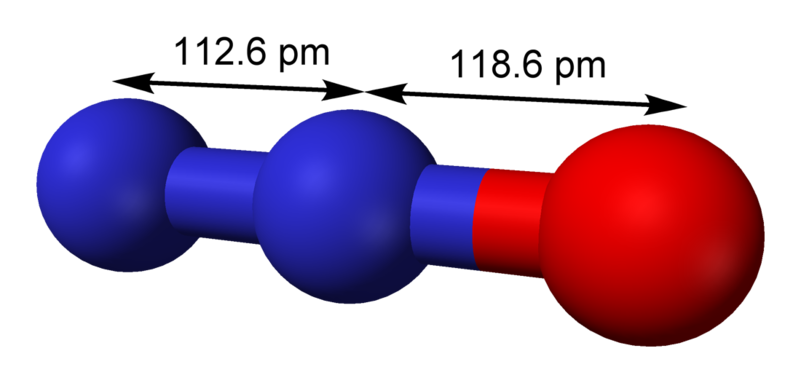
nitrous oxide
chemical compound

botulinum toxin group
group of eight neurotoxic proteins produced by Clostridium botulinum

strychnine

carbon disulfide
chemical compound

Arum maculatum
species of plant

neurotoxin
thumb|300px|right|Neurotoxins can be found in a number of organisms, including some strains of cyanobacteria, that can be found in [[algal blooms or washed up on shore in a green scum.]]

trichloroethene
Trichloroethylene (TCE, IUPAC name: trichloroethene) is an organochloride with the formula C2HCl3, commonly used as an industrial degreaser. It is a clear, colourless, non-flammable, volatile liquid with a sweet chloroform-like pleasant mild smell and burning sweet taste. Trichloroethylene has been sold under a variety of trade names. Under the trade names Trimar and Trilene, it was used as a volatile anesthetic and as an inhaled obstetrical analgesic. Industrial abbreviations include trichlor, Trike, Tricky and tri. It should not be confused with the similar 1,1,1-trichloroethane, which was c

Conium
Conium ( or ) is a genus of flowering plants in the family Apiaceae. , Plants of the World Online accepts six species.

tetraethyllead
Tetraethyllead (commonly styled tetraethyl lead), abbreviated TEL, is an organolead compound with the formula Pb(C2H5)4. It was widely used as a fuel additive for much of the 20th century, first being mixed with gasoline beginning in the 1920s. This "leaded gasoline" had an increased octane rating that allowed engine compression to be raised substantially and in turn increased vehicle performance and fuel economy. TEL was first synthesized by German chemist Carl Jacob Löwig in 1853. American chemical engineer Thomas Midgley Jr., who was working for the U.S. corporation General Motors, was the

curare
thumb|Chondrodendron tomentosum, the main source of 'tube curare' and principal source of [[D-tubocurarine (DTC), the alkaloid constituting medicinal curare]]
thumb|Strychnos toxifera, the [[Strychnos species which is the principal source of 'calabash curare' and its main active constituent, the alkaloid toxiferine]]

Arum italicum
species of plant

dimethylmercury
Dimethylmercury is an extremely toxic organomercury compound with the formula (CH3)2Hg. A volatile, flammable, dense and colorless liquid, dimethylmercury is one of the strongest known neurotoxins. Less than 0.1 mL is capable of inducing severe mercury poisoning resulting in death.

aconitine

Inocybe
Inocybe is a genus of mushroom-forming fungi, with over 1,000 species. Its members are mycorrhizal, and some evidence shows that the high degree of speciation is due to adaptation to different trees and possibly also local habitats.

thujone
Thujone () is a ketone and a monoterpene that occurs predominantly in two diastereomeric (epimeric) forms: (−)-α-thujone and (+)-β-thujone.
cyanide poisoning
broad-spectrum poisoning by inhibition of the aerobic respiration metabolism at the cellular level in mitochondria

aldrin
Aldrin is an organochlorine insecticide that was widely used until the 1990s, when it was banned in most countries. Aldrin is a member of the so-called "classic organochlorines" (COC) group of pesticides. COCs enjoyed a very sharp rise in popularity during and after World War II. Other noteworthy examples of COCs include dieldrin and DDT. After research showed that organochlorines can be highly toxic to the ecosystem through bioaccumulation, most were banned from use. Before the ban, it was heavily used as a pesticide to treat seed and soil. Aldrin and related "cyclodiene" pesticides (a term f

dieldrin
Dieldrin is an organochlorine compound originally produced in 1948 by J. Hyman & Co, Denver, as an insecticide. Dieldrin is closely related to aldrin, which reacts further to form dieldrin. Aldrin is not toxic to insects; it is oxidized in the insect to form dieldrin which is the active compound. Both dieldrin and aldrin are named after the Diels–Alder reaction which is used to form aldrin from a mixture of norbornadiene and hexachlorocyclopentadiene.
batra
Batrachotoxin (BTX) is an extremely potent cardiotoxic and neurotoxic steroidal alkaloid found in certain species of beetles, birds, and frogs. The name is from the Greek word . Structurally-related chemical compounds are often referred to collectively as batrachotoxins. In certain frogs, this alkaloid is present mostly on the skin. Such frogs are among those used for poisoning darts. Batrachotoxin binds to and irreversibly opens the sodium channels of nerve cells and prevents them from closing, resulting in paralysis and death. No antidote is known.

coniine
Coniine is a poisonous chemical compound, an alkaloid present in and isolable from poison hemlock (Conium maculatum), where its presence has been a source of significant economic, medical, and historico-cultural interest; coniine is also produced by the yellow pitcher plant (Sarracenia flava), and fool's parsley (Aethusa cynapium). Its ingestion and extended exposure are toxic to humans and all classes of livestock; its mechanism of poisoning involves disruption of the central nervous system, with death caused by respiratory paralysis. The biosynthesis of coniine contains as its penultimate st

fipronil
Fipronil is a broad-spectrum insecticide that belongs to the phenylpyrazole insecticide class. Fipronil disrupts the insect central nervous system by blocking the ligand-gated ion channel of the GABAA receptor (IRAC group 2B) and glutamate-gated chloride (GluCl) channels. This causes hyperexcitation of contaminated insects' nerves and muscles. Fipronil's specificity towards insects is believed to be due to its greater binding affinity for the GABAA receptors of insects than to those of mammals, and for its action on GluCl channels, which do not exist in mammals. , there does not appear to be s

endosulfan
Endosulfan is an organochlorine insecticide and acaricide, which acts by blocking the GABA-gated chloride channel of the insect (IRAC group 2A). It became highly controversial due to its acute toxicity, potential for bioaccumulation, and role as an endocrine disruptor. Because of its threats to human health and the environment, a global ban on the manufacture and use of endosulfan was negotiated under the Stockholm Convention in April 2011. The ban took effect in mid-2012, with certain uses exempted for five additional years. More than 80 countries, including the European Union, Australia, New
voriconazole
Voriconazole, sold under the brand name Vfend among others, is an antifungal medication used to treat a number of fungal infections. This includes aspergillosis, candidiasis, coccidioidomycosis, histoplasmosis, penicilliosis, and infections by Scedosporium or Fusarium. It can be taken by mouth or used by injection into a vein.

Aconitum anthora
species of plant
cypermethrin
Cypermethrin (CP) is a synthetic pyrethroid used as an insecticide in large-scale commercial agricultural applications as well as in consumer products for domestic purposes. It behaves as a fast-acting neurotoxin in insects. It is easily degraded on soil and plants but can be effective for weeks when applied to indoor inert surfaces. It is a non-systemic and non-volatile insecticide that acts by contact and ingestion, used in agriculture and in pest control products. Exposure to sunlight, water and oxygen will accelerate its decomposition. Cypermethrin is highly toxic to fish, bees and aquatic
tetanospasmin
chemical compound

resiniferatoxin
Resiniferatoxin (RTX) is a naturally occurring chemical found in resin spurge (Euphorbia resinifera), a cactus-like plant commonly found in Morocco, and in Euphorbia poissonii found in northern Nigeria. It is a potent functional analog of capsaicin, the active ingredient in chili peppers.
(RS)-ibotenic acid
group of stereoisomers
tubocurarine
chemical compound
chlordecone
Chlordecone, better known in the United States under the brand name Kepone, is an organochlorine compound and a colourless solid. It is an obsolete insecticide, now prohibited in the Western world, but only after many thousands of tonnes had been produced and used. Chlordecone is a known persistent organic pollutant that was banned globally by the Stockholm Convention on Persistent Organic Pollutants in 2009.
polyacrylamide
Polyacrylamide (abbreviated as PAM or pAAM) is a polymer with the formula (-CH2CHCONH2-). It has a linear-chain structure. PAM is highly water-absorbent, forming a soft gel when hydrated. In 2008, an estimated 750,000,000 kg were produced, mainly for water treatment and the paper and mineral industries.
sulfuryl fluoride
chemical compound

Arum cylindraceum
species of plant

cicutoxin
Cicutoxin is a naturally-occurring poisonous chemical compound produced by several plants from the family Apiaceae including water hemlock (Cicuta species) and water dropwort (Oenanthe crocata). The compound contains polyene, polyyne, and alcohol functional groups and is a structural isomer of oenanthotoxin (also found in water dropwort) and bupleurotoxin (found in Bupleurum longiradiatum). All of these belong to the C17-polyacetylenes chemical class.
hexafluorobenzene
Hexafluorobenzene, HFB or perfluorobenzene is an organofluorine compound with the chemical formula . In this derivative of benzene, all hydrogen atoms have been replaced by fluorine atoms. The technical uses of the compound are limited, although it has some specialized uses in the laboratory owing to distinctive spectroscopic properties.
tricresyl phosphate
group of isomers
tetrafluorohydrazine
Tetrafluorohydrazine or perfluorohydrazine, , is a colourless, nonflammable, reactive inorganic gas. It is a fluorinated analog of hydrazine.
(+)-epibatidine
Epibatidine is a chlorinated alkaloid that is secreted by the Ecuadorian frog Epipedobates anthonyi and poison dart frogs from the genus Ameerega. It was discovered by John W. Daly in 1974, but its structure was not fully elucidated until 1992. Whether epibatidine occurs naturally remains controversial due to challenges in conclusively identifying the compound from the limited samples collected by Daly. By the time that high-resolution spectrometry was used in 1991, there remained less than one milligram of extract from Daly's samples, raising concerns about possible contamination. Samples fro
quinolinic acid
chemical compound

grayanotoxins
Grayanotoxins are a group of closely related neurotoxins named after Leucothoe grayana, a plant native to Japan and named for 19th-century American botanist Asa Gray. Grayanotoxin I (grayanotoxane-3,5,6,10,14,16-hexol 14-acetate) is also known as andromedotoxin, acetylandromedol, rhodotoxin and asebotoxin. Grayanotoxins are produced by Rhododendron species and other plants in the family Ericaceae. Honey made from the nectar and so containing pollen of these plants also contains grayanotoxins and is commonly referred to as mad honey.
picrotoxin
Picrotoxin, also known as cocculin, is a poisonous crystalline plant compound. It was first isolated by the French pharmacist and chemist Pierre François Guillaume Boullay (1777–1869) in 1812. The name "picrotoxin" is a combination of the Greek words "picros" (bitter) and "toxicon" (poison). A mixture of two different compounds, picrotoxin occurs naturally in the fruit of the Anamirta cocculus plant, although it can also be synthesized chemically.
panaxynol
Falcarinol (also known as carotatoxin or panaxynol) is a natural pesticide and fatty alcohol found in carrots (Daucus carota), Panax ginseng and ivy. In carrots, it occurs in a concentration of approximately 2 mg/kg. As a toxin, it protects roots from fungal diseases, such as liquorice rot that causes black spots on the roots during storage. The compound is sensitive to light and heat.

samandarin
Samandarin or Samandarine is the main steroidal alkaloid secreted by the fire salamander (Salamandra salamandra). The compound is extremely toxic (LD50 = 70 μg/kg in mice). Poisoning can cause convulsions, respiratory paralysis, and eventual death. Samandarin is also believed to be the active ingredient in Salamander brandy, a Slovenian traditional medicinal alcoholic drink with purported hallucinogenic and aphrodisiac effects.
isoflurophate
chemical compound

veratridine
thumb|Unlike the typical 6-6-6-5 steroid ring backbone (1), veratridine displays a 6-6-5-6 arrangement (2).Veratridine is a steroidal alkaloid found in plants related to lilies, specifically the genera Veratrum and Schoenocaulon. Upon absorption through the skin or mucous membranes, it acts as a neurotoxin by binding to and preventing the inactivation of voltage-gated sodium ion channels in heart, nerve, and skeletal muscle cell membranes. Veratridine increases nerve excitability and intracellular Ca2+ concentrations.
conotoxin
A conotoxin is one of a group of neurotoxic peptides isolated from the venom of the marine cone snail, genus Conus.
diethylmercury
Diethylmercury is a flammable, colorless liquid, and one of the strongest known neurotoxins. This organomercury compound is described as having a slightly sweet smell, though inhaling enough fumes to notice this would be deadly.
This chemical can cross the blood–brain barrier, causing permanent brain damage. It is, however, considerably less toxic than dimethylmercury.
dencichin
chemical compound
(−)-anisatin
Anisatin is an extremely toxic, insecticidally active component of the shikimi plant. The lethal dose is 1 mg/kg (i.p.) in mice. Symptoms begin to appear about 1–6 hours after ingestion, beginning with gastrointestinal ailments, such as diarrhea, vomiting, and stomach pain, followed by nervous system excitation, seizures, loss of consciousness, and respiratory paralysis, which is the ultimate cause of death.

5-methoxy-N,N-diisopropyltryptamine
5-MeO-DiPT, also known as '5-methoxy-N,N-diisopropyltryptamine and sometimes as foxy methoxy or simply foxy', is an atypical psychedelic drug of the tryptamine and 5-methoxytryptamine families. It has unique and distinct effects from other serotonergic tryptamines, including some stimulant- and entactogen-like effects, robust tactile and sexual enhancement, and only light hallucinogenic effects. The drug is usually taken orally, but may also be used by other routes.
tetraethylammonium
Tetraethylammonium (TEA) is a quaternary ammonium cation with the chemical formula , consisting of four ethyl groups (, denoted Et) attached to a central nitrogen atom. It is a counterion used in the research laboratory to prepare lipophilic salts of inorganic anions. It is used similarly to tetrabutylammonium, the difference being that its salts are less lipophilic, more easily crystallized and more toxic.
3-(N-methylamino)-L-alanine
β-Methylamino--alanine, or BMAA, is a non-proteinogenic amino acid produced by cyanobacteria. BMAA is a neurotoxin. Its potential role in various neurodegenerative disorders is the subject of scientific research.
oenanthotoxin
Oenanthotoxin is a toxin extracted from hemlock water-dropwort (Oenanthe crocata) and other plants of the genus Oenanthe. It is a central nervous system poison, and acts as a noncompetitive antagonist of the neurotransmitter gamma-aminobutyric acid. A case has been made for the presence of this toxin in local Oenanthe species playing a causative role in euthanasia in ancient Sardinia. It was crystallized in 1949 by Clarke and co-workers. It is structurally closely related to the toxins cicutoxin and carotatoxin. Oenanthotoxin is a C17 polyacetylene isomer of cicutoxin.
oripavine
apamin
Apamin is an 18 amino acid globular peptide neurotoxin found in apitoxin (bee venom). Dry bee venom consists of 2–3% of apamin. Apamin selectively blocks SK channels, a type of Ca2+-activated K+ channel expressed in the central nervous system. Toxicity is caused by only a few amino acids, in particular cysteine1, lysine4, arginine13, arginine14 and histidine18. These amino acids are involved in the binding of apamin to the Ca2+-activated K+ channel. Due to its specificity for SK channels, apamin is used as a drug in biomedical research to study the electrical properties of SK channels and thei