Category
page 1Norwegian cuisine

mead
Mead (, ), also called honey wine, and hydromel (particularly when low in alcohol content), is an alcoholic beverage made by fermenting honey mixed with water, and sometimes with added ingredients such as fruits, spices, grains, or hops. The alcoholic content ranges from about 3.5% ABV to more than 20%. Possibly the most ancient alcoholic drink, the defining characteristic of mead is that the majority of the beverage's fermentable sugar is derived from honey. It may be still, carbonated, or naturally sparkling, and despite a common misconception that mead is exclusively sweet, it can also be d

Rubus chamaemorus
species of plant

fish and chips
hot dish of fried fish and fried potato

mashed potato
potato dish
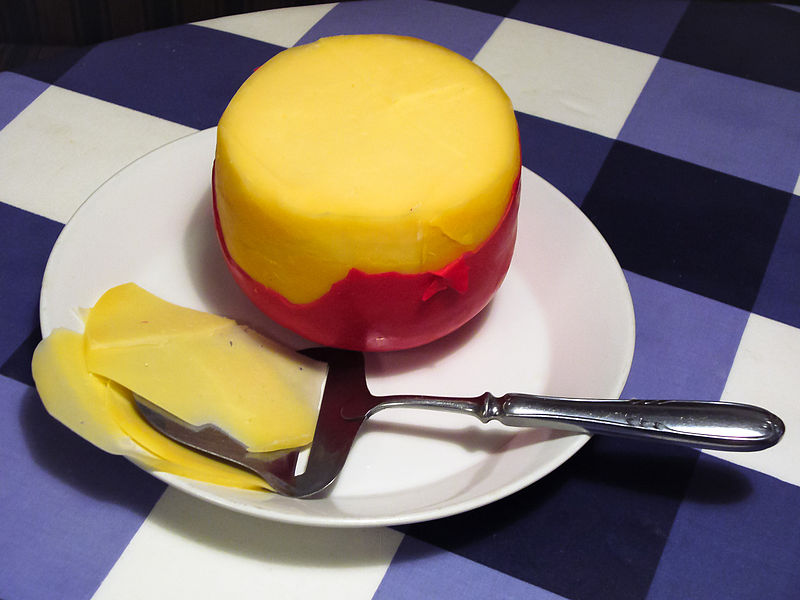
Edam
Dutch cheese
open sandwich
single slice of bread with food items on top
Norwegian cuisine
culinary traditions of Norway

gravlax
thumb|Gravlax with hovmästarsås (a mustard and dill sauce)
fish ball
balls made from fish paste which are then boiled or deep-fried

lutefisk
thumb|Lutefisk prepared to eat

crisp bread
Crispbread is a flat and dry type of bread, containing mostly rye flour. Crispbreads are lightweight and keep fresh for a very long time due to their lack of water. Crispbread is a staple food and was for a long time considered a poor man's diet.

smørrebrød
' (; originally , "butter and bread"), smørbrød "butter bread" (Norwegian), or smörgås' "butter goose" (Swedish), is a traditional open-faced sandwich in the cuisines of Denmark, Norway and Sweden that usually consists of a piece of buttered (a dense, dark rye bread) topped with commercial or homemade cold cuts, pieces of meat or fish, cheese or spreads, and garnishes.

semla
A ', , Swedish eclair, , , , or is a traditional sweet roll made in various forms in Sweden, Finland, Estonia, Denmark, the Faroe Islands, Iceland, Norway, and Latvia, associated with Lent and especially Shrove Tuesday in most countries, Shrove Monday in Denmark, parts of southern Sweden, Iceland and Faroe Islands or Sunday of Fastelavn in Norway. In Sweden it is most commonly known as just (plural: ), but is also known as , . In the southern parts of Sweden, as well as in Swedish-speaking Finland, it is known as (plural: ; on the other hand means a plain wheat bun with butter, called in Swedi
Danish
multilayered, laminated sweet pastry

brunost
''''' () is a common Norwegian name for ' (; ; ; ; /), a family of soft cheese-related foods made with whey, milk, and/or cream. The characteristic brown color and sweet taste result from milk sugars being caramelized after boiling. The term is often used to refer to ' or ' ('Gudbrandsdal cheese'), which are the most popular varieties.

frikadeller
A '''''' is a rounded, flat-bottomed, pan-fried meatball of ground meat, often likened to the German version of meatballs. The origin of the dish is unknown. The term is German but the dish is associated with German, Nordic and Polish cuisines. They are one of the most popular meals in Poland, where they are known as (literally "ground cutlets") or regionally ("schnitzels").
dried and salted cod
cod which has been preserved by drying after salting

lefse
thumb|Balls of lefse dough
thumb|Lefse rolling pin
nettle soup
traditional soup prepared from stinging nettles
lingonberry jam
traditional fruit preserve in Scandinavian cuisine
Hollandse Nieuwe
raw herring soaked in a mild preserving liquid
smoked salmon
smoked food

rakfisk
thumb|300px|right|Rakfisk served on lefse with onions and sour cream.
pyttipanna
Pytt i panna (Swedish), pytt i panne (Norwegian), pyttipannu (Finnish) or biksemad (Danish), is a culinary dish consisting of chopped meat, potatoes and onions fried in a pan, similar to a hash, and popular in Scandinavia. The term is Swedish for "small pieces in a pan".

kringle
Kringle (, ) is a Northern European pastry, a variety of pretzel. Pretzels were introduced by Roman Catholic monks in the 13th century in Denmark, and from there they spread throughout Scandinavia and evolved into several kinds of sweet, salty or filled pastries, all in a characteristic pretzel-like twisted shape.

smalahove
Smalahove (also called smalehovud, sau(d)ehau(d) or skjelte) is a Western Norwegian traditional dish made from a sheep's head, originally eaten before Christmas. The name of the dish comes from the combination of the Norwegian words hove and smale. Hove is a dialectal form of hovud, meaning "head" (cf. Hǫfuð), and smale is a word for sheep, so smalahove literally means "sheep head". The skin and fleece of the head are torched, the brain removed, and the head is salted, sometimes smoked, and dried. The head is boiled or steamed for about three hours, and served with mashed swede/rutabaga and po
nib sugar
coarse fragments of refined white sugar, often used as a decorative topping for baked goods
liver pâté
pâté and meat spread popular in northern and eastern Europe

pinnekjøtt
alt=|thumb| with rutabaga [[purée, potatoes and sausages]]
whale meat
flesh of whales used for consumption by humans or other animals

klenät
Klenät, kleinur,
klena, klejne, kleina, kleyna, and fattigmann are all names for angel wings, a fried pastry common in the Nordic countries as well as the rest of Europe and the United States. In nearby countries (such as Lithuania, is found under the name žagarėliai or in Latvia under the name žagariņi or zaķauši depends on region) and Eastern European countries (such as Romania under the name of minciunele or Poland under the name ‘’faworki ‘’ or Russia, under the name krepli, ). The name is related to klen, the Swedish term for "weak", but is originally of Low German origin, which may indic

blodplättar
thumb|right|Finnish blood pancakes
Blodplättar (in Swedish; blodpannekaker in Norwegian, veriohukainen, verilätty or verilettu in Finnish; verikäkk in Estonian), or blood pancakes in English are a dish served in Finland, Estonia, Sweden and Norway made of whipped blood (typically reindeer blood), water or pilsner, flour and eggs. It is similar to black pudding, but is thinner and crispier.
sautéed reindeer
traditional meal from Lapland and Sakha (Yakutia)

filmjölk
right|thumb|220px| in a glass
' (), also known as ', is a traditional fermented milk product from Sweden, and a common dairy product within most of the Nordic countries. It is made by fermenting cow's milk with a variety of bacteria from the species Lactococcus lactis and Leuconostoc mesenteroides. The bacteria metabolize lactose, the sugar naturally found in milk, into lactic acid, which means people who are lactose intolerant can tolerate it better than other dairy products. The acid gives a sour taste and causes proteins in the milk, mainly casein, to coagulate, thus thickening the final pr
Sami cuisine
cuisine of peoples from the Sápmi territory of the Sami people
Rømmegrøt
' (Norwegian Bokmål), also known as (Norwegian Nynorsk) and ' (Swedish), is a Norwegian porridge made with sour cream, whole milk, wheat flour, butter, and salt.

medisterpølse
thumb|Pieces of fried medister, of approx. 5 cm.

brown sauce
sauce made with brown meat stock
seal meat
flesh from seals

smultring
Smultring (plural: smultringer) and hjortetakk (sometimes spelled hjortebakkels) are cake doughnuts from Norway. They are small and usually prepared without glazing or filling, and are often spiced with cardamom, cinnamon, lemon or orange zest, as well as various liqueurs.

vispipuuro
thumb|Whisking while it is cooling down in water filled kitchen sink
Vispipuuro (, "whipped porridge"), russedessert (Norwegian), vispgröt/klappgröt/klappkräm (Swedish name), debesmanna (Latvian name, "sky-semolina"), or mannavaht (Estonian name) is a sweet, wheat semolina (manna) cold porridge made with berries, usually lingonberries.

Julebord
thumb|Swedish Julbord aboard the cruise boat Gustavsberg VII in 1990.
thumb|Christmas table in a Swedish home.
karsk
Karsk (also called kask or kaffeekask, alongside a variety of different names) is Norwegian cocktail (from the Trøndelag region) containing coffee together with moonshine and sometimes a spoon of sugar (enthusiasts often consider moonshine exclusively to be appropriate as an added component, as it has no inherent taste like other alcoholic beverages). Broader, it can also be found in other parts of Scandinavia.
cod tongue
Variety cut from the lower jaw of codfish
Kvikk Lunsj
brand of chocolate bar
raspeball
' (also known as , , , , , ') is a traditional Norwegian potato dumpling. A similar German dish is called .

Grandiosa
Pizza Grandiosa (colloquially also referred to simply as Grandiosa or Grandis) is the most popular brand of frozen pizza in Norway.
Stegt flæsk
Danish recipe
Spekesild
thumb|Spekesild (salt cured herring) the Norwegian way, with potatoes, raw onions, dill, pickled beets, butter and flatbrød.
Spekesild (Norwegian for "salted herring") is Atlantic herring preserved using salt.
Primost
thumb|right|alt=A yellow tube of primost with mountains and a field drawn on it.|A tube of primost (messmör)
Primost, messmör, or prime cheese is a Swedish cheese made from cow's milk. It is slightly brown and has a soft spreadable texture. Cream is added towards the end of the process. The semi-sweet taste is derived from caramelizing the milk sugars of the whey as it is made.
Sodd
thumb|A bowl of Inderøysodd with boiled potatoes and carrots.
fenalår
thumb|Slices of
'''''' is a traditional Norwegian cured meat made from salted and dried leg of lamb. is a very popular dish in Norway and is often served with other preserved food at a Christmas buffet or on Norwegian Constitution Day.
goro
Norwegian sweet bread
gomme
traditional Norwegian cheese preparation
Krotekake
Krotekake is a traditional Norwegian flatbread. It is traditionally associated with the region of Hardanger and is commonly decorated with a cross-hatch pattern. Outside of the region it is often known as hardangerkaker.