
semla
Sign in to saveAlso known as Laskiaispulla
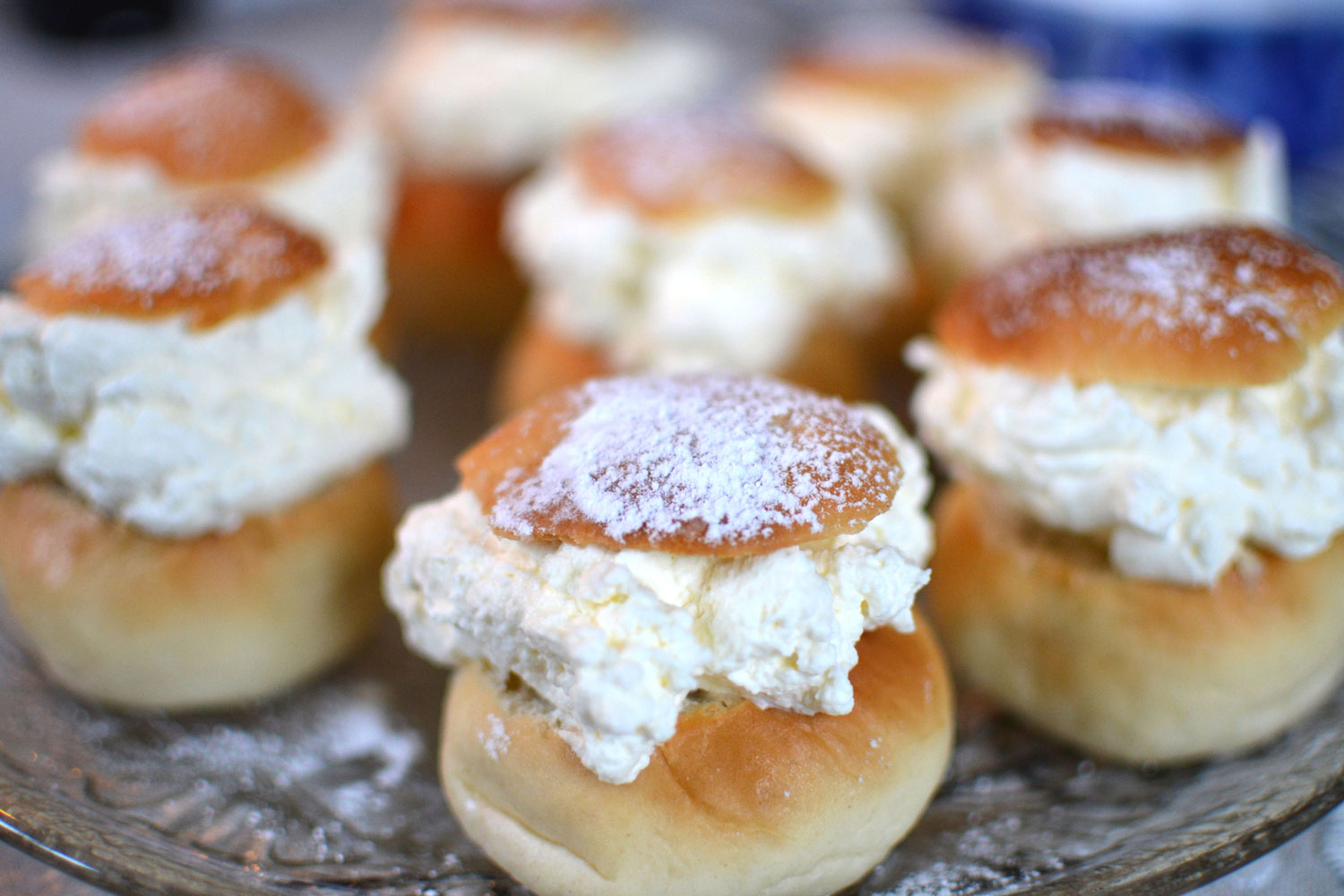
A ', , Swedish eclair, , , , or is a traditional sweet roll made in various forms in Sweden, Finland, Estonia, Denmark, the Faroe Islands, Iceland, Norway, and Latvia, associated with Lent and especially Shrove Tuesday in most countries, Shrove Monday in Denmark, parts of southern Sweden, Iceland and Faroe Islands or Sunday of Fastelavn in Norway. In Sweden it is most commonly known as just (plural: ), but is also known as , . In the southern parts of Sweden, as well as in Swedish-speaking Finland, it is known as (plural: ; on the other hand means a plain wheat bun with butter, called in Swedi
Key facts
- Prepared food.name
- Semla
- Prepared food.image
- File:SemlaFlickr.jpg
- Prepared food.image_size
- 367 px
- Prepared food.caption
- Traditional Swedish
- Prepared food.alternate_name
- and Lent buns
- Prepared food.associated_cuisine
- Swedish cuisine
- Prepared food.place_of_origin
- Sweden
- Prepared food.region
- Northern Europe
- Prepared food.year
- 1500s
- Prepared food.course
- Dessert
- Prepared food.type
- Sweet roll
- Prepared food.served
- Medium
- Prepared food.main_ingredient
- Wheat bread, whipped cream, and almond paste or jam.
- Prepared food.minor_ingredient
- Icing sugar
- Prepared food.calories
- 412
- Prepared food.fat
- 17
- Prepared food.protein
- 5.7
- Prepared food.carbohydrate
- 40
via Wikipedia infobox
Described at
Semlor - Levande kulturarv
Att äta och baka fastlagsbullar under årets första månader är en utbredd tradition i Sverige.
levandekulturarv.se →Att äta och baka fastlagsbullar under årets första månader är en utbredd tradition inte bara i Sverige, utan även i andra nordeuropeiska länder. De har funnits sedan medeltiden men såväl namnet som formen och tillredningen har förändrats genom åren. Att äta och baka semlor, eller fastlagsbullar, är en utbredd tradition i samband med ”fettisdagen”. Traditionen har funnits sedan medeltiden under det att semlans namn, tillredning och sammansättning har förändrats. Den semla som i dag förekommer i Sverige bakas på vetemjöl och garneras med mandelmassa, vispgrädde och florsocker. Även andra varianter kan dock förekomma. Semlan har även många namn bland annat beroende på hur den äts. Om den serveras med varm mjölk kallas den istället hetvägg. Namnet lever kvar sedan 1700-talet då den kokades i varm mjölk. Semlans utseende har förändrats efter hand som det blivit allt vanligare med ingredienser som vetemjöl, socker, jäst och mandelmassa. Även traditionen att äta kaffebröd har bidragit till semlans nuvarande form. Semlan har även fortsättningsvis omskapats och under 2000-talet har en mängd nya varianter tagit form. Under fettisdagen äts det över fem miljoner semlor i Sverige och få bakverk får lika stor uppmärksamhet. Marknadsföringen kulminerar framförallt på ”fettisdagen” men under senare tid har försäljningen startat allt tidigare. Traditionen främjas bland annat av en stor mängd tester som utgör bas för jämförelser mellan olika konditorier. Det finns även många recept att tillgå. Den nutida svenska semlan, oftast gjord på vitt mjöl, vispgrädde, mandelmassa och florsocker, fick sin utformning i början av 1900-talet. Semlan är en vetebulle där överdelen är avskuren, eller avklippt. Underdelen kan vara lite urgröpt. Där ligger ett lager mandelmassa och ovanpå det ett lager vispad, ofta spritsad, grädde. Överst ligger locket som vanligtvis är pudrat med florsocker. Semlan äts framförallt på ”fettisdagen” men numera också innan och efter denna. Under de senaste femtio åren har semlorna börjat bakas och säljas allt tidigare, ofta runt trettonhelgen. Många bagerier slutar med försäljningen ett par veckor före påsk, då intresset för att äta semlor minskar. Vid vilken tidpunkt man slutar beror på om påsken och därmed fettisdagen, är tidig eller sen. Branschorganisationen för Sveriges konditorer och bagare beräknar att varje svensk i genomsnitt äter 4–5 semlor per år och att det årligen äts cirka 40 millioner semlor. Därtill kommer alla semlor som bakas i svenska hem. Traditionen att äta semlor på fettisdagen hör samman med kyrkan och katolicismen, inom vilken de stora högtiderna börjat med en fasta på 40 dagar. Fastan före påsk hade en viktig roll i Sverige under medeltiden då landet var katolskt. Under den tiden var det förbjudet att äta kött och ägg och man skulle leva i stillhet och återhållsamhet. Dagarna dessförinnan, i fastlagen, kunde människor roa sig och äta mycket mat – på fläsksöndag, bullamåndag och fettisdag. Traditionerna har sett olika ut i olika tider och i olika delar av landet. Ordet hetvägg kommer från tyska heisse wecke vilket betyder 'het kil'. En heisse wecke åts nygräddad, därav namnet ”het”. Den säljs fortfarande i Tyskland och är numera en relativt osöt bulle med russin, ibland dekorerad med ett kors, vilket gör att bullen indelas i fyra kilar. Ordet semla härstammar från latinska simila som betyder 'finsiktat mjöl'; semla betyder helt enkelt en bulle som är bakad med finsiktat mjöl, oftast vete. Redan på 1500-talet fanns i Köpenhamn simlebagare. Från mitten av 1800-talet bytte hetväggen namn till fettisdagsbulle. Den var ofta fylld med russin, sukat och/eller mandelmassa och åts vanligen med varm mjölk. Bakverkets nuvarande utseende hör samman med seden att äta bakat kaffebröd, tillgången på vetemjöl, pressjäst och socker samt järnspisens utbredning i de svenska hemmen. När sockerpriserna sjönk sötade man även degen. Runt sekelskiftet 1900 började namnet semla användas, men bullen kallas även för fastlags
Excerpt from a page describing this subject · 13,192 chars · not written by Vinony
Wikidata facts
Show 6 more facts
- Commons category
- Semlor
- different from
- samsa
- native label
- semla
- cuisine
- Finnish cuisine
- course
- dessert
- described at URL
- levandekulturarv.se/in-english/the-inventory/submissions/semlor
via Wikidata · CC0
~7 min read
Encyclopedic overview
7 sectionsContents
- Etymology
- Sweden/Finland/Estonia
- Norway
- Denmark/Iceland/Faroe Islands
- History
- See also
- References
A ', , Swedish eclair, , , , or is a traditional sweet roll made in various forms in Sweden, Finland, Estonia, Denmark, the Faroe Islands, Iceland, Norway, and Latvia, associated with Lent and especially Shrove Tuesday in most countries, Shrove Monday in Denmark, parts of southern Sweden, Iceland and Faroe Islands or Sunday of Fastelavn in Norway. In Sweden it is most commonly known as just (plural: ), but is also known as , . In the southern parts of Sweden, as well as in Swedish-speaking Finland, it is known as (plural: ; on the other hand means a plain wheat bun with butter, called in Swedish). In Poland it is known as . In Estonia it is called . In Norway and Denmark it is called . In Iceland, it is known as a ' and served on Bolludagur. In Faroe Islands it is called ''', and is served on . In Latvia, it is called . served in a bowl of hot milk is '.
==Etymology== The name (plural: ) is a loan word from Middle Low German semmel, originally deriving from the Latin , meaning 'flour', itself a borrowing from Greek (), which was the name used for the finest quality wheat flour. In the southernmost part of Sweden (Scania) and by the Swedish-speaking population in Finland, they are known as . In Denmark and Norway they are known as ( and fastelavn being the equivalent of Shrove Tuesday). In Scanian, the feast is also called . In Finnish they are known as (which refers to the Finnish ), in Latvian as , and in Estonian as .
Excerpted from Wikipedia’s “semla” article, available under the CC BY-SA 4.0 licence.