Category
page 1Ontologists

Aristotle
Aristotle (; 384–322 BC) was an ancient Greek philosopher and polymath. His writings cover a broad range of subjects spanning the natural sciences, philosophy, linguistics, economics, politics, psychology, and the arts. As the founder of the Peripatetic school of philosophy in the Lyceum in Athens, he began the wider Aristotelian tradition that followed, which set the groundwork for the development of modern science.

Karl Marx
German-born philosopher (1818-1883)

Leo Tolstoy
Russian author (1828–1910)

Voltaire
François-Marie Arouet (; 21 November 169430 May 1778), known by his pen name Voltaire (, ; ), was a French Enlightenment writer, philosopher (philosophe), satirist, and historian. Famous for his wit and his criticism of Christianity (especially of the Catholic Church) and of slavery, Voltaire was an advocate of freedom of speech, freedom of religion, and separation of church and state.

Immanuel Kant
German philosopher (1724-1804)

René Descartes
French philosopher, mathematician, and scientist (1596–1650)

Jean-Paul Sartre
French existentialist philosopher (1905–1980)

Avicenna
Ibn Sina ( – 22 June 1037), commonly known in the West as Avicenna ( ), was a preeminent philosopher and physician of the Muslim world. He was a seminal figure of the Islamic Golden Age, serving in the courts of various Iranian rulers, and was influential to medieval European medical and Scholastic thought.

Noam Chomsky
Avram Noam Chomsky is an American intellectual, philosopher, linguist, political activist, and social critic. Sometimes called "the father of modern linguistics", Chomsky is also a major figure in analytic philosophy and one of the founders of the field of cognitive science. He is a laureate professor of linguistics at the University of Arizona and an institute professor emeritus at the Massachusetts Institute of Technology (MIT). Among the most cited living authors, Chomsky has written more than 150 books on topics such as linguistics, war, and politics. In addition to his work in linguistics, since the 1960s, Chomsky has been an influential voice on the American Left as a consistent critic of the foreign policy of the United States, contemporary capitalism, and corporatocracy.

Francis Bacon
English philosopher and statesman (1561–1626)

Benedictus de Spinoza
Dutch philosopher (1632-1677)
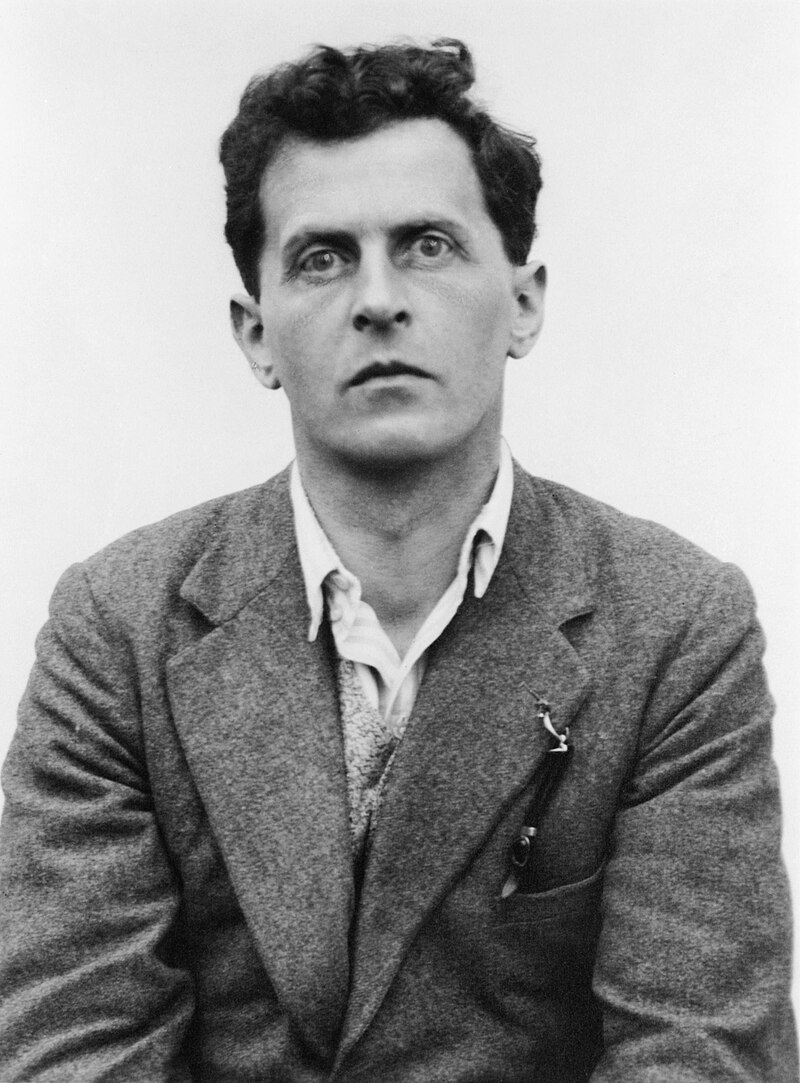
Ludwig Wittgenstein
Austrian philosopher and logician (1889–1951)

Thales
ancient Greek philosopher and mathematician

Thomas Hobbes
English philosopher (1588–1679)

Denis Diderot
French Enlightenment philosopher writer and encyclopædist (1713–1784)

Martin Heidegger
German philosopher (1889–1976)

Heraclitus
Heraclitus (; ; ) was an ancient Greek pre-Socratic philosopher from the city of Ephesus, which was then part of the Persian Empire. He exerts a wide influence on Western philosophy, both ancient and modern, through the works of such authors as Plato, Aristotle, the Stoics, Georg Wilhelm Friedrich Hegel, Friedrich Nietzsche, and Martin Heidegger.

Averroes
Ibn Rushd (14 April 112611 December 1198), Latinized as Averroes, was an Andalusian polymath and jurist who was proficient in a variety of intellectual fields, including philosophy, theology, medicine, astronomy, physics, psychology, mathematics, neurology, Islamic jurisprudence and law, and linguistics. The author of more than 100 books and treatises, his philosophical works include numerous commentaries on Aristotle, for which he was known in the Western world as "The Commentator" and "Father of Rationalism".

Karl Popper
Austrian-British philosopher of science and social and política e falsificationism and for criticism of Plato, Hegel and Marx as totalitarian opponents of open society (1902-1994)

William James
American philosopher, psychologist, and pragmatist (1842–1910)

Nagarjuna
Nāgārjuna (, ; ) was an Indian philosopher and Mahāyāna Buddhist monk of the Madhyamaka (Centrism, Middle Way) school. Nāgārjuna is widely considered one of the most important Buddhist philosophers. He was the founder of the Madhyamaka school of Buddhist philosophy and a defender of the Mahāyāna movement. His Mūlamadhyamakakārikā (Root Verses on Madhyamaka, MMK) is the most important text on the Madhyamaka philosophy of emptiness. The MMK inspired a large number of commentaries in Sanskrit, Chinese, Tibetan, Korean and Japanese and continues to be studied today.

Parmenides
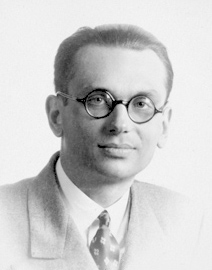
Kurt Gödel
Austrian-American logician, mathematician, and philosopher of mathematics (1906-1978)

John Dewey
American philosopher, psychologist, and educational reformer (1859–1952)

Ludwig Feuerbach
German philosopher and anthropologist (1804–1872)

Mencius
Mencius (孟子, Mèngzǐ, ; ), born Meng Ke (), was a Chinese Confucian philosopher, often described as the Second Sage () to reflect his traditional esteem relative to Confucius himself. He was part of Confucius's fourth generation of disciples, inheriting his ideology and developing it further. Living during the Warring States period, he is said to have spent much of his life travelling around the states offering counsel to different rulers. Conversations with these rulers form the basis of the Mencius, which would later be canonised as a Confucian classic.

Edmund Husserl
German philosopher, known as the father of phenomenology (*1859 – †1938)

Claude Lévi-Strauss
French anthropologist and ethnologist (1908–2009)

Alfred North Whitehead
English mathematician and philosopher (1861–1947)
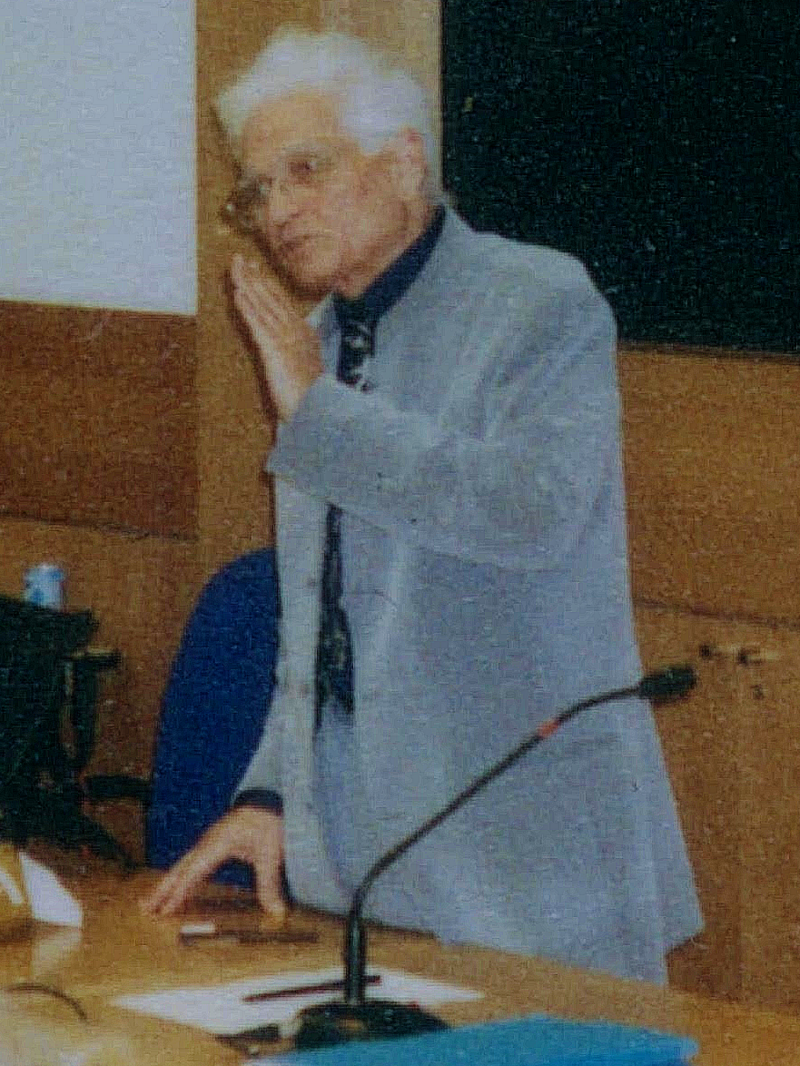
Jacques Derrida
French philosopher (1930–2004)

Slavoj Žižek
Slovenian philosopher (born 1949)

Farabi
thumbnail|200px|Postage stamp of the USSR, issued on the 1100th anniversary of the birth of Al-Farabi (1975)
Abu Nasr Muhammad al-Farabi (; – 14 December 950–12 January 951), known in the Latin West as Alpharabius, was an early Islamic philosopher and music theorist. He has been designated as "Father of Islamic Neoplatonism", and the "Founder of Islamic Political Philosophy".

Philip K. Dick
American science fiction author (1928–1982)

Ādi Shankara
8th-century Hindu philosopher and theologian- Restorer of “Dashanami Sampradaya”.

Anselm of Canterbury
11th‑century Benedictine monk, Archbishop of Canterbury, philosopher and theologian

Gottlob Frege
German philosopher, logician, and mathematician (1848–1925)

Max Stirner
German philosopher (1806-1856)

Oswald Spengler
German historian and philosopher (1880-1936)

Emmanuel Swedenborg
Swedish 18th century scientist and theologian (1688-1772)

Gilles Deleuze
French philosopher (1925–1995)

José Ortega y Gasset
Spanish liberal philosopher and essayist (1883–1955)

Al-Kindi
Abū Yūsuf Yaʻqūb ibn ʼIsḥāq aṣ-Ṣabbāḥ al-Kindī (; ; ; ) was an Arab polymath who was active as a philosopher, mathematician, physician, and music theorist. Al-Kindi was the first of the Islamic peripatetic philosophers, and is hailed as the "father of Arab philosophy".

Roland Barthes
French philosopher and essayist

Baron d'Holbach
German-born French philosopher (1723–1789)

George Santayana
Spanish-American philosopher

Emil Cioran
Romanian-French philosopher and essayist (1911–1995)

Charles Sanders Peirce
American philosopher, logician, mathematician, and scientist (1839-1914)

Hans-Georg Gadamer
German philosopher (1900–2002)

Max Scheler
German philosopher (1874-1928)

Pierre Teilhard de Chardin
French philosopher, Jesuit priest, and paleontologist

John Henry Newman
English cleric and cardinal (1801–1890)

Georg Lukács
Hungarian marxist philosopher and literary critic (1885–1971)

Rudolf Carnap
German philosopher and logician (1891–1970)

Mozi
Mozi, personal name Mo Di,

Friedrich Schleiermacher
German theologian, philosopher, and biblical scholar (1768-1834)

Max Horkheimer
German philosopher and sociologist (1895–1973)

Willard Van Orman Quine
American philosopher and logician (1900–2000)

Bernard Bolzano
Bohemian mathematician and priest (1781–1848)

Gabriel Marcel
French philosopher, playwright, music critic and leading Christian existentialist (1889-1973)

Nicolas Malebranche
French philosopher