Category
page 1Paraphyletic groups

fish
A fish is an aquatic, anamniotic, gill-bearing vertebrate animal with a tough cranium to protect the brain, but lacking limbs with digits. Fish can be grouped into the more basal jawless fish and the more common jawed fish, the latter including all living cartilaginous and bony fish, as well as the extinct placoderms and acanthodians. In a break from the long tradition of grouping all fish into a single class (Pisces), modern phylogenetics views fish as a paraphyletic group that includes all vertebrates except tetrapods. In English, the plural of "fish" is fish when referring to individuals an
.png)
Canis lupus
The wolf (Canis lupus; : wolves), also known as the grey wolf or gray wolf, is a canine native to Eurasia and North America. More than thirty subspecies of Canis lupus have been recognized, including the dog and dingo, though grey wolves, as popularly understood, include only naturally occurring wild subspecies. The wolf is the largest wild extant member of the family Canidae, and is further distinguished from other Canis species by its less pointed ears and muzzle, as well as a shorter torso and a longer tail. The wolf is nonetheless related closely enough to smaller Canis species, such as th
%20colourised.png)
elephant
Elephants are the largest living land animals. Three living species are currently recognised: the African bush elephant (Loxodonta africana), the African forest elephant (L. cyclotis), and the Asian elephant (Elephas maximus). They are the only surviving members of the family Elephantidae and the order Proboscidea; extinct relatives include mammoths and mastodons. Distinctive features of elephants include a long proboscis called a trunk, tusks, large ear flaps, pillar-like legs, and tough but sensitive grey skin. The trunk is prehensile, bringing food and water to the mouth and grasping object

Reptilia
Reptiles, as commonly defined, are tetrapod vertebrate animals with an ectothermic metabolism and amniotic development. Reptiles traditionally comprise four orders: Testudines (turtles), Crocodilia (crocodiles, alligators and gharials), Squamata (lizards and snakes) and Rhynchocephalia (tuatara), with about 12,000 extant species listed in the Reptile Database. The study of the traditional reptile orders, customarily in combination with the study of modern amphibians, is called herpetology.

Amphibia
thumb|250px|Many amphibians—like this Ceratophrys cranwelli—exhibit [[biofluorescence.]]

monkey
Monkey is a common name that may refer to most mammals of the infraorder Simiiformes, also known as simians. Traditionally, all animals in the group now known as simians are counted as monkeys except the apes. Thus monkeys, in that sense, constitute an incomplete paraphyletic grouping; alternatively, if apes (Hominoidea) are included, monkeys and simians are synonyms.

duck
Duck is the common name for numerous species of waterfowl in the family Anatidae. Ducks are generally smaller and shorter-necked than swans and geese, which are members of the same family. Divided among several subfamilies, they are a form taxon; they do not represent a monophyletic group (the group of all descendants of a single common ancestral species), since swans and geese are not considered ducks. Ducks are mostly aquatic birds, and may be found in both fresh water and sea water.

Lacertilia
Lizard is the common name used for all squamate reptiles other than snakes (and to a lesser extent amphisbaenians), encompassing over 7,000 species, ranging across all continents except Antarctica, as well as most oceanic island chains. The grouping is paraphyletic as some lizards are more closely related to snakes than they are to other lizards. Lizards range in size from chameleons and geckos a few centimeters long to the 3-meter-long Komodo dragon.
%20(Sylvilagus%20palustris).jpg)
rabbit
Rabbits, or bunnies, are small mammals in the family Leporidae (which also includes the hares), which is in the order Lagomorpha (which also includes pikas). They are familiar throughout the world as a small herbivore, a prey animal, a domesticated form of livestock, and a pet, having a widespread effect on ecologies and cultures. The most widespread rabbit genera are Oryctolagus and Sylvilagus. The former, Oryctolagus, includes the European rabbit, Oryctolagus cuniculus, which is the ancestor of the hundreds of breeds of domestic rabbit and has been introduced on every continent except Antarc

fox
Foxes are small-to-medium-sized omnivorous mammals belonging to several genera of the family Canidae. They have a flattened skull; upright, triangular ears; a pointed, slightly upturned snout; and a long, bushy tail ("brush").
.jpg)
Archaea
Archaea ( ) is a domain of organisms. Traditionally, Archaea included only its prokaryotic members, but has since been found to be paraphyletic, as eukaryotes are known to have evolved from archaea. Even though the domain Archaea cladistically includes eukaryotes, the term archaea ( ; ) in English still generally refers specifically to prokaryotic members of Archaea.

dolphin
A dolphin is any one of the 40 extant species of aquatic mammal from the cetacean families Delphinidae (the oceanic dolphins), Platanistidae (the Indian river dolphins), Iniidae (the New World river dolphins), Pontoporiidae (the brackish dolphins), and the probably extinct Lipotidae (baiji or Chinese river dolphin). All these families belong to the parvorder Odontoceti, i.e., toothed whales, which also include the closely related families Monodontidae (beluga and narwhal) and Phocoenidae (porpoises), as well as the more distant families Physeteroidea (sperm whales) and Ziphiidae (beaked whales

kangaroo
thumb|upright=1|A male red kangaroo
thumb|upright=1|Red kangaroos, Liverpool Plains, Sydney, c. 1819

protist
A protist ( ) or protoctist is any eukaryotic organism that is not an animal, land plant, or fungus. Protists do not form a natural group, or clade, but are a paraphyletic group encompassing the entire eukaryote tree of life, from which land plants, animals, and fungi evolved. They are primarily single-celled, exhibiting a wide range of forms such as amoebae, ciliates, thick-walled microalgae and, more commonly, flagellates. Several transitions to multicellularity have occurred among protists, from colonies with alternating cell types to giant slime molds, fungus-like organisms, and seaweeds w

snail
thumb|Helix pomatia sealed in its shell with a [[calcareous epiphragm]]

invertebrate
Invertebrates are animals that neither develop nor retain a vertebral column (commonly known as a spine or backbone), which evolved from the notochord. It is a paraphyletic grouping including all animals excluding the chordate subphylum Vertebrata, i.e. vertebrates. Well-known phyla of invertebrates include arthropods, molluscs, annelids, echinoderms, flatworms, cnidarians, and sponges.

Heterocera
Moths are a group of winged insect of the order Lepidoptera, the other well-known members of which are butterflies, they are characterized by dark or dull patterned wings. They were previously classified as suborder Heterocera, but the group is paraphyletic with respect to butterflies (suborder Rhopalocera) and neither subordinate taxon is used in modern classifications. Moths make up the vast majority of the order. There are approximately 160,000 species of moth, many of which have yet to be described. Most species of moth are nocturnal, although there are also crepuscular and diurnal species

whale
Whales are a widely distributed and diverse group of fully aquatic placental marine mammals. As an informal and colloquial grouping, they correspond to large members of the infraorder Cetacea, i.e. all cetaceans apart from dolphins and porpoises. Dolphins and porpoises may be considered whales from a formal, cladistic perspective. Whales, dolphins and porpoises belong to the order Cetartiodactyla, which consists of even-toed ungulates. Their closest non-cetacean living relatives are the hippopotamuses, from which they and other cetaceans diverged about 54 million years ago. The two parvorders

prokaryotes
thumb|upright=1.35|alt=image of prokaryotic cell|Diagram of a prokaryotic cell, a Bacteria|bacterium with a flagellum

wasps
A wasp is any insect of the narrow-waisted suborder Apocrita of the order Hymenoptera which is neither a bee nor an ant; this excludes the broad-waisted sawflies (Symphyta), which look somewhat like wasps, but are in a separate suborder. The wasps do not constitute a clade, a complete natural group with a single ancestor, as bees and ants are deeply nested within the wasps, having evolved from wasp ancestors. Wasps that are members of the clade Aculeata can sting their prey.

earthworm
An earthworm is a soil-dwelling terrestrial invertebrate that belongs to the phylum Annelida. The term is the common name for the largest members of the class (or subclass, depending on the author) Oligochaeta. In classical systems, they were in the order of Opisthopora since the male pores opened posterior to the female pores, although the internal male segments are anterior to the female. Theoretical cladistic studies have placed them in the suborder Lumbricina of the order Haplotaxida, but this may change. Other slang names for earthworms include "dew-worm", "rainworm", "nightcrawler", and

Crustacea
Crustaceans (from Latin word "crustacea" meaning: "those with shells" or "crusted ones") are mandibulate arthropods that are traditionally a part of the paraphyletic subphylum Crustacea (). Crustaceans are mainly aquatic, including decapods (shrimps, prawns, crabs, lobsters, and crayfish), seed shrimps, branchiopods, fish lice, krill, remipedes, isopods, barnacles, copepods, opossum shrimps, amphipods and mantis shrimp. It is now well accepted that hexapods (insects and entognathans) are cladistically crustaceans, with the two groups now combined in the monophyletic clade Pancrustacea. The thr

protozoa
right|thumb|upright=1.5|Clockwise from top left: Blepharisma japonicum, a [[ciliate; Giardia muris, a parasitic flagellate; Centropyxis aculeata, a testate (shelled) amoeba; Peridinium willei, a dinoflagellate; Chaos carolinense, a naked amoebozoan; Desmarella moniliformis, a choanoflagellate]]

coral
Corals are colonial marine invertebrates within the subphylum Anthozoa of the phylum Cnidaria. They typically form compact colonies of many identical individual polyps. Coral species include the important reef builders that inhabit tropical oceans and secrete calcium carbonate to form a hard skeleton.

antelope
thumb|A bull sable antelope among the trees in the African [[savanna]]
An antelope is an extant or recently extinct species of the ruminant artiodactyl family Bovidae, which are indigenous to most of Africa, India, the Middle East, Central Asia, and a small area of Russia. Antelopes do not form a monophyletic group, as some antelopes are more closely related to other bovid groups, such as bovines, goats, and sheep, than to other antelopes.

bird of prey
any species of bird that primarily hunts and feeds on relatively large vertebrates

Dicotyledones
thumb|Dicotyledon plantlet
thumb|200px|Young castor oil plant showing its prominent two embryonic leaves ([[cotyledons), which differ from the adult leaves]]
.png)
Microchiroptera
Microbats constitute the suborder Microchiroptera within the order Chiroptera (bats). Bats have long been differentiated into Megachiroptera (megabats) and Microchiroptera, based on their size, the use of echolocation by the Microchiroptera and other features; molecular evidence suggests a somewhat different subdivision, as the microbats have been shown to be a paraphyletic group.
peafowl
Peafowl is a common name for two bird species of the genus Pavo and one species of the closely related genus Afropavo within the tribe Pavonini of the family Phasianidae (the pheasants and their allies). Male peafowl are referred to as peacocks, and female peafowl are referred to as peahens. Despite this, peacock is usually used to refer to both sexes, in common language.

Agnatha
Agnatha (; ) or jawless fish is a paraphyletic infraphylum of animals in the subphylum Vertebrata of the phylum Chordata, characterized by the lack of jaws. The group consists of both living (cyclostomes such as hagfishes and lampreys) and extinct clades (e.g. conodonts and cephalaspidomorphs, among others). They are sister to vertebrates with jaws known as gnathostomes, who evolved from jawless ancestors during the early Silurian by developing folding articulations in the first pairs of gill arches.

ibis
thumb|Ibises illustration, c. 1835–1840
%20on%20the%20forest%20floor%20in%20Broken%20Bow%2C%20Oklahoma.jpg)
bryophyte
thumb|An example of moss (Bryophyta) on the forest floor in Broken Bow, Oklahoma

Mecoptera
Mecoptera (from Ancient Greek μῆκος (mêkos), meaning 'length', and πτερόν (pterón), meaning 'wing') is an order of insects in the superorder Holometabola with about six hundred species in nine families worldwide. Mecopterans are sometimes called scorpionflies after their largest family, Panorpidae, in which the males have enlarged genitals raised over the body that look similar to the stingers of scorpions, and long beaklike rostra. The Bittacidae, or hangingflies, are another prominent family and are known for their elaborate mating rituals, in which females choose mates based on the quality

sea lion
subfamily of marine mammals

Acanthodii
Acanthodii or acanthodians is an extinct class of gnathostomes (jawed fishes). They are currently considered to represent a paraphyletic grade of various fish lineages basal to extant Chondrichthyes, which includes living sharks, rays, and chimaeras. Acanthodians possess a mosaic of features shared with both osteichthyans (bony fish) and chondrichthyans (cartilaginous fish). In general body shape, they were similar to modern sharks, but their epidermis was covered with tiny rhomboid platelets like the scales of holosteians (gars, bowfins).

Polychaeta
Polychaeta () is a paraphyletic class of generally marine annelid worms, commonly called bristle worms or polychaetes (). Each body segment has a pair of fleshy protrusions called parapodia which bear many chitinous bristles called chaetae, hence their name.

paraphyly
thumb|300px|In this phylogenetic tree, the green group is paraphyletic; it is composed of a common ancestor (the lowest green vertical stem) and some of its descendants, but it excludes the blue group (a monophyletic group) which diverged from the green group.
%20and%20Polycarpa%20aurata%20(Sea%20quirt).jpg)
Ascidiacea
Ascidiacea, commonly known as the ascidians or sea squirts, is a paraphyletic class in the subphylum Tunicata of sac-like marine invertebrate filter feeders. Ascidians are characterized by a tough outer test or "tunic" made of the polysaccharide cellulose.
Psocoptera
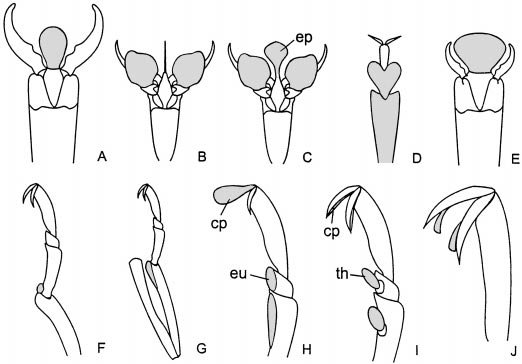
Psocoptera () are a paraphyletic group of insects that are commonly known as booklice, barklice or barkflies. The name Psocoptera has been replaced with Psocodea in recent literature, with the inclusion of the former order Phthiraptera into Psocodea (as part of the suborder Troctomorpha).

Turbellaria
The Turbellaria are one of the traditional sub-divisions of the phylum Platyhelminthes (flatworms), and include all the sub-groups that are not exclusively parasitic. There are about 4,500 species, which range from to large freshwater forms more than long or terrestrial species like Bipalium kewense which can reach in length. All the larger forms are flat with ribbon-like or leaf-like shapes, since their lack of respiratory and circulatory systems means that they have to rely on diffusion for internal transport of metabolites. However, many of the smaller forms are round in cross section. Most

green algae
paraphyletic group of eukaryotes

Pteridophyta
A pteridophyte is a vascular plant with xylem and phloem that reproduces by means of spores. Because pteridophytes produce neither flowers nor seeds, they are sometimes referred to as "cryptogams", meaning that their means of reproduction is hidden. They are also the ancestors of the plants we see today.

Placoderms
Placoderms (from Ancient Greek πλάξ [plax, plakos] 'plate' and δέρμα [derma] 'skin') are vertebrate animals of the class Placodermi, an extinct group of prehistoric fish known from Paleozoic fossils during the Silurian and the Devonian periods. While their endoskeletons are mainly cartilaginous, their head and thorax were covered by articulated armoured plates (hence the name), and the rest of the body was scaled or naked depending on the species.
Nematocera
thumb|Swarming nematocera flies.
The Nematocera (nemato+cera meaning "thread-horns") are a suborder of elongated flies with thin, segmented antennae and mostly aquatic larvae. This group is paraphyletic, containing all flies except for those of the suborder Brachycera (the name meaning "short-horns"), which includes species such as the housefly or the common fruit fly. Thus, the equivalent clade to Nematocera would be the whole of Diptera, with Brachycera as a "subclade". Families in Nematocera include mosquitoes, crane flies, gnats, black flies, and multiple families commonly known as midges.
%20larvae.jpg)
Symphyta
thumb|Larvae of Nematus septentrionalis
Sawflies are wasp-like insects that are in the suborder Symphyta within the order Hymenoptera. The common name comes from the saw-like appearance of the ovipositor, which females use to cut into the plants where they lay their eggs. The name is associated especially with the Tenthredinoidea, by far the largest superfamily in the suborder, with about 7,000 known species in the entire suborder. There are 8,000 described species in more than 800 genera.

Chondrostei
Chondrostei is a subclass of non-neopterygian ray-finned fish. While the term originally referred to the paraphyletic grouping of all non-neopterygian ray-finned fish, it was redefined by Patterson in 1982 to be a clade comprising the Acipenseriformes (which includes sturgeon and paddlefish) and their extinct relatives.

Anapsid
An anapsid is an amniote whose skull lacks one or more skull openings (fenestra, or fossae) near the temples. Traditionally, the Anapsida are considered the most primitive subclass of amniotes, the ancestral stock from which Synapsida and Diapsida evolved, making anapsids paraphyletic. It is, however, doubtful that all anapsids lack temporal fenestra as a primitive trait, and that all the groups traditionally seen as anapsids truly lacked fenestra.
%20(10353381334).jpg)
Entognatha
thumb|

Pelycosaur
Pelycosaur ( ) is an older term for basal or primitive Late Paleozoic synapsids, excluding the therapsids and their descendants. Previously, the term mammal-like reptile was used, and Pelycosauria was considered an order, but this is now thought to be incorrect and outdated. The terms stem mammals, protomammals, and basal or primitive synapsids are instead used where needed.

fur seal
subfamily of mammals
Apterygota
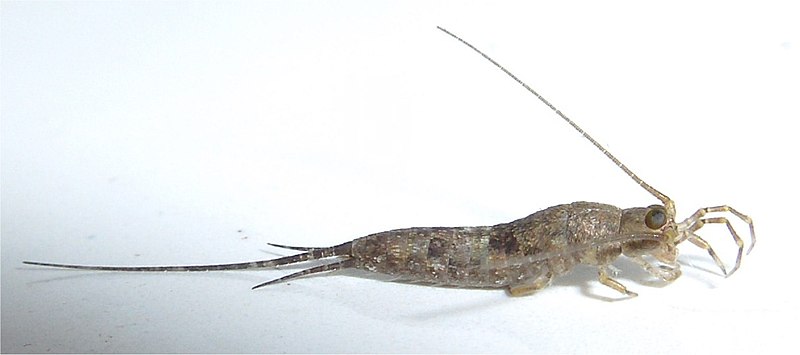
The name Apterygota is sometimes applied to a former subclass of small, agile insects, distinguished from other insects by their lack of wings in the present and in their evolutionary history; notable examples are the silverfish, the firebrat, and the jumping bristletails. Their first known occurrence in the fossil record is during the Devonian period, 417–354 million years ago. The group Apterygota is not a clade; it is paraphyletic, and not recognized in modern classification schemes. As defined, the group contains two separate clades of wingless insects: Archaeognatha comprises jumping bris
Soricomorpha
Soricomorpha (from Greek "shrew-form") is a formerly used taxon within the class of mammals. In the past it formed a significant group within the former order Insectivora. However, Insectivora was shown to be polyphyletic and various new orders were split off from it, including Afrosoricida (tenrecs, golden moles, otter shrews), Macroscelidea (elephant shrews), and Erinaceomorpha (hedgehogs and gymnures), with the four remaining extant and recent families of Soricomorpha shown here then being treated as a separate order. Insectivora was left empty and disbanded.

Monera
Monera () (Greek: (), "single", "solitary") is historically a biological kingdom that is made up of unicellular prokaryotes. As such, it is composed of single-celled organisms that lack a nucleus.

Radiata
Radiata or Radiates is a historical taxonomic rank that was used to classify animals with radially symmetric body plans. The term Radiata is no longer accepted, as it united several different groupings of animals that do not form a monophyletic group under current views of animal phylogeny. The similarities once offered in justification of the taxon, such as radial symmetry, are now taken to be the result of either incorrect evaluations by early researchers or convergent evolution, rather than an indication of a common ancestor. Because of this, the term is used mostly in a historical context.

Nautiloid
Nautiloids are a group of cephalopods (Mollusca) which originated in the Late Cambrian and are represented today by the living Nautilus and Allonautilus. Fossil nautiloids are diverse and species rich, with over 2,500 recorded species. They flourished during the early Paleozoic era, when they constituted the main predatory animals. Early in their evolution, nautiloids developed an extraordinary diversity of shell shapes, including coiled morphologies and giant straight-shelled forms (orthocones). No orthoconic and only a handful of coiled species, the nautiluses, survive to the present day.

badger
right|thumb|European badger
Badgers are medium-sized short-legged omnivores in the superfamily Musteloidea. Badgers are a polyphyletic rather than a natural taxonomic grouping, being united by their squat bodies and adaptions for fossorial activity rather than by their ancestral relationships: Musteloidea contains several families, only two of which (the "weasel family" Mustelidae and the "skunk family" Mephitidae) include badgers; moreover, both of these families also include various other animals that are not badgers.

marine flowering plant
Seagrasses are the only flowering plants which grow in marine environments. There are about 60 species of fully marine seagrasses which belong to four families (Posidoniaceae, Zosteraceae, Hydrocharitaceae and Cymodoceaceae), all in the order Alismatales (in the clade of monocotyledons). Seagrasses evolved from terrestrial plants which recolonised the ocean 70 to 100 million years ago.

Palaeoptera
The name Palaeoptera (from Greek ( 'old') + ( 'wing')) has been traditionally applied to those ancestral groups of winged insects (most of them extinct) that lacked the ability to fold the wings back over the abdomen as characterizes the Neoptera. The Diaphanopterodea, which are palaeopteran insects, had independently and uniquely evolved a different wing-folding mechanism. Both mayflies and dragonflies lack any of the smell centers in their brain found in Neoptera. Their midgut epithelium has a dual origin: the anterior and posterior regions develop through cellular differentiation, while the

Acoelomorpha
Acoelomorpha is a subphylum of very simple and small soft-bodied animals with planula-like features that live in marine or brackish waters. They usually live between grains of sediment, swimming as plankton, or crawling on other organisms, such as algae and corals. Except for two acoel freshwater species, all known acoelomorphs are marine.

Ostracoderm
thumb|Various ostracoderms of the class Osteostraci ('bony-shields')
thumb|Cardipeltis bryanti, a lower Devonian ostracoderm from the [[Bighorn Mountains of Wyoming. Ventral (underside) exposed.|upright]]
Ostracodermi () or ostracoderms is an informal group of vertebrate animals that include all armored jawless fish of the Paleozoic Era. The term does not often appear in classifications today because it is paraphyletic (excluding jawed fishes and possibly the cyclostomes if anaspids are closer to them) and thus does not correspond to one evolutionary lineage. However, the term is still used as