Category
page 1Physical phenomena

time
Time is the continuous progression of existence that occurs in an apparently irreversible succession from the past, through the present, and into the future. Time dictates all forms of action, age, and causality, being a component quantity of various measurements used to sequence events, to compare the duration of events (or the intervals between them), and to quantify rates of change of quantities in material reality or in the conscious experience. Time is often referred to as a fourth dimension, along with three spatial dimensions.

vacuum
thumb|300x300px|Vacuum pump and bell jar for vacuum experiments, used in science education during the early 20th century, on display in the Schulhistorische Sammlung ('School Historical Museum'), [[Bremerhaven, Germany]]

nuclear fusion
nuclear reaction in which atomic nuclei combine

radiation
upright=1.5|thumb|right|An illustration of the relative abilities of three different types of ionizing radiation to penetrate solid matter. Typical alpha particles (α) are stopped by a sheet of paper, while beta particles (β) are stopped by 3mm aluminum foil. Gamma radiation (γ) is dampened when it penetrates lead. Note caveats in the text about this simplified diagram.
border|right|frameless|597x597px
thumb|upright|The international symbol for ionizing radiation (radioactivity) that is unsafe for Radiation shield|unshielded humans. Radiation, in general, exists throughout nature, such as in l

refraction
thumb|A ray of light being refracted in a plastic block
In physics, refraction is the redirection of a wave as it passes from one medium to another. The redirection can be caused by the wave's change in speed or by a change in the medium. Refraction of light is the most commonly observed phenomenon, but other waves such as sound waves and water waves also experience refraction. How much a wave is refracted is determined by the change in wave speed and the initial direction of wave propagation relative to the direction of change in speed.

reflection
change in direction of a wavefront at an interface between two different media so that the wavefront returns into the medium from which it originated

superconductivity
thumb|A high-temperature superconductor levitating above a magnet. A persistent electric current flows on the surface of the superconductor, acting to exclude the magnetic field of the magnet (Meissner effect). This current effectively forms an electromagnet that repels the magnet.
Coriolis force
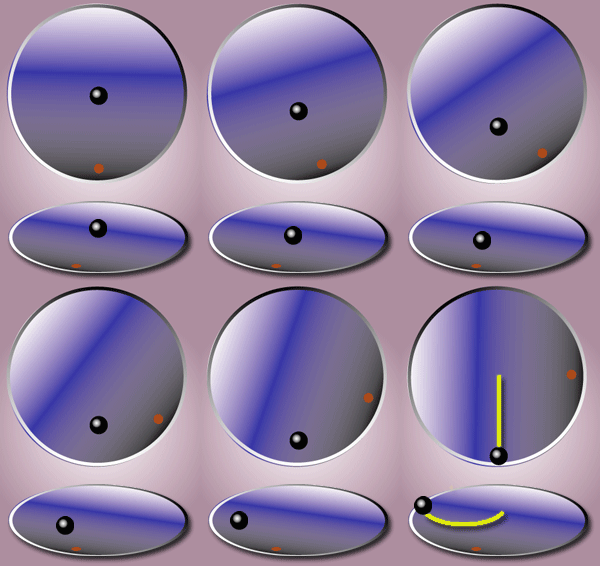
apparent or fictitious force on objects moving within a reference frame that rotates with respect to an inertial frame

electromagnetic induction
production of voltage by a varying magnetic field

fundamental interaction
any of the physical interactions or forces: gravitational, electromagnetic, strong nuclear, and weak nuclear

diffraction
thumb|The diffraction pattern Airy disk|(Airy disc) of a red [[laser beam projected onto a plate after passing through a small circular aperture in another plate]]
Diffraction is the deviation of waves from straight-line propagation due to an obstacle or through an aperture, without any change in their energy. Diffraction is the same physical effect as interference, but interference is typically used for the superposition of a few waves, while the term diffraction is used when many waves are superposed. The term diffraction pattern is used to refer to an image or map of the different direction

Lorentz force
force exerted on a charge in electromagnetic field

convection
thumb|Simulation of thermal convection in the Earth's mantle. Hot areas are shown in red, cold areas are shown in blue. A hot, less-dense material at the bottom moves upwards, and likewise, cold material from the top moves downwards.

nuclear reaction
process in which two nuclei collide to produce one or more nuclides

event horizon
boundary of a region of spacetime from which one cannot escape once entered

butterfly effect
idea that small causes can have large effects in complex or nonlinear dynamic systems

phase change
transitions between solid, liquid and gaseous states of matter, and, in rare cases, plasma

superfluidity
thumb|right|Helium#Helium II|Helium II will "creep" along surfaces in order to find its own level—after a short while, the levels in the two containers will equalize. The [[Rollin film also covers the interior of the larger container; if it were not sealed, the helium II would creep out and escape.]]
thumb|right|The liquid helium is in the superfluid phase. A thin invisible film creeps up the inside wall of the bowl and down on the outside. A drop forms. It will fall off into the liquid helium below. This will repeat until the cup is empty—provided the liquid remains superfluid.

time dilation
measured time difference as explained by relativity theory

ferromagnetism
thumb|A magnet made of [[alnico, a ferromagnetic iron alloy, with its keeper]]
thumb|Paramagnetism, ferromagnetism, and spin waves
Ferromagnetism is a property of certain materials (such as iron) that results in a significant, observable magnetic permeability, and in many cases, a significant magnetic coercivity, allowing the material to form a permanent magnet. Ferromagnetic materials are noticeably attracted to a magnet, which is a consequence of their substantial magnetic permeability.

Cherenkov radiation
electromagnetic phenomenon
gravitational singularity
location in space-time where the gravitational field of a celestial body becomes infinite

Rayleigh scattering
elastic scattering of light, or other electromagnetic radiation, by particles of size much smaller than the wavelength of the radiation

paramagnetism
thumb|Liquid oxygen (blue) can be suspended between the poles of a strong magnet as a result of its paramagnetism.
latent heat
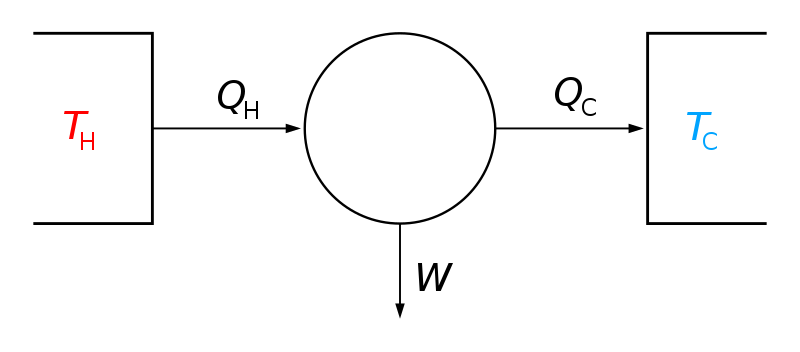
released or absorbed energy during a constant-temperature process

cavitation
thumb|upright=1|right|Cavitating propeller model in a Water tunnel (hydrodynamic)|water tunnel experiment

Total internal reflection
physical phenomenon
physical property
attribute of a physical system or body; OR non-chemical property of a material

scattering
thumb|A wine glass in an [[LCD projector's light beam makes the beam scatter.]]
In physics, scattering is a wide range of physical processes where moving particles or radiation of some form, such as light or sound, are forced to deviate from a straight trajectory by localized non-uniformities (including particles and radiation) in the medium through which they pass. In conventional use, this also includes deviation of reflected radiation from the angle predicted by the law of reflection. Reflections of radiation that undergo scattering are often called diffuse reflections and unscattered refle
thermoelectric effect
direct conversion of temperature differences to electric voltage and vice versa
Fermat's principle
principle of least time

Magnus effect
sidewise force on a spinning object in a liquid or gas

Casimir effect
Physical force caused by virtual particles

antiferromagnetism
thumb|Antiferromagnetic ordering
thumb|Magnetic orders : comparison between ferro, antiferro and ferrimagnetism
Leidenfrost effect
physical phenomenon in which a liquid close to a very hot surface produces an insulating vapor layer keeping the liquid from boiling rapidly
Mpemba effect
the observation that, in some circumstances, warmer water can freeze faster than colder water
heat treatment
process of heating something to alter it

sonoluminescence
right|thumb|Single-bubble sonoluminescence – a single, cavitating bubble
Sonoluminescence is luminescence induced by sound waves, such as in the emission of light from imploding bubbles in a liquid when excited by sound. Sonoluminescence is sometimes considered a kind of mechanoluminescence. However, mechanoluminescence is typically defined as pertaining to solids, while sonoluminescence usually pertains to liquids. The related terms acoustoluminescence and sonotriboluminescence have been used to describe sound-induced luminescence in solids (e.g., crystals suspended in slurries).

quasiparticle
In condensed matter physics, a quasiparticle is a concept used to describe a collective behavior of a group of particles that can be treated as if they were a single particle. Formally, quasiparticles and collective excitations are closely related phenomena that arise when a microscopically complicated system such as a solid behaves as if it contained different weakly interacting particles in vacuum.
Mössbauer effect
resonant and recoil-free emission and absorption of gamma radiation by atomic nuclei
water hammer
pressure surge when a fluid is forced to stop or change direction suddenly
stimulated emission
process by which an incoming photon of a specific frequency can interact with an excited atomic electron (or other excited molecular state), causing it to drop to a lower energy level
Stark effect
energy level splitting via a static electric field
spontaneous emission
quantum mechanical state change
quantization
procedure to construct a quantum system whose classical limit corresponds to a given classical system
Aharonov–Bohm effect
electromagnetic quantum-mechanical effect in regions of zero magnetic and electric field
Coandă effect
tendency of a fluid jet to stay attached to a convex surface
ultraviolet catastrophe
classical physics prediction that black body radiation grows unbounded with frequency

attenuation
In physics, attenuation is the gradual loss of flux intensity through a medium. For instance, dark glasses attenuate sunlight, lead attenuates X-rays, and water and air attenuate both light and sound at variable attenuation rates.

ergosphere
thumb|right|300px|At the ergospheres (shown here in violet for the outer and red for the inner one), the temporal metric coefficient gtt becomes negative, i.e., acts like a purely spatial metric component. Consequently, timelike or lightlike worldlines within this region must co-rotate with the inner mass. Kerr–Newman metric#Alternative .28Kerr.E2.80.93Schild.29 formulation|Cartesian projection, equatorial perspective.

linearity
In mathematics, the term linear is used in two distinct senses for two different properties:
linearity of a function (or mapping);
linearity of a polynomial.
An example of a linear function is the function defined by f(x)=(ax,bx) that maps the real line to a line in the Euclidean plane R2 that passes through the origin. An example of a linear polynomial in the variables X, Y and Z is aX+bY+cZ+d.
physical change
any change in matter not involving a change in the substance's chemical properties
sonochemistry
In chemistry, the study of sonochemistry is concerned with understanding the effect of ultrasound in forming acoustic cavitation in liquids, resulting in the initiation or enhancement of the chemical activity in the solution. Therefore, the chemical effects of ultrasound do not come from a direct interaction of the ultrasonic sound wave with the molecules in the solution.

suction
thumb|240x240px|Gasses or liquids that move along a pressure gradient can exert forces on objects.
Suction is the day-to-day term for the movement of gases or liquids along a pressure gradient with the implication that the movement occurs because the lower pressure pulls the gas or liquid. However, the forces acting in this case do not originate from just the lower pressure side, but instead from the side of the higher pressure, as a reaction to the pressure difference.
critical phenomena
physics of critical points
Unruh effect
prediction that an accelerating observer will observe blackbody radiation where an inertial observer would observe none
Marangoni effect
physical phenomenon
shock diamond
wave pattern in supersonic exhaust
Kondo effect
describes the scattering of conduction electrons in a metal due to magnetic impurities, resulting in a characteristic change in electrical resistivity with temperature
Doppler broadening
Phenomenon in physics