Category
page 1Psychoplastogens

lysergic acid diethylamide
Lysergic acid diethylamide, commonly known as LSD (from German ) and by the nicknames acid and lucy, is a semisynthetic hallucinogenic drug derived from ergot, known for its powerful psychological effects and serotonergic activity. It was historically used in psychiatry and 1960s counterculture; it is currently legally restricted but receiving renewed scientific interest and increasing use.

(RS)-ketamine
Ketamine is a cyclohexanone-derived general anesthetic and NMDA receptor antagonist with analgesic and hallucinogenic properties, used medically for anesthesia, depression, and pain management. Ketamine exists as its two enantiomers, S- (esketamine) and R- (arketamine), and has antidepressant action likely involving other mechanisms in addition to NMDA antagonism.

MDMA
3,4-Methylenedioxymethamphetamine (MDMA), commonly known as ecstasy (tablet form), and molly (crystal form), is an entactogen with stimulant and minor psychedelic properties.

psilocybin
Psilocybin, also known as '4-phosphoryloxy-N,N-dimethyltryptamine (4-PO-DMT'), is a naturally occurring tryptamine alkaloid and investigational drug found in more than 200 species of mushrooms, with hallucinogenic and serotonergic effects. Effects include euphoria, changes in perception, a distorted sense of time, and perceived spiritual experiences. It can also cause adverse reactions such as nausea and panic attacks.

mescaline
Mescaline, also known as mescalin or mezcalin, and in chemical terms 3,4,5-trimethoxyphenethylamine, is a naturally occurring classical psychedelic protoalkaloid of the substituted phenethylamine class, found in cacti like peyote (Lophophora williamsii) and San Pedro (certain species of the genus Echinopsis).

L-scopolamine
Scopolamine, also known as hyoscine, or '''Devil's Breath''', is a medication used to treat motion sickness and postoperative nausea and vomiting. It is also sometimes used before surgery to decrease saliva. When used by injection, effects begin after about 20 minutes and last for up to 8 hours. It may also be used orally and as a transdermal patch since it has been long known to have transdermal bioavailability.
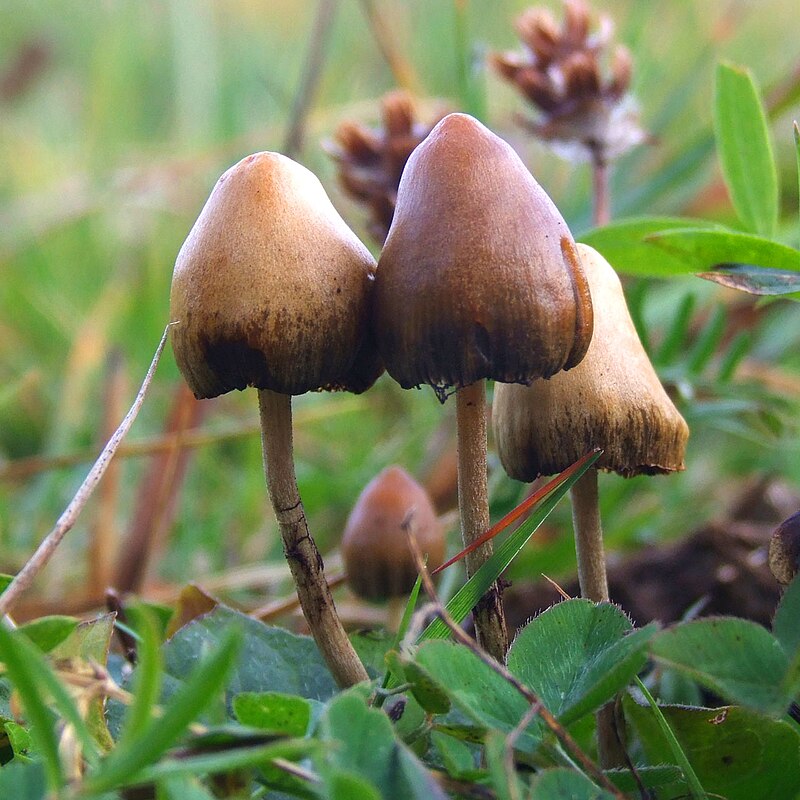
psilocybin mushroom
mushrooms containing psychoactive indole alkaloids

dimethyltryptamine
Dimethyltryptamine (DMT), also known as '''N,N-dimethyltryptamine (N,N-DMT'''), is a serotonergic hallucinogen and investigational drug of the tryptamine family that occurs naturally in many plants and animals. DMT is used as a psychedelic drug and prepared by various cultures for ritual purposes as an entheogen.
isoflurane
Isoflurane, sold under the brand name Forane among others, is a halogenated ether used as a general anesthetic. It can be used to start or maintain anesthesia; however, other medications are often used to start anesthesia, due to airway irritation with isoflurane. Isoflurane is a inhalational anesthetic given via inhalation.
psychedelic drug
serotonin receptor agonist temporarily altering states of consciousness

psilocin
Psilocin, also known as '4-hydroxy-N,N-dimethyltryptamine (4-HO-DMT'), is a psychedelic drug and fungal alkaloid of the tryptamine and 4-hydroxytryptamine families. Along with its phosphate ester psilocybin, it is found in most species of psilocybin-containing mushrooms, such as Psilocybe cubensis and Psilocybe mexicana, and is the compound responsible for their hallucinogenic effects, although concentrations of psilocin are variably lower than those of psilocybin. The drug is taken orally and its effects include perceptual changes and visual effects, emotional changes, ego dissolution, time d

ibogaine
Ibogaine is a psychoactive indole alkaloid derived from plants such as Tabernanthe iboga, characterized by hallucinogenic and oneirogenic effects. Traditionally used by Central African foragers, it has undergone controversial research for the treatment of substance use disorders. Ibogaine exhibits complex pharmacology by interacting with multiple neurotransmitter systems, notably affecting opioid, serotonin, sigma, and NMDA receptors, while its metabolite noribogaine primarily acts as a serotonin reuptake inhibitor and κ-opioid receptor agonist.

N,N-dimethyl-5-methoxytryptamine
5-MeO-DMT, also known as '5-methoxy-N,N-dimethyltryptamine, as well as O-methylbufotenin or mebufotenin', is an atypical psychedelic drug, entheogen, and alkaloid of the tryptamine and 5-methoxytryptamine families. It is found naturally in a wide variety of plant species, and is also secreted by the glands of at least one toad species, the Colorado River toad (Incilius alvarius, formerly Bufo alvarius). It may occur naturally in humans as well. Like its close relatives dimethyltryptamine (DMT) and bufotenin (5-HO-DMT), it has been used as an entheogen in South America. Slang terms include five

esketamine
(RS)-methylone
Methylone, also known as '3,4-methylenedioxy-N-methylcathinone (MDMC'), is an entactogen and stimulant drug of the amphetamine, cathinone, and MDxx families related to 3,4-methylenedioxymethamphetamine (MDMA; "ecstasy"). It is the β-keto or cathinone analogue of MDMA. The drug is usually taken orally, but can also be administered by other routes.
lisuride
Lisuride, sold under the brand name Dopergin among others, is a monoaminergic medication of the ergoline family which is used in the treatment of Parkinson's disease, migraine, and high prolactin levels. It is taken by mouth.
4-iodo-2,5-dimethoxyphenylisopropylamine
2,5-Dimethoxy-4-iodoamphetamine (DOI) is a psychedelic drug of the phenethylamine, amphetamine, and DOx families. It is little-used recreationally, but is widely used in scientific research in the study of psychedelics and serotonin receptors. The drug is taken orally.
O-acetylpsilocin
'4-Acetoxy-N,N-dimethyltryptamine (4-AcO-DMT or 4-acetoxy-DMT), also known as O-acetylpsilocin or psilacetin', is a psychedelic drug of the tryptamine family related to psilocybin and psilocin. It is a synthetic derivative of psilocin (4-HO-DMT) in which the hydroxyl group has been acetylated, and is the analogue of psilocybin (4-PO-DMT) in which the phosphate ester has been replaced with an acetate ester. The drug is a prodrug of psilocin and is used orally similarly to psilocybin.
tabernanthine
Tabernanthine is an alkaloid found in Tabernanthe iboga. It has been used in laboratory experiments to study how addiction affects the brain. Tabernanthine persistently reduced the self-administration of cocaine and morphine in rats.
5-bromodimethyltryptamine
5-Bromo-DMT, or 5-Br-DMT, also known as '5-bromo-N,N-dimethyltryptamine or by informal names like sea DMT or SpongeBob DMT', is a psychedelic drug and brominated indole alkaloid of the tryptamine family related to dimethyltryptamine (DMT). It is the 5-bromo derivative of DMT. The drug is naturally occurring in the sponges Smenospongia aurea and Smenospongia echina, as well as in Verongula rigida (0.00142% dry weight) alongside 5,6-dibromo-DMT (0.35% dry weight) and seven other alkaloids. It has been encountered as a novel designer drug.
noribogaine
Noribogaine, also known as '''O-desmethylibogaine or 12-hydroxyibogamine', is the principal psychoactive metabolite of the oneirogen ibogaine. It is thought to be involved in the antiaddictive effects of ibogaine-containing plant extracts, such as Tabernanthe iboga''.
bromolysergide
BOL-148, also known as 2-bromo-LSD or as bromolysergide, is a non-hallucinogenic serotonin receptor modulator of the lysergamide family related to the psychedelic drug lysergic acid diethylamide (LSD). It is specifically the 2-bromo derivative of LSD.
methylenedioxydimethylamphetamine
'3,4-Methylenedioxy-N,N-dimethylamphetamine (MDDM, MDDMA), also known as N,N-dimethyl-MDA or N-methyl-MDMA', is a lesser-known serotonin releasing agent and psychoactive drug of the phenethylamine, amphetamine, and MDxx families. It is the N,N-dimethyl analogue of 3,4-methylenedioxyamphetamine (MDA) and the N-methyl derivative of MDMA. The drug is a known synthetic impurity of MDMA and has also been described as a possible novel designer drug in 2025.
rapastinel
Rapastinel () (former developmental code name GLYX-13) is a novel antidepressant that was under development by Allergan (previously Naurex) as an adjunctive therapy for the treatment of treatment-resistant depression. It is a centrally active, intravenously administered (non-orally active) amidated tetrapeptide that acts as a novel and selective modulator of the NMDA receptor. The drug is a rapid-acting and long-lasting antidepressant as well as robust cognitive enhancer by virtue of its ability to enhance NMDA receptor-mediated signal transduction and synaptic plasticity.
arketamine
Arketamine (developmental code names PCN-101, HR-071603), also known as '(R)-ketamine or (R)-(−)-ketamine', is the (R)-(−) enantiomer of ketamine. Similarly to racemic ketamine and esketamine, the S(+) enantiomer of ketamine, arketamine is biologically active; however, it is less potent as an NMDA receptor antagonist and anesthetic and thus has never been approved or marketed for clinical use as an enantiopure drug. Arketamine is currently in clinical development as a novel antidepressant.