Category
page 1Rare cancers
Hodgkin lymphoma
lymphoma that is marked classically by the presence of Reed-Sternberg cells
Kaposi's sarcoma
connective tissue cancer, common among early AIDS patients

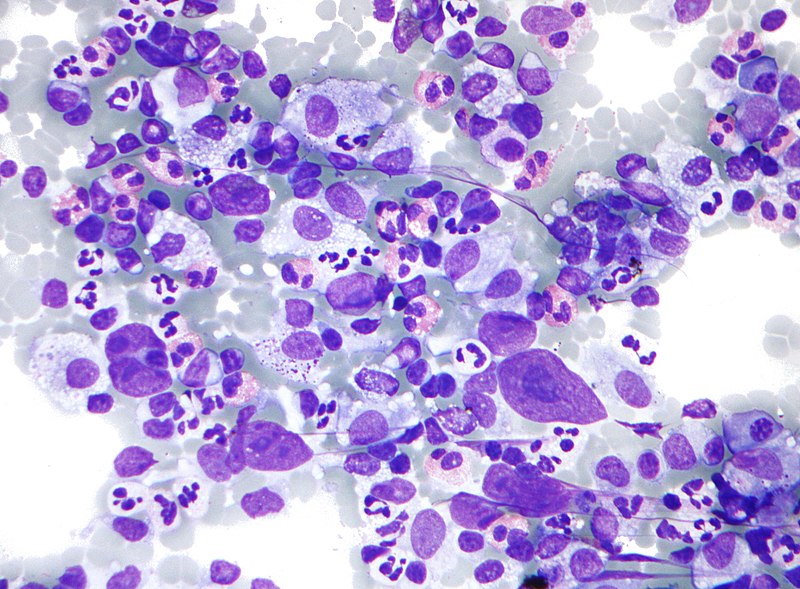
mesothelioma
Mesothelioma is a type of cancer that develops from the thin layer of tissue that covers many of the internal organs (known as the mesothelium). The area most commonly affected is the lining of the lungs and chest wall. Less commonly the lining of the abdomen and rarely the sac surrounding the heart, or the sac surrounding each testis may be affected. Signs and symptoms of mesothelioma may include shortness of breath due to fluid around the lung, a swollen abdomen, chest wall pain, cough, feeling tired, and weight loss. These symptoms typically come on slowly.

phaeochromocytoma
Pheochromocytoma (British English: phaeochromocytoma) is a rare tumor of the adrenal medulla composed of chromaffin cells and is a pharmacologically volatile, potentially lethal catecholamine-containing tumor of chromaffin tissue. It is part of the paraganglioma (PGL). These neuroendocrine tumors can be sympathetic, where they release catecholamines into the bloodstream which cause the most common symptoms, including hypertension (high blood pressure), tachycardia (fast heart rate), sweating, and headaches. Some PGLs may secrete little to no catecholamines, or only secrete paroxysmally (episod
polycythemia vera
human disease
Ewing sarcoma
bone cancer that has material basis in neural crest cells derives from undeveloped, undifferentiated neuroectoderm

cholangiocarcinoma
kidney cancer
urinary system cancer that is located in the kidney
penile cancer
cancer of the penis
nephroblastoma
rare disease

insulinoma
An insulinoma is a tumour of the pancreas that is derived from beta cells and secretes insulin. It is a rare form of a neuroendocrine tumour. Most insulinomas are benign in that they grow exclusively at their origin within the pancreas, but a minority metastasize. Insulinomas are one of the functional pancreatic neuroendocrine tumour (PNET) group ("functional" because it increases production of insulin). In the Medical Subject Headings classification, insulinoma is the only subtype of "islet cell adenoma".

angiosarcoma
Angiosarcoma is a rare and aggressive cancer that starts in the endothelial cells that line the walls of blood vessels or lymphatic vessels. Since they are made from vascular lining, they can appear anywhere and at any age, but older people are more commonly affected, and the skin is the most affected area, with approximately 60% of cases being cutaneous (skin). Specifically, the scalp makes up ~50% of angiosarcoma cases, but this is still <0.1% of all head and neck tumors. Since angiosarcoma is an umbrella term for many types of tumor that vary greatly in origin and location, many symptoms ma
vaginal cancer
female reproductive system cancer that is located in the vagina

rhabdomyosarcoma
Rhabdomyosarcoma (RMS) is a highly aggressive form of cancer that develops from mesenchymal cells that have failed to fully differentiate into myocytes of skeletal muscle. Cells of the tumor are identified as rhabdomyoblasts.

chondrosarcoma
Chondrosarcoma is a bone sarcoma, a primary cancer composed of cells derived from transformed cells that produce cartilage. A chondrosarcoma is a member of a category of tumors of bone and soft tissue known as sarcomas. About 30% of bone sarcomas are chondrosarcomas. It is resistant to chemotherapy and radiotherapy with mesenchymal suptype being a notable exception. Unlike other primary bone sarcomas that mainly affect children and adolescents, a chondrosarcoma can present at any age. It more often affects the axial skeleton than the appendicular skeleton.
myelofibrosis
myeloid neoplasm that is located in the bone marrow which results in bone marrow being replaced by fibrous (scar) tissue

thymoma
A thymoma is a tumor originating from the epithelial cells of the thymus that is considered a rare neoplasm. Thymomas are frequently associated with neuromuscular disorders such as myasthenia gravis; thymoma is found in 20% of patients with myasthenia gravis. Once diagnosed, thymomas may be removed surgically. In the rare case of a malignant tumor, radiation therapy may be used.
pilocytic astrocytoma
astrocytoma that is characterized by cells that look like fibers when viewed under a microscope and is located in the brain
Waldenström macroglobulinemia
Type of blood cancer

leiomyosarcoma
A leiomyosarcoma (LMS) is a rare malignant (cancerous) smooth muscle tumor. The word is . The stomach, bladder, uterus, blood vessels, and intestines are examples of hollow organs made up of smooth muscles where LMS can be located; however, the uterus and abdomen are the most common sites.
Merkel cell carcinoma
rare and highly aggressive skin cancer
ependymoma
An ependymoma is a tumor that arises from the ependyma, a tissue of the central nervous system. Usually, in pediatric cases the location is intracranial, while in adults it is spinal. The common location of intracranial ependymomas is the floor of the fourth ventricle. Rarely, ependymomas can occur in the pelvic cavity.
uveal melanoma
uveal cancer that has material basis in uvea pigment cells
salivary gland neoplasm
human disease
heart cancer
cardiovascular cancer located in the heart
glucagonoma
Glucagonoma is a very rare tumor of the alpha cells of the pancreas that results in the overproduction of the hormone glucagon. Typically associated with a rash called necrolytic migratory erythema, weight loss, and mild diabetes mellitus, most people with glucagonoma contract it spontaneously. However, about 10% of cases are associated with multiple endocrine neoplasia type 1 (MEN-1) syndrome.
VIPoma
A VIPoma or vipoma () is a rare endocrine tumor that overproduces vasoactive intestinal peptide (thus VIP + -oma). The incidence is about 1 per 10,000,000 per year. VIPomas usually (about 90%) originate from the non-β islet cells of the pancreas. They are sometimes associated with multiple endocrine neoplasia type 1. Roughly 50–75% of VIPomas are malignant, but even when they are benign, they are problematic because they tend to cause a specific syndrome: the massive amounts of VIP cause a syndrome of profound and chronic watery diarrhea and resultant dehydration, hypokalemia, achlorhydria, ac
adenoid cystic carcinoma
type of cancer
adrenocortical carcinoma
adrenal cortex cancer that forms in the outer layer of tissue of the adrenal gland and that has material basis in abnormally proliferating cells derives from epithelial cells

germinoma
A germinoma is a type of germ-cell tumor, which is not differentiated upon examination. It may be benign or malignant.
fallopian tube cancer
female reproductive organ cancer that is located in fallopian tube
somatostatinoma
Somatostatinomas are a tumor of the delta cells of the endocrine pancreas that produces somatostatin. Increased levels of somatostatin inhibit pancreatic hormones and gastrointestinal hormones. Thus, somatostatinomas are associated with mild diabetes mellitus (due to inhibition of insulin release), steatorrhoea and gallstones (due to inhibition of cholecystokinin release), and achlorhydria (due to inhibition of gastrin release). Somatostatinomas are commonly found in the head of pancreas. Only ten percent of somatostatinomas are functional tumours, and 60–70% of tumours are malignant. Nearly t
malignant Sertoli-Leydig cell tumor
Human disease
atypical teratoid rhabdoid tumor
brain cancer that is usually located in the brain, but can occur anywhere in the central nervous system
esthesioneuroblastoma
Esthesioneuroblastoma is a rare cancer of the nasal cavity. Arising from the upper nasal tract, esthesioneuroblastoma is believed to originate from sensory neuroepithelial cells, also known as neuroectodermal olfactory cells.
urethral cancer
urinary tract cancer that derives from the tissues of the urethra
sacrococcygeal teratoma
medical condition
male breast cancer
Human disease
adult T-cell leukemia/lymphoma
human disease
primitive neuroectodermal tumor
group of malignant tumors of the nervous system that feature primitive cells with elements of neuronal or glial differentiation
in situ pulmonary adenocarcinoma
lung cancer that derives from the distal bronchioles or alveoli that initially exhibit a specific non-invasive growth pattern

adamantinoma
Adamantinoma () is a rare bone cancer, making up less than 1% of all bone cancers. It almost always occurs in the bones of the lower leg and involves both epithelial and osteofibrous tissue.

islet cell carcinoma
islet cell tumor that has material basis in epithelial cells
granulosa cell tumour
Human disease
endodermal sinus tumor
germ cell cancer that has material basis in cells that line the yolk sac of the embryo
malignant Leydig cell tumor
sex cord-stromal tumour group of ovarian and testicular cancers
dermatofibrosarcoma protuberans
fibrosarcoma that is located in the dermis layer of the skin
meningeal carcinomatosis
disorder in cancer patients in which the disease spreads to the membranes surrounding the brain and spinal cord
juvenile myelomonocytic leukemia
Human disease
ganglioglioma
A ganglioglioma is a rare, slow-growing primary central nervous system (CNS) tumor which most frequently occurs in the temporal lobes of children and young adults. They are mixed cell tumors containing both neural ganglionic cells and neural glial cell components. This should not be confused with a gangliocytoma (ganglion cell tumor) which is composed of neurons of variable sizes but contains no glial cells.
Sertoli cell tumor
Human disease
hypopharynx cancer
pharynx cancer that is located in the hypopharynx
parathyroid carcinoma
endocrine disease
gliosarcoma
Gliosarcoma is a rare type of glioma, a cancer of the brain that comes from glial, or supportive, brain cells, as opposed to the neural brain cells. Gliosarcoma is a malignant cancer, and is defined as a glioblastoma consisting of gliomatous and sarcomatous components. Primary gliosarcoma (PGS) is classified as a grade IV tumor and a subtype of glioblastoma multiforme in the 2007 World Health Organization classification system (GBM). Because of a lack of specific and clear diagnostic criteria, the word "gliosarcoma" was frequently used to refer to glial tumours with mesenchymal properties, suc
mast cell leukemia
rare leukemia (blood cancer) involving mast cells
hereditary breast ovarian cancer
autosomal dominant disease characterized by the higher than normal tendency to develop breast and ovarian cancers in genetically related families
Richter's syndrome
Human disease
T-cell lymphoma
Rare T-cell lymphoma
chronic neutrophilic leukemia
chronic leukemia characterized by neutrophilic leukocytosis with no detectable Philadelphia chromosome or BCR/ABL fusion gene
alveolar soft part sarcoma
soft tissue cancer that is a slow growing tumor of an unknown origin that effects children and effects young adults