Category
page 1Staple foods

bread
Bread is a baked food product made from water, flour, and often yeast. It is a staple food across the world, particularly in Europe and the Middle East. Throughout recorded history and around the world, it has been an important part of many cultures' diets. It is one of the oldest human-made foods, having been of significance since the dawn of agriculture, and plays an essential role in both religious rituals and secular culture.

maize
Maize (; Zea mays), also known as corn in North American English, is a tall stout grass that produces cereal grain. The leafy stalk of the plant gives rise to male inflorescences or tassels which produce pollen, and female inflorescences called ears. The ears yield grain, known as kernels or seeds. In modern commercial varieties, these are usually yellow or white; other varieties can be of many colors. Maize was domesticated by indigenous peoples in southern Mexico about 9,000 years ago from wild teosinte. Native Americans planted it alongside beans and squashes in the Three Sisters polycultur

banana
A banana is an elongated, edible fruit—botanically a berry—produced by several kinds of large treelike herbaceous flowering plants in the genus Musa. In some countries, cooking bananas are called plantains, distinguishing them from dessert bananas. The fruit is variable in size, color and firmness, but is usually elongated and curved, with soft flesh rich in starch covered with a peel, which may have a variety of colors when ripe. It grows upward in clusters near the top of the plant. Almost all modern edible seedless (parthenocarp) cultivated bananas come from two wild species – Musa acuminat

potato
The potato () is a starchy tuberous vegetable native to the Americas that is consumed as a staple food in many parts of the world. Potatoes are underground stem tubers of the plant Solanum tuberosum, a perennial in the nightshade family Solanaceae.
%20(8231709397).jpg)
wheat
Wheat is a group of wild and domesticated grasses of the genus Triticum (). As cereals, they are cultivated for their grains, which are staple foods around the world. Well-known wheat species and hybrids include the most widely grown common wheat (T. aestivum), spelt, durum, emmer, einkorn, and Khorasan or Kamut. The archaeological record suggests that wheat was first cultivated in the regions of the Fertile Crescent around 9600 BC.

sweet potato
species of plant

Avena sativa
The oat (Avena sativa), sometimes called the common oat, is a species of cereal grass (Avena) grown for fodder and for its seed, which is known by the same name (usually in the plural). Oats appear to have been domesticated as a secondary crop, as their seeds resembled those of other cereals closely enough for them to be included by early cultivators. Oats tolerate cold winters less well than cereals such as wheat, barley, and rye, but need less summer heat and more rain, making them important in areas such as Northwest Europe that have cool, wet summers. They can tolerate low-nutrient and aci

flour
Flour is a powder used to make many different foods, including baked goods, as well as thickening dishes. It is made by grinding grains, beans, nuts, seeds, roots, or vegetables using a mill.

Secale cereale
Rye (Secale cereale) is a grass grown extensively as a grain, a cover crop and a forage crop. It is grown principally in an area from Eastern and Northern Europe into Russia. It is much more tolerant of cold weather and poor soil than other cereals, making it useful in those regions; its vigorous growth suppresses weeds and provides abundant forage for animals early in the year. It is a member of the wheat tribe (Triticeae) which includes the cereals wheat and barley. It is likely that rye arrived in Europe as a secondary crop, meaning that it was a minor admixture in wheat as a result of Vavi

pumpkin
thumb|upright=1.4|A pile of pumpkins at the French Market in New Orleans, Louisiana
thumb|upright=1.4|A variety of pumpkin cultivars. The central and rightmost orange fruits are Cucurbita pepo, all others are [[Cucurbita maxima]]
thumb|upright=1.4|A field of giant pumpkins

Colocasia esculenta
Taro (; Colocasia esculenta) is a root vegetable. It is the most widely cultivated species of several plants in the family Araceae that are used as vegetables for their corms, leaves, stems and petioles. Taro corms are a food staple in African, Caribbean, Oceanian, East Asian, Southeast Asian and South Asian cultures (similar to yams).

pasta
Pasta (, ; ) is a type of food typically made from an unleavened dough of wheat flour mixed with water or eggs, and formed into sheets or other shapes, then cooked by boiling or baking. Pasta was originally only made with durum, although the definition has been expanded to include alternatives for a gluten-free diet, such as rice flour, or legumes such as beans or lentils. Pasta is believed to have developed independently in Italy and is a staple food of Italian cuisine, with evidence of Etruscans making pasta as early as 400 BCE in Italy.

breadfruit
Breadfruit (Artocarpus altilis) is a species of flowering tree in the mulberry and jackfruit family (Moraceae) believed to have been selectively bred in Polynesia from the breadnut (Artocarpus camansi). Breadfruit was spread into Oceania via the Austronesian expansion and to further tropical areas during the Colonial Era. British and French navigators introduced a few Polynesian seedless varieties to Caribbean islands during the late 18th century.

noodle
Noodles are a type of food typically made from unleavened dough which is rolled flat and cut, stretched, or extruded into long strips or strings. Noodles are a staple food in many cultures and made into a variety of shapes. The most common noodles are those derived from Chinese cuisine or Italian cuisine. Italian noodles are generally referred to as pasta. In Chinese cuisine, the overarching term for noodles is 面 (miàn in Mandarin), which refers specifically to dough-based noodles made from wheat or other grain-based dough. Chinese noodles also include another category, called 粉 (fěn), which a

bean
thumb|right|French bean pods on a plant

couscous
Couscous () is a traditional North African dish of small steamed granules of rolled semolina that is often served with a stew spooned on top. Pearl millet, sorghum, bulgur, and other cereals are sometimes cooked in a similar way in other regions, and the resulting dishes are also sometimes called couscous.

Chenopodium quinoa
Quinoa (Chenopodium quinoa; , from Quechua ' or ') is a flowering plant in the amaranth family. It is an herbaceous annual plant grown as a crop primarily for its edible seeds; the seeds are high in protein, dietary fiber, B vitamins and dietary minerals especially potassium and magnesium in amounts greater than in many grains. Quinoa is not a grass but rather a pseudocereal botanically related to spinach and amaranth (Amaranthus spp.), and originated in the Andean region of northwestern South America. It was first used to feed livestock 5,2007,000 years ago, and for human consumption 3,0004,0

legume
thumb|upright=0.9|A selection of dried pulses and fresh legumes

yam
edible tuber

chapati
Chapati (alternatively spelled chapathi or chapatti; IAST: ) is an unleavened flatbread originating from the Indian subcontinent. Chapatis are made of whole-wheat flour known as atta, mixed into dough with water, and cooked on an iron griddle known as a tava, puffing up over direct heat. Another version, in East African cuisine, is instead fried. Chapati is a form of roti, and the two are sometimes conflated. It is a widely eaten in South Asia—even in areas where rice is the typical staple—and in most East African countries, as well as by the South Asian diaspora.

grain
thumb|upright=1.35|Various food grains at a market in IndiaA grain is a small, hard, dry fruit (caryopsis) – with or without an attached hull layer – harvested for human or animal consumption. A grain crop is a grain-producing plant. The two main types of commercial grain crops are cereals and legumes.

tortilla
A tortilla (, ) is a thin, circular unleavened flatbread from Mesoamerica originally made from masa, and now also from wheat flour.

cooking banana
banana cultivars commonly used in cooking
%20in%20New%20Guinea.jpg)
sago
thumb|right|Sago palms (Metroxylon sagu) in New Guinea
thumb|Peeling and pounding a segment of sago palm stem to produce an edible starch. Sepik River, Papua New Guinea
Sago () is a starch extracted from the pith, or spongy core tissue, of various tropical palm stems, especially those of Metroxylon sagu. It is a major staple food for the lowland peoples of New Guinea and the Maluku Islands, where it is called saksak, rabia and sagu. The largest supply of sago comes from Melanesia region, particularly Eastern Indonesia. Large quantities of sago are sent to Europe and North America for cooking p

bulgur
thumb|Coarse bulgur

staple food
food that is eaten routinely, and considered a dominant portion of a standard diet

tajine
thumb|A Portuguese-made tagine pot
A tagine or tajine, also tajin or tagin () is a Maghrebi dish, and the earthenware pot in which it is cooked. It is also called or .

mămăligă
Mămăligă (;) is a polenta-like dish made out of yellow maize flour, traditional in Romania, Moldova, south-western Ukraine and among Poles in Ukraine (mamałyga), Hungary (puliszka), Bulgaria (kačamak), the Black Sea regions of Georgia and Turkey, and Thessaly and Phthiotis in Greece.
%20flower%2C%20my%20back%20yard%2C%20Gurgaon%2C%20India.jpg)
Xanthosoma
Xanthosoma is a genus of flowering plants in the arum family, Araceae. The genus is native to tropical America but widely cultivated and naturalized in other tropical regions. Several are grown for their starchy corms, an important food staple of tropical regions, known variously as malanga, otoy, otoe, cocoyam (or new cocoyam), tannia, tannier, yautía, macabo, ocumo, macal, taioba, dasheen, quequisque, ʻape and (in Papua New Guinea) as Singapore taro (taro kongkong). Many other species, including especially Xanthosoma roseum, are used as ornamental plants; in popular horticultural literature

tsampa
Tsampa or tsamba (; ) is a Tibetan and Himalayan staple foodstuff; it is also prominent in parts of northern Nepal. It is a glutinous meal made from roasted flour, usually barley flour and sometimes also wheat flour and flour prepared from tree peony seeds. It is usually mixed with Tibetan butter tea. It is also eaten in Turkestan and Mongolia, where it is known as zamba.

gruel
Gruel is a food consisting of some type of cereal—such as ground oats, wheat, rye, or rice—heated or boiled in water or milk. It is a thinner version of porridge that may be more often drunk rather than eaten. Historically, gruel has been a staple of the Western diet, especially for peasants. Gruel may also be made from millet, hemp, barley, or, in hard times, from chestnut flour or even the less-bitter acorns of some oaks. Gruel has historically been associated with feeding the sick and recently weaned children.

Ensete
Ensete is a genus of monocarpic flowering plants native to tropical regions of Africa and Asia. It is one of the three genera in the banana family, Musaceae, and includes the false banana or enset (E. ventricosum), an economically important food crop in Ethiopia.
Masala dosa
a variant of South Indian food dosa

Musa troglodytarum
species of plant
nut
dry, edible fruit or seed which usually has a high fat content

garri
thumb|Garri flour
thumb|Cooked garri (eba) on a plate in Cameroon
poi
Hawaï food

potage
Pottage or potage (, ; ) is a thick soup or stew made by boiling vegetables, grains, and, if available, meat or fish. It was a staple food for many centuries. The word pottage comes from the same Old French root as potage, which is a dish of more recent origin.

grits
thumb|Grits with cheese, bacon, green onion and a basted egg
ambuyat
Ambuyat is a dish derived from the interior trunk of the sago palm. It is a starchy, bland substance similar to tapioca. Ambuyat is the national dish of Brunei, and it is also popular in the Malaysian states of Sarawak and Sabah as well as the federal territory of Labuan, where it is sometimes known as linut.
yak butter
butter made from the milk of the domesticated yak

kisra
Kisra, also spelled kissra (), is a Sudanese popular thin fermented bread made in Sudan, Chad, South Sudan, Algeria and some parts of Uganda and Kenya. It is made from durra or wheat.
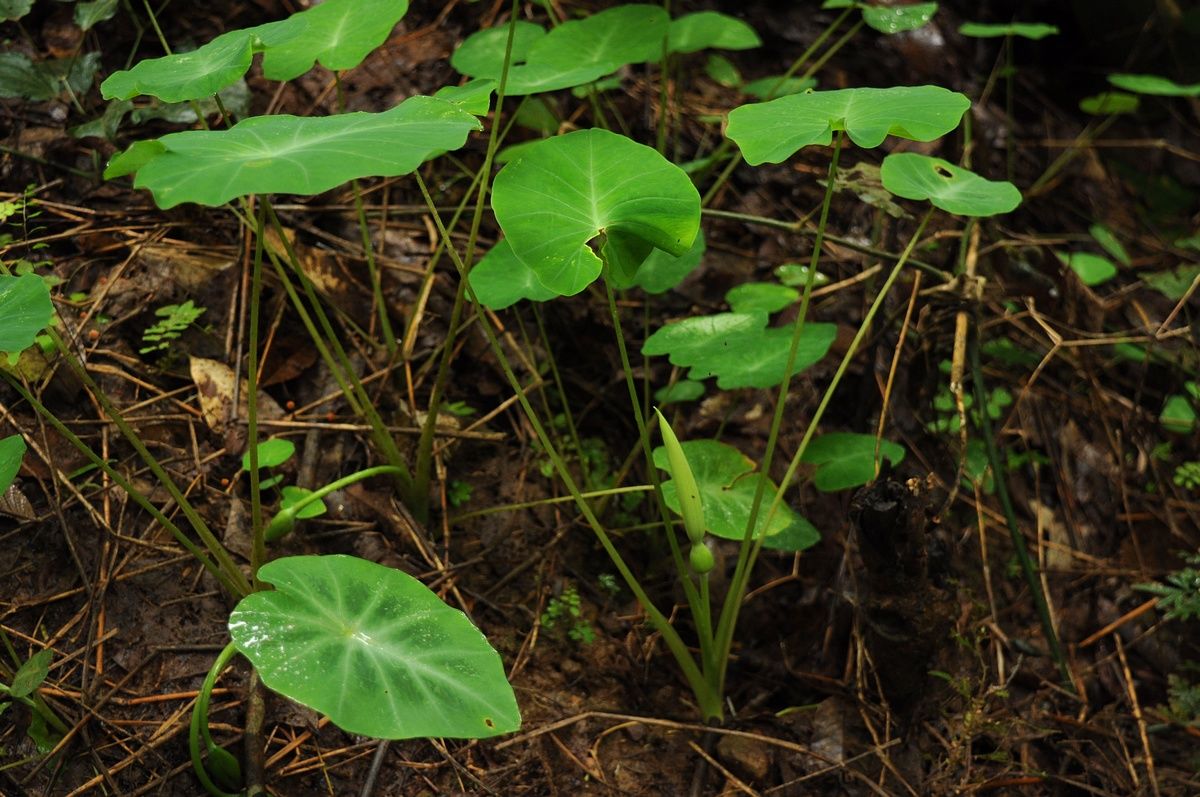
Eddoe
Eddoe or eddo (Colocasia antiquorum) is a species in the genus Colocasia. It is a tropical vegetable, closely related to taro (dasheen, Colocasia esculenta), which is primarily used for its thickened stems (corms). In most cultivars there is an acrid taste that requires careful cooking. The young leaves can also be cooked and eaten, but (unlike taro) they have a somewhat acrid taste.
broken rice
fragments of rice grains
Papeda
Indonesian traditional dish originating from East Indonesian region

Cyrtosperma merkusii
species of plant
mote
corn kernels boiled in lime

Amala
traditional Yoruba Nigerian food made of root flour
rupjmaize
Rupjmaize is a traditional dark bread made from rye and is considered to be the staple of the Latvian diet. The first written references to Latvian rye bread are found in a recipes book dating back to 1901.

pelt porridge
thumb|Musmehl, main ingredient of Brenntar

mangú
Mangú is the national breakfast dish of the Dominican Republic. A traditional Dominican dish, it can also be served for lunch or dinner.
wheat tortilla
type of soft, thin flatbread made from finely ground wheat flour
Bob chorba
Bulgarian bean soup
Egbo
meal ground from dried corn
pounded yam
yam-based staple food from West Africa
cocoyam
thumb|300px|right|A man in Cameroon tends to his cocoyam farm on the slope of [[Mount Fako]]
Cocoyam is a common name for more than one tropical root crop and vegetable crop belonging to the Arum family (also known as Aroids and by the family name Araceae) and may refer to:
Cuchuco
Cuchuco is a soup, part of Native American cuisine of South America associated with the Muisca people, made with corn, barley or wheat and mashed beans, popular in Colombian cuisine, especially Altiplano of the Boyacá and Cundinamarca Departments of Colombia. It is a staple food in Colombia, where it is often made with peas, potatoes, wheat and beans.
ogi
fermented cereal pudding from Nigeria, typically made from maize, sorghum, or millet
Mielie-meal
Coarse maize flou, mainly used in Africa
Nasi katok
Bruneian rice dish