File:Fulka_Roti_like_ball.jpg · Wikimedia Commons · See Wikimedia Commons
chapati
Sign in to saveAlso known as safati, shabaati, phulka, roshi, chapatti, chappati, chapathi, chappathi
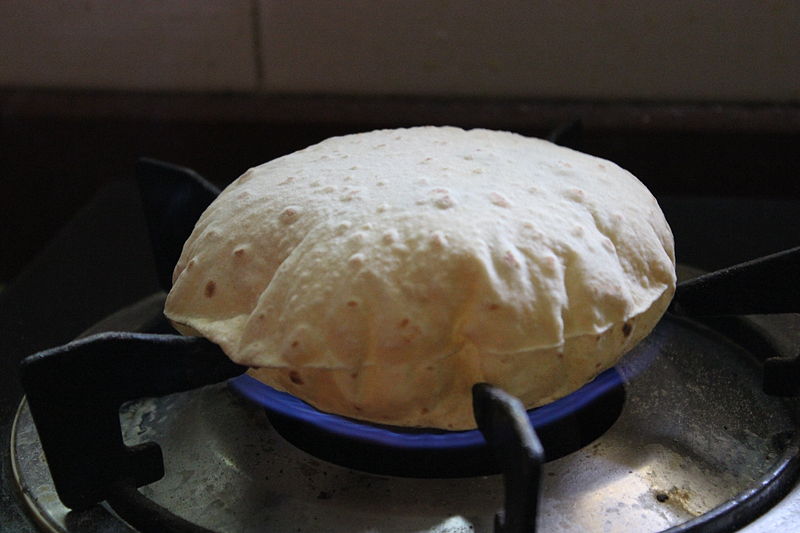
Chapati (alternatively spelled chapathi or chapatti; IAST: ) is an unleavened flatbread originating from the Indian subcontinent. Chapatis are made of whole-wheat flour known as atta, mixed into dough with water, and cooked on an iron griddle known as a tava, puffing up over direct heat. Another version, in East African cuisine, is instead fried. Chapati is a form of roti, and the two are sometimes conflated. It is a widely eaten in South Asia—even in areas where rice is the typical staple—and in most East African countries, as well as by the South Asian diaspora.
Chapati is a simple unleavened flatbread made from whole-wheat flour dough and cooked on a griddle, originating from the Indian subcontinent. It has become a widely eaten staple across South Asia and East Africa, as well as among South Asian communities around the world.
AI-generated from the Wikipedia summary — may contain errors.
Key facts
- Food.name
- Chapati
- Food.image
- 2 Chapati warm and ready to be eaten.jpg
- Food.image_size
- 250px
- Food.caption
- Chapatis with various side dishes
- Food.alternate_name
- Roti, roshi, phulka
- Food.country
- Indian subcontinent
- Food.associated_cuisine
- South Asian (Central Indian, North Indian, Western Indian, Pakistani), East African (Kenyan, Tanzanian, Ugandan)
- Food.type
- Bread
- Food.served
- Hot
- Food.main_ingredient
- Atta, water
- Food.minor_ingredient
- Salt, oil
- Food.similar_dish
- Paratha, puri (food), roomali roti, tandoori roti, thepla
- Food.variations
- Rolex, kikomando
via Wikipedia infobox
Wikidata facts
- Subclass of
- food
- Country of origin
- India
- Material used
- flour
- Image
- Chappathi and Potato Curry.JPG
- Said to be same as
- roti
Show 6 more facts
- indigenous to
- East Africa
- native label
- चपाती
- different from
- ciabatta
- described by source
- Encyclopædia Britannica 11th edition
- Commons category
- Chapati
- name in kana
- チャパーティー
Sources (3)
via Wikidata · CC0
~25 min read
Encyclopedic overview
18 sectionsContents
- Etymology
- Preparation
- Ingredients
- Kneading and shaping
- Cooking
- Classification and variations
- Serving
- Nutrition and properties
- Nutrition
- Physical qualities
- Shelf life
- History
- Consumption
- By region
- See also
- Notes
- References
- Works cited
Chapati (alternatively spelled chapathi or chapatti; IAST: ) is an unleavened flatbread originating from the Indian subcontinent. Chapatis are made of whole-wheat flour known as atta, mixed into dough with water, and cooked on an iron griddle known as a tava, puffing up over direct heat. Another version, in East African cuisine, is instead fried. Chapati is a form of roti, and the two are sometimes conflated. It is a widely eaten in South Asia—even in areas where rice is the typical staple—and in most East African countries, as well as by the South Asian diaspora.
Evidence of foods like chapati dates back to the Indus Valley Civilization, and chapati is recorded in Sanskrit and Mughal-era texts. During the British era, chapatis were consumed by Anglo-Indians as well as native Indians in other parts of the empire. They were introduced to East Africa by trade and immigration, including by Indian indentured railway workers. Around the 21st century, Indian consumers have supplanted chapati with Western-style bread.
Excerpted from Wikipedia’s “chapati” article, available under the CC BY-SA 4.0 licence.