Category
page 1Sugar substitutes

aspartame
Aspartame is an artificial, non-saccharide sweetener commonly used as a sugar substitute in foods and beverages. It is 200 times sweeter than sucrose, and is a methyl ester of the aspartic acid/phenylalanine dipeptide with brand names NutraSweet, Equal, and Canderel. Discovered in 1965, aspartame was approved by the US Food and Drug Administration (FDA) in 1974 and re-approved in 1981 after its initial approval was briefly revoked.

saccharin
Saccharin, also called saccharine, benzosulfimide, or E954, or used in saccharin sodium or saccharin calcium forms, is a non-nutritive artificial sweetener. Saccharin is a sultam that is about 500 times sweeter than sucrose, but has a bitter or metallic aftertaste, especially at high concentrations. It is used to sweeten products, such as drinks, candies, baked goods, tobacco products, excipients, and for masking the bitter taste of some medicines. It appears as white crystals and is odorless.

D-sorbitol
Sorbitol (), less commonly known as glucitol (), is a sugar alcohol with a sweet taste which the human body metabolizes slowly. It can be obtained by reduction of glucose, which changes the converted aldehyde group (−CHO) to a primary alcohol group (−CH2OH). Most sorbitol is made from potato starch, but it is also found in nature, for example in apples, pears, peaches, and prunes. It is converted to fructose by sorbitol-6-phosphate 2-dehydrogenase. Sorbitol is an isomer of mannitol, another sugar alcohol; the two differ only in the orientation of the hydroxyl group on carbon2. While similar, t

Stevia
genus of plants

xylitol
Xylitol is an organic compound with the formula . Two other isomeric sugar alcohols exist. It is a colorless or white crystalline solid. It is classified as a polyalcohol and a sugar alcohol, specifically an alditol. Of the common sugar alcohols, only sorbitol is more soluble in water.

sodium cyclamate
Cyclamate is an artificial sweetener. It is 30–50 times sweeter than sucrose (table sugar), making it the least potent of the commercially used artificial sweeteners. It is often used with other artificial sweeteners, especially saccharin; the mixture of 10 parts cyclamate to 1 part saccharin is common and masks the off-tastes of both sweeteners. It is less expensive than most sweeteners, including sucralose, and is stable under heating. Safety concerns led to it being banned in a few countries, though the European Union considers it safe.

oligosaccharide
An oligosaccharide (; ) is a saccharide polymer containing a small number (typically three to ten) of monosaccharides (simple sugars). Oligosaccharides can have many functions including cell recognition and cell adhesion.
sugar substitute
sweetener that contains significantly less food energy than sugar
candyleaf
species of the genus Stevia

Synsepalum dulcificum
miracle fruit, causes sour foods to taste sweet

sucralose
thumb|Sucralose: (C12H19Cl3O8) Black Carbon, White Hydrogen, Green Chlorine, Red Oxygen
Sucralose is an artificial sweetener and sugar substitute. In the European Union, it is also known under the E number E955. It is produced by chlorination of sucrose, selectively replacing three of the hydroxy groups—in the C1 and C6 positions of the fructose portion and the C4 position of the glucose portion—to give a 1,6-dichloro-1,6-dideoxyfructose–4-chloro-4-deoxygalactose disaccharide. Sucralose is about 600 times sweeter than sucrose (table sugar), 3 times as sweet as both aspartame a
acesulfame potassium
Organic synthetic salt used as a low-calorie sweetener

D-(-)-mannitol
Mannitol is a type of sugar alcohol used as a sweetener and medication. It is used as a low-calorie sweetener as it is poorly absorbed by the intestines. As a medication, it is used to decrease pressure in the eyes, as in glaucoma, and to lower increased intracranial pressure. Medically, it is given by injection or inhalation. Effects typically begin within 15 minutes and last up to 8 hours.

erythritol
Erythritol (, ) is an organic compound, the naturally occurring achiral meso four-carbon sugar alcohol (or polyol). It is the reduced form of either D- or L-erythrose and one of the two reduced forms of erythrulose. It is used as a food additive and sugar substitute. It is synthesized from corn using enzymes and fermentation. Its formula is , or HO(CH2)(CHOH)2(CH2)OH.
lead(II) acetate
chemical compound

polyol
In organic chemistry, a polyol is an organic compound containing multiple hydroxyl groups (). The term "polyol" can have slightly different meanings depending on whether it is used in food science or polymer chemistry. Polyols containing two, three and four hydroxyl groups are diols, triols, and tetrols, respectively.

anethole
Anethole (also known as anise camphor) is an organic compound that is widely used as a flavoring substance. It is a derivative of the aromatic compound allylbenzene and occurs widely in the essential oils of plants. It is in the class of phenylpropanoid organic compounds. It contributes a large component of the odor and flavor of anise and fennel (both in the botanical family Apiaceae), anise myrtle (Myrtaceae), liquorice (Fabaceae), magnolia blossoms, and star anise (Schisandraceae). Closely related to anethole is its isomer estragole, which is abundant in tarragon (Asteraceae) and basil (Lam
maltitol
Maltitol is a sugar alcohol (a polyol) used as a sugar substitute and laxative. It has 75–90% of the sweetness of sucrose (table sugar) and nearly identical properties, except for browning. It is used to replace table sugar because it is half as calorific, does not promote tooth decay, and has a somewhat lesser effect on blood glucose. In chemical terms, maltitol is known as '4-O-α-glucopyranosyl--sorbitol'. It is used in commercial products under trade names such as Lesys, Maltisweet and SweetPearl.
lactitol
Lactitol is a disaccharide sugar alcohol produced from lactose. It is used as a replacement bulk sweetener for low calorie foods with 30–40% of the sweetness of sucrose. It is also used medically as a laxative.
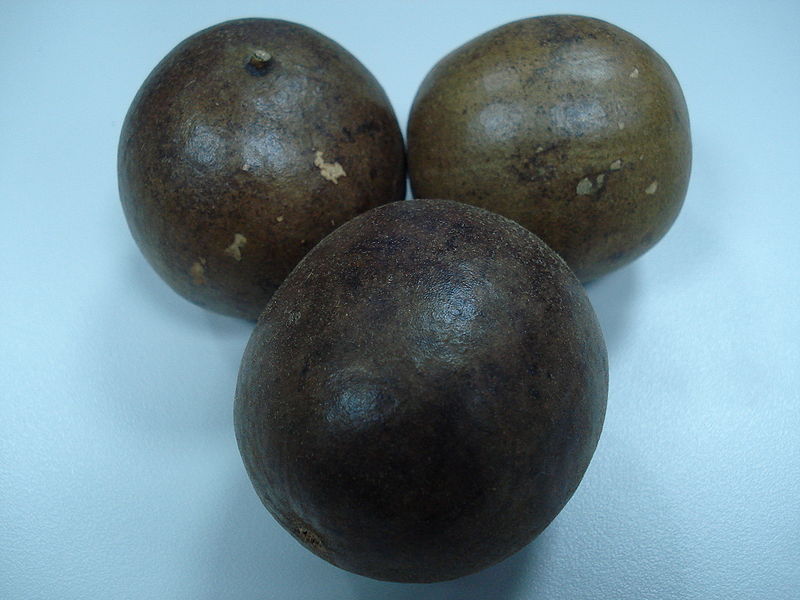
Siraitia grosvenorii
species of plant whose fruit extract is 300 times sweeter than sugar
keto-D-tagatose
Tagatose is a hexose monosaccharide found in small quantities in a variety of foods and has attracted attention as an alternative sweetener. It is often found in dairy products, because it is formed when milk is heated. It is similar in texture and appearance to sucrose (table sugar):215 and is 92% as sweet,:198 but with only 38% of the calories.:209 Tagatose is generally recognized as safe by the Food and Agriculture Organization and the World Health Organization, and has been since 2001. Since it is metabolized differently from sucrose, tagatose has a minimal effect on blood glucose and insu

Thaumatin family
Thaumatin (also known as talin) is a low-calorie sweetener and taste modifier. The protein is often used primarily for its flavor-modifying properties and not exclusively as a sweetener.
isomalt
Isomalt is a sugar substitute, a mixture of the two disaccharide alcohols 1,6-GPS and 1,1-GPM. It is used primarily for its sugar-like physical properties. It has little to no impact on blood sugar levels, and does not stimulate the release of insulin. It also does not promote tooth decay and is considered to be tooth-friendly. Its energy value is 2 kcal per gram, half that of sugars. It is less sweet than sugar, but can be blended with high-intensity sweeteners such as sucralose to create a mixture with the same sweetness as sucrose (‘sugar’).
alditol
carbohydrate that is an acyclic polyol having the general formula HOCH2[CH(OH)]nCH2OH (formally derivable from an aldose by reduction of the carbonyl group)

Gynostemma pentaphyllum
species of plant
galactitol
Galactitol (dulcitol) is a sugar alcohol, the reduction product of galactose. It has a slightly sweet taste. In people with galactokinase deficiency, a form of galactosemia, excess dulcitol forms in the lens of the eye leading to cataracts.

amazake
thumb|260px|Several types of amazake from a supermarket
is a traditional sweet, low-alcohol or non-alcoholic Japanese drink made from fermented rice. Amazake dates from the Kofun period, and it is mentioned in the Nihon Shoki. It is part of the family of traditional Japanese foods made using the koji mold , which also includes miso, soy sauce, and sake.

neotame
Neotame, also known by the brand name Newtame, is a non-caloric artificial sweetener and aspartame analog. By mass, it is 7,000 to 13,000 times sweeter than sucrose. It has no notable off-flavors when compared to sucrose. It enhances original food flavors. It can be used alone, but is often mixed with other sweeteners to increase their individual sweetness (i.e. synergistic effect) and decrease their off-flavors (e.g. saccharin). It is chemically somewhat more stable than aspartame. Its use can be cost effective in comparison to other sweeteners as smaller amounts of neotame are needed.
miraculin
Miraculin is a taste modifier, a glycoprotein extracted from the fruit of Synsepalum dulcificum. The berry, also known as the miracle fruit, was documented by explorer Chevalier des Marchais, who searched for many different fruits during a 1725 excursion to its native West Africa.
dulcin
Dulcin is an artificial sweetener about 250 times sweeter than sugar, discovered in 1883 by the Polish chemist Józef (Joseph) Berlinerblau (27 August 1859 – 1935). It was first mass-produced about seven years later. Although it was discovered only five years after saccharin, it never enjoyed the latter compound's market success. Nevertheless, it was an important sweetener of the early 20th century and had an advantage over saccharin in that it did not possess a bitter aftertaste.
glycyrrhizin
Glycyrrhizin (glycyrrhizic acid or glycyrrhizinic acid) is the chief sweet-tasting constituent of Glycyrrhiza glabra (liquorice) root. Structurally, it is a saponin used as an emulsifier and gel-forming agent in foodstuffs and cosmetics. Its aglycone is enoxolone.
lugduname
Lugduname (from lat. Lugdunum for Lyon) is one of the most potent sweetening agents known. Lugduname has been estimated to be between 220,000 and 300,000 times as sweet as sucrose (table sugar), with estimates varying between studies. It was developed at the University of Lyon, France in 1996. Lugduname is part of a family of potent sweeteners which contain acetic acid functional groups attached to guanidine.
neohesperidin dihydrochalone
chemical compound

stevia
thumb|Stevia rebaudiana
Stevia () is a sweet sugar substitute that is about 50 to 300 times sweeter than sugar. It is extracted from the leaves of Stevia rebaudiana, a plant native to areas of Paraguay and Brazil. The active compounds in stevia are steviol glycosides (mainly stevioside and rebaudioside). Stevia is heat-stable, pH-stable, and not fermentable. Humans cannot metabolize the glycosides in stevia, and it therefore has zero calories. Its taste has a slower onset and longer duration than that of sugar, and at high concentrations some of its extracts may have an aftertaste describ
fructooligosaccharide
thumb|class=skin-invert-image|Fructooligosaccharide structure
Fructooligosaccharides (FOS) also sometimes called oligofructose or oligofructan, are oligosaccharide fructans, used as an alternative sweetener. FOS exhibits sweetness levels between 30 and 50 percent of sugar in commercially prepared syrups. It occurs naturally, and its commercial use emerged in the 1980s in response to demand for healthier and calorie-reduced foods.
alitame
Alitame is an aspartic acid-containing dipeptide sweetener. It was developed by Pfizer in the early 1980s and currently marketed in some countries under the brand name Aclame. Most dipeptides are not sweet, but the unexpected discovery of aspartame in 1965 led to a search for similar compounds that shared its sweetness.

Lippia dulcis
species of plant
volemitol
Volemitol is a naturally occurring seven-carbon sugar alcohol. It is a substance widely distributed in plants, red algae, fungi, mosses, and lichens. It was also found in lipopolysaccharides from E. coli. In certain higher plants, such as Primula, volemitol plays several important physiological roles. It functions as a photosynthetic product, phloem translocate, and storage carbohydrate.
Birnenhonig
Birnenhonig () is a syrup made from pears in central Switzerland. In North America it is known as pear butter. It is very similar to the Belgian spread sirop de Liège.
phyllodulcin
Phyllodulcin is a dihydroisocoumarin found in Hydrangea macrophylla and Hydrangea serrata. It is a sweetener 400–800 times sweeter than sugar.
monellin
Monellin, a sweet protein, was discovered in 1969 in the fruit of the West African shrub known as serendipity berry (Dioscoreophyllum cumminsii); it was first reported as a carbohydrate. The protein was named in 1972 after the Monell Chemical Senses Center in Philadelphia, U.S.A., where it was isolated and characterized.
5-nitro-2-propoxyaniline
5-Nitro-2-propoxyaniline, also known as P-4000 and Ultrasüss, is about 4,000 times the intensity of sucrose (hence its alternate name, P-4000). It is an orange solid that is only slightly soluble in water. It is stable in boiling water and dilute acids. 5-Nitro-2-propoxyaniline was once used as an artificial sweetener but has been banned in the United States because of its possible toxicity.
enoxolone
Enoxolone (INN, BAN; also known as glycyrrhetinic acid or glycyrrhetic acid) is a pentacyclic triterpenoid derivative of the beta-amyrin type obtained from the hydrolysis of glycyrrhizic acid, which was obtained from the herb liquorice.

hernandulcin
thumb|The Phyla dulcis plant, which naturally produces hernandulcin.
Hernandulcin is an intensely sweet chemical compound gained from the chiefly Mexican and South American plant Lippia dulcis.
osladin
Osladine is a high-intensity sweetener isolated from the rhizome of Polypodium vulgare. It is a saponin, sapogenin steroid glycoside, 500 times sweeter than sucrose.

L-glucose
-Glucose is an organic compound with formula C6H12O6 or O=CH[CH(OH)]5H, specifically one of the aldohexose monosaccharides. As the -isomer of glucose, it is the enantiomer of the more common -glucose.

Brazzein
Brazzein is a sweet-tasting protein that occurs naturally in oubli (Pentadiplandra brazzeana), a fruit native to the Atlantic coastal areas of Central Africa. Brazzein was named in 1994 by scientists at the University of Wisconsin–Madison. It is roughly 500 to 2000 times sweeter than sucrose.
perillaldehyde
Perillaldehyde, perillic aldehyde or perilla aldehyde, is a natural organic compound found most abundantly in the annual herb perilla, but also in a wide variety of other plants and essential oils. It is a monoterpenoid containing an aldehyde functional group.
perillartine
Perillartine, also known as perillartin and perilla sugar, is a semisynthetic sweetener that is about 2000 times as sweet as sucrose. It is mainly used in Japan.
Perillartine is the oxime of perillaldehyde, which is extracted from plants of the genus Perilla (Lamiaceae).
suosan sodium
Suosan is calorie-free artificial sweetener derived from β-alanine, discovered in 1948 by Petersen et Muller.
curculin
Curculin or neoculin is a sweet protein complex that was discovered and isolated in 1990 from the fruit of Curculigo latifolia (Hypoxidaceae). Like miraculin, curculin exhibits taste-modifying activity; however, unlike miraculin, it also exhibits a sweet taste by itself. After consumption of curculin, water and sour solutions taste sweet.
monatin
Monatin, commonly known as arruva, is a naturally occurring, high intensity sweetener isolated from the plant Sclerochiton ilicifolius, found in the Transvaal region of South Africa. Monatin contains no carbohydrate or sugar, and nearly no food energy, unlike sucrose or other nutritive sweeteners.
naringin dihydrochalcone
chemical compound
steviol glycoside
sweet chemicals derived from the Stevia plant
siamenoside I
chemical compound
Falernum
Falernum (pronounced ) is either a syrup liqueur or a nonalcoholic syrup from the Caribbean. It is best known for its use in tropical drinks. It contains flavors of ginger, lime, and almond, and frequently cloves or allspice. It may be thought of as a spicier version of orgeat syrup.
mabinlin
thumb|Stick structure of the amino acid residues in segment B54-B64 in Mabinlin II. Constructed in PyMOL (PDB 2DS2).
Mabinlins are sweet-tasting proteins extracted from the seed of mabinlang (Capparis masaikai Levl.), a plant growing in Yunnan province of China. There are four homologues. Mabinlin-2 was first isolated in 1983 and characterised in 1993, and is the most extensively studied of the four. The other variants of mabinlin-1, -3 and -4 were discovered and characterised in 1994.
2-furonitrile
2-Furonitrile is a colorless derivative of furan possessing a nitrile group.
aspartame-acesulfame salt
chemical compound
sucrononic acid
chemical compound