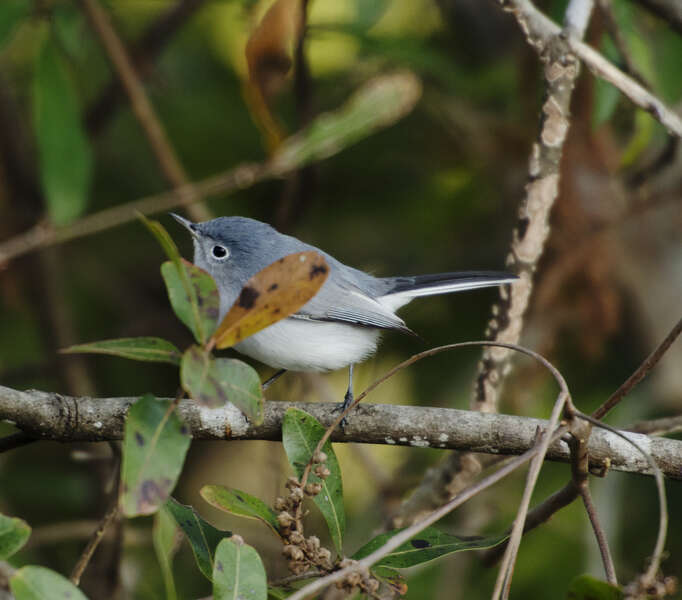
Blue-grey Gnatcatcher
Also known as Polioptila caerulea, Blue-gray Gnatcatcher
species of bird
Species
Least ConcernA small (4 ½ inches) songbird, the Blue-gray Gnatcatcher is most easily identified by its blue-gray body, pale breast, and dark tail with white edges. Males in breeding plumage possess faint black eye-stripes which separates them visually from females, which are less adorned. In winter, male and female Blue-gray Gnatcatchers are similar to one another. The Blue-gray Gnatcatcher breeds across much of the United States, southern Canada, Mexico, and northern portions of Central America. In winter, northerly-breeding populations migrate south, spending the winter anywhere from coastal California and the coastal southeastern U.S. south to Central America and the West Indies. Some southerly-breeding populations, particularly those in the tropics, are non-migratory. Blue-gray Gnatcatchers breed in a number of semi-open woodland habitats, particularly in habitats with deciduous trees and often in locations near water. In winter, this species utilizes a variety of tropical and subtropical shrub habitats. As this species’ name suggests, Blue-gray Gnatcatchers primarily eat small insects. In appropriate habitat, Blue-gray Gnatcatchers may be observed flitting through the undergrowth or the lo
via IUCN
Wikidata facts
- Image
- Blue-gray Gnatcatcher (polioptila caerulea) (10828008123).jpg
Sources (2)
via Wikidata · CC0