
File:01_Clément_VI_(Fresque_de_la_chapelle_Saint-Martial_du_palais_des_papes).jpg · Wikimedia Commons · See Wikimedia Commons
Clement VI
Sign in to saveAlso known as Pierre Roger de Beuamont, Pope Clement VI, Clemente VI
Pope of the Catholic Church and the fourth Avignon Pope (1342–1352)
Clement VI was a pope who led the Catholic Church from 1342 to 1352 and was the fourth pope to reside in Avignon, France rather than Rome. He is notable for his role during a significant period when papal authority was centered outside Italy, which shaped the Church's influence and structure during the medieval era.
AI-generated from the Wikipedia summary — may contain errors.
Wikidata facts
- Instance of
- human
- Gender
- male
- Citizenship
- France
- Place of birth
- Rosiers-d'Égletons
- Place of death
- Avignon
- Occupation
- Catholic priest
- Educated at
- College of Sorbonne
- Languages spoken
- Latin
- Religion
- Catholic Church
- Participant in
- 1342 papal conclave
- Image
- Henri Auguste Calixte César Serrur (1794-1865)-ritratto Clemente VI.jpg
- Work location
- Papal States
- Religious order
- Benedictines
Show 11 more facts
- place of burial
- Royal abbey of La Chaise-Dieu
- Commons category
- Clemens VI
- date of death
- 1352-12-06
- date of birth
- 1291-00-00
- described by source
- Wikitólica
- topic's main category
- Category:Pope Clement VI
- name in native language
- Clemens PP. VI
- consecrator
- Bertrand du Pouget
- name
- Pope Clement VI
- P13311
- Mantello
- P8168
- schedule
Sources (3)
via Wikidata · CC0
Works in European collections
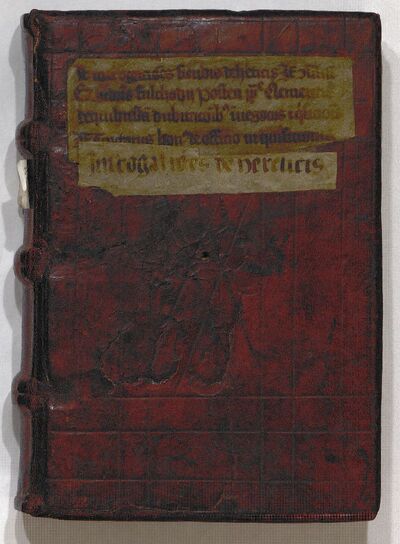
2 objects attributed to Clement VI, held across European museums, libraries & archives · via Europeana

~27 min read
Encyclopedic overview
Pope Clement VI (Latin: Clemens VI; 1291 – 6 December 1352), born Pierre Roger, was head of the Catholic Church from 7 May 1342 to his death, in December 1352. He was the fourth Avignon pope. Clement reigned during the first visitation of the Black Death (1348–1350), during which he granted remission of sins to all who died of the plague.
Roger steadfastly resisted temporal encroachments on the Church's ecclesiastical jurisdiction, and, as pope Clement VI, entrenched French dominance of the Church and opened its coffers to enhance the regal splendour of the Papacy. He recruited composers and music theorists for his court, including figures associated with the then-innovative Ars Nova style of France and the Low Countries.
Excerpted from Wikipedia’s “Clement VI” article, available under the CC BY-SA 4.0 licence.
Gallery (3)
Available in 72 languages
- Español
- Français
- Deutsch
- 中文
- 日本語
- Русский
- Português
- Italiano
- العربية
- Afrikaans
- Albanian
- Bahasa Indonesia
- Basque
- Belarusian
- Breton
- Bulgarian
- Catalan
- cdo
Show 53 more
- Croatian
- Czech
- Danish
- Egyptian Arabic
- Esperanto
- Estonian
- Filipino
- Finnish
- Galician
- Georgian
- Greek
- Hakka Chinese
- Hebrew
- Hungarian
- Ido
- Iloko
- Irish
- Javanese
- Latin
- Latvian
- Lithuanian
- Macedonian
- Malagasy
- Malay
- Marathi
- Nederlands
- Norwegian
- Occitan
- Piedmontese
- Polski
- Romanian
- Scots
- Serbian
- Serbian (Latin)
- Sicilian
- simple
- Slovak
- Slovenian
- Svenska
- Swahili
- Tiếng Việt
- Türkçe
- Ukrainian
- Urdu
- Waray
- Welsh
- Wu Chinese
- Yoruba
- Zaza
- zh_min_nan
- zh_yue
- فارسی
- 한국어
via Wikidata sitelinks · CC0