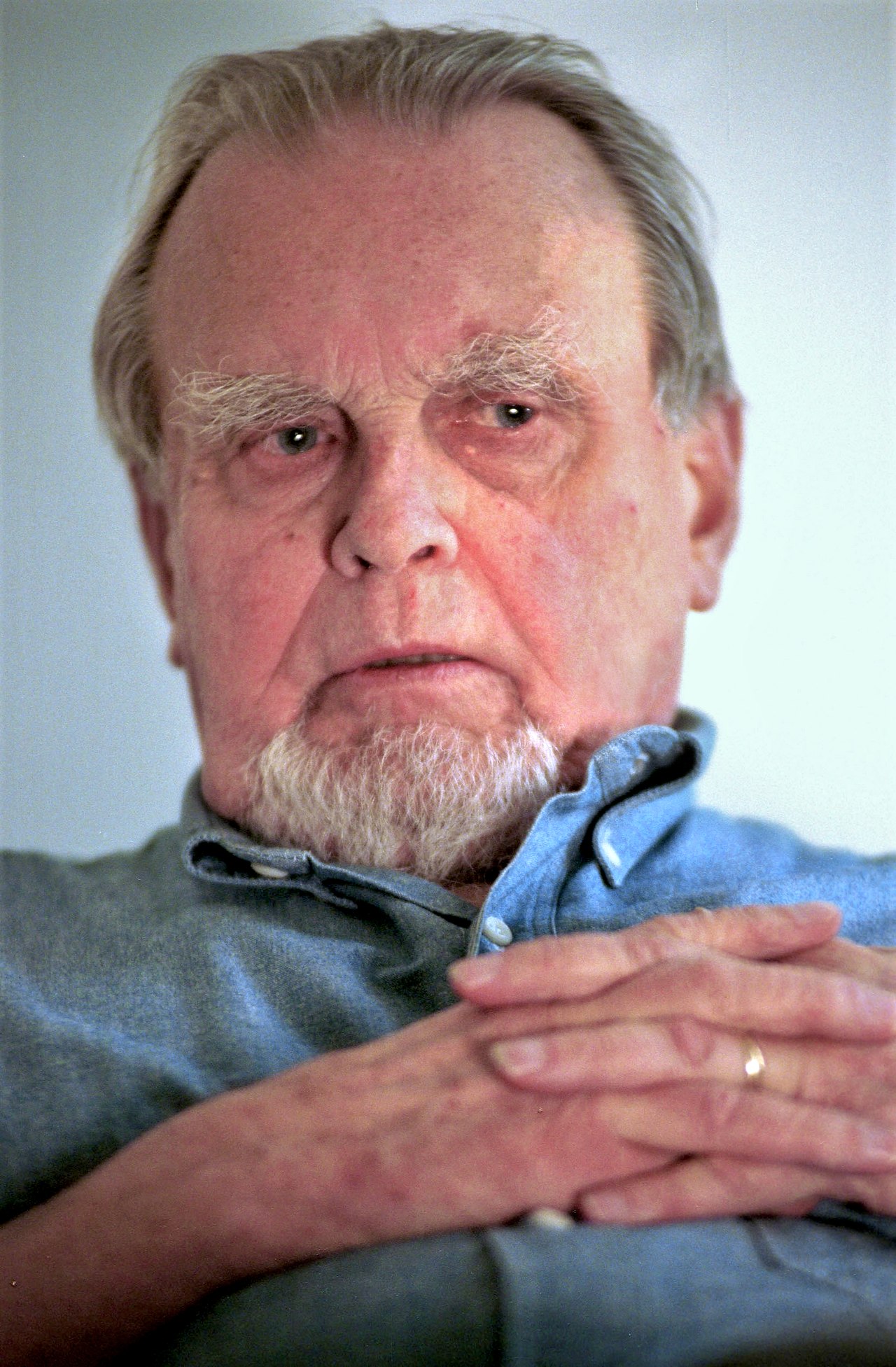
Czesław Miłosz
Also known as Czeslaw Milosz
polsk poet, essäist och diplomat (1911–2004)
AI overview
Czesław Miłosz was a Polish-American poet who lived from 1911 to 2004 and won the Nobel Prize in Literature, one of the world's highest honors for writing. His work is significant because he gave powerful literary voice to the experience of living through twentieth-century upheaval, including World War II and Communist rule in Eastern Europe.
AI-generated from the Wikipedia summary — may contain errors.
Person · Open Library
- Born
- June 30, 1911
- Died
- August 14, 2004
- Works
- 253
Top works
- [Zehn handgeschriebene Poeme und Grafiken]
- Rok myśliwego
- ʻAl gedat ha-nahar
- Prentice Hall Literature--World Masterpieces
- Murti-Bing
via Open Library + Wikidata
Film & TV
Writing · Szetejnie, Kovno Governorate, Russian Empire [now Seteniai, Lithuania]
Czesław Miłosz (30 June 1911 – 14 August 2004) was a Polish-American poet, prose writer, translator, and diplomat. He primarily wrote his poetry in Polish. Regarded as one of the great poets of the 20th century, he won the 1980 Nobel Prize in Literature. In its citation, the Swedish Academy called Miłosz a writer who "voices man's exposed condition in a world of severe conflicts". Miłosz…
Known for
- In the Bathtub of the World — Self2001
- Apostrophes — Self1975
via TMDB
Music · MusicBrainz
- Type
- Person
- Gender
Article · Svenska
Czesław Miłosz, född 30 juni 1911 i i Litauen (i dåvarande Ryssland), död 14 augusti 2004 i Kraków i Polen, var en polsk författare. Han mottog Nobelpriset i litteratur 1980. Efter första världskriget flyttade familjen från Šeteniai till Wilno (som då tillhörde Polen), där han bland annat utbildades i hebreiska och tog en juristexamen. Miłosz var en period bosatt i Paris där han började skriva poesi. När han flyttade tillbaka till Vilnius tog han arbete på en radiostation men blev avskedad för att han var "vänstervriden". Därefter flyttade han till Warszawa och efter en tid som författare blev han diplomat i Washington och Paris. 1951 sökte han politisk asyl i Frankrike och sedan 1960 var han bosatt i USA. 1961 blev Czesław Miłosz professor i slaviska språk och litteratur vid University of California, Berkeley. 1970 fick han sitt amerikanska medborgarskap. På 1990-talet återvände han till Polen och bosatte sig i Kraków. Mot slutet av sitt liv hade han tre pass: Polens, USA:s och Litauens. I böcker som Issadalen (1955), Mitt Europa (1959) med mera och diverse artiklar har han diskuterat om det europeiska kulturarvet, inte bara det centraleuropeiska utan även Sverigerelaterat, bland annat finns i hans produktion en poetisk dikt om botanikern Carl von Linné och referenser till Emanuel Swedenborg. Miłosz har även som skönlitterär författare förstått flodens betydelse för kulturens blomstring, floden som på många sätt bundit samman Europa.
Abstract from DBpedia / Wikipedia · CC BY-SA
Gallery (12)
Connections
Categories
1911 births2004 deaths20th-century American poets20th-century American translators20th-century Polish nobility20th-century Polish poets20th-century translatorsAmerican Catholic poetsAmerican former atheists and agnosticsAmerican Nobel laureatesAmerican translatorsCatholic Righteous Among the Nations